The Trusted Manufacturer of High Pressure Hydraulic Valves
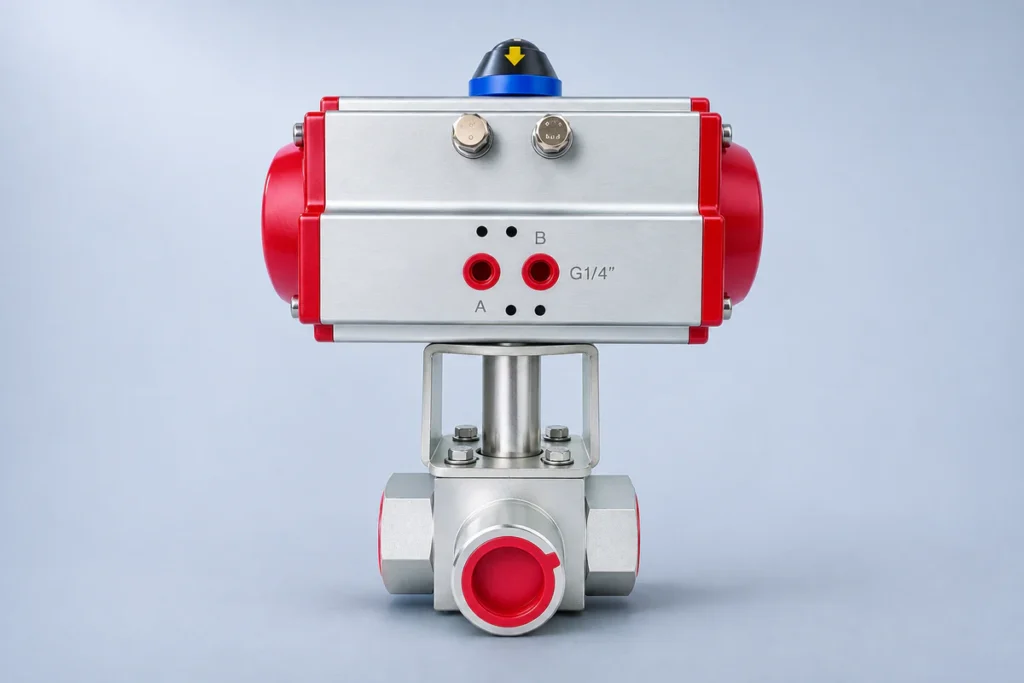
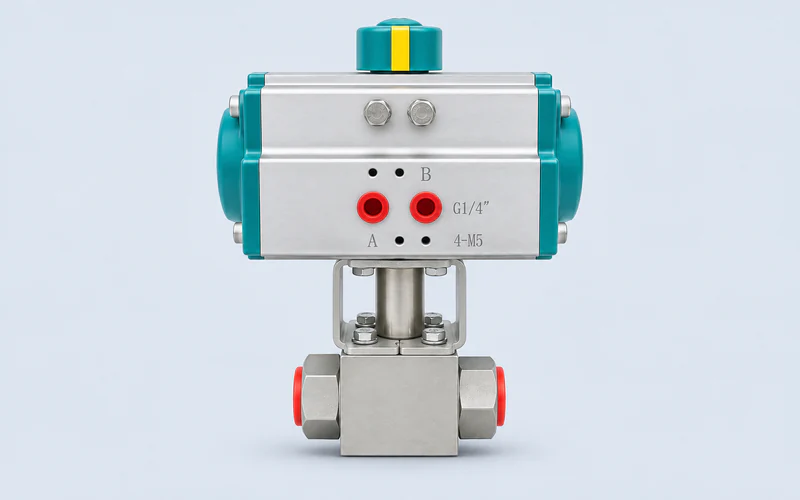
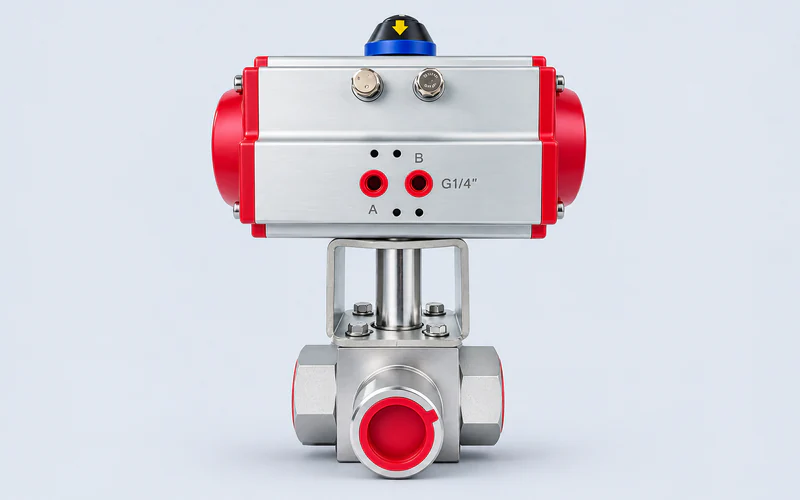
Compressed air moves the actuator, and hydraulic oil flows through the ball valve. We offer double-acting KHB/KHM assemblies for line shut-off and KHB3K assemblies for three-way switching.
Share your hydraulic circuit and available air supply. We can review the valve function, actuator arrangement and room for the complete assembly.
Choose Your Valve Function
Start with your circuit drawing. Identify whether the valve needs to isolate one line or switch flow between paths, then choose the assembly that matches.
Line Shut-Off
Selected KHB/KHM valves use a double-acting pneumatic actuator to open or shut off a hydraulic line. Check the connection and bore for your size.
Flow Switching
Use the KHB3K flow diagram to match the required port connections. Include the pressure inlet and closed-branch pressure when specifying the assembly.
Match the valve ports and working conditions to your hydraulic circuit. For the actuator, check the air supply, switching requirements and installation space.
Requirement
What to Specify
Valve function
Two-way shut-off or connected ports in each three-way position
Hydraulic line
Port standard, size, pressure range, fluid and temperature
Air supply
Available air pressure at the actuator and intended switching frequency
Controls
Any position feedback or required behaviour if air is lost
Installation
Available assembly height, actuator orientation and access to fittings
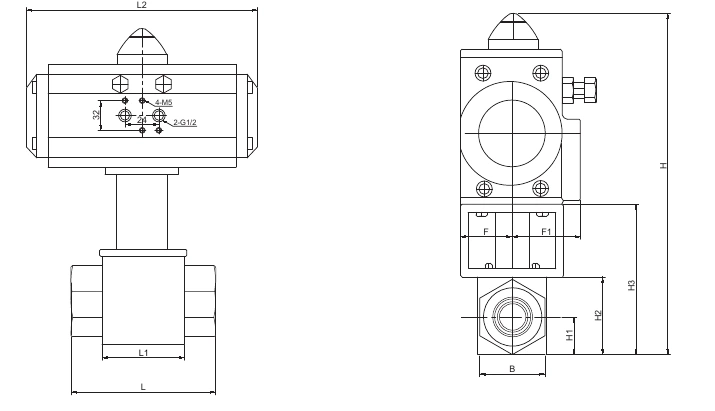
Use the assembly drawing to see where the valve connects and how much space it needs. Compare the dimensions for your valve size and actuator before ordering.
Match the hydraulic port type and size, then check the end-to-end valve length (L).
Compare the overall height (H) and actuator width (L2) with the space around the valve.
Leave room at the actuator ports for air fittings, tubing bends and service access.

PRODUCT QUESTIONS
Hydraulic oil flows through the valve body. Compressed air goes to the actuator, which turns the valve. Share both pressures when you’re specifying the assembly.
Yes. We offer selected KHB and KHM 2-way valves for line shut-off and KHB3K 3-way valves for switching flow paths, both with double-acting actuators. For a 3-way valve, show us which ports need to connect in each position.
It depends on the actuator size and how much torque it takes to turn the valve under working pressure. Share the air pressure available at the actuator and the highest working pressure on the hydraulic side.
A double-acting actuator uses air to move the valve in both directions. What the valve does when the air supply stops depends on the actuator and controls. If your system needs the valve to move to a specific position, tell us which one before ordering.
It depends on the valve stem, mounting pattern, and torque required. Send us the model number and a drawing or photo of the stem and mounting area so we can check your options.
Compare the valve ports, end-to-end length, and total assembly height. Check which way the actuator faces and how much room you have for the air fittings and controls.
Talk to our engineering team for product selection, technical support, and customized hydraulic valve solutions.
Tell us how the valve needs to operate. Include the hydraulic working pressure, available air pressure, and space for the valve and actuator.