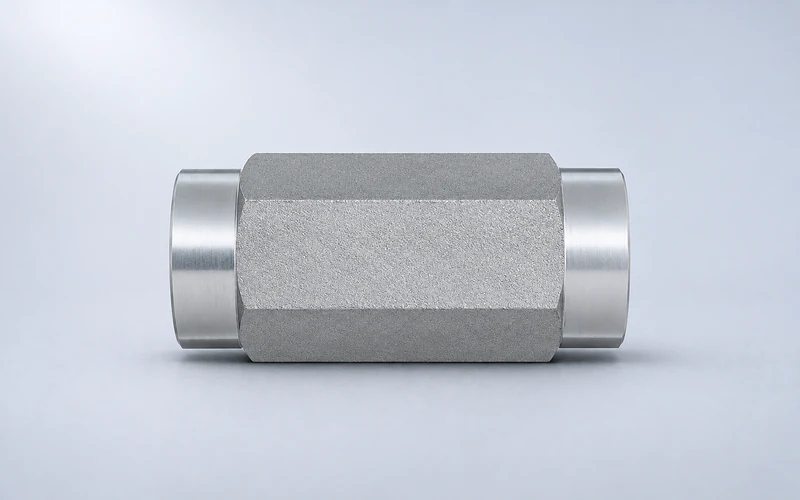
The Trusted Manufacturer of High Pressure Hydraulic Valves

Hydraulic Check Valves

We offer hydraulic check valves for one-way flow, along with dual pilot-operated check valves for controlled reverse-flow release. Choose the standard or pilot-operated form according to how your hydraulic circuit must retain or release flow.

Start with the required flow direction and any pilot-control requirement. Send us the circuit diagram, connection details and operating conditions so we can compare the appropriate valve form.

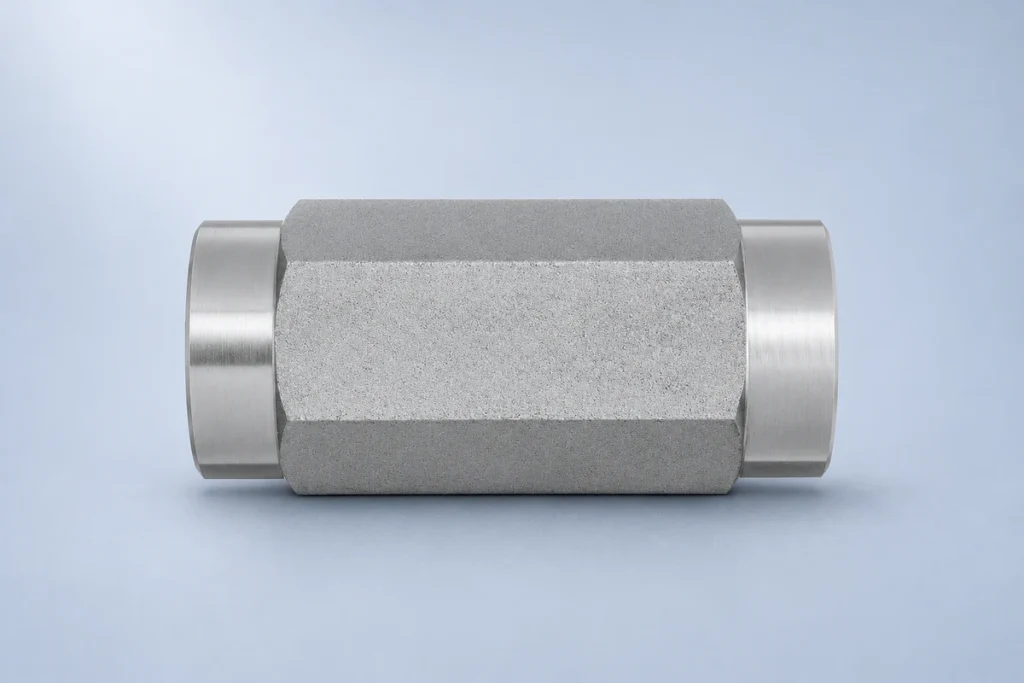
hydraulic check valves

FIND THE RIGHT CONFIGURATION

Standard and Pilot-Operated Check Valves

Compare the function and hydraulic symbol to identify the appropriate form for the circuit.

standard hydraulic check valve

Standard Hydraulic Check Valves

Our standard check-valve form allows flow in one direction and blocks reverse flow. Compare the flow direction, connection and required operating conditions.

dual pilot operated check valve

Dual Pilot-Operated Check Valves

The dual form uses crossed pilot control to release reverse flow through the corresponding check path. It is also described as a hydraulic lock.

Hydraulic Check Valve Specifications

Connection details and operating ratings depend on the selected model. Use the information below as a selection checklist and confirm model-specific values before ordering.

Standard Inline Check Valve

Valve Type
Inline check valve
Flow Function
Free flow in one direction; reverse flow blocked
Flow Direction
Follow the arrow or port marking on the valve
Connection
Confirm thread standard and port size by model
Cracking Pressure
Confirm the required value for the selected model
Working Pressure / Flow
Confirm from model-specific technical data
Body / Seal Materials
Confirm from the product specification

Dual Pilot-Operated Check Valve

Valve Body
Dual pilot-operated check valve
Main Flow Paths
Two check paths towards the actuator
Port Arrangement
V1/V2: directional-valve side; C1/C2: actuator side
Pilot Function
Pressure on one line releases the opposite check path
Connection / Port Size
Confirm from the model and port drawing
Working Pressure / Flow
Confirm from model-specific technical data
Pilot Requirements / Materials
Confirm for the selected valve and circuit

Technical note: Exact working pressure, maximum flow, cracking pressure, pilot requirements, connection sizes and material options should not be assumed across the whole range. Please confirm them against the selected model and its drawing.

SELECTION GUIDE

How to Select the Right Hydraulic Check Valve

Check the key requirements before selecting a valve for your hydraulic system.

01

Identify the Flow Direction

For an inline valve, confirm the permitted flow direction and the required cracking pressure. Check the arrow or symbol before installation.

02

Check Pressure and Flow

Provide the working pressure, required flow rate and, where applicable, the cracking pressure or available pilot pressure.

03

Confirm the Connections

Specify the thread standard, port size and installation dimensions. Do not assume that similar-looking threads are interchangeable.

04

Show the Pilot Circuit

For a dual pilot-operated valve, mark both lines on the hydraulic schematic and identify V1/V2 and C1/C2 so the port layout can be checked.

PRODUCT QUESTIONS

Hydraulic Check Valves FAQs

Is a Non-Return Valve the Same as a Check Valve?

Yes. “Non-return valve” and “check valve” are commonly used for a valve that allows flow in one direction and closes against reverse flow.

The valve has two check paths. When pressure is applied to one line, the cross-pilot passage releases the opposite check path, allowing oil to return from the actuator.

When both check paths are closed against reverse flow, the valve helps retain oil in the actuator lines. Pilot pressure releases the required path when the actuator needs to move. Actual load-holding performance depends on valve leakage, the actuator and the complete hydraulic circuit.

Cracking pressure is the pressure difference at which a check valve begins to open in the permitted flow direction. The required value should be checked against the selected valve model and the circuit requirements.

A standard check valve blocks reverse flow and may help retain oil in a hydraulic line, but it should not automatically be treated as a load-holding solution. Suitability depends on leakage, load conditions, the actuator and the full circuit design.

Provide the valve model or a clear photo, flow direction, working pressure, required flow rate, connection standard and port size. For a dual pilot-operated valve, include the hydraulic circuit drawing and available pilot pressure so the port arrangement and release function can be checked.

Contact Us

Talk to our engineering team for product selection, technical support, and customized hydraulic valve solutions.

Choose an Inline or Pilot-Operated Check Valve

For an inline valve, share the required flow direction and port size. For a pilot-operated valve, send your circuit sketch and available pilot pressure.

Request A Quote