
When choosing between a pneumatic actuated ball valve and an electric actuated ball valve, you are not just choosing an actuator. You are choosing how your system will control flow, respond to operation signals, handle working conditions, and manage long-term maintenance costs.
Both valve types are widely used in industrial automation, hydraulic systems, high-pressure pipelines, and process control applications. A pneumatic actuated ball valve uses compressed air to open and close the valve, so it is often preferred for fast operation, frequent cycling, and demanding industrial environments. An electric actuated ball valve uses an electric motor, making it a practical choice when compressed air is not available or when remote control and more precise positioning are required.
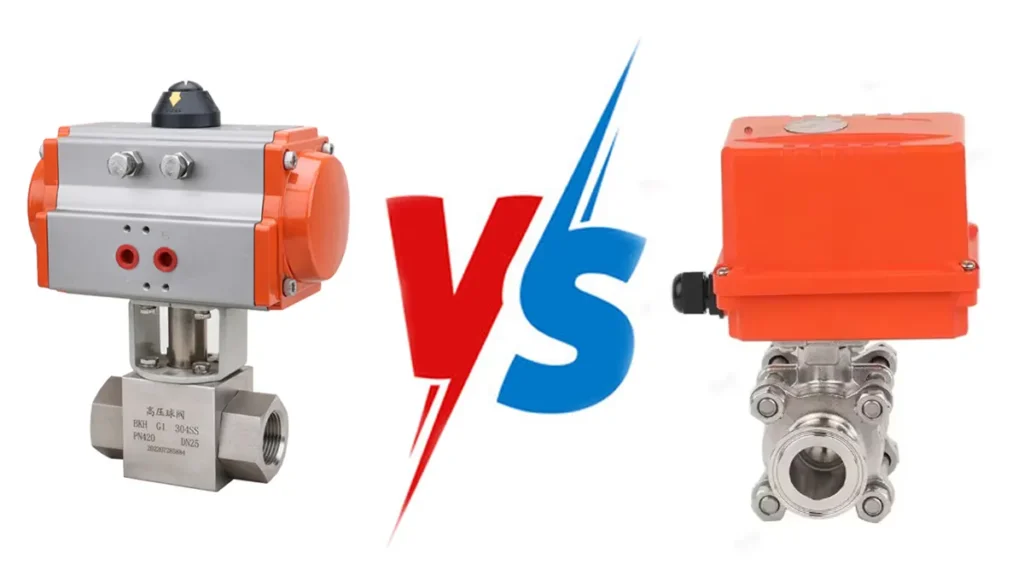
The right choice depends on your power source, opening speed, working pressure, control requirements, installation environment, safety needs, and budget. Here is a simple comparison to help you understand the key differences:
| Feature | Pneumatic Actuated Ball Valve | Electric Actuated Ball Valve |
|---|---|---|
| Power Source | Compressed air | Electricity |
| Response Speed | Fast | Slower |
| Torque Output | High | Low to medium |
| Control Precision | Moderate | Higher |
| Suitable Environment | High-pressure, high-cycle, industrial environments | Areas without air supply or with remote electrical control |
| Safety | Good for many industrial applications | Depends on electrical protection level |
| Cost | Often lower actuator cost | Usually higher actuator cost |
In short, if your system needs fast opening and closing, frequent operation, and stable performance in industrial conditions, a pneumatic actuated ball valve may be the better choice. If your site has no reliable air supply or needs electric remote control, an electric actuated ball valve may be more suitable.
Key Takeaways
- Pneumatic actuators use air that is squeezed. They are fast and strong for hard work.
- Electric actuators use electricity. They give exact control and need less fixing.
- Pick pneumatic valves for quick jobs in rough places like factories.
- Use electric valves when you need things to be exact or far away, mostly in clean spots.
- Think about how to set them up: pneumatic valves need air, but electric valves need power.
- Pneumatic valves cost less at first. But electric valves can help you save on repairs later.
- Safety matters: pneumatic valves are safer where things might explode. Electric valves need dry and clean places.
- Always pick the right valve for your system. Think about speed, control, and where you will use it.
Key Takeaways
Main Differences
When you look at pneumatic and electric actuated ball valves, you will see some big differences. Here is a table that shows how they compare:
| Feature | Pneumatic Actuators | Electric Actuators |
|---|---|---|
| Design | Simple | Complex |
| Force | Depends on air pressure | Depends on screw pitch |
| Speed | High | Low |
| Accuracy | Low | High |
| Repeatability | Low | High |
| Efficiency | Low | High |
| Maintenance | High | Minimal |
| Ideal Use | End-to-end positioning | Multi-point positioning |
Pneumatic actuators are fast and strong. They are good for hard jobs. But they are not as accurate or repeatable as electric actuators. Electric actuators give you better control. They do not need much maintenance. But they move slower and have a more complicated design.
Quick Comparison Points
Here are the main things to remember when you pick between these two valves:
- Speed: Pneumatic actuators open and close valves very fast, in less than a second. If you need something quick, choose them. Electric actuators are slower, but you can control the valve position better.
- Accuracy: Electric actuators are more accurate. They can stop at exact spots and do the same thing again and again. Pneumatic actuators are less exact because air pressure can change.
- Cost: Pneumatic valves cost less to buy and put in. But you might pay more later for fixing and air supply. Electric valves cost more at first, but you save money on running them.
- Environment: Pneumatic actuators work well in tough places like hot, high-pressure, or dangerous areas. Electric actuators need to be kept safe from water and very harsh places.
- Application Suitability: Pneumatic valves are best for heavy or risky jobs. Electric valves are best where you need exact control or want to automate things, especially if you do not have air.
Tip: Think about what is most important for your system. Do you need speed, accuracy, or to work in tough places? Your answer will help you pick the right valve.
If you are still not sure, remember the pneumatic vs electric actuated ball valve choice depends on your job. Pneumatic valves are great for fast and hard work. Electric valves are better for careful, automatic control. There is no one answer for everyone, so check what your system needs before you decide.
What Are Pneumatically Actuated Ball Valves?
If you work in a factory, you will see pneumatically actuated ball valves a lot. These valves use pneumatic actuators to move liquids or gases. They work fast and are very reliable. You can use them when you need things to move quickly or in hard places.
How Pneumatic Actuators Work
You may wonder how pneumatic actuators move a ball valve. Here is how it happens step by step:
- Compressed air goes into the pneumatic actuator.
- The pistons move in a straight line because of the air.
- A rack and pinion system turns this straight movement into turning.
- The turning motion opens or closes the ball valve.
Here is a table that shows what each part does:
| Component | Function |
|---|---|
| Rack | Connects to the piston and makes straight movement from air pressure. |
| Pinion | Changes the straight movement into turning movement. |
| Piston | Uses compressed air to make the force to move the valve. |
Pneumatic actuators work fast. They are safe to use where explosions could happen. You can use them where there is no electricity. If you need to control valves in dangerous or far away places, pneumatic actuators are a good choice.
Common Names
People call pneumatic actuators by different names. Some say air actuators, pneumatic drives, or pneumatic motors. All these names mean they use compressed air to move valves.
Industrial Uses
Pneumatically actuated ball valves are used in many jobs. You can find them in:
- Industrial Automation: They help control pressure and move parts in factories.
- HVAC Systems: They manage air for heating and cooling.
- Water and Wastewater Treatment: They control water and chemicals during cleaning.
- Oil and Gas Industry: They move oil, gas, and chemicals in plants.
- Food Processing: They move food ingredients and keep things clean.
Hydraulic Systems
You can use pneumatic actuators in hydraulic systems. They help control high-pressure fluids. They let you manage flow and pressure quickly and easily.
High Pressure Applications
Pneumatic actuators are great for high pressure jobs. They give strong force and fast action. This is good for heavy work.
Automation Equipment
If you want to make machines work by themselves, pneumatic actuators help. You can set up fast and repeatable actions. This keeps your machines running smoothly.
Tip: If you need speed, safety, and trust, pneumatic actuators are a smart pick. They work well in tough places where other choices might not work.
What Are Electrically Actuated Ball Valves?
If you want your system to work smoothly, think about using electrically actuated ball valves. These valves use electric actuators to open and close. They are a good choice for many kinds of jobs. You can trust them when you need the valve to move exactly and want things to be automatic.
How Electric Actuators Work
Electric actuators use electricity to move the valve. Here is how they do it:
- An electric motor turns electricity into movement.
- A gear system makes the valve move with the right force and speed.
- Limit switches stop the valve at open or closed spots.
- A position indicator tells you where the valve is.
- The housing keeps all the parts safe from dust and water.
Electric valve actuators work the same way every time. They do not need air, so you can use them where there is no air supply. You can also control them from far away. This is great for modern machines.
Tip: Electric actuators let you control the valve very well. You can set the valve where you want, and it will stay there until you change it.
Common Names
People call these devices by different names. Some names are:
- electric valve actuators
- motorized ball valves
- electric actuators
- electrically actuated ball valves
All these names mean they use electricity to move the valve.
Industrial Uses
You will see electrically actuated ball valves in many places. They help control liquids and gases safely and steadily. Here are some places you might find them:
- Power plants use electric valve actuators for boilers and steam.
- Chemical factories use electric actuators for dangerous materials.
- Water and wastewater plants use them for water, filters, and sludge.
- Oil and gas companies use electric valve actuators for hard jobs.
Remote Control
You can control electric valve actuators from a control room or another building. This makes your work easier and safer. You do not have to walk to each valve. You just press a button or use a computer.
Low Frequency Operation
Electric actuators are best if you do not open and close the valve a lot. If your system moves only a few times a day, electric valve actuators are a smart pick. They last longer and do not need much fixing in these cases.
No Air Supply Sites
Sometimes, you cannot get air to your site. Maybe you work far away or in a building without air. Electrically actuated ball valves fix this problem. You only need electricity, which is easy to get and use.
Note: If you want easy setup, little fixing, and remote control, electric valve actuators are a great choice for your system.
Pneumatic vs Electric Actuated Ball Valve Comparison Table
Power Source
There is a big difference in how these valves get power. Pneumatic actuated ball valves use compressed air to move. You need an air compressor to give them air. The pressure is usually between 60 and 125 PSI. This works well if your building already has an air system. Pneumatic actuators can make a lot of force even though they are small. This is good for tough jobs.
Electric actuated ball valves use electricity instead of air. You just plug them into a power source. They do not need an air compressor. This makes them easier to put in where there is no air supply. Electric actuators are good when you want very exact control. You also do not have to worry about air lines.
- Pneumatic actuators use compressed air.
- Electric actuators use an electric motor.
- Pneumatic valves are small but strong.
- Electric valves are best when you need exact movement.
Speed
Speed is important if you need the valve to move fast. Pneumatic ball valves are known for being quick. Most of the time, they open or close in about 6 seconds. This fast action is great for emergencies or when timing matters a lot.
Electric ball valves move slower than pneumatic ones. They usually take 15 to 20 seconds to open or close. If you do not need the valve to move right away, this is okay. The slow movement can also help stop sudden changes in pressure.
- Pneumatic valves: open or close in about 6 seconds.
- Electric valves: open or close in 15 to 20 seconds.
- Pneumatic is best if you need a fast response.
Tip: Pick pneumatic if you need the valve to move quickly.
Control
Control means how well you can set the valve’s position. Pneumatic actuators are good for simple open and close jobs. They work well if you do not need tiny changes. Their control is not as exact because air pressure can change.
Electric actuators are better when you need very exact control. You can stop them at any spot, not just open or closed. This is good for jobs where you need to change how much flows through the valve.
| Actuator Type | Control Precision | Key Features |
|---|---|---|
| Electric | Excellent | Fine throttling, smooth modulation, precise stops |
| Pneumatic | Sufficient | Best for open/close, less precise modulation |
If you want the valve to go to the same spot every time, electric actuators are better. Pneumatic actuators are good for simple on and off jobs.
Installation
When you install a pneumatic ball valve, you usually need an air supply system. This means you have to set up air lines and maybe even an air compressor. If your factory already uses air tools or machines, adding a pneumatic valve feels pretty simple. You just connect the valve to the air system, mount it on the pipe, and check for leaks. Most people find the setup quick if they already have air.
With an electric ball valve, you need to connect it to a power source. You might have to run wires or add a control box. Sometimes, you need an electrician to help with the wiring. Electric valves often come with clear instructions, so you can follow the steps and get it working. You do not need to worry about air leaks, but you should make sure the area stays dry and safe from water.
Here’s a quick table to help you compare:
| Valve Type | What You Need for Installation | Special Tips |
|---|---|---|
| Pneumatic | Air lines, compressor, fittings | Check for air leaks |
| Electric | Power supply, wiring, control panel | Keep dry, follow wiring map |
Tip: If you already have an air system, pneumatic valves go in fast. If you want less piping, electric valves might be easier.
Maintenance
You will notice that pneumatic valves need more regular checks. Air leaks can happen, and dust or water in the air lines can cause trouble. You should look at the seals, clean the air filters, and make sure the actuator moves smoothly. If you hear hissing or see slow movement, check the air supply first.
Electric valves need less day-to-day care. You should check the wiring and make sure the motor runs quietly. Sometimes, dust or water can get inside the housing, so keep the area clean. If the valve stops moving, look at the power supply or control signals. Most electric actuators last a long time if you keep them dry and away from harsh chemicals.
Here’s a quick checklist for both:
- Pneumatic:
- Inspect air lines for leaks
- Clean filters
- Lubricate moving parts
- Electric:
- Check wiring connections
- Keep housing clean and dry
- Test control signals
Note: Pneumatic valves need more hands-on care, but electric valves need you to watch out for electrical problems.
Cost
When you look at the price, pneumatic ball valves usually cost less to buy. The parts are simple, and you can find them almost anywhere. If you already have an air system, you save even more. But remember, you might spend more on maintenance and running the air compressor.
Electric ball valves cost more at the start. The motor and control parts make the price go up. You might also pay for an electrician to help with the setup. Over time, you save money because electric valves need less fixing and use less energy if you do not run them all the time.
Here’s a quick breakdown:
- Pneumatic: Lower purchase price, higher maintenance and air supply costs
- Electric: Higher purchase price, lower maintenance, and energy costs
Tip: Think about both the price to buy and the cost to keep the valve running. Sometimes, paying more at the start for an electric valve saves you money later.
Safety
When you think about safety, you want to keep people safe. You also want to protect your machines. Pneumatic actuated ball valves are very good for safety. They use air instead of electricity. This means there are no sparks. So, they are a smart choice for places with flammable gas or dust. You will see these valves in chemical plants and oil refineries. They help lower the chance of explosions.
Electric actuated ball valves can be safe too. But you need to be more careful. Electricity can make sparks if wires break or touch wrong. It is best to use electric valves in dry and clean places. These places should not have flammable stuff. Some electric actuators have special covers to stop explosions. These covers cost more money and make things harder to set up.
Here’s a table to help you compare:
| Valve Type | Safety Strengths | Safety Concerns |
|---|---|---|
| Pneumatic | No sparks, safe in explosive areas | Air leaks, pressure hazards |
| Electric | No air leaks, safe in dry environments | Electrical sparks, overheating |
Tip: If you work in a dangerous place, pick pneumatic valves. For normal, safe places, electric valves are a good choice.
Best Use Cases
You want to choose the right valve for your job. Here are the best times to use each type:
Pneumatic Actuated Ball Valves:
- Good for factories with lots of dust, gas, or chemicals.
- Great for jobs that need the valve to move fast.
- Work well in hot or high-pressure places.
- Best if your system already uses compressed air.
Electric Actuated Ball Valves:
- Good for places far away where you cannot use air lines.
- Best for jobs that need slow and careful movement.
- Great for clean and dry places like labs or water plants.
- Useful if you want to control valves from far away with a computer.
Here’s a table to help you remember:
| Valve Type | Best Use Cases |
|---|---|
| Pneumatic | Hazardous areas, fast cycles, high pressure/temperature |
| Electric | Remote sites, precise control, clean environments |
Note: Always pick the valve that fits your system. Think about where you work, how fast you need the valve, and how much control you want. This will help you make the best choice.
Pneumatic vs Electric Actuated Ball Valve: Key Differences
Power Source
These valves get their power in different ways. Pneumatic actuators use compressed air to move. You need an air compressor and pipes for the air. This is good if your building already uses air for other machines. Electric actuators use electricity instead of air. You just plug them into a power outlet, like 24VDC, 120VAC, or 240VAC. You do not have to worry about air leaks or compressors with electric actuators.
Here is a quick table to show what you need for each:
| Specification | Pneumatic Actuator | Electric Actuator |
|---|---|---|
| Power Source | Compressed air | Electricity |
| Extra Equipment | Air compressor, air lines | Electrical wiring |
| Setup Complexity | More complex if no air | Easier if power is nearby |
| Common Standards | ISO 5211 mounting | ISO 5211 mounting |
If you already use air, pneumatic actuators are easy to add. If you want a simple setup, electric actuators are a good choice.
Speed & Response
How fast the valve moves is important. Pneumatic actuators are very quick. They use air pressure to move the valve almost right away. This makes them good for emergencies or fast jobs. Electric actuators move slower than pneumatic ones. They take more time to open or close the valve. The slow speed can help stop sudden changes in pressure.
Here is a simple list:
- Pneumatic actuators: Fast, good for quick jobs.
- Electric actuators: Slower, better for smooth movement.
If you need something fast, pick pneumatic. If you want gentle control, choose electric.
Accuracy & Control
You may want your valve to stop at a certain spot. Pneumatic actuators are good for simple open and close jobs. Their control is not as exact because air pressure can change. Sometimes, the valve might not stop in the same place every time. Electric actuators give you much better control. You can set the valve anywhere you want, and it will stay there. This is helpful for jobs that need small changes.
Here is a table to help you see the difference:
| Actuator Type | Control Precision | Best For |
|---|---|---|
| Pneumatic | Moderate | On/off, fast cycles |
| Electric | High | Precise flow, modulating jobs |
If you want the same result every time, use electric actuators. Pneumatic actuators are best for simple and fast work.
Tip: Think about what is most important—speed or accuracy. This will help you choose between pneumatic and electric actuated ball valves.
Force & Torque
When you compare force and torque, you notice big changes between pneumatic and electric actuators. Pneumatic actuators use compressed air to make strong force. This helps move heavy valves or work with high-pressure systems. A small pneumatic actuator can give a lot of torque. If you need to open or close a hard valve, pneumatic is a good pick.
Electric actuators use motors to make force. They give steady torque, but it is usually less than pneumatic. Electric actuators are good for small or medium valves. If you want more torque, you need a bigger motor. This makes the actuator larger and heavier.
Here’s a quick table to help you compare:
| Feature | Pneumatic Actuator | Electric Actuator |
|---|---|---|
| Max Torque | High | Medium |
| Force Output | Strong, fast | Steady, slower |
| Valve Size | Large, heavy-duty | Small to medium |
| Energy Source | Air pressure | Electric motor |
Tip: If your system needs to move big valves or handle high pressure, pneumatic actuators give you more force and torque. Electric actuators are best for lighter jobs where steady movement matters.
Installation Needs
You should think about installation before picking a valve. Pneumatic actuators need an air supply to work. You must set up air lines, compressors, and fittings. If your factory uses air tools, you can connect the actuator to your air system. If not, you need to add new equipment. This takes more time and space.
Electric actuators need a power supply to work. You must run wires and connect the actuator to a control panel. You do not need air lines or compressors. Electric actuators are easier to install in places without air systems. You just plug them in and set up the controls.
Here’s a checklist for installation:
- Pneumatic Actuator:
- Air lines
- Compressor
- Fittings
- Space for equipment
- Electric Actuator:
- Electrical wiring
- Control panel
- Dry environment
| Installation Factor | Pneumatic Actuator | Electric Actuator |
|---|---|---|
| Air Supply Needed | Yes | No |
| Wiring Needed | No | Yes |
| Setup Complexity | Higher if no air system | Higher if no power nearby |
| Space Requirement | More for air equipment | Less, compact design |
Note: If you already have an air system, pneumatic actuators are quick to install. If you want a simple setup, electric actuators are easier in places with power.
Maintenance
You must keep your valves working well. Pneumatic actuators need regular checks to stay in good shape. You must look for air leaks, clean filters, and oil moving parts. Dust and water in air lines can cause problems. If you hear hissing or see slow movement, check the air supply.
Electric actuators need less maintenance than pneumatic ones. You must check wiring and keep the housing clean and dry. If the actuator stops moving, look at the power supply or control signals. Electric actuators last longer if you keep them safe from dust and water.
Here’s a maintenance checklist:
- Pneumatic Actuator:
- Inspect air lines for leaks
- Clean filters
- Lubricate parts
- Electric Actuator:
- Check wiring connections
- Keep housing dry
- Test control signals
| Maintenance Factor | Pneumatic Actuator | Electric Actuator |
|---|---|---|
| Frequency | High | Low |
| Common Issues | Air leaks, dirty filters | Wiring faults, moisture |
| Skill Needed | Mechanical | Electrical |
| Downtime Risk | Higher | Lower |
Tip: Pneumatic actuators need more hands-on care. Electric actuators need you to watch for electrical problems. Pick the one that matches your skills and how much time you have for maintenance.
Cost
You probably want to know how much you will spend on a valve. The cost is not just about the price tag. You need to look at the total cost of ownership. This means you count everything: buying, installing, running, fixing, and replacing the valve.
Let’s break it down:
- Pneumatic ball valves usually cost less when you buy them. If your factory already has an air system, you save money on setup.
- Electric ball valves cost more at first. You pay extra for the motor and control parts. Sometimes, you need an electrician to help with wiring.
But here’s the thing. The total cost of ownership can change over time. Pneumatic valves need more maintenance. You spend money fixing air leaks and cleaning filters. Electric valves need less fixing, so you save on long-term running costs.
Here’s a table to help you compare:
| Valve Type | Purchase Price | Installation | Maintenance Needs | Long-Term Running Costs | Total Cost of Ownership |
|---|---|---|---|---|---|
| Pneumatic | Low | Low (if air) | High | High | Can be high |
| Electric | High | High | Low | Low | Can be low |
If you want to save money now, pneumatic valves look good. If you want to save money later, electric valves might be better. Always check the total cost of ownership before you decide.
Safety & Environment
Safety matters a lot in factories. You want to keep people safe and protect your machines. The environment around your valve can change what you need.
- Pneumatic valves use air. They do not make sparks. You can use them in places with flammable gas or dust. These valves work well in hot, dirty, or dangerous spots.
- Electric valves use electricity. They can make sparks if wires break. You need to keep them dry and clean. Some electric valves have special covers for extra safety, but these cost more.
Here’s a quick list:
- Pneumatic: Safe in explosive areas, works in harsh environments, no sparks.
- Electric: Safe in clean, dry places, needs protection from water and dust, can be risky in hazardous spots.
Think about where you will use the valve. If your site is risky, pneumatic valves are safer. If your site is clean and dry, electric valves work well.
Application Fit
You want your valve to match your job. The ideal application depends on what you need.
- Pneumatic valves fit jobs that need fast action and strong force. They handle heavy-duty work and tough conditions. You see them in factories with lots of dust, gas, or chemicals. They are great for automated flow control in high-pressure systems.
- Electric valves fit jobs that need careful control and steady movement. They work best in places where you want precise automated flow control. You can use them for remote control and in clean environments. If you do not have an air supply, electric valves are the ideal application.
Here’s a table to help you decide:
| Valve Type | Ideal Application | Automated Flow Control | Environment |
|---|---|---|---|
| Pneumatic | Heavy-duty, fast cycles, hazardous | Yes | Harsh, risky |
| Electric | Precise, remote, clean sites | Yes | Clean, dry, remote |
When you compare pneumatic vs electric actuated ball valve, always match the valve to your job. Look at the total cost of ownership, safety, and how well the valve fits your application. This helps you make the best choice for your system.
When to Choose Pneumatically Actuated Ball Valves
Ideal Conditions
You may ask when a pneumatic actuated ball valve is right for your system. These valves work best where you need quick action and strong performance. If your workspace has dust, heat, or chemicals, you need a valve that can handle it. Pneumatic actuators do not stop working in harsh places. They keep going even when things get tough.
You also feel safe in places where sparks could cause problems. Pneumatic valves use air, not electricity, so you do not worry about explosions from sparks. This makes them a safe pick for chemical plants, oil refineries, or spots with flammable gases.
Tip: If your site already has an air compressor or uses air tools, adding pneumatic valves is easy and saves money.
Automation & High Pressure
Do you need your system to react fast? Pneumatic actuated ball valves open and close very quickly. You get almost instant response, which is great for emergency shut-offs or quick changes in flow. These valves are strong. They give lots of force, so you can use them with high-pressure fluids or heavy pipes.
Here’s why you might pick pneumatic valves for automation and high-pressure jobs:
- You need fast reaction times to keep your process safe and efficient.
- Your equipment faces tough conditions, like extreme heat or lots of dust.
- You work in hazardous areas where electric sparks could be dangerous.
Pneumatic valves last a long time. They keep working, even if you use them again and again. You do not have to worry about them wearing out fast.
| Feature | Pneumatic Ball Valve Advantage |
|---|---|
| Reaction Speed | Opens/closes in less than a second |
| Durability | Handles harsh, dirty environments |
| Safety | No sparks, safe in hazardous areas |
Note: If you want a valve that works hard and fast, pneumatic is the way to go.
High Frequency Use
Some systems need valves to open and close all day, every day. If your process runs non-stop or cycles many times per hour, you want a valve that can keep up. Pneumatic actuated ball valves handle high-frequency use easily. They do not overheat or slow down, even after thousands of cycles.
You will see these valves in factories with automated machines, bottling plants, or any place where speed matters. Pneumatic actuators do not get tired. They keep your process moving without missing a beat.
- Great for systems that cycle on and off many times a day
- Reliable for continuous or repetitive tasks
- Low risk of breakdown, even with heavy use
If you need a tough, fast, and reliable valve for busy systems, pneumatic actuated ball valves are your best bet.
When to Choose Electrically Actuated Ball Valves
Ideal Conditions
You want your system to work well all the time. Electrically actuated ball valves are great when you need exact control. They give steady results and do not change much. These valves work best in clean places. You can use them in labs or water plants. They are good anywhere you need to control flow very carefully. You do not have to worry about air leaks. There are no loud compressors to bother you. Electric actuators always give the same results.
If you like things to be automatic, electric actuators help a lot. You can connect them to smart systems. This lets you set times for the valves to open or close. You can check the valve from your desk. You can also change settings without walking to the valve. This means you do not have to do as much work by hand.
Tip: Pick electric actuators if you want quiet use and very exact valve movement.
Remote & Low Frequency
Sometimes, you need to control valves from far away. Maybe your building is big, or you want to use a control room. Electrically actuated ball valves make this easy. You can send signals a long way. The valve will move right when you tell it to. You do not have to walk to each valve.
Electric actuators are also good if you do not use the valve a lot. If you only open and close the valve a few times each day, electric valves last longer. They do not break down quickly. You do not have to fix them often. This saves you time and money.
Here is a table to show how electric and pneumatic actuators work for remote and low-use jobs:
| Actuator Type | Application Type | Control Precision |
|---|---|---|
| Electric | Proportional control (like pH control) | ±0.5% accuracy |
| Pneumatic | On/off applications (like tank isolation) | Basic position switches |
Electric actuators are much more accurate. If you need to make small changes or keep things steady, electric is the best choice.
Note: Electric actuators are great for far away places and jobs that need careful control but not lots of movement.
No Air Supply
You might work where there is no air system. Maybe your building does not have air pipes. You may not want to pay for compressors and pipes. Electrically actuated ball valves fix this problem. You just need a power outlet. Plug in the actuator and connect your controls. Now you are ready to use the valve.
Electric actuators are good for offices, schools, and small factories. You do not need extra machines. Your setup stays simple and neat. If you want to add more valves later, it is easy with electric ones.
- No need for air compressors
- Easy to set up
- Lower costs to start
If you want something easy to use, electric actuators are a smart pick. You get good results without extra work.
Pneumatic vs Electric Actuated Ball Valve: Which Is Better?
Decision Factors
You might ask which valve is best for your system. There is not just one answer for everyone. You have to think about what you need most. Let’s look at the main things to think about before you choose.
- Torque Requirements
Think about how much force your valve needs. Pneumatic actuators are strong and can do heavy jobs. Electric actuators are good for smaller valves. - Operational Parameters
How often will you open and close the valve? If your system moves a lot, pneumatic actuators last longer and work faster. Electric actuators are better for slow and steady movement. - Air Supply Availability
Do you have an air compressor or air lines? Pneumatic actuators need air to work. If you do not have air, electric actuators are easier to set up. - Actuator Housing
Look at where you will use the valve. Is it hot, dusty, or wet? Pneumatic actuators work well in tough places. Electric actuators need to stay safe from water and dirt. - Mounting Practices
Make sure you put your actuator on the right way. This helps stop problems and keeps your valve working longer. - Control Accessories
What kind of control do you want? Pneumatic actuators are simple and good for on/off jobs. Electric actuators let you control the valve more exactly. - Choosing Between Types
Do you need speed, accuracy, or strength? Pneumatic actuators are fast and strong. Electric actuators are accurate and easy to automate.
Remember, your choice depends on what your system needs. Think about what is most important for your job.
Quick Selection Guide
You want an easy way to pick the right valve. Here is a checklist and a table to help you decide fast:
Checklist for Choosing Your Valve:
- Do you need fast action?
✅ Choose pneumatic. - Is high precision important?
✅ Choose electric. - Is your environment harsh or hazardous?
✅ Choose pneumatic. - Do you have an air supply?
✅ Choose pneumatic. - Do you want remote or automated control?
✅ Choose electric. - Is your budget tight for upfront costs?
✅ Choose pneumatic. - Do you want lower maintenance over time?
✅ Choose electric.
Comparison Table:
| Factor | Pneumatic Actuator | Electric Actuator |
|---|---|---|
| Speed | Fast | Slow |
| Precision | Moderate | High |
| Force | High | Medium |
| Environment | Harsh, hazardous | Clean, dry |
| Air Supply Needed | Yes | No |
| Maintenance | More frequent | Less frequent |
| Upfront Cost | Lower | Higher |
| Long-Term Cost | Higher | Lower |
| Automation | Basic | Advanced |
Use this guide to match your needs with the right valve. If you are still not sure, talk to a valve expert or supplier. They can help you find the best fit for your system.
What to Provide Before Buying
Valve Size
You need to know the right valve size before you buy. If you pick the wrong size, your system might not work well. The valve size depends on the pipe diameter and the flow rate you want. You can check the pipe size by measuring the outside diameter or looking at your system drawings. Most ball valves come in sizes like ½”, 1”, 2”, or even bigger.
Here’s a quick tip:
Always match the valve size to your pipe size. If you use a valve that’s too small, you’ll get low flow. If you use a valve that’s too big, you might waste money.
You can use this table to help you decide:
| Pipe Size (inches) | Common Valve Size (inches) | Typical Flow Rate (GPM) |
|---|---|---|
| ½ | ½ | 8–10 |
| 1 | 1 | 20–25 |
| 2 | 2 | 50–60 |
If you’re not sure, ask your supplier for help. They can check your system and suggest the best size.
Pressure & Medium
You should know the pressure and the medium in your system. Pressure means how strong the fluid pushes inside the pipe. Medium means what flows through the valve, like water, air, oil, or chemicals.
If you use a valve that can’t handle your pressure, it might leak or break. Always check the maximum pressure rating for the valve. You’ll see numbers like 150 PSI, 300 PSI, or even higher.
Here’s a checklist for you:
- Find out the highest pressure in your system.
- Write down what medium you use (water, steam, oil, gas, etc.).
- Tell your supplier if your medium is dirty, sticky, or has particles.
Note: Some valves work better with certain fluids. If you use chemicals or hot steam, you need a valve that can handle those conditions.
Material & Connection
You need to pick the right material and connection for your valve. The material depends on your medium and environment. Common materials are stainless steel, brass, PVC, or carbon steel. Stainless steel works well for chemicals and high pressure. Brass is good for water and air. PVC is best for low-pressure and non-corrosive fluids.
You also need to choose the connection type. You can pick threaded, flanged, or welded connections. Threaded valves screw onto pipes. Flanged valves bolt onto pipe flanges. Welded valves join pipes by welding.
Here’s a table to help you:
| Material | Best For | Connection Type | Use Case |
|---|---|---|---|
| Stainless Steel | Chemicals, high pressure | Flanged, welded | Industrial plants |
| Brass | Water, air | Threaded | HVAC, plumbing |
| PVC | Low pressure, clean fluids | Socket, threaded | Water treatment |
Tip: Tell your supplier about your medium and environment. They can help you pick the best material and connection.
If you get these details right, your valve will last longer and work better. You’ll save money and avoid problems in your system.
Actuator Type
You have to choose the right actuator type for your ball valve. This choice changes how your valve works and how you control it. There are two main types: pneumatic and electric actuators. Pneumatic actuators use compressed air to move the valve. Electric actuators use a motor and electricity.
Here’s a quick table to help you compare:
| Actuator Type | Power Source | Best For | Control Level |
|---|---|---|---|
| Pneumatic | Compressed Air | Fast, tough jobs | Basic |
| Electric | Electricity | Precise, remote control | Advanced |
Think about what your system needs most. If you want speed and power, pneumatic actuators are a good choice. If you want careful control and easy automation, electric actuators are better.
Tip: Ask yourself, “Do I need fast action or careful control?” Your answer will help you pick the right actuator type.
Air or Power Supply
You must check if you have air or power before buying a ball valve. Pneumatic actuators need compressed air to work. Electric actuators need electricity to run. If your factory has an air compressor, you can use pneumatic actuators easily. If you do not have air lines, electric actuators are easier to install.
Here’s a checklist for you:
- Do you have an air compressor?
- Is your air pressure steady and clean?
- Can you give the right voltage for electric actuators?
- Is your power supply reliable?
If you pick pneumatic, make sure your air supply is right for the actuator. Most pneumatic actuators need 60–125 PSI. If you pick electric, check the voltage. Common choices are 24VDC, 120VAC, or 240VAC.
Note: If you do not have air, electric actuators save time and money. If your power is not steady, pneumatic actuators are a better choice.
Control Signal
You need to know what control signal your system uses. Control signals tell the actuator when to open or close the valve. Pneumatic actuators often use simple signals like “open” or “close.” Electric actuators can use more advanced signals. You can send them digital commands or analog signals.
Here’s a list of common control signals:
- 4–20 mA (analog)
- 0–10 V (analog)
- ON/OFF (digital)
- Modbus or other digital protocols
If your system uses a control panel or PLC, check what signal it sends. Make sure your actuator matches this signal. If you use a simple switch, ON/OFF works fine. If you want to control the valve position, pick an actuator that accepts analog signals.
If you are not sure about your control signal, ask your supplier. They can help you match the actuator to your system.
Accessories
You might think a ball valve is ready to go right out of the box, but you often need a few extra parts to make it work just right. Accessories help you get the most out of your valve and actuator. Some accessories make your system safer, while others make it easier to control or monitor.
Here are some common accessories you should consider:
- Limit Switches: These tell you if the valve is open or closed. You can connect them to alarms or control panels.
- Positioners: These help you set the valve at a certain spot, not just fully open or closed. They are great for flow control.
- Solenoid Valves: If you use pneumatic actuators, solenoid valves control the air that moves the actuator.
- Manual Overrides: Sometimes you need to move the valve by hand. Manual overrides let you do this if the power or air goes out.
- Heaters and Insulation: If your valve is outside or in a cold place, heaters keep it from freezing.
- Feedback Devices: These send signals to your control system so you always know the valve’s position.
Tip: Always tell your supplier which accessories you need. This helps them build a valve package that fits your system.
Environment & Space
You need to think about where you will put your valve and actuator. The environment can change how well your valve works and how long it lasts. Some places are hot, wet, dusty, or even explosive. You want to pick a valve that can handle these conditions.
Ask yourself these questions:
- Is the area hot or cold?
- Will the valve get wet or dirty?
- Is there a risk of fire or explosion?
- Do you have enough room to install and service the valve?
Check out this table for quick reference:
| Environment Factor | What to Consider |
|---|---|
| Temperature | Use heaters or special materials |
| Moisture | Pick waterproof actuators |
| Dust/Dirt | Use sealed housings |
| Space | Make sure you have room to work |
| Hazardous Area | Choose explosion-proof options |
If you plan ahead, you avoid problems later. Always match your valve and actuator to the space and environment.
Drawings or Samples
Before you buy, you should give your supplier as much information as possible. Drawings or samples help a lot. A drawing shows the size, shape, and how the valve fits in your system. If you have a sample of an old valve, you can send it to your supplier. This makes it easier for them to find the right match.
Here’s what you can provide:
- Piping layout drawings
- Photos of your current setup
- Old valve samples or part numbers
- Measurements of pipe size and space
The more details you share, the better your supplier can help you. You get a valve that fits perfectly and works the way you want.
Common Mistakes in Selection
Focusing Only on Price
You might feel tempted to pick the cheapest ball valve or actuator. Price grabs your attention first. It’s easy to think saving money now will help your budget later. But focusing only on price can lead to bigger problems down the road.
When you choose a valve just because it costs less, you risk getting poor quality. Cheap valves often break faster. You may spend more on repairs or replacements. Sometimes, a low-cost valve won’t fit your system or handle your needs. You could face leaks, downtime, or even safety issues.
Here’s a quick list of what happens when you focus only on price:
- Higher maintenance costs
- More frequent breakdowns
- Shorter valve lifespan
- Lower performance
Tip: Always balance price with quality, reliability, and suitability. Ask yourself, “Will this valve last and work well in my system?”
Ignoring Pressure Rating
Pressure rating matters a lot. If you ignore it, you risk damaging your system. Every ball valve and actuator has a maximum pressure it can handle. If your system pressure goes above this limit, the valve might leak or burst.
You need to check the pressure rating before you buy. Look at your system’s highest pressure. Compare it to the valve’s rating. If you pick a valve with a lower rating, you could face safety hazards or costly repairs.
Here’s a table to help you remember:
| Valve Type | Typical Pressure Rating | What Happens If Exceeded |
|---|---|---|
| Pneumatic | 150–300 PSI | Leaks, actuator failure |
| Electric | 150–600 PSI | Motor damage, leaks |
Note: Always match the valve’s pressure rating to your system. If you’re not sure, ask your supplier for help.
Overlooking Power/Air Supply
You need to think about how your actuator gets power. Some people forget to check if their site has the right air or electrical supply. If you pick a pneumatic actuator, you need steady compressed air. If you choose an electric actuator, you need reliable electricity.
If you overlook power or air supply, your valve might not work. You could face delays, extra costs, or even have to redo your installation. Always check what your site can provide.
Here’s what you should ask yourself:
- Do I have a working air compressor?
- Is my air pressure steady and clean?
- Can I supply the right voltage for electric actuators?
- Is my power source reliable?
Double-check your power or air supply before you buy. This simple step saves you time and trouble.
Forgetting Accessories
You may think just buying a ball valve and actuator is enough. Many people do not get accessories, but this can cause big trouble. Accessories help your valve work better and last longer. They also keep your system safe. If you skip them, your system might not work right.
Let’s see some common accessories you should think about:
- Limit switches tell you if the valve is open or closed. You can hook them up to alarms or control panels. Without them, you may not know where the valve is.
- Positioners help you set the valve at a certain spot. This gives you more control over flow. If you do not use positioners, you lose accuracy.
- Solenoid valves control the air for pneumatic actuators. If you do not have them, you cannot make the valve move by itself.
- Manual overrides let you move the valve by hand. You need these if the power or air stops working.
- Heaters and insulation keep your valve from freezing outside or in cold places. Insulation also helps with big temperature changes.
- Feedback devices send signals to your control system. You always know what the valve is doing.
Tip: Always ask your supplier about accessories. They can help you pick what fits your system best.
Here is a table that shows how each accessory helps:
| Accessory | What It Does | Why You Need It |
|---|---|---|
| Limit Switch | Shows valve position | Prevents mistakes |
| Positioner | Sets exact valve spot | Improves control |
| Solenoid Valve | Controls air flow | Enables automation |
| Manual Override | Lets you move valve by hand | Emergency use |
| Heater/Insulation | Protects from cold | Prevents freezing |
| Feedback Device | Sends valve status | Helps monitoring |
If you forget accessories, you might have these problems:
- You cannot check or control the valve from far away.
- Your system is less accurate and less reliable.
- You spend more time fixing things.
- You could have downtime or safety problems.
You want your valve to work well. Accessories make your job easier and your system safer. Make a list of what you need. Ask your supplier for help. You will save money and avoid problems later.
Remember, accessories are not just extras. They are important parts of your valve system.
Conclusion
Pneumatic valves are fast and strong. Electric valves are good for careful control and easy automation. You should pick the valve that fits your system best. Think about how fast you need the valve to move, how much control you want, and where you will use it. If you are not sure what to choose, you can ask the company that makes the valves for help. They can even make a special valve just for you. If your project is hard or dangerous, talk to an expert. This will help you make a smart and safe choice!
FAQ
What is the main difference between pneumatic and electric actuated ball valves?
Pneumatic valves use air to work. Electric valves use electricity. Pneumatic valves move fast and do hard jobs. Electric valves let you control things better. They are good for automatic systems.
Can I use electric actuated ball valves in hazardous areas?
It is not safe to use electric valves where things might explode or get very wet. Electric parts can make sparks. Pneumatic valves are safer in these places because they do not use electricity.
Which valve type is easier to install?
If your building already has air, pneumatic valves are easy to put in. If you only have power, electric valves are easier. You just connect wires and set up controls.
How often do I need to maintain these valves?
You need to check pneumatic valves a lot. Look for leaks and clean the filters. Electric valves do not need much care. Just keep them dry and check the wires sometimes.
Are electric actuated ball valves more expensive?
Electric valves cost more when you buy them. But you might save money later. They do not break as much and use less energy if you do not use them all the time.
Can I control these valves remotely?
You can control both types from far away. Electric valves are easier to use with computers or smart systems. Pneumatic valves need extra parts to work from a distance.
What size valve should I choose?
Pick a valve that matches your pipe size and how much you need to flow. Check your system drawings or ask your supplier if you are not sure.