
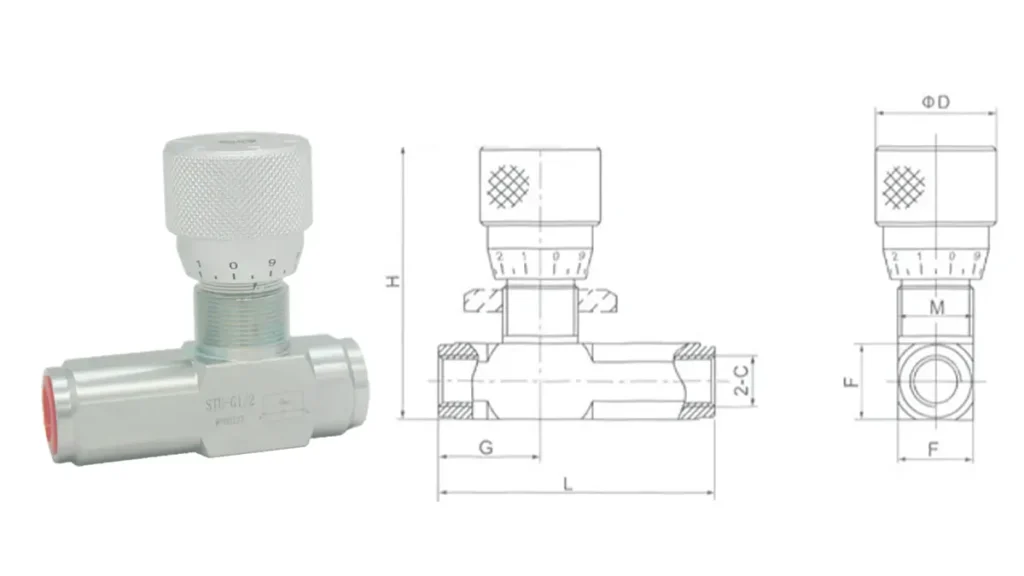
When considering what is throttle valve in hydraulic system, it’s important to know that this component is designed to control the flow rate and pressure of hydraulic fluid. The throttle valve allows you to adjust how much fluid moves through the system, which in turn helps regulate the system’s performance and safety. Many industries rely on throttle valves to enhance machine efficiency and speed. Here are some benefits highlighted by industry research:
| System Feature | Result |
|---|---|
| Electronic throttle control in excavators | Saves fuel and provides more precise operation |
| Sensors and actuators in throttle systems | Improves machine responsiveness and performance |
| Throttle-check valves for cylinder speed | Enables precise control of fluid flow across various industries |
So, if you’re wondering what is throttle valve in hydraulic system, it’s a key device that manages the movement and pressure of hydraulic fluid, ensuring optimal operation in any hydraulic application.
Key Takeaways
- Throttle valves help control how fast and strong fluid moves. They make sure machines work well.
- You can change a throttle valve to adjust fluid speed. This helps control how fast machines run.
- These valves keep things safe by controlling pressure. They let machines stop quickly if needed.
- There are different throttle valves, like unidirectional and bidirectional. Each type has its own job for moving fluid.
- Picking the right throttle valve depends on what your system needs. You should think about flow control and what the valve is made of.
- If you take care of throttle valves often, you can avoid problems. This also helps your hydraulic system last longer.
- Throttle valves can help save energy and money. They do this by making fluid flow better in machines.
- Knowing how throttle valves and flow control valves are different helps you choose the right one for your work.
What Is Throttle Valve in Hydraulic System
Throttle Valve Definition
You might ask, what is throttle valve in hydraulic system? This valve is a device that helps you control how much fluid moves in your hydraulic system. When you use a throttle valve, you can make the fluid move slower or faster. This lets you decide how quickly your machines work. Many people call throttle valves a kind of flow control valve. Sometimes, these names mean the same thing because both help you manage fluid flow in your system.
Throttle Valve Function
Let’s see what a throttle valve in hydraulic system does. The main job of a throttle valve is to control how much fluid moves and how much pressure there is. You use it to help your machines work smoothly and safely. Here is a simple table that shows what throttle valves do in hydraulic systems:
| Function | Description |
|---|---|
| Flow Rate Control | Controls how much and how fast fluid moves, so machines get the right amount. |
| Pressure Regulation | Keeps the pressure safe, so parts do not get damaged and everything works well. |
| System Performance Optimization | Helps save energy and keeps things balanced, which is important for automatic machines. |
| Emergency Control and Safety | Lets you stop things quickly and keeps people safe if pressure gets too high. |
| Fluid Distribution Management | Makes sure the right parts get enough fluid in big or complex systems. |
Throttle valves do more than just slow things down. They help keep everything working right and safe. If you want your hydraulic machines to last and work well, you need to use throttle valves the right way.
How Throttle Valves Work
How does a throttle valve work? When you turn or move the valve, you change the size of the opening inside. This is where the fluid goes through. If you make the opening smaller, less fluid can go through, and the flow slows down. If you make it bigger, more fluid can move, and the flow gets faster. This gives you a lot of control over your hydraulic system.
Throttle valves work by making a small space for the fluid to pass. This changes how fast the fluid moves and how much pressure is on the other side. You can use this to help your machines. For example, if you want something to move slower, you just adjust the throttle valve. The science behind this is called fluid dynamics. When fluid goes through a small space, it loses some pressure and makes heat. That is why you should check your system often and make sure it stays cool and safe.
In short, what is throttle valve in hydraulic system? It is your main tool for controlling how much fluid moves and how much pressure there is. You use it to keep your machines working the way you want. Throttle valves are an important part of flow control valves, and you will find them in almost every hydraulic system.
Hydraulic Throttle Valves and Flow Control Valves
Throttle Valve vs Flow Control Valve
You may think hydraulic throttle valves and flow control valves are the same. They both help control fluid flow in hydraulic systems, but they work differently. Let’s see how each one works and where you might use them.
Here’s a simple table to show the main differences:
| Feature | Flow Control Valve | Throttle Valve |
|---|---|---|
| Control Type | Automatic, precise regulation of flow rate | Manual, coarse regulation of flow rate |
| Adjustment Mechanism | Adjustable valve stem or disc | Hand lever or handwheel |
| Application Suitability | Pipelines, chemical processing, medical devices | Water supply systems, HVAC systems |
| Pressure Independence | Controls flow rate independent of pressure | Adjusts to control pressure independently of flow |
Flow control valves let you set the flow and leave it alone. They give very exact control over how much fluid moves. Throttle valves let you change the flow by hand. You turn a lever or wheel to make the opening bigger or smaller. This gives you less exact control, but it is easy and fast.
Key Differences
Let’s look at what makes these valves different. You use flow control valves when you need very exact control. These valves keep the flow steady, even if the pressure changes. This is good for jobs where things must stay the same, like in chemical plants or medical machines.
Hydraulic throttle valves are best when you want to change the flow by hand. You do not get as much accuracy, but you get a simple way to slow things down or speed them up. You might see throttle valves in water supply systems or HVAC setups, where you do not need super-fine adjustments.
Here’s what you should remember:
- Flow control valves are for precision and automation.
- Throttle valves are for quick, manual changes.
If you need steady fluid flow, use a flow control valve. If you want to turn a knob and change things quickly, use a throttle valve.
When to Use Each
You might ask, “When should I use a throttle valve instead of a flow control valve?” Here are some tips to help you choose:
- Pick throttle valves when you want to save money and do not need advanced control.
- Use them in small setups where you do not need exact calibration.
- Choose throttle valves for jobs that only need basic manual changes and no automation.
Flow control valves are best when you need very exact control over fluid flow. They work well in big hydraulic systems, chemical plants, or medical devices where safety and accuracy are very important.
Tip: If you want your hydraulic system to work well and safely, always pick the right valve for your needs. Think about how much control you want, how often you will change the flow, and how important accuracy is for your job.
Types of Flow Throttle Valves
There are many kinds of flow throttle valves you can use. Each type helps you control how fluid moves in a different way. Let’s look at the most common types and see what they do.
Unidirectional Throttle Valve
Unidirectional throttle valves control fluid flow in just one direction. You can slow down or speed up movement, but only one way. If you want a cylinder to move slower as it extends, you use this valve. When fluid goes the other way, it moves without being stopped. This setup is good for machines that need speed control in one direction.
- You can control how fast things move.
- You help protect your equipment from quick changes.
- You save energy by changing flow only when needed.
If you want simple speed control in one direction, unidirectional throttle valves are a good choice.
Bidirectional Throttle Valve
Bidirectional throttle valves let you control flow both ways. You can change fluid flow if your cylinder moves forward or backward. This valve helps you manage speed for both extending and pulling back. You often see these valves in machines that need smooth movement all the time.
- You get even control for both directions.
- You keep your system safe and steady.
- You make sure your machine works smoothly no matter which way it moves.
Bidirectional throttle valves are good for jobs where you need speed control both ways.
Other Types
Needle Throttle Valve
Needle throttle valves use a thin, pointed stem to control flow. You turn the stem to make the opening bigger or smaller. This gives you very fine control over how much fluid moves. You use these valves when you need to adjust flow slowly and carefully. Needle valves work well in jobs where you need to be exact, like in labs or small hydraulic circuits.
Plate Throttle Valve
Plate throttle valves use a flat plate to change the size of the opening. You slide the plate to let more or less fluid through. These valves are simple and quick to use. You often find them in systems where you need fast changes and easy care. Plate valves help you control flow without much work.
You can pick special throttle valves for unique jobs. Some valves are made for food processing. Others are built to last a long time for planes or green energy. Companies now make valves for special needs, so you can get what your job needs.
Here’s a table showing the latest trends in throttle valve design:
| Trend | Description |
|---|---|
| Improved Efficiency | New designs and materials help use less energy. |
| Smart Functionalities | Digital tools make valves easier to use. |
| Compact Designs | Smaller valves fit into tight spaces. |
| Enhanced Precision | Finer flow control gives you better results. |
| Durability and Longevity | Stronger materials make valves last longer and need less fixing. |
| Sustainability | Eco-friendly fluids and processes bring new ideas. |
Throttle valve technology keeps getting better. You get more ways to control flow, better efficiency, and valves that last longer. If you want your hydraulic system to work well, pick the right flow throttle valves for your needs.
Applications of Throttle Valves
Industrial Machinery
Throttle valves are used a lot in big machines. They help you control how oil and fluid move. You can change the speed, force, or where something is. Factories use throttle valves in presses and machines that shape metal. They are also in machines that make plastic parts and in textile machines. Some throttle valves are special and let you control things very carefully.
Here are some places you find throttle valves in factories:
- Presses
- Injection molding machines
- Metalworking equipment
- Textile machinery
Throttle valves help keep machines steady and save energy. You can set them up to change by themselves. This helps machines work better. Sometimes, they connect to electronic or air-powered parts. These are run by computers called PLCs. This way, you can change oil flow right away. It makes the machines safer and more dependable.
If you want your machines to last longer and work better, throttle valves are a good pick for flow control.
Mobile Equipment
Throttle valves are also in moving machines like tractors and diggers. They help you control oil flow and how fast parts move. For example, wheel loaders use them to lift and tilt buckets. Cranes use throttle valves to move loads smoothly.
Here is how throttle valves help in mobile machines:
- They let you control fluid flow for moving parts.
- You can change how fast things move to stay safe.
- Changing speeds helps you do tough jobs faster.
Throttle valves help parts start moving slowly. This stops sudden moves that could hurt people or break things. Even if you are new to these machines, throttle valves help you work safely.
Other Industries
Throttle valves are not just for factories or building sites. You see them in many other places. Cars use throttle valves in engines, brakes, and steering. HVAC systems use them to control oil and keep things cool or warm. Planes need throttle valves to control fluids in flight.
Here is a table with some other ways throttle valves are used:
| Industry | Application |
|---|---|
| Automotive | Engines, brakes, power steering |
| HVAC | Temperature and oil flow management |
| Aerospace | Fluid control in flight systems |
Throttle valves help you get the right oil flow in many jobs. They keep machines safe, comfortable, and working well.
Advantages and Limitations
Benefits of Throttle Valves
You might wonder why so many people choose throttle valves for hydraulic systems. These valves offer some real advantages that can make your machines work better and last longer. Here are some of the main benefits you get when you use a throttle valve:
- You can adjust the flow quickly and easily. This helps you match the speed of your machine to the job you need to do.
- Throttle valves give you better control, especially when you want to move things slowly or with extra care. This is important when you need smooth starts and stops.
- Valve-controlled systems often use less energy than pump-controlled systems. You can save power and lower your costs.
- If you use a hybrid system that combines both valve and pump control, you can boost energy efficiency by up to 20%. That means your machines run longer without wasting energy.
- Throttle valves help you keep your system safe. You can stop or slow down the movement of fluid in an emergency.
Here’s a quick look at how throttle valves can help you:
| Benefit | What It Means for You |
|---|---|
| Easy flow adjustment | Change speed or force on the fly |
| Better control | Smooth, steady machine movement |
| Energy savings | Lower power bills and less waste |
| Improved safety | Quick response in emergencies |
Tip: If you want a simple way to manage flow and keep your machines running smoothly, a throttle valve is a smart choice.
Common Limitations
Throttle valves do a lot of good, but they also have some limits you should know about. When you use a throttle valve, you create a pressure drop. This turns some of the hydraulic energy into heat. Too much heat can make the fluid get hot, which can hurt your system and shorten the life of your fluid.
Here are some things to watch out for:
- Throttle valves can cause up to 60% of the total energy loss in a hydraulic system. Most of this loss happens when the valve core moves.
- If you do not design your system well, you might waste energy. Some ways to fix this include using special servo valves or adding hydraulic accumulators to cut down on losses.
- Throttle valves do not work well in load-sensitive jobs. If the load changes, the speed of your actuator can change too. This makes it hard to keep things steady.
- When the system gets hot, you may need to stop and let it cool down. Hot fluid can damage seals and other parts.
You should always think about these limits before you pick a throttle valve. Sometimes, a flow control valve or another type of control might work better for your needs.
Note: If you want to save energy and keep your system cool, look for ways to reduce pressure loss and heat build-up.
Selection and Maintenance Guide
How to Choose a Throttle Valve
Choosing the right throttle valve can be hard. You want your machines to work well and last longer. Here are some things to think about before you pick:
- Flow control is important. You need to keep the flow steady and control how fast the fluid moves.
- Construction materials must match the fluid. If you use the wrong material, it can get damaged or worn out. Materials also change if the temperature changes.
- Actuation methods give you choices. Manual actuators let you adjust by hand. Automatic actuators are more accurate and easier to use.
- Connection compatibility matters. Make sure the valve fits your pipes.
Engineers check these things every time. People who buy valves ask questions like, “What kinds of throttle valves are there?” or “How does a throttle valve work with a check valve?” You might also ask about controllers, bypass valves, and why matching the fluid is important. These questions help you find the best valve for your system.
Tip: Picking the right throttle valve helps your system work better and last longer. You save money and stop downtime.
Installation Tips
You want your throttle valve to work well and last a long time. Good installation is very important. Put the valve where you can reach it easily. This makes it simple to adjust and take care of. Make sure there is enough straight pipe before and after the valve. This keeps the flow steady and stops turbulence.
Do not put the valve near bends or tight spots. If you do, the flow can get rough or cause cavitation. Cavitation happens when pressure drops and bubbles form. These bubbles can hurt your valve. To stop cavitation, keep back pressure in mind. You might need restrictions after the valve or special anti-cavitation parts.
When you change a throttle valve, flush the system first. This keeps dirt and other stuff out. Always match the new valve to the old one’s specs—flow, pressure, and port setup.
Note: Good installation keeps your system safe and helps your throttle valve last longer.
Maintenance and Troubleshooting
Taking care of your throttle valve means less downtime and fewer repairs. Here’s a table that shows the best ways to keep your valve working:
| Maintenance Practice | Purpose | Operation Method | Suitable Users |
|---|---|---|---|
| Regular Visual Inspections | Find problems early | Check every month for leaks, rust, or damage | Maintenance teams in factories or construction |
| Monitor Hydraulic Fluid Quality | Stop problems and wear | Test fluid every six months for thickness, water, and dirt. Change if needed | Operations with high-performance hydraulic systems |
| Appropriate Torque Settings | Stop leaks and bad fits | Use the right torque from the maker, with a special wrench | Technicians installing or fixing hydraulic systems |
| Functionality Tests | Make sure valves work under stress | Test during checks, pretend conditions, watch response and flow | Maintenance staff for big machines |
| Clean and Replace Filters | Keep fluid clean, make valve last longer | Check filters every month, change as needed by maker’s rules | Places using hydraulic machines often |
If you follow these steps, you find problems early. You keep your system working and avoid expensive repairs. Regular care stops early wear and helps you fix things before they get worse. Taking care of your valves helps your machines work better and costs less.
Callout: Good picking and care of throttle valves means your machines work better, last longer, and cost less to run.
Conclusion
Now you understand what a throttle valve does in a hydraulic system, how it controls fluid flow, and why proper valve selection is important for stable system performance.
By choosing the right hydraulic throttle valve, you can:
- Control fluid flow more accurately
- Improve machine performance and operating stability
- Protect hydraulic systems from unstable pressure or flow changes
- Match different working conditions, fluids, and installation requirements
As a hydraulic valve manufacturer, Chenyang Hydraulic supplies throttle valves, hydraulic valves, and high pressure ball valves for industrial and mobile hydraulic systems. We manufacture unidirectional throttle valves, bidirectional throttle valves, and customized hydraulic valve solutions according to customer requirements.
Our team can support you with valve selection, flow control requirements, material options, thread standards, and OEM customization. Whether you need standard throttle valves or custom hydraulic valves for your equipment, Chenyang Hydraulic can help you find a reliable solution for your hydraulic system.
FAQ
What does a throttle valve do in a hydraulic system?
You use a throttle valve to control how fast fluid moves. This helps you set the speed of your machine. It also helps keep pressure safe.
Can you adjust a throttle valve while the system runs?
Yes, you can. Most throttle valves let you turn a knob or handle. You can change the flow without stopping your machine.
How do you know if a throttle valve is failing?
Look for leaks, slow movement, or strange noises. If your machine acts different or loses power, check the valve first.
What is the difference between a throttle valve and a check valve?
A throttle valve controls flow speed. A check valve only lets fluid move one way. You use them for different jobs in your system.
Do throttle valves waste energy?
Throttle valves can cause some energy loss. They create heat when they slow fluid down. You can reduce this by picking the right valve size.
Where should you install a throttle valve?
Place the throttle valve where you can reach it easily. Keep it away from sharp bends or tight spots in the pipe. This helps it work better.
How often should you check or maintain a throttle valve?
Check your throttle valve every month. Clean it and look for damage. Regular care keeps your system safe and running well.