
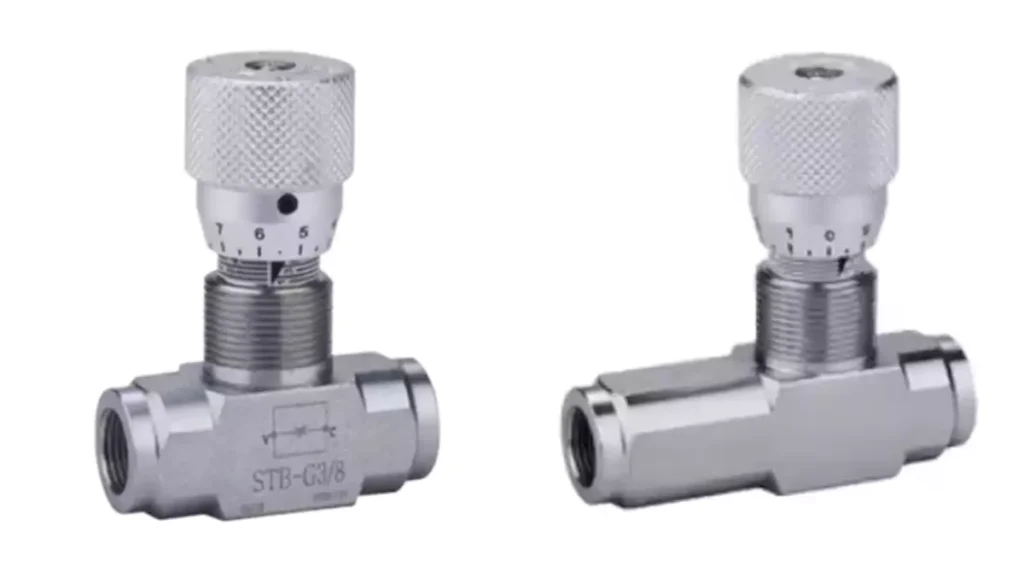
Hydraulic throttle valves help you control flow and pressure. They are very important for many machines and jobs. Choosing the right valve helps your equipment work better and last longer. There are different throttle valves, like globe, gate, and butterfly valves. Each type does a special job. Here is a quick look at some common valves and where you use them:
| Valve Type | Description | Primary Applications |
|---|---|---|
| Globe Valve | Controls flow and pressure; can stop flow completely. | Throttling commodities |
| Gate Valve | Blocks flow; not for control; can wear out if half open. | Gas, air, oil, water, or steam |
| Butterfly Valve | Can control flow; fits in small spaces; keeps water in. | Various industrial applications |
| Process Valves | Handles heat, chemicals, and slurry; better than ball valves. | Tight-seal processes |
| Diverter Valve | Sends flow to two places; made to last a long time. | Plumbing systems |
| Bulk Material Valve | Easy to clean; good for dusty places. | Silos, dry solids, dust collectors |
When you know the types of throttle valves, you can pick the right one for your needs and stop common problems.
Key Takeaways
- Hydraulic throttle valves help control how fluid moves and its pressure. This makes machines work better and last longer.
- There are different throttle valves like globe, gate, and butterfly. Each one has its own job and use.
- Globe valves let you control flow very well. They are good for systems that need small changes often.
- Ball valves are good for turning off flow fast. They are not good for small changes in flow. Use them when you need quick stops.
- Butterfly valves are small and work well. They fit in tight places and react fast in many jobs.
- Pick the right valve material to stop rust and leaks. This is important if you use strong chemicals.
- Check throttle valves often to stop leaks and keep them working well.
- Think about if you need manual or automatic valves. This depends on how much control and speed your system needs.
Overview of Throttle Valves
What Are Throttle Valves
A throttle valve is a simple tool in a hydraulic system. It helps control how much fluid moves through the pipes. You can change how fast or slow the fluid goes. This is done by making the opening bigger or smaller. If you turn a handle, you can let more or less fluid pass. Sometimes, a machine does this job for you.
| Term | Definition |
|---|---|
| Throttle Valve | A device that regulates fluid flow by creating a variable restriction in the flow path. |
| Function | Provides precise control over the rate of hydraulic fluid movement by adjusting the flow passage size. |
| Operation | Introduces a deliberate restriction that creates a pressure drop across the valve for flow control. |
When you use a throttle valve, you can make a machine part move faster or slower. You also control how strong the machine works. This helps you get the job done right.
How Throttle Valves Work
Throttle valves change the size of the opening for fluid. If the opening is small, less fluid can go through. If it is big, more fluid will pass. This lets you control the system easily.
Throttle valves are made to adjust the flow of fluids. This is very important in hydraulic systems. You can keep the flow steady and stop sudden jumps in pressure. This keeps your equipment safe from harm. When you set the valve the right way, your system works well and safely.
Tip: If your machine is too fast or too slow, check the throttle valve. A small change can help a lot.
Common Uses
Throttle valves are used in many places. Here are some examples:
- They help control how fast a hydraulic press moves.
- You can use them to change the speed of a conveyor belt.
- They are found in machines like excavators to move the arm.
- Farmers use them in tractors and harvesters for smooth work.
- They help car lifts go up and down safely at repair shops.
Throttle valves are also used in water plants, food factories, and even rides at amusement parks. If you need to control speed or force, you probably need a throttle valve.
Note: Choosing the right throttle valve can save you time and money later.
Types of Throttle Valves
When you look at the different types of throttle valves, you’ll see that each one works in its own way. Some give you precise control, while others are better for quick shut-off or saving space. Let’s break down three of the most common throttling valve types so you can pick the right one for your job.
Globe Throttle Valves
Globe throttle valves are one of the most popular throttling valve types. You’ll spot them by their round, globe-shaped bodies. These valves give you very precise control over how much fluid moves through your system. Here’s what makes them special:
- The valve has a movable disk and a fixed ring seat inside a round body.
- You control the flow by moving the disk up or down. The disk moves straight up and down, which lets you open or close the valve as much as you want.
- Globe throttle valves handle big pressure drops well. You can adjust them often without wearing them out.
- They work great when you need to change the flow a lot or keep things steady.
You’ll find globe throttle valves in places like:
- Steam systems
- Water cooling systems
- Control valve bypass systems
Tip: If you need to fine-tune the flow in your pipes, globe throttle valves are a smart choice. They help you avoid sudden changes and keep everything running smoothly.
Ball Throttle Valves
Ball throttle valves look simple, but they pack a punch. You control the flow with a ball that has a hole through the middle. When you turn the ball, you line up the hole with the pipe to let fluid pass, or you turn it to block the flow. Here’s a closer look at how these throttle valves work:
| Component | Description |
|---|---|
| Ball | A round sphere with a hole. Rotating it lets fluid flow or stops it. |
| Valve Body | Connects to your pipes. Made from strong materials like stainless steel. |
| Valve Seat | Seals against the ball to stop leaks. Often made from PTFE or rubber. |
| Actuator | Lets you turn the ball by hand, with electricity, or with air pressure. |
| Sealing Ring | Stops leaks. Made from rubber or polyurethane. |
| Other Parts | Includes bearings and a stuffing box to help the ball move smoothly. |
You can operate ball throttle valves in three ways:
- Turn a handle or wheel by hand.
- Use an electric motor for remote control.
- Use air pressure for fast opening and closing.
Here’s how you use a ball throttle valve:
- Rotate the ball so the hole lines up with the pipe. Fluid flows through.
- Turn the ball 90 degrees. The hole closes off the pipe, stopping the flow.
Ball throttle valves have some big advantages. They don’t need much maintenance, and they last a long time. You can install them quickly, and they seal tightly even with low force. But there are some limits. If you use the wrong fluid, particles can get trapped and jam the valve. The seats can also corrode if you use them for throttling all the time. That’s why most people use ball throttle valves for quick shut-off, not for steady flow control.
| Advantages of Ball Valves | Limitations of Ball Valves |
|---|---|
| No need for lubrication or much upkeep | Can jam if particles get trapped |
| Long lifespan and tough against damage | Seats may corrode if used for throttling |
| Easy to install and repair | Not the best for steady throttling |
| Tight sealing with little effort |
Note: Ball throttle valves work best when you need to open or close the flow quickly. If you want to control the flow slowly or precisely, try other types of throttle valves.
Butterfly Throttle Valves
Butterfly throttle valves are another popular choice when you want to save space and get quick results. These valves use a flat disc that spins inside the pipe. You turn the disc to control how much fluid gets through. Here’s what you need to know about butterfly throttle valves:
| Key Component/Function | Description |
|---|---|
| Operation | A disc rotates to change the flow. You can fine-tune the angle for control. |
| Compact Design | Fits in tight spaces but still lets a lot of fluid pass. |
| Pressure Handling | Handles pressures from 150 to 300 psi. |
| Flow Control | Gives you steady flow at small openings and quick changes at big openings. |
| Material Selection | Made from tough, corrosion-resistant materials. |
| Actuation Options | You can turn it by hand, or use electric or air-powered motors. |
Butterfly throttle valves shine in industries where you need fast response and low maintenance. You’ll see them in:
| Industry | Why Use Them? |
|---|---|
| Water Treatment | Quick to open and close, easy to keep clean. |
| Chemical Processing | Good for precise control and safe with many chemicals. |
| Food and Beverage | Keeps fluids pure, easy to clean, and made from safe materials. |
People like butterfly throttle valves because they are compact, have a low-pressure drop, and give you precise control. They also respond quickly and don’t need much upkeep. Plus, they’re usually more affordable than other throttling valves.
Tip: If you need a valve that fits in a small spot and still gives you good control, butterfly throttle valves are a great pick.
When you compare the types of throttle valves, think about what you need most—precise control, quick shut-off, or saving space. Each of these throttling valve types has its own strengths, so you can always find the right throttle for your system.
Gate Throttle Valves
You might see gate throttle valves in big pipelines or water systems. These valves use a flat or wedge-shaped gate that moves up and down to control the flow. When you lift the gate, fluid flows freely. When you lower it, the flow slows down or stops.
Here’s how gate throttle valves work for fluid control:
- They regulate flow by creating a variable restriction in the path.
- You can change the cross-sectional area to let more or less fluid pass.
- If you close the valve a little, you increase resistance and slow the flow.
- If you open it wide, you reduce resistance and let more fluid through.
Gate throttle valves are not the best for precise flow control. They work best when you need to open or close a line fully. You’ll find them in water supply systems, oil pipelines, and fire protection lines. If you need a valve that can handle high pressure and large volumes, this is a solid choice.
Tip: Don’t use gate throttle valves for fine adjustments. They can wear out if you keep them half open.
Needle Throttle Valves
Needle throttle valves give you amazing control over small flows. You’ll notice a long, pointed plunger inside. This plunger fits into a tiny seat, and you turn a handle to move it up or down.
Let’s break down how needle throttle valves work:
- The plunger restricts flow by moving inside the valve seat.
- There’s a small orifice that interrupts the flow path.
- The more you seat the plunger, the less fluid gets through.
- You can make tiny adjustments to the flow rate.
These valves are perfect for jobs where you need to control flow with high accuracy. You’ll see them in labs, chemical plants, and pharmaceutical factories. They help you cut off fluid or adjust the flow with precision. Needle throttle valves are essential for low-flow systems and keep your process safe and efficient.
| Where You’ll Find Them | Why Use Them? |
|---|---|
| Laboratories | Fine-tune gas or liquid flow |
| Chemical industry | Handle delicate reactions |
| Pharmaceuticals | Ensure safety and accuracy |
Note: If you need to throttle flow in a delicate system, needle throttle valves are your best friend.
Pinch Throttle Valves
Pinch throttle valves look different from other types. They use a flexible sleeve inside the valve body. When you want to control the flow, you squeeze the sleeve with a bar or actuator.
Here’s what happens inside a pinch throttle valve:
- The sleeve relaxes when open, so fluid flows with almost no pressure loss.
- When you want to throttle, the actuator compresses the sleeve and slows the flow.
- If you close it all the way, the sleeve walls touch and seal the line.
The only part that touches the fluid is the elastomer sleeve. This makes pinch throttle valves perfect for handling abrasive, corrosive, or dirty fluids. You’ll find them in mining, cement, wastewater, and food processing. They work well with slurries, powders, and liquids that contain solids.
| Main Parts | What They Do |
|---|---|
| Housing/Body | Supports the sleeve |
| Elastomeric Sleeve | Contacts the fluid, flexible |
| Actuation Mechanism | Squeezes the sleeve to throttle |
Tip: Pinch throttle valves shine when you need to handle tough fluids that would damage other valves.
Pinch throttle valves are easy to maintain and last a long time. If you work with slurries or chemicals, you’ll love how reliable these valves are.
Diaphragm Throttle Valves
If you want a valve that keeps things clean, diaphragm throttle valves are a good choice. You turn a handwheel to control these valves. This lets you make small changes to the flow. The design helps you change the flow smoothly. You can keep things steady and stop sudden jumps.
Diaphragm throttle valves look smooth inside. There are no cracks or corners for dirt to hide. This helps stop bacteria and dirt from sticking. That’s why people use them where hygiene is important, like food factories and labs. The valves use special materials approved by the FDA. These materials stop bacteria from growing and keep fluids pure. You can clean them easily with Cleaning In Place or Steam In Place.
Here’s what makes diaphragm throttle valves special:
- You get fine control with the handwheel.
- The flow changes in a steady way.
- The inside stays clean, so microbes don’t grow.
- They work with thick fluids and liquids with bits in them.
- You can clean and sterilize them without taking them apart.
You’ll see these valves in places that need very clean fluids. They work well in biopharmaceuticals, food processing, and water treatment. If you need to control flow in a sanitary system, diaphragm throttle valves are a great pick.
But there are some limits you should know. Diaphragm throttle valves do not work well with high pressure or heat. Look at this table to see the main problems:
| Limitation Type | Description |
|---|---|
| Pressure Limit | Usually limited to about 16 bar (1.6 MPa) |
| Temperature Limit | Works below 150 °C; higher heat can damage the materials |
| Size Limit | Rarely bigger than DN 200 (8 inches) |
| Mechanical Strain | Diaphragms wear out over time, especially with rapid cycling or pulsing pressures |
| Failure Risk | Sudden leaks can happen if the diaphragm ruptures |
| Alternative Solutions | Engineers often choose other throttling valves for high-pressure jobs |
If you need to control flow in a high-pressure system, try a different valve. Diaphragm throttle valves work best in clean and low-pressure jobs.
Tip: Always check the pressure and temperature before picking a diaphragm throttle valve. This helps you avoid trouble and keeps your system safe.
Expansion Throttle Valves
Expansion throttle valves are important in cooling systems. You will find them in fridges and air conditioners. These valves control how much refrigerant moves and how much pressure drops.
When you use an expansion throttle valve, the liquid refrigerant goes through the valve and expands. This makes the refrigerant cool down and turn into a mist. The mist goes into the evaporator and turns into gas, making things cold. The valve changes the flow when the temperature changes. This way, you always get the right amount of cooling. It stops the refrigerant from turning back into a liquid, which could hurt your system.
In HVAC systems, the expansion valve acts as a throttle. It controls the refrigerant going into the evaporator. It changes the flow when the cooling needs change. This keeps the pressure and temperature just right.
There are a few types of expansion throttle valves. Each type has good and bad points. Look at this table for a quick comparison:
| Device | Advantages | Disadvantages |
|---|---|---|
| Electronic Expansion Valve | High cooling capacity, keeps superheat constant | Expensive, more moving parts |
| Capillary Tube | Simple, cheap, needs little torque | Low cooling capacity, can’t adjust to changes, clogs easily |
Expansion throttle valves let you change the flow a lot. You get high precision and fast temperature changes. These valves work well when the cooling needs change a lot, like with variable frequency compressors. You get better energy savings and more cooling.
Here’s why you might pick expansion throttle valves:
- You can change the flow over a big range.
- They give you precise cooling control.
- They work well when cooling needs change.
- They help compressors save energy.
- You get fast temperature changes.
You also get these benefits:
- More cooling power
- Constant evaporator superheat
- Better energy efficiency in different seasons
If you need to control refrigerant flow in a cooling system, expansion throttle valves are a smart choice. They help your system run smoothly and save energy.
Note: Expansion throttle valves are great for fridges and air conditioners. You get steady cooling and use less energy.
Throttling Valve Types and Applications
Precise Flow Control
When you need precise control of flow, not every valve will do the job. Some valves let you make tiny changes, so you can get the exact amount of fluid you want. This is important in many application highlights, like chemical mixing or feedwater systems in power plants. You want repeatable flow control, so every time you set the valve, you get the same result.
Here’s a quick look at the best valves for this:
| Valve Type | Key Features |
|---|---|
| Globe Valve | High precision for fine flow regulation. Great for throttling and resisting flow. |
| Needle Valve | Sharp pointed disc for very precise control. Perfect for low flow rates. |
| Lift Type Plug Valve | Works for both full flow and throttling. Sealed design keeps leaks away. |
You’ll often see globe valves and needle valves in feedwater lines, lab setups, and dosing pumps. These valves help you control fluid flow with accuracy. If you need to adjust the flow in small steps, these are your go-to choices.
Tip: For any application where you need to measure and adjust flow exactly, pick a globe or needle valve. You’ll get steady results every time.
Space-Saving Installations
Sometimes, you don’t have much room for big valves or pipes. In these cases, you need valves that fit tight spaces but still do the job. Space-saving throttle valves are a smart pick for compact machines, mobile equipment, or even deep space probes.
Check out these features that make some valves perfect for small spaces:
| Feature | Description |
|---|---|
| Compact Design | Fits into tight spots, great for small machines or crowded panels. |
| High Power Density | Packs a lot of control into a small size. |
| Ease of Integration | Simple to install and set up, saving you time and space. |
You’ll find these valves in feedwater systems for boilers, mobile hydraulic units, and even in spacecraft. Miniaturization helps engineers reduce weight and size without losing function. This is a big win for any application where space matters.
- Miniaturized throttle valves are common in modern feedwater control systems.
- Engineers use them in deep space probes to keep payloads light.
- You can install them easily in tight spots, making pipeline control simple.
Handling Slurries and Viscous Fluids
If you work with thick fluids, slurries, or liquids with solids, you need a special kind of valve. Not all valves can handle these tough jobs. Some will clog or wear out fast. For these applications, you want a valve that can throttle flow without getting stuck.
Here are the top choices for these situations:
- Butterfly valves: These work well for throttling slurries. They open partway to let thick fluids move. They seal tight but can wear down if the fluid is rough.
- Pinch valves: These are lightweight and easy to fix. The pinch tube design lets you control fluid flow, even with dense or gritty liquids.
- Ball valves: These have smooth paths and strong seals. They’re great for viscous fluids and slurries. You get good flow and long-lasting performance.
You’ll see these valves in feedwater lines for mining, wastewater plants, and food factories. They keep your system running, even when the fluid is thick or dirty.
Note: For any application highlights where you need to move slurries or sticky fluids, try a pinch, butterfly, or ball valve. You’ll spend less time on repairs and more time working.
Corrosive or Solid-Containing Media
Many industries use fluids that are hard to handle. Some fluids are acidic or have lots of solids in them. You need a throttle valve that can deal with these problems. Diaphragm valves are good for these jobs. They use a flexible diaphragm to control the flow. This keeps the fluid away from metal parts and stops corrosion.
You can use diaphragm valves for:
- Moving corrosive fluids like acids or chemicals.
- Handling slurries with fibers and even radioactive fluids.
- Keeping fluids clean by stopping contamination.
These valves work well in pipes with solids floating in the fluid. They seal tightly and have a simple design. Maintenance is easy, and fluid resistance stays low. You do not have to worry about leaks or fixing them often.
If you work in chemical plants, wastewater treatment, or mining, you see these valves a lot. They help you move harsh fluids safely. You can trust them to last longer and keep your system clean.
Tip: If you need to move acidic fluids or fluids with solids, use a diaphragm valve. You save time and avoid expensive breakdowns.
Refrigeration and Air Conditioning
You want your cooling system to work well. Throttle valves are important in fridges and air conditioners. They control how much refrigerant flows and how fast it cools. When refrigerant goes through the valve, the pressure drops fast. This makes the refrigerant cold. The valve sprays the refrigerant into the evaporator through a fine screen.
Here’s what you should check when picking a throttle valve for cooling systems:
| Parameter | Description |
|---|---|
| Pressure drop required | How much pressure loss is needed for the system. |
| Range of flow control required | The flow rates the valve must handle. |
| Flow medium | The type of fluid (gas or liquid) being used. |
| Design temperature and pressure | The limits for temperature and pressure. |
Throttle valves keep liquid refrigerant out of the compressor. If liquid gets in, it can cause damage. You use an accumulator on the low-pressure side to filter and store the refrigerant. This keeps your system safe and working well.
You see throttle valves in fridges, freezers, and air conditioners. They help you get steady cooling and protect your equipment. You can change the flow to match what you need. This saves energy and keeps your space comfortable.
Note: Always check the pressure and temperature limits before you install a throttle valve in your cooling system. You keep your equipment safe and avoid expensive repairs.
Selecting Throttle Valves
Material Compatibility
Picking the right material for your throttle valve is very important. If you choose the wrong one, your valve could rust, leak, or break. You want your valve to last a long time, especially if you use strong chemicals.
First, look at your process and ask yourself some questions. What chemicals will go through the valve? How hot or cold will the fluid be? What is the highest pressure the valve will face?
Always pick a valve that can handle the hardest conditions in your system. Stainless steel is good for strong chemicals and high pressure. Carbon steel is cheaper but does not stop rust as well. Polymers like PTFE or PVC are good for tough chemicals, but they cannot handle high heat or pressure.
Here is a quick guide to help you match materials to your needs:
| Material Type | Properties | Applications |
|---|---|---|
| Stainless Steel | Stops rust and is strong | Strong chemicals, high-pressure jobs |
| Carbon Steel | Strong and cheap, but rusts easily | Jobs without strong chemicals |
| Alloy Steels | Tough, strong, and stops rust | Hard jobs |
| Polymers (PTFE, PVC) | Does not react, stops rust, but weak to heat and pressure | Tough chemicals |
| Ceramics | Very hard and lasts long, but breaks easily | Rough fluids |
| Rubber Linings | Flexible, stops some chemicals | Rough or strong chemicals |
| Fluoropolymer Coatings | Does not react, lowers friction and chemical damage | Protects inside parts from strong chemicals |
Tip: Always check a chemical chart before picking a valve material. This helps you avoid expensive mistakes.
Manual vs. Automatic Operation
You can use your throttle valve in two ways: manual or automatic. Each way has its own good points.
Manual valves let you control the flow yourself. You turn a handle or wheel to change the flow. These valves cost less and are simple. But you need to check them often, and someone could bump the handle and change the flow.
Automatic valves use motors or actuators to change the flow for you. They work fast and keep the flow steady, even if your system changes. Automatic valves cost more at first, but they save you time and work.
Here is a side-by-side look:
| Feature | Automatic Throttle Valves | Manual Throttle Valves |
|---|---|---|
| Operational Efficiency | Very precise and efficient | Direct control, but can change easily |
| Cost | Costs more at first | Costs less and is simple |
| User Control | Needs less effort, adapts to changes | Needs more effort and skill |
Note: If you want steady flow and less work, pick automatic valves. If you want a simple and cheap option, manual valves are good.
Maintenance Needs
Keeping your throttle valves in good shape means less downtime and fewer surprises. You should check your valves often for leaks around seals and connections. Watch for changes in how your system works. If you hear strange noises or feel shaking, something may be wrong inside the valve.
Here are some easy maintenance tips:
- Look for leaks when you check your valves.
- Listen for weird sounds or shaking.
- Test your system to find early signs of wear.
- If you use sensitive fluids, take samples often to catch clogs early.
- Clean your valves as needed and follow the right steps when changing parts.
Tip: Regular checks help your valves last longer and save you money on repairs.
Pressure and Flow Requirements
When you pick a throttle valve, you need to think about pressure and flow. These two things decide how well your valve will work in your system. If you get them wrong, you might face leaks, slow machines, or even damage.
Let’s break down what you should look for:
- Working Pressure Range: Every valve has a pressure range it can handle. If your system runs at low pressure, you might see internal leaks. This happens a lot when the pressure drops to around 0.3–0.4 MPa. The sealing surfaces inside the valve may not fit perfectly, so fluid sneaks through. You might notice your hydraulic cylinder moves slowly or creeps when it should stay still. That can mess up your whole process.
- Maximum Pressure: Always check the highest pressure your system can reach. If you push a valve past its limit, you risk blowing seals or breaking parts. That means more repairs and downtime.
- Flow Rate: You need to know how much fluid will move through the valve. If the valve is too small, it will choke the flow. Your machine will run slow. If it’s too big, you lose control and waste energy.
- Flow Direction: Most throttle valves work best in one direction. If you install the valve backward, you might get poor performance. Some valves even act differently if you flip the flow. This is important if your pipes have mirrored layouts or if you change the direction often.
- Pressure Drop: When fluid passes through a throttle valve, the pressure drops. You want a valve that gives you the right amount of pressure drop for your job. Too much drop means wasted energy. Too little means you can’t control the flow well.
Tip: Always match the valve’s pressure and flow specs to your system. If you’re not sure, ask your supplier for help. They can help you avoid leaks and keep your machines running smoothly.
Here’s a quick checklist to help you:
- Check your system’s normal and max pressure.
- Measure the flow rate you need.
- Make sure the valve fits the flow direction.
- Look for signs of leaks at low pressure.
- Pick a valve with the right pressure drop.
If you follow these steps, you’ll get a throttle valve that works well and lasts longer. You’ll also avoid common problems like slow cylinders, wasted energy, or sudden breakdowns. Remember, the right valve keeps your system safe and efficient.
Manual vs. Automatic Throttling Valves
When to Use Manual Valves
Manual throttle valves give you hands-on control. You turn a handle or wheel to set the flow. This works well when you do not need to change the flow often. If your system runs at a steady speed, a manual valve is a smart pick. You can use these valves in small machines, test setups, or backup systems.
Here are some good times to use manual valves:
- You want a simple setup with low cost.
- You do not need to adjust the flow all the time.
- Your system is easy to reach and safe to operate.
- You want to teach new users how valves work.
Tip: Manual valves are great for learning and for jobs where you want to see and feel the control.
When to Use Automatic Valves
Automatic throttle valves do the work for you. They use motors, air, or electricity to move the valve. You can set them to change the flow at the right time. This is helpful when your system changes a lot or when you need fast action.
You should pick automatic valves if:
- You want to control flow from far away.
- Your system needs to react quickly to changes.
- You want to keep the flow steady all day.
- Your process is too dangerous or hard to reach.
You will see automatic valves in big factories, water plants, and places where safety matters. They help you save time and keep things running without stopping.
Note: Automatic valves are perfect for busy systems that need quick and steady control.
Pros and Cons
Let’s compare manual and automatic throttle valves. This table shows what you get with each type:
| Feature | Manual Valves | Automatic Valves |
|---|---|---|
| Cost | Low | Higher |
| Control | Hands-on | Remote or programmed |
| Speed | Slower | Fast |
| Maintenance | Simple | Needs more care |
| Best For | Small, simple jobs | Large, changing systems |
| Power Needed | None | Yes (electric, air, or motor) |
Manual valves give you direct control and are easy to fix. You do not need power or fancy tools. Automatic valves cost more but save you time and work. They keep your system steady and safe, even when you are not there.
Remember: Pick the valve that fits your job. If you want simple and cheap, go manual. If you need speed and steady control, go automatic.
Conclusion
You’ve seen that different throttle valve types are designed for different control needs. Some valves are better for precise flow adjustment, while others are used for simple shut-off, compact installation, or special working media. The right choice depends on your pressure, flow rate, medium, connection type, and working conditions.
As a throttle valve manufacturer, Chenyang Hydraulic can help you choose a suitable valve for your hydraulic system or industrial application. We can also provide custom throttle valves based on your required size, thread type, pressure rating, material, drawings, or samples. Send us your system details, and our team will help you find or manufacture the right solution for your project.
FAQ
What is the main job of a hydraulic throttle valve?
You use a hydraulic throttle valve to control how fast fluid moves in your system. It helps you set the speed and force of machines. You can make things go faster or slower with just a small adjustment.
How do I know which throttle valve to pick?
Think about your fluid type, pressure, and how much control you need. Check if you want manual or automatic operation. If you feel unsure, ask a valve expert for advice.
Can I use a ball valve for throttling?
You can use a ball valve for quick shut-off. It does not give you fine control. If you want smooth and steady flow changes, try a globe or needle valve instead.
Why do some valves wear out faster?
Valves wear out fast if you use the wrong type for your fluid or pressure. Dirty or rough fluids can damage seals. Always pick a valve that matches your job.
What is the difference between manual and automatic throttle valves?
Manual valves need you to turn a handle. Automatic valves use motors or air to move. Automatic valves work best when you want steady flow without checking all the time.
How often should I check my throttle valves?
Check your valves every few months. Look for leaks, strange noises, or slow movement. Regular checks help you catch problems early and keep your system safe.
Can throttle valves handle thick or dirty fluids?
Yes, some can! Pinch and diaphragm valves work well with thick or dirty fluids. They do not clog easily. Always check the valve type before using it with tough fluids.