
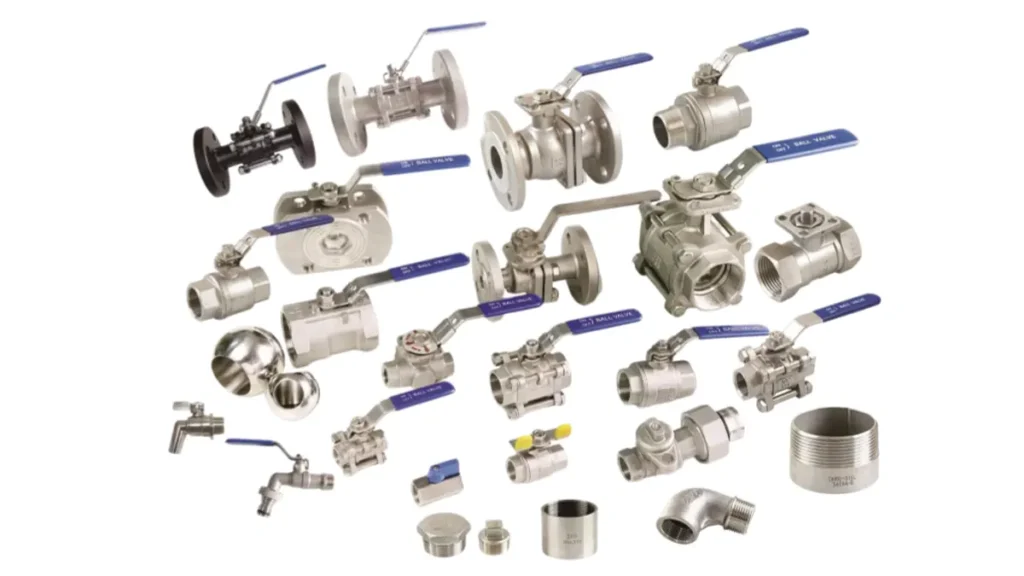
You use ball valves to help your hydraulic system work well. They let you stop or control the flow, so your equipment works when you need it. There are many kinds of ball valves. Each one fits different needs for pressure, flow, and how you want to use them. Look at this table to see some common types and where you can use them:
| Type | Key Features | Applicable Industries |
|---|---|---|
| Straight-Through Ball Valve | Linear flow path; minimal resistance | Gas transportation, water treatment, industrial fluid transport |
| Three-Way Ball Valve | T-type or L-type paths; flexible flow switching capability | Chemical industry, food processing, industrial fluid handling |
| Angle Ball Valve | Angled flow path; suitable for compact piping layouts | Special industrial equipment, laboratory setups |
| Soft-Seated Ball Valve | Seals made from materials like PTFE; excellent sealing performance | Food and pharmaceutical industries, light industry, low-temperature applications |
| Metal-Seated Ball Valve | Metal seals; withstands high temperatures, high pressures, and abrasive media | Chemical industry, power generation, high-temperature fluid transport |
| Manual Ball Valves | Operated by a handle or wheel; suited for small systems | Residential and low traffic commercial buildings |
| Pneumatic Ball Valves | Operated by compressed air; fast acting and reliable | Manufacturing plants, high cycle applications |
| Electric Ball Valves | Have electrical actuators; accurate and computerized | Oil refining, large HVAC systems, chemical processing applications |
| Hydraulic Ball Valves | Operated by hydraulic actuators; ideal for high pressure applications | Hydraulic power stations, machinery |
Picking the right ball valve helps your system work its best and stay safe. Each type in the Types of Ball Valves group gives your setup something special.
Key Takeaways
- Ball valves help control how fluids move in hydraulic systems. They let you turn the flow off quickly and work well every time.
- There are different ball valves, like two-way and three-way. Each type does a special job for different uses.
- Picking the right ball valve makes your system work better. It also stops leaks and pressure problems.
- The material of the valve is important. Choose stainless steel or brass, depending on what your system needs.
- Taking care of ball valves often stops leaks. It also helps them last longer and work well.
- Think about how much pressure and heat your system has before picking a valve. Make sure the valve fits what your system needs.
- Use full-port ball valves if you need lots of fluid to move fast. Pick reduced-port valves if you want to save money.
- You can add electric or pneumatic actuators to ball valves. This makes it easier to control and improves how your system works.
What Is a Ball Valve?
You might wonder what makes a ball valve so useful in hydraulic systems. Let’s break it down. A ball valve is a device that helps you control the flow of fluid. You can open or close it quickly, and it works well even under high pressure. The secret lies in its simple design and reliable operation.
Structure and Components
Ball valves have several important parts. Each one plays a role in making sure the valve works smoothly and keeps your system safe.
Valve Body
The valve body is the main shell. It holds all the other parts together. You get strength and durability from this part. The body protects the inside from harsh conditions and high pressure. If you need a valve that lasts, pay attention to the material and build of the valve body.
Ball and Stem
Inside the valve body, you find the ball and stem. The ball is a round piece with a hole through the center. When you turn the stem, the ball rotates. If the hole lines up with the pipe, fluid flows through. If you turn the ball so the solid side faces the pipe, the flow stops. This simple movement gives you fast control.
Tip: You only need to turn the ball 90 degrees to open or close the valve. That’s why ball valves are so easy to use!
Seats and Seals
Seats and seals sit around the ball. They make sure no fluid leaks out when the valve is closed. The seat is usually made from soft or hard materials, depending on what you need. If you want a tight seal, look for valves with high-quality seats and seals. These parts keep your hydraulic system safe and efficient.
Handle or Actuator
You use a handle or actuator to move the stem and ball. Handles let you control the valve by hand. Actuators can be electric, pneumatic, or hydraulic. They help you automate the process. If your system needs quick or remote control, actuators make life easier.
Here’s a quick look at the main parts and what they do:
| Component | Function |
|---|---|
| Valve Body | Houses all internal components and provides structural integrity and durability against pressure. |
| Ball | Controls fluid flow; its rotation allows for on/off functionality. |
| Valve Seat | Ensures a tight seal around the ball to prevent leaks when the valve is closed. |
| Valve Stem | Connects the ball to the actuator, enabling the opening and closing of the valve. |
| Actuator/Handle | Allows manual or automated control of the valve’s operation. |
You can see how each part works together. The ball valve gives you reliable shut-off and flow control. You get a simple, strong, and easy-to-use solution for your hydraulic system.
Why Ball Valve Type Matters
Hydraulic System Roles
Not all valves do the same thing. Each valve has a special job in your hydraulic system. Ball valves are important because they shut off flow fast and control it well. You can pick different ball valves for different needs. Some are good for high pressure. Others help you control flow better.
Here’s a simple table showing how valve types compare:
| Valve Type | Key Features | Best Use Case |
|---|---|---|
| Floating Ball Valves | Tight seal under pressure, suitable for lower-pressure applications | General use in low-pressure systems |
| Trunnion-Mounted Ball Valves | Supports high pressure, stable operation, mitigates leakage | High-pressure applications |
| V-Port Ball Valves | Excellent flow regulation, precise control | Metering applications |
| Full-Port Ball Valves | Oversized ball, minimal pressure drop | Efficiency-focused systems |
| Reduced-Port Ball Valves | Smaller ball, reduced flow, cost-effective | Situations where flow restriction is acceptable |
Each valve type fits a different job. If you need to handle high pressure, use a trunnion-mounted ball valve. For careful flow control, a V-port ball valve is best. Picking the right valve helps your system work well.
Shut-Off and Flow Control
You want your hydraulic system to start and stop fluid quickly. Ball valves let you do this with a quick turn. They seal tightly, so leaks are rare. This makes ball valves great for shut-off jobs. Some ball valves, like V-port, help you control flow better.
Tip: If you need both shut-off and flow control, choose ball valves that fit your system’s pressure and flow needs.
Ball valves work faster than many other valves. You can trust them to keep your system safe and working well.
Impact on Performance
The ball valve you pick changes how your hydraulic system works. You want steady pressure, good flow, and high efficiency. If you pick the wrong valve, you might get leaks, slow response, or waste energy.
Look at this table to see how ball valve choice affects performance:
| Performance Metric | Description |
|---|---|
| Pressure Handling | Ball valves are made for high-pressure jobs. They keep pressure steady. |
| Flow Regulation | They give quick on/off control. They work well for high flow rates. They may not control flow as finely as diaphragm valves. |
| Efficiency | Their strong build helps your system work better, especially in tough places. |
You can make your hydraulic system better by picking the right ball valve. Think about pressure, flow, and efficiency before you choose. The ball valves you pick will affect how your system works every day.
Common Types of Ball Valves
When you look at hydraulic systems, you will see several common types of ball valves. Each type has a special job. Picking the right one helps your system run smoothly and safely. Let’s break down the most important types of ball valves you will find.
Two-Way Ball Valves
You will find two-way ball valves in almost every hydraulic system. These valves have a simple design. They use a spherical ball with a hole through the center. When you turn the handle, the ball rotates. This lets fluid flow or stops it completely. You get quick shutoff and easy flow control with this type.
Here’s a table to help you understand the main features of two-way ball valves:
| Feature | Description |
|---|---|
| Design | Strong body with a floating ball design that rotates to open or close the flow. |
| Function | Gives you full shutoff or on/off flow control in your hydraulic circuit. |
| Configuration | Comes in many setups, but two-way is the most basic for line shutoff. |
| Operation | Simple to use, low pressure drop, and great for fast cycling in high-pressure systems. |
| Application | Works as an isolation valve for maintenance or emergency shutoff. |
| Comparison | Unlike three-way or four-way valves, this type focuses on basic shutoff, not advanced routing. |
You will often use two-way ball valves when you need to stop flow quickly. They are perfect for emergency shutoff or when you want to isolate a part of your system for repairs. You can trust them for reliability and speed.
Three-Way and Four-Way Ball Valves
Sometimes, you need more than just on and off. Three-way and four-way ball valves give you more options for flow control. These valves have extra ports, so you can direct fluid in different ways.
Let’s compare these types in a simple table:
| Valve Type | Number of Ports | Primary Function | Complexity Level |
|---|---|---|---|
| Two-Way | 2 | On-off control of fluid flow | Simple |
| Three-Way | 3 | Directs flow to two outlets or mixes flows | Moderate |
| Four-Way | 4 | Manages complex flow paths | High |
You can use three-way ball valves to send fluid to one of two places or to mix two flows together. Four-way ball valves help you manage even more complex flow paths. You will see these valves in systems that need flexible routing, like mixing, diverting, or switching between different circuits.
- Two-way valves give you basic on-off control.
- Three-way valves let you switch flow between two outlets or combine flows.
- Four-way valves handle complex flow control, making them great for advanced hydraulic circuits.
If you need to change the direction of flow or mix fluids, these types of valves are your best choice.
Tip: Three-way and four-way ball valves make your system more flexible. You can control where the fluid goes without adding extra pipes or fittings.
Full-Port Ball Valves
Full-port ball valves stand out when you want the best flow capacity. The hole in the ball matches the size of the pipe. This means fluid moves through with almost no restriction. You get minimal pressure drop and less turbulence.
Here’s a quick comparison between full-port and reduced-port ball valves:
| Feature | Full Port Ball Valve | Reduced Port Ball Valve |
|---|---|---|
| Flow Capacity | Higher Cv value | Lower Cv value |
| Pressure Drop | Minimal | Higher |
| Turbulence | Reduced | Slight |
| Suitability for High Flow | Ideal for high-flow systems | Acceptable for moderate flow |
| Energy Efficiency | Essential for minimizing loss | Less efficient |
You should pick full-port ball valves if your system needs high flow rates or if you want to keep energy loss low. These valves work well in places where you cannot afford a drop in pressure. They are a top choice for main lines and pump outlets.
Note: Full-port ball valves help you get the most out of your hydraulic system. You keep your flow strong and your energy costs down.
You have now seen three of the most common types of ball valves. Each one gives you different options for flow control and system design. In the next sections, you will learn about reduced-port, high-pressure, and other specialty valves.
Reduced-Port Ball Valves
You might see reduced-port ball valves called “standard port” valves. These valves have a smaller opening inside the ball than the pipe size. This design means less flow can pass through compared to a full-port valve. You get a cost-effective option, but you trade off some flow capacity.
Let’s look at how flow changes with different valve sizes:
| Nominal Diameter (DN) | Full Port KV Value | Reduced Port KV Value (3/4 Port) | Reduced Port KV Value (1/2 Port) | KV Reduction (FP vs. 3/4 Port) |
|---|---|---|---|---|
| 50 (2”) | 80 | 55 | 35 | 31% |
| 100 (4”) | 280 | 190 | 130 | 32% |
| 150 (6”) | 620 | 420 | 290 | 32% |
| 200 (8”) | 1100 | 750 | 520 | 32% |
You can see that reduced-port valves lower the flow rate by about 30%. This means you get more pressure loss. For example, if you run a flow of 300 m³/h, a 3/4-port valve might lose 0.050 MPa, but a 1/2-port valve could lose 0.106 MPa. That’s a big jump! You may need a bigger pump to keep your flow strong, which can raise your energy costs.
Tip: Use reduced-port ball valves when you want to save money and your system can handle a little less flow. If you need every bit of flow, stick with full-port valves.
You often see reduced-port valves in places where flow control is not critical. They work well for general shut-off jobs and where space or cost matters more than maximum flow.
High Pressure Ball Valves
When you need to handle tough jobs, high pressure ball valves step up. These valves are built for strength. You find them in hydraulic systems, high-pressure gas lines, and other demanding spots.
Here’s what you get with high pressure ball valves:
- Pressure resistance from 1,000 to 6,000 PSI is common.
- Some special designs can handle up to 10,000 PSI.
- You get strong construction and precision seals for safety.
- These valves are perfect for critical and industrial applications.
You can trust high pressure ball valves to keep your system safe when the pressure climbs. They use tough materials and careful engineering. If you work with high-pressure fluids, you need these valves in your setup.
Note: Always check the pressure rating before you pick a valve. Using the wrong type can lead to leaks or even failure.
Trunnion Mounted Ball Valves
Trunnion mounted ball valves use a special design to handle high pressure and large sizes. You see a trunnion mounted ball design when the ball is anchored at both ends. This keeps the ball stable, even when the pressure gets high.
The trunnion mounting mechanism gives you:
- Mechanical anchoring that stops the ball from shifting.
- Reliable sealing, even in high-pressure hydraulic circuits.
- Less wear on the seats, so your valve lasts longer.
This design is important for safety and performance. In high-pressure systems, you want the ball to stay in place. The trunnion mounted ball design gives you that peace of mind.
You find these valves in big pipelines, oil and gas plants, and heavy-duty hydraulic circuits. They work well when you need a strong, stable valve that can handle tough jobs.
Callout: If you need a valve for high pressure or large diameter pipes, look for trunnion mounted ball valves. They give you the stability and reliability you need.
You now know how reduced-port, high pressure, and trunnion mounted ball valves fit into different hydraulic systems. Each type brings something special to the table. You can pick the right one for your needs by thinking about flow, pressure, and how much control you want.
Manual Ball Valves
You see manual ball valves in many places. You turn a handle or lever to open or close the valve. This lets you control the flow in your hydraulic system. You can feel how the valve works. You know right away if it is open or closed.
Manual ball valves use a floating ball design. The ball sits inside the valve body. It moves when you turn the handle. This makes the valve easy to use and very reliable. You do not need power or special tools. You just turn the handle, and the valve works.
Here are some reasons to pick manual ball valves:
- You want a cheap solution.
- You need to shut off flow fast in an emergency.
- You work where power is not always there.
- You want things to stay simple.
Manual ball valves are good for small hydraulic circuits and water lines. They also work in home plumbing. You get strong shutoff and basic flow control without trouble.
Tip: Make sure the handle is easy to reach. If you need to turn the valve fast, nothing should block your way.
Electric Ball Valves
Electric ball valves use an electric actuator to move the ball. You do not turn a handle. You press a button or send a signal. The valve opens or closes by itself. This is great for places you cannot reach. It is also good if you want to control things from a control room.
Electric ball valves give you many benefits:
- Predictive maintenance helps you stop problems before they happen.
- You can find wear or failure early and save money on repairs.
- Quick shutoff makes your system safer, especially in dangerous places.
- You can control flow very well. This helps you follow safety rules and improve quality.
- You can use these valves from far away in big systems.
There are some limits too:
- If you skip maintenance, the valve can jam.
- The wrong fluid can cause rust.
You see electric ball valves in oil refineries, chemical plants, and big HVAC systems. You get steady flow control and can automate your process.
Note: Electric ball valves let you control your system from far away. You can make changes fast and keep your team safe.
Pneumatic Ball Valves
Pneumatic ball valves use compressed air to move the actuator. You do not need electricity or to turn anything by hand. Air pressure opens or closes the valve quickly. These valves are fast and very reliable. They are great for jobs that need speed.
You find pneumatic ball valves in factories and assembly lines. They are used where speed is important. You can set them up with sensors and timers. This means you can automate your whole system and keep it running well.
Here is a table to compare electric and pneumatic ball valves:
| Feature | Electric Ball Valves | Pneumatic Ball Valves |
|---|---|---|
| Power Source | Electricity | Compressed Air |
| Speed | Moderate | Very Fast |
| Best Use | Remote or precise control | High-speed, repetitive tasks |
| Maintenance | Needs regular checks | Needs clean, dry air |
You get the best results when you pick the right valve. Pneumatic ball valves give you speed and reliability. Electric ball valves give you control and automation. Manual ball valves keep things simple.
Callout: Think about what your system needs. Do you want speed, control, or simplicity? The right valve helps your hydraulic system work better every day.
Custom and Specialty Ball Valves
Sometimes, your hydraulic system needs more than regular valves. You may have to deal with very hot or cold temperatures. Sometimes, you need to handle high pressure or keep things super clean. This is when you use custom and specialty ball valves. These valves are made for special jobs that normal valves cannot do.
You find custom and specialty valves where safety or cleanliness is very important. Here are some real-life examples: Aerospace engineers use custom valves in jet engines. These valves can handle lots of heat and pressure. Deep-sea explorers use special valves in underwater robots. These valves do not break under strong water pressure or salt. Semiconductor factories need very clean valves. These valves stop tiny bits of dirt from getting into microchips. Nuclear plants use leak-proof valves. These valves keep dangerous fluids safe, even when it is hot or there is radiation. Food and drug companies use sanitary valves. These valves follow health rules and keep food and medicine clean.
There are also specialty valves for hard jobs: Trunnion-mounted ball valves give extra support in high-pressure places. Cryogenic ball valves work with very cold liquids like liquefied natural gas. Three-way ball valves help you change flow paths in tricky marine systems. Actuated ball valves let you control flow from far away or by machine.
Tip: If your project is special, ask a valve expert for help. You can get a custom valve that fits your system just right.
Custom and specialty ball valves show how many choices you have. You can always find a ball valve for your hardest jobs.
Materials and Construction
When you think about what ball valves are made of, you see how each part matters. The right materials help your hydraulic system last longer and work better.
Valve Body Materials
You can pick from different materials for the valve body. Each one has good and bad points. Here is a table to help you compare:
| Material | Characteristics | Applications | Advantages | Limitations |
|---|---|---|---|---|
| Stainless Steel | Fights rust, heat, and damage from chemicals | Oil, gas, chemical plants, food, medicine | Lasts long, needs little care, works well | Costs more than other choices |
| Brass | Does not rust much, easy to shape, not expensive | Plumbing, heating, low-pressure jobs | Cheap, simple to use, great for water | Not good for strong chemicals or high heat |
| Bronze | Handles rust, especially in salty places | Seawater, HVAC, fire safety | Strong and works well in the sea | Costs more than brass, best for medium pressure |
| Carbon Steel | Strong and tough for many jobs | Cheaper valves, pressure under 3,000 PSI | Saves money for some uses | Needs a coating if used with harsh fluids |
Stainless steel is best for hard jobs. Brass and bronze are good for easier jobs. Carbon steel is cheaper for lower pressure.
Seat and Seal Materials
Seats and seals help your valve work well. If you pick the right ones, you get fewer leaks. Here is what you should know:
- PTFE and PEEK are common. They seal tight and stop leaks.
- Smooth seats help stop leaks and last longer.
- Energized seals keep working even when pressure changes.
- If you turn the valve too hard, you can scratch the ball. Scratches can make leaks.
- High pressure can hurt O-rings. Broken seals can make your system fail.
Tip: Always check what seats and seals are made of before you buy. The right ones keep your system safe.
Fluid Compatibility
Your ball valve must work with the fluid in your system. Some things help you decide if the materials are right:
| Factor | Description |
|---|---|
| Fluid Type | Make sure the materials match the fluid’s chemicals. |
| Temperature Range | Pick materials that can handle your system’s heat or cold. |
| Pressure Requirements | Choose materials that won’t bend or break under pressure. |
| Corrosion Resistance | In harsh places, use stainless steel, bronze, or PTFE. |
| Cost and Budget | Find a balance between price and performance. |
| Compliance | Make sure materials follow the rules for your industry. |
If you use the wrong materials, your valve can rust, leak, or break. Always match the valve to your fluid and system.
Note: Picking the right materials for your ball valves helps you avoid repairs and keeps your hydraulic system working well.
Selecting the Right Ball Valves
Pressure and Temperature Ratings
When you start selecting the right ball valves, you need to think about how much pressure and heat your system will face. Every valve has a pressure rating. If you use a valve that cannot handle your system’s pressure, you risk leaks or even damage. Most hydraulic ball valves can handle pressures from 1,000 to 6,000 PSI. Some special valves go up to 10,000 PSI.
Here’s a quick table to help you see which valve fits your job:
| Pressure Classification | PSI Range | Application Type |
|---|---|---|
| Low-Pressure Ball Valves | Below 500 psi | General utility applications |
| Medium-Pressure Ball Valves | 500–1000 psi | Commercial and moderate industrial uses |
| High-Pressure Ball Valves | Above 1000 psi | Industrial and critical applications |
Temperature matters too. As the fluid gets hotter, the valve’s pressure rating can drop. For example, a valve rated for 1,500 psi at room temperature might only handle 1,200 psi when things heat up. Always check both the pressure and temperature ratings before you choose. This helps you avoid problems and keeps your system safe.
Tip: If your system faces big changes in temperature, double-check the valve’s specs. The right choice now saves you from trouble later.
Flow Direction and Port Configuration
You also need to look at how the valve controls the flow. The port configuration decides where the fluid goes. Two-way valves let fluid move in or out—simple and direct. Three-way and four-way valves give you more options.
- T-port valves can send flow to more than one outlet at the same time or block one path. This gives you flexibility in complex systems.
- L-port valves let you switch between two different flow paths. You get precise control when you need to send fluid in two directions.
If you want to mix, divert, or switch flows, pick the right port configuration. This makes your hydraulic system work the way you want.
Size and Connection Type
Size is one of the key features to consider. The valve size should match your pipe size. If you pick a valve that is too small, you get less flow and more pressure loss. If it is too big, you waste money and space. Always check the valve’s flow rating and compare it to your system’s needs.
Connection type matters too. You can choose from threaded, flanged, or welded connections. Threaded valves are easy to install and remove. Flanged connections give you a strong seal for bigger pipes. Welded valves work best when you want a leak-proof joint.
Note: Always use the right size and connection type for your system. This helps your valves last longer and keeps your hydraulic system running smoothly. If you need extra safety, consider adding a pressure relief valve to protect against spikes.
Operation Method
When you pick a ball valve, think about how you want to use it. The way you operate the valve changes how fast you can control flow. It also changes how hard it is to use. Here’s a table that shows the main ways to operate ball valves and what they do for your system:
| Operation Method | Impact on System Performance |
|---|---|
| Manual Actuation | Slower to react, best for jobs with low pressure. |
| Pneumatic Actuation | Fast action, good for medium pressure, but needs air. |
| Electric Actuation | Very accurate, great for machines, but sometimes slower. |
| Hydraulic Actuation | Fastest control, best for high-pressure systems. |
Manual valves are easy to use. You just turn the handle to open or close them. Pneumatic and electric valves let you control things from far away. These can make your system work faster. Hydraulic actuation is the quickest and works best for high pressure. Always pick the operation method that fits your system.
Installation Environment
Where you put your valve is very important. You want your valve to last and work well. Here are some things to think about:
- Abrasion resistance helps if your fluid has bits that can wear out seals.
- Temperature range matters. Your valve must handle hot or cold places.
- Fluid compatibility keeps the valve from breaking down.
- Dirt or chemicals in the air can hurt seals and make the valve wear out faster.
If you choose the wrong valve for your space, it might leak or break early. Always check what your valve will face every day before you decide.
Tip: Try to put your valve in a clean, cool place. This helps it last longer than if it’s in a hot or dirty spot.
Common Selection Mistakes
People often make the same mistakes when picking ball valves. These mistakes can cost you time and money:
- They don’t check what their system really needs. This can make the system work badly or even break.
- They forget to do regular maintenance. Worn parts and leaks can happen without warning.
- They ignore the environment. Rust or damage can happen fast if you don’t pay attention.
- They put the valve in the wrong way. This can cause leaks and other trouble.
If you plan ahead and check your choices, you can avoid these problems. Good planning helps your hydraulic system work better and last longer.
Note: Always look at your system’s needs and where the valve will go before you buy. This helps you pick the right valve and avoid problems later.
Conclusion
You want your hydraulic system to stay safe, stable, and easy to maintain. Choosing the right ball valve helps control flow, prevent leakage, and protect your equipment during operation.
Before selecting a valve, check your system’s working pressure, temperature, fluid type, valve size, connection type, material, and seal compatibility. The right valve should match your hydraulic oil circuit, installation space, and long-term working conditions. Regular inspection and maintenance can also help extend valve service life and reduce unexpected downtime.
As a hydraulic ball valve manufacturer, Chenyang Hydraulic can help you choose or customize suitable ball valves for your system. We can support different pressure ratings, sizes, thread types, materials, sealing options, and custom designs based on drawings or samples. If you need a standard or special hydraulic ball valve, send us your system details and our team will help you find the right solution.
FAQ
What is the main job of a ball valve?
You use a ball valve to start or stop the flow of fluid in a pipe. It works fast and gives you a tight seal.
How do I know which ball valve to pick?
Check your system’s pressure, temperature, and fluid type. Match the valve’s size and material to your needs. If you’re not sure, ask an expert.
Can I use ball valves for both water and oil?
Yes, you can use ball valves for water, oil, and many other fluids. Just make sure the materials fit your fluid.
How often should I check my ball valves?
You should check your valves every few months. Look for leaks, rust, or hard-to-turn handles. Regular checks help you avoid big problems.
What’s the difference between full-port and reduced-port ball valves?
A full-port valve lets more fluid through with less pressure drop. A reduced-port valve has a smaller opening, so it slows flow a bit.
Do ball valves need special tools for installation?
Most ball valves only need basic tools like wrenches. Always follow the instructions from the manufacturer for the best results.
Can I automate a ball valve?
Yes! You can add electric or pneumatic actuators to automate ball valves. This lets you control flow from far away or with a button.