Hydraulic Valves for Marine Equipment
Material-conscious ball, shut-off, check and flow-control valve solutions for deck machinery, winches, steering support systems, port equipment and shipboard hydraulic power units.
Hydraulic Valve Selection Around Corrosion Exposure
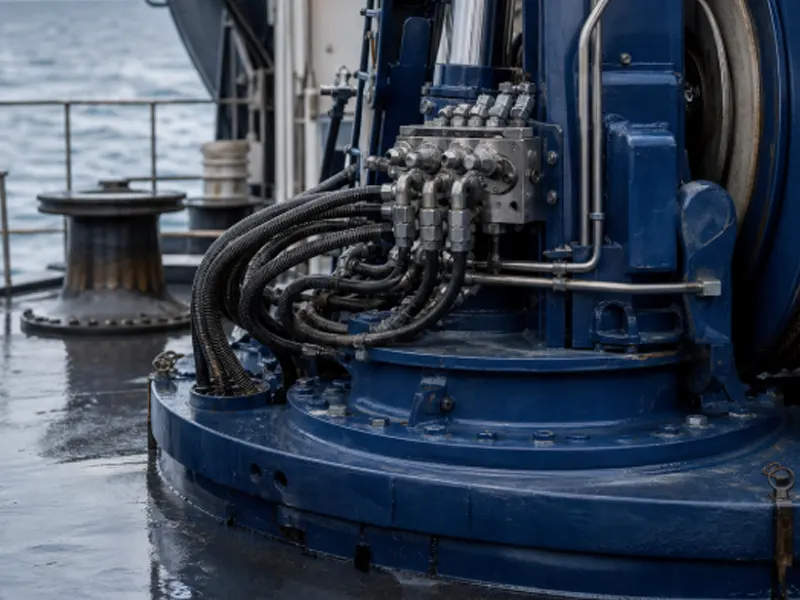
Marine hydraulic equipment operates in high humidity, salt-laden air and difficult service locations. Material, surface protection, seals and installation details must be evaluated alongside pressure and flow.
Chenyang can supply carbon-steel and stainless-steel hydraulic valve options for hydraulic oil systems used on marine and port equipment. Suitability must be confirmed from the actual fluid, exposure and project requirements.
Stainless steel can improve corrosion resistance but grade, pressure and fluid compatibility must be confirmed.
Protected carbon steel may be considered where exposure and maintenance allow it.
Pneumatic actuators support remote shut-off when suitable air control is available.
Flanged and plate-mounted options can support project-specific installation layouts.
Marine certification should never be assumed from material or application wording alone.
Challenges in Marine Hydraulic Systems
Airborne salt and condensation can accelerate external corrosion and connection deterioration.
Body, ball, stem, fasteners, seals and adjacent piping should be reviewed as a complete system.
Winches, steering and deck equipment may operate through repeated cycles and changing loads.
Shipboard and deck equipment often leaves limited space for handles, actuators and servicing.
Connections and mounting should support movement, shock and equipment vibration.
Accessible isolation and suitable materials help manage difficult service locations.
FAQs
What hydraulic valves are used in marine equipment?
Marine equipment may use ball valves, shut-off valves, check valves, throttle valves, actuated valves and other circuit-specific components.
Which valve material is suitable for a marine environment?
Stainless steel is often considered for improved corrosion resistance, while protected carbon steel may suit less exposed locations. The correct choice depends on pressure, fluid, atmosphere and maintenance.
Is stainless steel completely resistant to seawater corrosion?
No. Stainless grade, chloride concentration, temperature, crevices and galvanic contact all affect corrosion. Material suitability must be evaluated for the exact exposure.
Can carbon steel valves be used on marine equipment?
They may be suitable in protected hydraulic-oil systems with an appropriate coating and maintenance plan. They should not be assumed suitable for direct seawater contact.
Can marine hydraulic valves be remotely operated?
Pneumatic-actuated ball valves can support remote shut-off when compressed air, actuator sizing and control requirements are confirmed.
Are Chenyang valves marine certified?
Certification is product- and project-specific. Do not assume classification approval. Tell us the required DNV, ABS, Lloyd’s or other documentation before quotation so feasibility can be reviewed.
What information is required for selection?
Send installation area, exposure, valve function, pressure, flow, fluid, temperature, material, connection, mounting, certification needs, quantity and drawing.
Contact Us
Talk to our engineering team for product selection, technical support, and customized hydraulic valve solutions.
Need Valves for Marine Equipment?
Describe the installation area, salt exposure, hydraulic fluid, pressure, flow, material, connection and documentation requirements.