
Choosing the right flanged ball valve is not only about checking the valve size. Many buyers look at DN or nominal size first, but that is only one part of the picture.
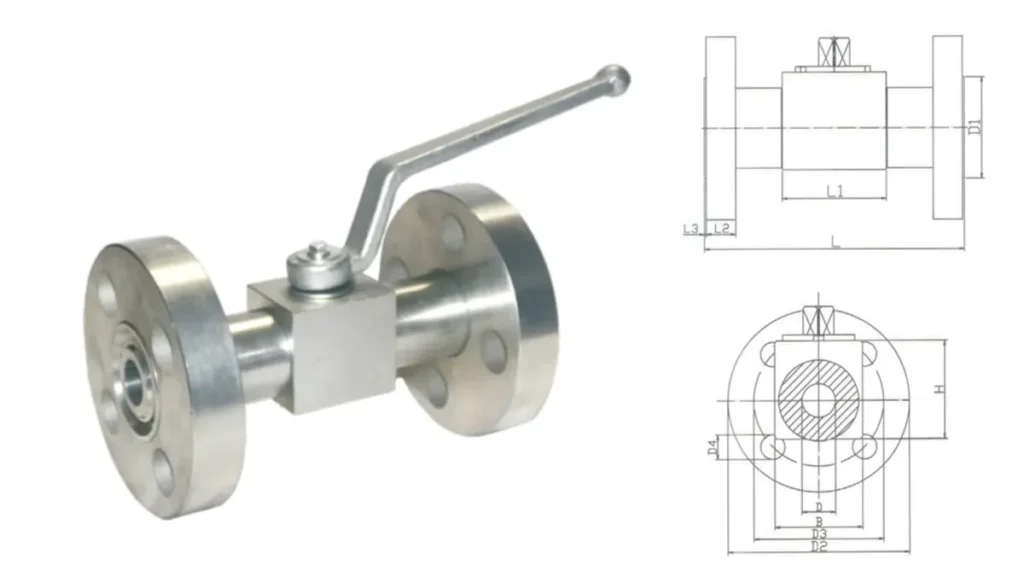
For a flanged ball valve, you also need to check the flange diameter, bolt hole size, bolt circle, face-to-face length, valve height, handle clearance, material, seal type, and pressure rating. If one dimension does not match your system, the valve may not install correctly, or it may cause leakage, vibration, or extra maintenance problems later.
Key Takeaways
- Flanged ball valve dimensions include more than DN or nominal size.
- You should check flange size, bolt hole size, valve length, and handle clearance before ordering.
- Pressure rating can affect the valve body size, flange design, and installation requirements.
- For high-pressure hydraulic systems, always confirm the dimension drawing with the manufacturer.
- If you need a non-standard size, a flanged ball valve manufacturer can help with custom dimensions.
What Do Flanged Ball Valve Dimensions Mean?
Flanged ball valve dimensions describe the full physical size and connection details of the valve. These dimensions help you know whether the valve can fit your pipeline, hydraulic system, equipment frame, or installation space.
Many people think valve size only means the inner port size or DN. But in real industrial use, the outside dimensions are just as important. A valve may have the correct DN, but if the flange holes, body length, or handle space do not match your system, it still cannot be installed properly.
Here are the main dimensions you should understand.
Nominal Diameter / DN
DN, or nominal diameter, is the basic size of the valve connection. It helps match the valve with the pipe, tube, or hydraulic line.
For example, a DN16 flanged ball valve is smaller than a DN50 flanged ball valve. But DN alone does not tell you everything. You still need to check the pressure rating, flange dimensions, bolt holes, and body length.
In high-pressure hydraulic systems, two valves with the same DN may have different body dimensions if their pressure ratings or flange designs are different.
Face-to-Face Length
Face-to-face length is the distance between the two flange connection faces. This is one of the most important installation dimensions.
If the valve body is too long, it may not fit into the original installation space. If it is too short, the piping or hydraulic line may need to be adjusted.
Before replacing or ordering a flanged ball valve, always check the face-to-face length from the drawing or product dimension table.
Flange Diameter
Flange diameter is the outside diameter of the flange connection. It affects how the valve connects to the system and how much space the valve needs around the connection area.
The flange diameter must match the connected flange or mounting surface. If the flange size is different, the valve may not align correctly.
Bolt Hole and Bolt Circle
Bolt hole dimensions are very important for flanged valves. You need to check:
- bolt hole diameter
- number of bolt holes
- bolt circle diameter
- bolt spacing
- bolt size
Even a small difference in bolt hole position can make installation impossible. This is why buyers should never choose a flanged ball valve only by DN.
Overall Height and Handle Clearance
Overall height includes the valve body and handle area. Handle clearance means the space needed to open and close the valve.
This is easy to ignore, but it matters a lot in compact equipment. If the handle cannot turn fully, the valve cannot operate correctly. For machines, test benches, hydraulic power units, or tight installation areas, always check the height and handle direction before ordering.
Common Flanged Ball Valve Dimensions Buyers Should Check
Before buying a flanged ball valve, it is useful to prepare a dimension checklist. This helps the manufacturer confirm the right model and reduces mistakes during installation.
| Dimension | Why It Matters |
|---|---|
| DN / Nominal Size | Helps match the valve with the pipe, tube, or hydraulic line |
| Face-to-Face Length | Confirms whether the valve can fit the installation space |
| Flange Diameter | Must match the connected flange or mounting surface |
| Bolt Hole Size | Must match the required bolt size |
| Bolt Circle Diameter | Ensures correct flange alignment |
| Valve Body Width | Helps check space around the valve body |
| Overall Height | Important for compact systems and equipment layouts |
| Handle Clearance | Ensures the handle can open and close smoothly |
| Pressure Rating | Must match the system working pressure |
| Material and Seal Type | Must match the fluid, temperature, and working environment |
A good way to avoid mistakes is to send the valve drawing, old valve sample, or system connection details before placing an order. This is especially useful for high-pressure hydraulic systems or non-standard equipment.
KHBF Flanged Ball Valve Size Range
For high-pressure hydraulic systems, Chenyang Hydraulic supplies KHBF flanged ball valves for reliable shut-off and flow control. These valves are designed for hydraulic oil circuits, industrial equipment, machinery, and other demanding fluid control applications.
The KHBF flanged ball valve series can support different size and pressure requirements. The available range may vary by model, material, and working condition, but the general product range includes:
| Item | Range / Options |
|---|---|
| Product Type | KHBF Flanged Ball Valve |
| Application | High-pressure hydraulic systems and industrial fluid control |
| Nominal Size | DN16 to DN50 |
| Pressure Range | 10 bar to 315 bar |
| Body Material | Carbon steel or stainless steel |
| Seal Options | POM, PTFE, or other suitable materials |
| Operation | Manual handle |
| Custom Options | Size, material, seal, pressure rating, flange dimensions, drawings, or samples |
This range gives buyers a practical starting point. However, the final choice should always be based on your working pressure, connection size, installation space, and actual system drawing.
Flanged Ball Valve Dimension Chart
A flanged ball valve dimension chart helps buyers quickly compare different valve sizes. It usually includes DN, pressure rating, valve length, flange diameter, bolt hole size, and overall height.
The exact chart may look different depending on the manufacturer, valve series, and pressure rating. For high-pressure hydraulic flanged ball valves, you should pay close attention to both the connection dimensions and the valve body dimensions.
Here is a simple example of the key items normally included in a flanged ball valve dimension chart:
| Dimension Item | What It Means | Why You Should Check It |
|---|---|---|
| Model | Valve model or series number | Helps identify the correct product |
| Pressure | Rated working pressure | Must match your system pressure |
| DN | Nominal diameter | Matches the hydraulic line or connection size |
| D | Main outside diameter or related body dimension | Helps confirm body size |
| L | Overall valve length | Affects installation space |
| L1 / L2 | Additional body or connection length | Useful for checking layout and assembly |
| D1 / D2 | Flange or connection diameter | Must match the connected part |
| D3 / D4 | Bolt circle or related flange dimensions | Important for bolt alignment |
| H | Overall height | Helps check vertical installation space |
| B | Handle or body width | Helps confirm side clearance |
When you look at a flanged ball valve size chart, do not only compare DN. A DN25 valve from one pressure series may not have the same outside dimensions as a DN25 valve from another pressure series.
For example, a higher-pressure valve may need a stronger body, thicker flange area, or different bolt arrangement. This is why it is always better to check the full dimension drawing before confirming the order.
How Pressure Rating Affects Flanged Ball Valve Dimensions
Pressure rating is one of the most important factors when choosing a flanged ball valve. A valve used in a low-pressure system and a valve used in a high-pressure hydraulic system may look similar, but their internal design and body strength can be very different.
In many cases, higher pressure requires:
- stronger valve body design
- thicker or more robust connection areas
- suitable sealing materials
- more accurate machining
- stronger flange connection
- better pressure resistance testing
This means that pressure rating may affect the final valve dimensions. You should not choose a valve only by size or appearance.
For example, if your system requires 315 bar working pressure, you should not use a valve that only matches the DN but does not meet the pressure requirement. The valve may fit physically, but it may not be safe or reliable during operation.
A better approach is to confirm these details together:
- DN or nominal size
- working pressure
- maximum pressure
- flange dimensions
- bolt hole dimensions
- material
- seal type
- installation space
This helps ensure the valve is not only the right size, but also strong enough for your system.
How to Choose the Right Flanged Ball Valve Size
Choosing the right flanged ball valve size is not difficult if you check the right information step by step. The most important thing is not to rely on only one dimension. You need to look at the valve size, pressure rating, flange connection, installation space, material, and sealing requirements together.
Here are the key points to check before ordering.
Confirm the Working Pressure
Start with the working pressure of your system. This is one of the first things a manufacturer will ask.
You should know:
- normal working pressure
- maximum pressure
- pressure fluctuation
- whether the system has pressure shock
For hydraulic systems, pressure can change quickly during operation. So the selected flanged ball valve should not only match the normal pressure, but also handle the possible maximum pressure safely.
If you are not sure about the pressure rating, do not choose a valve only by size. A valve with the correct DN but the wrong pressure rating may create safety risks.
Check the Nominal Diameter
The nominal diameter, or DN, should match your hydraulic line or system connection. This helps keep the flow path suitable for your equipment.
However, bigger is not always better. If the valve is too small, it may restrict flow and cause pressure drop. If the valve is too large, it may increase cost, weight, and installation space.
A good choice should match:
- pipe or tube size
- required flow rate
- pressure rating
- system layout
- available installation space
Match the Flange Connection
For flanged ball valves, the flange connection must match your system. This includes flange size, bolt hole diameter, bolt circle, and bolt quantity.
If these details do not match, the valve cannot be installed correctly. Even if the DN is correct, the wrong flange pattern can cause serious installation problems.
Before ordering, check the valve drawing and compare it with your equipment or existing valve.
Check the Installation Length
Installation length is very important when replacing an old valve. If the new valve has a different face-to-face length, your pipeline or hydraulic line may not line up correctly.
Before replacement, it is better to measure the old valve or send photos and drawings to the manufacturer. This helps confirm whether the new valve can fit the original position.
Review Handle Clearance
Handle clearance is often ignored, but it is very important in compact equipment.
You need enough space to turn the handle fully. If the valve is installed close to a machine frame, cylinder, pipe, or another component, the handle may be blocked.
Before ordering, check:
- valve height
- handle length
- handle rotation direction
- surrounding space
- installation position
For special installation conditions, a custom handle design may be needed.
Choose the Right Material and Seals
Flanged ball valve dimensions are important, but material and seals are also part of proper selection.
Carbon steel is often used for general high-pressure hydraulic systems. Stainless steel may be better for humid, corrosive, outdoor, or cleaner working environments.
Seal material should match the working medium, pressure, and temperature. For hydraulic oil systems, common seal options may include POM, PTFE, or other suitable materials depending on the valve structure and application.
Common Mistakes When Checking Flanged Ball Valve Dimensions
Many purchasing problems happen because buyers only check one or two dimensions. For flanged ball valves, this is not enough.
Here are some common mistakes to avoid.
Only Checking DN
DN is important, but it does not show the full valve size. Two valves with the same DN may have different flange sizes, body lengths, pressure ratings, and handle dimensions.
Always check the full dimension chart before ordering.
Ignoring Pressure Rating
A valve may fit your system physically, but it still may not be safe if the pressure rating is too low.
For high-pressure hydraulic systems, pressure rating should be confirmed before size selection.
Not Checking Bolt Hole Dimensions
Bolt hole dimensions must match the system flange. If the bolt circle or hole size is wrong, the valve cannot be mounted correctly.
This is one of the most common problems when replacing flanged valves.
Mixing Different Flange Standards
Different flange standards may look similar, but the dimensions can be different. The bolt pattern, flange thickness, sealing face, and connection size may not match.
Before buying, confirm the flange standard or send the drawing to the manufacturer.
Ignoring Handle Space
A valve can fit between two flanges but still be hard to operate if there is not enough handle clearance.
This is especially important for hydraulic power units, test benches, compact machines, and equipment with limited space.
Ordering Without Drawings
Catalog tables are useful, but drawings are more accurate. If the project has strict installation requirements, always confirm the drawing before placing an order.
When Do You Need Custom Flanged Ball Valve Dimensions?
Standard flanged ball valves can meet many common applications. But in some systems, standard sizes may not be enough.
You may need custom flanged ball valve dimensions when your system has:
- non-standard flange connection
- special DN size
- limited installation space
- special pressure rating
- stainless steel material requirement
- special handle direction
- different seal material requirement
- replacement need for an old or discontinued valve
- drawings or samples that must be matched
As a flanged ball valve manufacturer, Chenyang Hydraulic can help with custom valve solutions based on your pressure rating, DN size, flange dimensions, material, seal type, installation space, drawings, or samples.
Custom manufacturing can help reduce installation problems and make the valve fit your system more accurately.
Conclusion
Flanged ball valve dimensions are more than just DN or valve size. To choose the right valve, you need to check pressure rating, flange size, bolt hole dimensions, face-to-face length, material, seal type, overall height, and handle clearance.
For high-pressure hydraulic systems, this is especially important. A valve that looks similar may not have the same pressure rating, flange pattern, or installation size. Checking the full dimension chart and manufacturer drawing can help avoid leakage, installation problems, and equipment downtime.
As a flanged ball valve manufacturer, Chenyang Hydraulic can help you choose or customize the right valve based on your working pressure, DN size, flange dimensions, material, seal requirements, drawings, or samples. If you are not sure which size fits your system, send us your system details, and our team can help you find a suitable solution.
FAQ
What dimensions should I check before buying a flanged ball valve?
You should check DN, pressure rating, face-to-face length, flange diameter, bolt hole size, bolt circle diameter, overall height, handle clearance, material, and seal type.
Is DN the same as the full valve size?
No. DN only shows the nominal diameter. It does not show the full valve body size, flange dimensions, bolt hole layout, or handle clearance.
Why do flanged ball valve dimensions change with pressure rating?
Higher pressure may require a stronger valve body, different flange design, thicker connection area, or different sealing structure. That is why two valves with the same DN may have different dimensions.
How do I know if a flanged ball valve fits my system?
The best way is to compare the valve drawing with your system drawing or existing valve. You should confirm DN, flange pattern, bolt holes, face-to-face length, pressure rating, and installation space.
Can flanged ball valve dimensions be customized?
Yes. Flanged ball valves can be customized for special sizes, flange dimensions, materials, pressure ratings, seal types, handle directions, or installation requirements.