
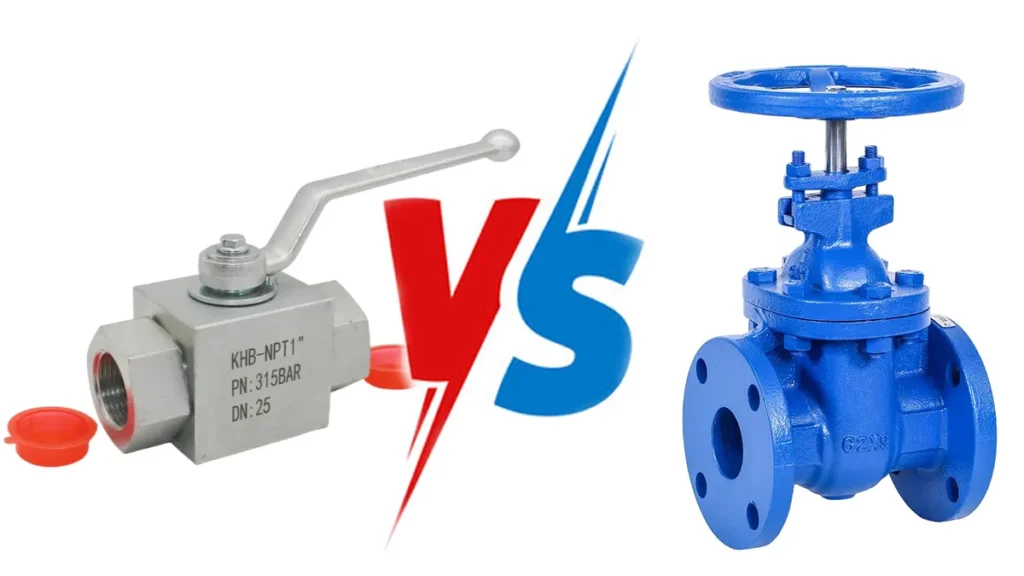
The main difference between a ball valve vs gate valve is how they control flow. You use a ball valve when you want to stop flow quickly; you just turn it once to shut it off. In contrast, a gate valve uses a gate that moves up or down to start or stop the flow. Choosing the right valve can impact cost, speed, and overall efficiency. Look at this table to see what each valve does best:
| Valve Type | Common Applications |
|---|---|
| Gate Valve | Municipal water, oil pipelines, marine plants, steam systems, industrial isolation |
| Ball Valve | HVAC, plumbing, chemical plants, food processing, irrigation, gas pipelines |
Key Takeaways
- Ball valves can stop flow fast with a simple turn. This makes them good for emergencies.
- Gate valves are best for controlling flow in big pipes. They let a lot of liquid through when open.
- Pick ball valves if you need to use them often. They also seal tightly to stop leaks.
- Gate valves work well when it is very hot. But they are not good for changing the flow amount.
- Think about how much space you have to install the valve. Ball valves are smaller than gate valves.
- Ball valves cost less to take care of and last longer. This is true when you use them a lot.
- Always pick the right valve for your system. Think about what fluid you use, the pressure, and how often you use it.
- Ask experts for help if you are not sure. This will help you choose the best valve for your job.
Ball Valve Overview
What Is a Ball Valve
You might see a ball valve in your home or at work. This valve type uses a round ball inside to control the flow of liquids or gases. The ball has a hole through its center. When you turn the handle, the ball rotates. If the hole lines up with the pipe, fluid flows through. If you turn the handle again, the solid part of the ball blocks the flow. This simple design makes the ball valve easy to use and reliable for many jobs.
How Ball Valves Work
Imagine you need to stop water fast. You grab the handle and turn it a quarter turn. The ball inside moves, and either opens or closes the path. The internal mechanism works by rotating the ball 90 degrees. When the hole matches the pipeline, fluid moves freely. When you turn the ball, the solid side seals the line and stops the flow. You get a tight seal with just one quick motion. This makes ball valves perfect for situations where speed and control matter.
Tip: You can spot a ball valve by its handle. It usually sits perpendicular to the pipe when closed and parallel when open.
Ball Valve Advantages
If you compare a ball valve vs gate valve, you notice some clear benefits. Ball valves stand out in high-pressure systems and tough environments. Here are some reasons why you might choose an industrial ball valve:
- Durability: Ball valves last a long time. They handle harsh conditions without breaking down.
- Tight Sealing Capabilities: You get excellent sealing. Leaks rarely happen, even under high pressure.
- Low Torque Requirement: You don’t need much force to turn the handle. This makes it easy for anyone to operate and helps with automation.
- Quick Operation: The quarter-turn design lets you open or close the valve fast. This is great for emergencies or when you need to regulate flow quickly.
- Versatility: Ball valves work with many types of fluids. They perform well in different temperatures and pressures.
You can use ball valves in plumbing, HVAC, chemical plants, and more. They fit almost any application where you need reliable shut-off and easy operation.
Ball Valve Disadvantages
No valve is perfect for every use. When you compare a ball valve vs gate valve, you will see some problems with ball valves. These problems might make you pick a different valve. Let’s look at the main disadvantages of ball valves, especially in factories or big buildings.
Here’s a table that shows the main problems:
| Disadvantage | Description |
|---|---|
| Higher Pressure Drop | Can cause a higher pressure drop vs gate valves, especially in partially open positions. |
| Not Ideal for High Temperatures | The sealing materials can degrade at very high temperatures, limiting their use in such environments. |
| Potential for Wear | Continuous operation in throttling applications can cause seat and ball wear. |
A ball valve can cause a bigger pressure drop. This happens if you do not open it all the way. The fluid loses more energy as it moves through. If you want your system to work well, this can be a problem. Gate valves let fluids move with less resistance. They are better if you want to keep pressure loss low.
Temperature is another thing to think about. The seals inside a ball valve are often made from PTFE or rubber. These seals can break down in very hot places. If your system gets very hot, you might see leaks or the valve might stop working. In these cases, another valve type might last longer.
Ball valves can also wear out faster. This happens if you use them to control flow by keeping them partly open. The ball and seats inside get worn down because the fluid pushes on the same spot again and again. You might see this in factories where people use ball valves for throttling. Ball valves are best for turning flow on or off, not for adjusting flow.
Note: If you need a valve for lots of throttling or for very hot systems, you should think before picking a ball valve. You might save money and avoid problems by choosing a different valve.
When you compare a ball valve vs gate valve, remember each one is good for different jobs. Ball valves are great for quick shut-off and tight sealing. But they do have some limits. Knowing these problems helps you choose the right valve and avoid trouble later.
Gate Valve Overview
What Is a Gate Valve
You might see a gate valve in big water pipes or in factories. This valve uses a flat or wedge-shaped gate to control the flow of liquids or gases. When you turn the handle, the gate moves up or down inside the valve body. If the gate is up, fluid can move through the pipe. If the gate is down, the flow stops. People like to use this valve when they need a full open or full close. You do not use it to adjust the flow. You use it to start or stop the flow completely.
How Gate Valves Work
A gate valve works with a simple up-and-down motion. You turn the handwheel on top. This action moves a stem inside the valve. The stem lifts the gate to open the valve or lowers it to close the valve. When the gate is fully raised, the path inside the valve is wide open. Fluid can move through with almost no resistance. When you lower the gate, it blocks the flow and seals the pipe. This design helps you get a tight shutoff. You will notice that the handle turns many times to open or close the valve. This slow action makes it good for big pipes and systems where you do not need to open or close the flow quickly.
Tip: If you see a valve with a round handwheel and it takes several turns to open, you are probably looking at a gate valve.
Gate Valve Advantages
You get many benefits when you use a gate valve, especially in large pipelines. Here are some reasons why you might choose this valve:
- You can open the valve all the way or shut it off completely.
- The valve gives you excellent sealing. Leaks are rare when the gate is down.
- You get a full-bore flow path. This means fluid moves through with almost no pressure loss.
- The valve works well in high-temperature and high-pressure systems.
- You can use it in water, oil, gas, and power plants.
A gate valve is a great choice if you want reliable shutoff and low pressure drop. You will see this valve in water treatment plants, oil and gas lines, and power stations. It handles tough jobs and lasts a long time.
Gate Valve Disadvantages
When you look at a gate valve, you might think it’s the perfect solution for every job. But like any tool, this valve has its downsides. You need to know these before you decide if it’s right for your system.
Let’s break down the most common disadvantages you’ll face with a gate valve:
- Slow Operation: You have to turn the handle many times to open or close the valve. This slow action can be a problem if you need to stop the flow quickly, especially in emergencies.
- Not Good for Throttling: If you try to use a gate valve to control or adjust the flow, you might damage it. The valve works best when it’s fully open or fully closed. Partial opening can cause the gate and seats to wear out faster.
- Needs More Space: A gate valve takes up more room than other valves. The stem moves up and down as you turn the handle, so you need extra space above the valve for it to work.
- Friction and Wear: When you open or close the valve, the gate rubs against the sealing surfaces. Over time, this friction can cause wear, especially if your system runs at high temperatures.
- Maintenance Challenges: Most gate valves have two sealing covers. This design makes it harder to fix or maintain the valve. You might spend more time and effort on repairs.
Here’s a quick table to help you see these disadvantages at a glance:
| Disadvantage | What It Means for You |
|---|---|
| Slow Operation | Takes longer to open/close, not ideal for emergencies |
| Not for Throttling | Can’t adjust flow, risk of damage if used this way |
| Large Installation Space | Needs more room, especially for rising stem designs |
| Friction and Wear | Sealing surfaces wear out faster, especially with heat |
| Maintenance Difficulty | More complex to repair due to extra sealing covers |
Note: If you have limited space or need to open and close a valve quickly, a gate valve might not be your best choice. You should also avoid using it to control flow, since that can shorten its life.
You might see a gate valve in big water lines or industrial plants, but you need to plan for its size and slower operation. Always think about how often you’ll use the valve and how much space you have. If you want something for quick shut-off or easy maintenance, you may want to look at other valve types.
Ball Valve vs Gate Valve Comparison
Design and Mechanism
When you look at the design of a ball valve vs gate valve, you notice big differences. A ball valve uses a round ball with a hole through it. You turn the handle, and the ball rotates. This action lets fluid flow or stops it fast. The ball sits inside soft seats that help seal the valve tightly.
A gate valve works in a different way. You turn a wheel, and a flat gate moves up or down inside the body. The gate blocks or opens the path for fluid. The stem can rise or stay fixed, depending on the design. You need more turns to open or close a gate valve.
Here’s a table that shows the main design features:
| Feature | Ball Valves | Gate Valves |
|---|---|---|
| Design and Operation | Spherical disc that rotates for quick operation and tight seal | Rising or non-rising stem with a gate for full flow or shut-off |
| Flow Control | Ideal for on/off control, not for throttling | Better for minimal flow resistance, not for precise control |
| Pressure Drop | Higher pressure drop when partially open | Minimal pressure drop when fully open due to straight-through flow path |
If you need a valve for quick shut-off, you might pick a ball valve. If you want low resistance and full flow, a gate valve works better. You see ball valves in homes and factories. Gate valves show up in big water lines and industrial plants.
Tip: Always check the design before you choose a valve. The right mechanism can save you time and money.
Operation Speed
You want to know how fast you can open or close each valve. Ball valves win here. You only need to turn the handle a quarter turn. The flow stops or starts almost instantly. This speed helps in emergencies or when you need to cycle the valve often.
Gate valves take longer. You must turn the wheel many times. The gate moves slowly up or down. If you need to shut off flow fast, a gate valve might not be the best choice.
Let’s look at the operation times:
- Ball valves operate with a 90° turn, allowing for faster opening and closing times.
- Gate valves require more than a 360° turn, resulting in slower operation.
- Ball valves provide nearly instantaneous shutoff, which is advantageous in high cycle speed applications.
Here’s a table that compares emergency shut-off speed:
| Valve Type | Operation Speed | Emergency Shut-off Capability |
|---|---|---|
| Ball Valve | Fast (quarter-turn) | Immediate isolation during emergencies |
| Gate Valve | Slow (multiple turns) | Delayed response in emergencies |
If you work in a place where safety matters, you might want an industrial ball valve. You get quick action and reliable shut-off.
Sealing and Leak Prevention
You care about leaks. Ball valves use soft seats that press against the ball. This design gives you a tight seal. Even under high pressure, leaks rarely happen. The soft material fits snugly around the ball and blocks fluid.
Gate valves rely on metal-to-metal contact. Small particles can get stuck and cause leaks. The seal is not as tight as a ball valve. Over time, wear and debris can make leaks worse.
Here’s a table that shows typical leakage rates:
| Valve Type | Leakage Rate (cm³/min) | Leak Tightness |
|---|---|---|
| Soft-seated Ball | 0.0001 | Class VI |
| Soft-seated Gate | 0.01 | Class VI (95%) |
| Metal-seated Ball | 0.001 | Class V |
| Metal-seated Gate | 0.01 | Class IV |
Ball valves are designed with soft, resilient seats that conform to the ball, ensuring a tight seal that prevents leaks effectively. Gate valves depend on metal-to-metal contact, which can be less reliable due to potential interference from small particles, making them more susceptible to leaks.
Note: If you want the best leak prevention, choose a ball valve. You get peace of mind and less maintenance.
Durability and Maintenance
When you pick a valve for your system, you want it to last and not break down often. You also want to spend less time and money fixing it. Let’s see how a ball valve vs gate valve compares when it comes to durability and maintenance.
A ball valve usually lasts longer than a gate valve. You can use a ball valve many times each year, and it still works well for a long time. In factories or water plants, a ball valve can last 15 to 20 years, even if you open and close it a lot. A gate valve works best if you do not use it often. It may last 10 to 15 years if you only open or close it about 100 times a year.
Here’s a table to help you see the difference:
| Metric | Gate Valve | Ball Valve |
|---|---|---|
| Service Life | 10–15 years (low-cycle use) | 15–20 years (high-cycle use) |
You also need to think about how much it costs to keep your valve working. A gate valve needs more care. You have to replace the packing, add grease, and sometimes fix the seats. This can cost $1,200 to $2,000 each year. A ball valve is easier to take care of. You might only need to change the seals or check the actuator. This costs less, about $400 to $800 each year.
Check out this table for a quick look:
| Metric | Gate Valve | Ball Valve |
|---|---|---|
| Annual Maintenance Cost | $1,200–$2,000 | $400–$800 |
| Failure Rate | 8–12% per year | 3–5% per year |
A gate valve can fail more often, especially in high-pressure systems. You might see leaks or have trouble turning the handle. A ball valve has a lower failure rate. It stays tight and easy to use, even after many cycles.
Here are some quick tips for you:
- If you want a valve that lasts longer and needs less fixing, choose a ball valve.
- If you use your valve a lot, a ball valve will save you money and time.
- If you only open or close your valve a few times a year, a gate valve can still work, but you may spend more on repairs.
Tip: Always check how often you will use your valve. This helps you pick the right one and avoid surprise costs.
A ball valve gives you better durability and lower maintenance. You get fewer leaks, less downtime, and more value for your money.
Best Uses for Ball Valves
Residential Applications
Ball valves are common in homes. They help you control water in pipes. If you need to stop water fast, turn the handle. The water stops right away. This is good for emergencies or fixing things. You can find ball valves under sinks and near toilets. They are also by water heaters.
Here’s a table that shows where ball valves are used in homes:
| Application Type | Description |
|---|---|
| Shut-off Applications | Ball valves are often used to control water flow in home plumbing systems. |
Tip: Put ball valves at important spots in your plumbing. If something breaks, you can turn off the water quickly. This helps stop leaks and water damage.
Industrial and High-Pressure Uses
Ball valves are used in factories and power plants too. They work well in places with high pressure and heat. These valves help keep systems safe and running well.
Ball valves control steam and water in boilers. They also help with turbines and cooling systems. The trunnion-mounted design gives extra support to the ball. You do not need much force to turn the valve. This makes ball valves good for tough jobs like oil pipelines.
The trunnion ball valve holds the ball at both ends. This keeps the valve strong when pressure is high. You get good performance even in hard jobs.
Note: If you work with high pressure or heat, ball valves are a smart choice. They last longer and need less fixing.
When to Choose a Ball Valve
You want to pick the right valve for your job. Here are some things to think about:
| Factor | Description |
|---|---|
| Material Selection | The material must match the fluid and conditions. This helps the valve last longer and work well. |
| Valve Size | The right size helps control fluid and stops leaks. |
| Type of Ball Valve | There are different types for different jobs. |
| Pressure and Temperature Ratings | Make sure the valve can handle your system’s pressure and heat. |
| Flow Control | Think about how much control you need. |
| Actuation Method | Pick the method that fits your job and control needs. |
| Sealing Mechanism | Choose seals that stop leaks and fit your system. |
| End Connections | The right connections make installation easy and help the valve fit your pipes. |
If you need to shut off flow fast or want tight sealing, use a ball valve. Ball valves work in homes and factories. They are easy to use and help stop leaks.
Callout: Always check the material, size, and pressure rating before buying a ball valve. This keeps your system safe and helps avoid problems.
Best Uses for Gate Valves
Large Diameter Applications
You often see a gate valve in places where pipes are huge. These valves work best when you need to control water or other fluids in big systems. If you look at municipal infrastructure, you will find them in some of the most important spots:
- Water Supply
- Wastewater Treatment
These systems need a valve that can handle a lot of flow without slowing things down. The gate valve opens wide, so water moves through with almost no resistance. You get a strong seal when you close it, which helps prevent leaks in large pipelines. If you work with city water or manage treatment plants, this type of valve is a smart choice.
Low-Pressure and Throttling
You might wonder how a gate valve performs when you want to control flow, not just stop it. In low-pressure systems, you can use this valve to isolate sections of pipe. But if you try to use it for throttling—adjusting the flow little by little—it does not do as well as some other valves.
Here’s a quick table to help you compare:
| Topic | Gate Valve | Globe Valve |
|---|---|---|
| Primary job | Fluid isolation | Flow regulation / control |
| Throttling capability | Poor (risk of damage) | Strong, stable control |
If you need to adjust flow often, a globe valve gives you better control. The gate valve works best when you want to open or close the line all the way. Using it for throttling can wear it out faster.
Tip: Use a gate valve for on/off jobs, not for fine-tuning flow. This keeps your system running longer.
When to Choose a Gate Valve
You might ask yourself, “When should I pick a gate valve instead of another type?” The answer depends on what you need for your system. Here’s a table that lays out the main points:
| Valve Type | Advantages | Disadvantages |
|---|---|---|
| Gate Valve | – Seal tightly | – Open and close slowly |
| – Long-lasting | – Require more installation space | |
| – Suitable for many applications | – Not ideal for flow control | |
| Ball Valve | – Versatile flow control | – Cavitation risk with rapid pressure drops |
| – Minimal pressure loss | – Large valves require significant force to operate | |
| – Self-cleaning feature |
You should choose a gate valve if you need a tight seal in a big pipe, want something that lasts, and do not need to adjust the flow often. This valve fits best in water plants, city pipelines, and places where you open or close the flow only a few times each year.
Note: Always think about your system’s size, how often you use the valve, and if you need to control flow. Picking the right valve saves you time and money.
Common Misconceptions
Flow Control Myths
You might hear a lot of myths about how valves work. Some people think all valves can do the same job, but that’s not true. Let’s clear up some common misunderstandings about flow control:
- Gate valves can be used for throttling.Actually, gate valves are made to be fully open or fully closed. If you try to adjust the flow with a gate valve, you can damage the disc and the sealing surfaces.
- All gate valves are the same.Gate valves come in different types. You’ll find parallel slide, wedge, and knife gate valves. Each one works best for certain jobs.
- Gate valves are always the best option.Sometimes you need a quick shut-off. Ball valves can do that better than gate valves.
- Gate valves can’t react quickly.Gate valves need more turns to open or close, but they can still operate fast enough for many uses.
- Gate valves are maintenance-intensive.Maintenance depends on the materials and where you use the valve. Stainless steel valves usually need less care.
- Gate valves are too expensive.The price changes based on size and material. Gate valves can be cost-effective because they last a long time.
If you want good flow control, you need to pick the right valve for your system. Don’t let these myths lead you to the wrong choice.
Durability Misunderstandings
You might think one valve lasts longer than another just because of its design. That’s not always true. Ball valves often last longer in systems where you open and close them a lot. Gate valves can last many years if you don’t use them often. The material matters too. Stainless steel valves resist rust and wear, so they need less maintenance. If you use the wrong valve for the job, it can wear out faster. Always check what your system needs before you decide.
Tip: If you want your valve to last, match it to your system’s pressure, temperature, and how often you use it.
Cost Assumptions
Many people believe that gate valves cost more than ball valves. You might hear that gate valves are always expensive. That’s not true. The cost depends on the size, material, and how long the valve lasts. Gate valves can be cheaper upfront, especially for big pipes. Ball valves might cost more at first, but they save money over time because they need less maintenance. If you look at the total cost, including repairs and downtime, ball valves can be a smart investment.
Here’s a quick table to help you compare:
| Valve Type | Upfront Cost | Maintenance Cost | Service Life |
|---|---|---|---|
| Gate Valve | Lower | Higher | Long |
| Ball Valve | Higher | Lower | Longer |
Note: Don’t just look at the price tag. Think about how much you’ll spend to keep your valve working year after year.
Choosing the Right Valve
Key Selection Factors
Picking the right valve for your system can feel tricky, but you can make it simple by focusing on a few key points. Start by thinking about what flows through your pipes. Is it water, gas, or something else? Some valves work better with certain fluids. Next, check the pressure in your system. High pressure needs a strong valve that can handle the force.
You should also look at how often you plan to open and close the valve. If you need to turn it on and off a lot, you want a type that lasts through many cycles. Space matters too. Some valves need more room to install and operate. If you have a tight spot, you might need a compact design.
Here’s a quick checklist to help with valve selection:
- What type of fluid will flow through the valve?
- What is the maximum pressure and temperature?
- How often will you operate the valve?
- How much space do you have for installation?
- Do you need fast shut-off or slow, steady control?
- Will you automate the valve or use it by hand?
Tip: Always match the valve to your system’s needs. This helps you avoid leaks, breakdowns, and extra costs.
Quick Decision Guide
You want to make valve selection easy. Use this table to compare your needs and pick the best option:
| Need | Best Valve Type | Why It Works Well |
|---|---|---|
| Quick shut-off | Ball valve | Fast, easy to use |
| Low pressure drop | Gate valve | Full flow, less resistance |
| Frequent operation | Ball valve | Durable, handles many cycles |
| Large pipe size | Gate valve | Fits big systems |
| Tight installation space | Ball valve | Compact design |
| High temperature | Gate valve | Handles heat better |
If you want a fast answer, remember this: Ball valves are great for quick shut-off and frequent use. Gate valves work best in big pipes and high-temperature spots.
Note: Good valve selection saves you time and money. Always check your system before you buy.
You can always ask an expert if you feel unsure. The right choice keeps your system safe and running smoothly.
Conclusion
You now know the key differences between ball valves and gate valves. Ball valves give you quick shut-off and tight seals. Gate valves work best for large pipes and low pressure drop. Here’s what to remember:
- Pick a ball valve for fast, frequent use or tight spaces.
- Choose a gate valve for big pipelines or high temperatures.
Need help? We’re a Hydraulic Ball Valve manufacturer. Reach out for expert advice or custom solutions!
FAQ
What is the main difference between a ball valve and a gate valve?
You turn a ball valve quickly for instant shut-off. A gate valve uses a gate that moves up or down. You often see an industrial gate valve in large pipelines where full flow is needed.
Can I use a ball valve for throttling?
You should not use a ball valve for throttling. It works best for on/off control. If you need to adjust flow often, look for a valve made for fluid control.
Where do you usually install an industrial gate valve?
You find an industrial gate valve in water treatment plants, oil pipelines, and other big systems. It handles large flows and gives you reliable shut-off.
How does a ball valve improve system performance?
A ball valve gives you fast shut-off and a tight seal. This helps you avoid leaks and keeps your system performance steady.
Which valve offers high durability for tough jobs?
If you want high durability, choose an industrial ball valve. It lasts longer and needs less maintenance, even in harsh conditions.
Are gate valves or ball valves better for high-pressure systems?
You can use both in high-pressure systems. An industrial gate valve works well for large pipes. A ball valve is better if you need quick shut-off and less maintenance.
What should I check before choosing a valve?
Check the size of your pipes, the pressure, and how often you will use the valve. Think about what kind of fluid you control and if you need fast shut-off or slow operation.
Can I automate these valves?
Yes, you can automate both types. Ball valves are easier to automate because they need only a quarter turn. Gate valves take more time and space to automate.