
High-pressure ball valves are widely used in demanding systems because they provide fast, reliable shutoff with a simple quarter-turn operation, even when pressure spikes and vibration are present.
In this article, you’ll learn how the internal ball-and-seat mechanism seals under high pressure and what design details differentiate high-pressure models from standard ball valves.
What Is a High Pressure Ball Valve?
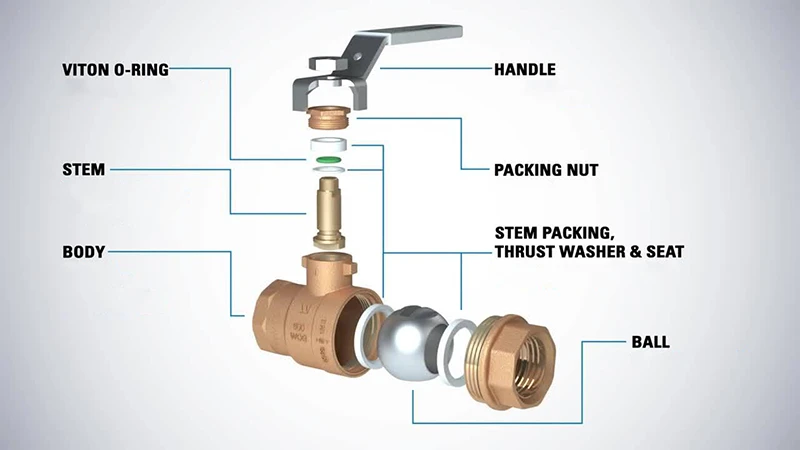
A high-pressure ball valve is a quarter-turn shutoff valve that controls flow using a drilled, rotating ball inside the valve body. When the handle or actuator turns the stem 90 degrees, the ball’s bore aligns with the flow path (open) or rotates perpendicular to it (closed), allowing quick on/off control with minimal operator effort.
Compared with standard ball valves, high-pressure versions are engineered to maintain tight sealing and mechanical integrity under higher system loads, pressure cycling, and occasional surge conditions. They are commonly selected for hydraulic power units, test benches, pressure-wash or waterjet lines, gas handling, chemical injection or dosing skids, and other industrial assemblies where compact size, rapid isolation, and dependable sealing are critical.
Core Components and Their Roles
Understanding the main parts of a high-pressure ball valve makes the working principle easy to visualize:
- Valve body & end connections: The body contains the pressure boundary and supports all internal parts. High-pressure bodies are typically thicker and paired with robust end connections (threaded, flanged, or hydraulic-style fittings) to resist vibration and pressure cycling.
- Ball & bore (flow passage): A precision-machined ball with a drilled hole controls the flow path. Full-port designs keep the bore close to the pipe ID for lower pressure drop, while reduced-port designs can be more compact and sometimes help reduce required torque.
- Stem (shaft): The stem transfers handle/actuator torque to the ball. High-pressure valves often use an anti-blowout stem design, meaning internal retention features help prevent stem ejection if packing loosens or pressure spikes.
- Seats (soft vs metal): Seats press against the ball to seal. Soft seats (e.g., PTFE variants) seal very tightly at lower torque, while metal seats handle higher temperatures, abrasion, and some harsh media but may allow slightly more leakage.
- Seals, O-rings & backup rings: Elastomer seals prevent leakage paths, while backup rings reduce extrusion risk under high differential pressure.
- Packing & gland: The packing seals around the stem; the gland compresses packing to maintain stem sealing over time.
- Actuation: Manual lever is simplest; gear lowers operator effort; pneumatic/hydraulic actuators enable remote, frequent, or high-torque operation.
How Does High Pressure Ball Valves Work: Step-by-Step Flow Path
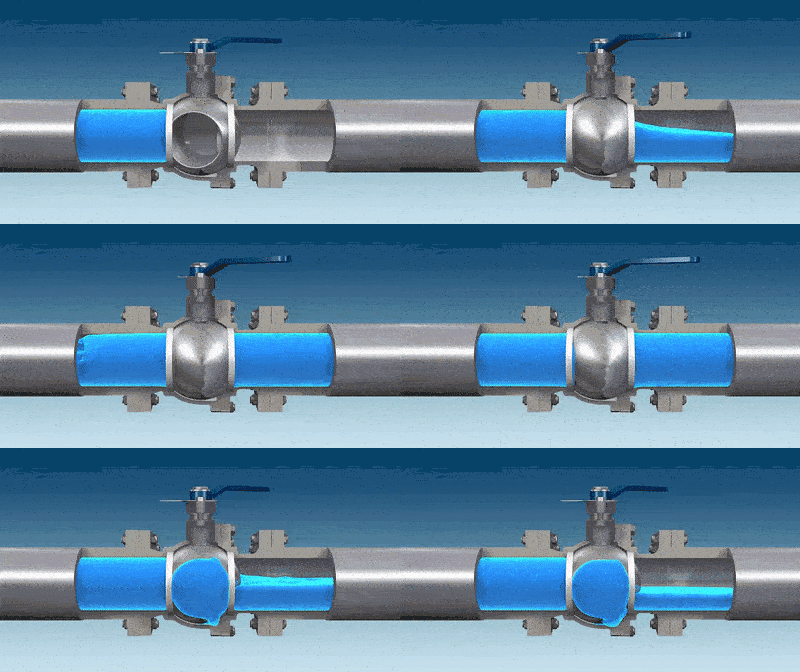
A high-pressure ball valve works by rotating a drilled ball to either align or block the flow path:
- Open position (flowing): When the valve is open, the ball’s bore is aligned with the inlet and outlet ports. Fluid passes straight through the bore with relatively low turbulence. Full-port valves typically minimize pressure drop, which matters in high-flow hydraulic or gas systems.
- Closing action (quarter-turn): Turning the handle or actuator 90° rotates the ball so the bore is no longer aligned with the pipeline. The solid side of the ball blocks the passage, stopping flow quickly. Because it’s a short rotation, ball valves are preferred when fast isolation is required.
- Sealing under pressure (how “tight shutoff” happens): As the ball rotates into the closed position, the seats contact the ball’s surface. Under differential pressure, system pressure can help push the downstream seat tighter against the ball (seat loading), improving sealing. High-pressure designs rely on controlled clearances, seat geometry, and anti-extrusion sealing elements so the seat doesn’t deform or get forced out under load.
- Why torque matters: Higher pressure and tighter seats can increase friction between seat and ball, which increases operating torque. That’s why high-pressure valves often use improved stem support, packing systems, and sometimes gear operators or powered actuators.
- Throttling note: Most ball valves are designed for on/off service. Using them partially open for long periods can concentrate velocity at the seat edge, accelerating wear and causing leakage—so throttling is usually better handled by a valve designed for control.
What Makes It “High Pressure”: Design Differences vs Standard Ball Valves
High-pressure ball valves are engineered to stay sealed and stable when the system sees high differential pressure, pressure cycling, and occasional spikes. The differences are not only about “thicker metal”—they’re about how the valve manages stress, keeps seals from deforming, and maintains safe stem retention over long service intervals.
Reinforced Body and Pressure Boundary
A high-pressure valve body is designed to reduce stress concentration and resist fatigue from repeated pressure cycles. In many high-pressure designs, the body geometry is more compact but structurally stronger, with thicker critical sections and better load paths. Forged bodies are also common in high-pressure applications because forging can provide a more uniform internal structure and improved durability in harsh duty.
Seat, Seal, and Anti-Extrusion Design
Under high differential pressure, soft sealing elements can deform or extrude into clearance gaps. High-pressure ball valves address this with optimized seat geometry and added support features such as backup rings that help prevent seal “cold flow.” The result is more stable shutoff performance and a lower risk of sudden leakage after pressure spikes or temperature changes.
Stem Safety and Packing Reliability
High-pressure valves often use anti-blowout stem retention, where the stem is mechanically captured from inside the body. Combined with a more robust packing arrangement, this helps maintain stem sealing and reduces safety risk if the packing loosens or the system experiences a surge.
Precision Machining and Connection Standards
Higher surface finish, tighter tolerances, and better ball sphericity support predictable torque and consistent sealing. End connections are also chosen to match high-pressure assembly standards—such as NPT/BSPP, SAE/ORB-style ports, or flanged options—so installation remains secure and serviceable in real-world equipment layouts.
How to Select the Right High Pressure Ball Valve (Checklist)
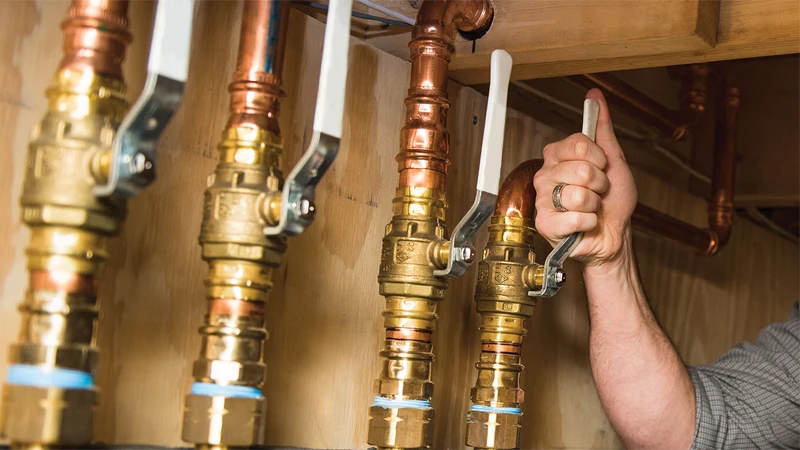
For OEMs, brands, and industrial distributors, the “right” high-pressure ball valve is the one that seals reliably in your exact duty cycle—not just the one with the highest rated pressure. Use this checklist to avoid mis-specification and premature leakage.
- Working pressure + safety margin + pressure spikes: Define normal operating pressure, peak/surge events, and cycling frequency. Include pump ripple, hydraulic shock, and rapid actuator closure effects when sizing the pressure class.
- Temperature range: Confirm both ambient and media temperature. Temperature affects seat material behavior, stem packing performance, and operating torque—especially in cold starts or hot fluid systems.
- Media compatibility: Identify the fluid (hydraulic oil, water-glycol, gas, chemicals) and any additives/contaminants. Seat and seal materials must resist swelling, embrittlement, and wear under your media and temperature.
- Required shutoff tightness: Specify acceptable leakage (bubble-tight vs controlled leakage) based on safety, downstream equipment, and test requirements.
- Port size & flow requirement: Choose full-port vs reduced-port based on pressure drop limits, flow rate, and desired Cv. Undersized ports increase loss and heat; oversized valves can raise cost and torque.
- Connection standard & space constraints: Match thread/port standards (e.g., NPT/BSPP, SAE/ORB, flanged) and check envelope dimensions for manifolds, skids, or compact assemblies.
- Operation frequency & actuation: Frequent cycling may favor low-wear seats and powered actuation. Confirm available torque and whether locking, position indication, or fire-safe options are needed.
- Compliance & documentation: For B2B supply chains, clarify requirements such as material certificates, pressure test reports, batch traceability, and marking/packaging standards for your market.
FAQ
Can a high pressure ball valve be used for throttling?
Ball valves are best for on/off service. Long-term throttling can create high-velocity erosion at the seat edge, increasing torque and leakage. Use a control valve if stable regulation is required.
What’s the difference between soft-seated and metal-seated at high pressure?
Soft seats typically provide tighter shutoff at lower torque, while metal seats handle higher temperatures, abrasion, and harsher media. Metal-seated designs may allow slightly more leakage depending on the application.
How do I know if I need full port?
Choose full port when you need minimal pressure drop, higher flow, pigging/cleaning access, or to match the line ID. Reduced port can be more compact and cost-effective for general isolation.
What causes stem leakage and how do I prevent it?
Stem leakage is commonly caused by packing wear, thermal cycling, vibration, or improper gland adjustment. Use compatible packing, avoid over-tightening, and periodically inspect for seepage and torque changes.
What information should I provide for a quick quotation?
Share working/peak pressure, temperature range, media, connection standard/size, port requirement, quantity, operating frequency, and any documentation needs (tests, certificates, marking, packaging).
Conclusion
High pressure ball valves work by rotating a precision-bored ball to align or block flow, while reinforced seats, seals, and stem retention features maintain tight shutoff under high differential pressure.
To select the right valve, match pressure/temperature and media compatibility, confirm the needed sealing level, and choose the correct port and connection standard.
For OEM, private label, or wholesale supply, send your operating conditions (pressure, temperature, media, end connection, size, and quantity). We can recommend a suitable configuration, provide samples, and support technical documentation for your projects.