
You use a hydraulic check valve to help control fluid direction in your machines. This small part makes sure fluid goes the right way. It stops fluid from going backward. This helps protect your system. Good hydraulic check valve design gives you safer and more dependable machines. Look at how different jobs need strong hydraulic check valves for safety and good work:
| Application Area | Impact on Safety and Reliability |
|---|---|
| Agricultural Machinery | Makes sure machines work well in tough places. It stops backflow that could hurt product quality. |
| Material Handling Equipment | Stops loads from dropping by accident. This keeps things safe if power or pressure changes. |
| Aerospace Applications | Follows strict rules for safety. It controls important parts where mistakes could be very bad. |
When you pick the right check valve, your hydraulic system works better. You also have fewer expensive problems.
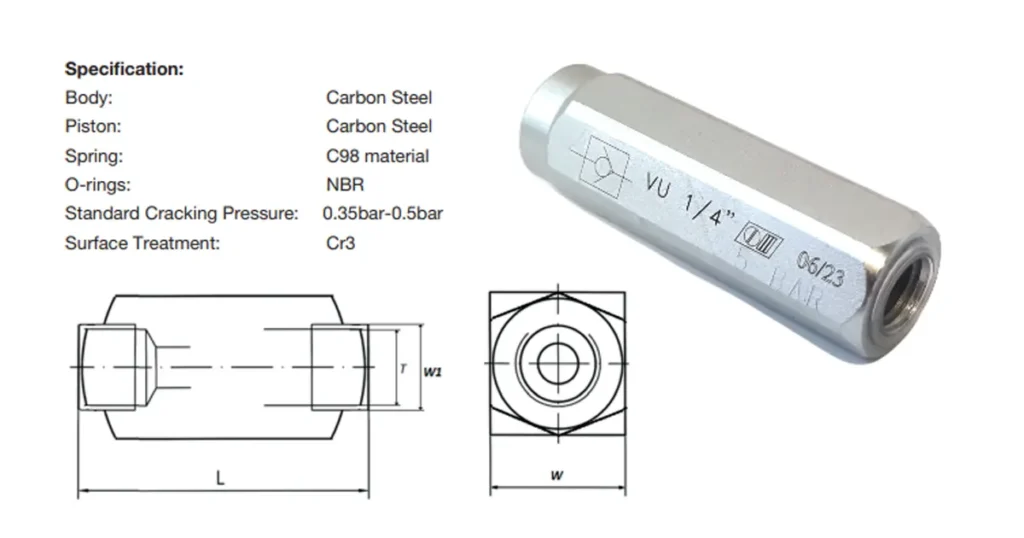
Key Takeaways
- Hydraulic check valves help control fluid direction. They stop backflow and keep your system safe.
- It is important to install them the right way. Always check the flow direction. This helps you avoid expensive mistakes.
- Pick the right valve type for your job. Use ball-type valves for dirty fluids. Use poppet-type valves for high pressure.
- The material you choose is important. Stainless steel works well in corrosive places. Aluminum is good if you need something light.
- Cracking pressure should fit your system’s needs. This makes sure the valve works right.
- Check your system often for maintenance. This can stop leaks and keep things running well.
- Quality control during making the valves is important. It finds defects that could cause your system to fail.
- Talk to manufacturers for expert help. They can give advice about custom solutions and which materials to use.
Hydraulic Check Valve Basics
Function and Operation
A hydraulic check valve works like a one-way door for fluid. It lets fluid move forward but blocks it from going back. When fluid moves the right way, the valve opens. If fluid tries to go backward, the valve closes tight. This keeps your system safe and helps it work well.
Here is what a check valve does in your hydraulic system:
- The valve only lets fluid go one way.
- It opens when the inlet side has more pressure than the outlet.
- If the pressure switches, the valve shuts and stops backflow.
Some systems use a pilot-operated check valve. This type blocks flow in one way but can open with outside pressure. You get more control and a strong lock. This helps hold a load still or stop unwanted movement. Stopping backflow is a main reason to use these valves.
Industrial Applications
Check valves are used in many industries. They help machines stay safe and work well. Here are some places you might find them:
| Industry | Typical Applications |
|---|---|
| Agricultural Machinery | Used in control systems, three-point hitches, and steering in tough places. |
| Material Handling | Used in forklifts, cranes, and conveyors to stop loads from dropping. |
| Aerospace | Used in flight controls and landing gear to meet strict safety rules. |
In every use, the hydraulic check valve stops backflow and keeps equipment working right.
Importance of Proper Installation
You must install your check valve the correct way. If you do not, you can have big problems:
- Fluid flow can get blocked and stop your machine.
- Pressure drops can make your system weak or slow.
- Your system may shut down if the valve leaks or blocks.
- Backflow can bring in dirt and hurt your equipment.
- Parts can break if pressure gets too high or fluid moves wrong.
Tip: Always check the flow direction before you put in a check valve. One small mistake can cost a lot to fix.
If you install it right, you stop reverse flow and keep your system working well.
Types of Hydraulic Check Valves
Ball-Type Check Valve
You see ball-type check valves in many hydraulic systems. This valve uses a round ball to block or let fluid pass. When fluid pushes from the inlet side, the ball moves away from the seat and opens the path. If fluid tries to flow backward, the ball presses against the seat and stops the flow. You get a simple design that works well for most jobs. Ball-type check valves handle dirty fluids and can last a long time. You can use them as a non-return check valve in places where you need a one-way valve that does not clog easily.
Poppet-Type Check Valve
Poppet-type check valves use a shaped plug called a poppet. The poppet moves up and down inside the valve body. When fluid flows in the right direction, the poppet lifts and opens the valve. If fluid tries to go backward, the poppet drops and seals the seat. You get a tight shutoff and less leakage. Poppet-type check valves work well in systems where you need high pressure and clean fluid. You often find them in machines that need fast response and strong sealing. These valves help protect your equipment from reverse flow and keep your hydraulic check valve working smoothly.
Lift and Swing Check Valves
Lift and swing check valves give you more choices for controlling fluid direction. Lift check valves use a disc that moves straight up when fluid flows forward. Swing check valves use a disc that swings open like a door. Both types stop fluid from going backward, but they work in different ways.
Let’s look at how they compare:
| Valve Type | Closure Time | Suitability for High Pressure |
|---|---|---|
| Lift Check Valve | <0.1 seconds | Up to 25,000 psi |
| Swing Check Valve | Slower | Less effective |
Lift check valves close very fast. You can use them in high-pressure hydraulic systems. They help prevent reverse pressure damage and give you a tight shutoff. Swing check valves close slower and work better in low-pressure systems. You might use them where you do not need a quick response.
- Lift check valves are ideal for hydraulic circuits to prevent reverse pressure damage.
- They provide tight shutoff and are suitable for high-pressure systems.
If you need a check valve for a tough job, lift check valves are a smart choice. Swing check valves work well for simple jobs where speed is not important. You can pick the right one-way valve based on your system needs.
Tip: Always check your system pressure and response time before you choose a check valve. The right choice keeps your equipment safe and running well.
Silent and Non-Slam Check Valves
Have you ever heard pipes make a loud noise when a valve shuts? That noise is called water hammer. It can hurt your system and be very loud. Silent and non-slam check valves stop this problem. These valves close softly and quietly. Your system stays safer and lasts longer.
Here’s why you might use a silent or non-slam check valve:
- They almost stop sudden pressure jumps when the valve closes.
- They protect pipes and equipment from strong shocks.
- You spend less money fixing things because there is less shaking.
- Your system stays safe by stopping pipe bursts and leaks.
You can use a silent check valve where you want quiet and extra safety. These valves work well in fast hydraulic systems. If you want a non-return check valve that keeps things calm, this is a smart choice.
Pilot-Operated and Cartridge Designs
Sometimes you need more control in your hydraulic system. Pilot-operated check valves give you extra control. You can open or close these valves from far away. This helps when you need to control flow in hard-to-reach places. These valves also hold loads without leaking, so your system stays safe.
Double pilot-operated check valves help you move two cylinders at once. You can keep everything working together and stop parts from moving wrong. This makes your machines work better and keeps them safe.
Cartridge check valves are another good choice. They fit in small spaces and let you build complex circuits. You get more design options and can save space in your system. If you want a flexible and small solution, cartridge valves are a great pick.
Tip: Use pilot-operated or cartridge valves when you need more control or want to save space in your hydraulic setup.
Ball vs. Poppet Comparison
You might wonder which check valve is best for your job. Ball-type and poppet-type valves both have good points. Let’s see how they compare:
| Feature | Ball-Type Check Valve | Poppet-Type Check Valve |
|---|---|---|
| Sealing Mechanism | Spherical ball sits against a flat or cone seat | Guided poppet moves up and down inside the valve body |
| Flow Characteristics | Good sealing with some self-cleaning, but higher pressure drops | Large flow area with low pressure drop |
| Manufacturing Complexity | Simple design, not expensive | More complex to make, usually costs more |
| Performance | Sensitive to dirt, may have higher pressure drops | Great flow rates, works well for high-pressure jobs |
If you want a simple and cheap valve, ball-type might be right for you. It works well for most jobs and can handle dirty fluids. If you need a valve for high pressure and want the best flow, try a poppet-type. It shuts tight and works well in clean systems.
Picking the right hydraulic check valve helps your equipment work better and last longer.
Hydraulic Check Valve Design Considerations
Pressure Ratings and Flow
When you look at hydraulic check valve design, you need to think about pressure ratings first. The pressure rating tells you how much force the valve can handle before it leaks or breaks. If you pick a check valve with a pressure rating of 150 psi, it can safely hold up to 150 pounds per square inch. This number is important because it keeps your system safe and working right.
You also need to match the flow rate to your system. If you choose a valve that is too small, it will slow down the fluid and make your pump work harder. If you pick one that is too big, it might not close when it should, and you could get leaks. Here are some things to remember about flow and sizing:
- Proper valve sizing helps you avoid big pressure drops and problems like cavitation.
- If the valve is too large, it may not close at low flow rates, which can cause leaks.
- If the valve is too small, it restricts flow and puts extra strain on your hydraulic system.
- Flow rate affects how much pressure drops across the valve and how well it works.
- Most manufacturers give you flow rate charts to help you pick the right size.
You want your check valve to fit your system’s needs. This makes sure your equipment runs smoothly and lasts longer.
Cracking Pressure and Spring Force
Cracking pressure is another key part of check valve design. This is the lowest pressure needed to open the valve and let fluid through. If your system does not reach this pressure, the valve stays closed. You need to pick a cracking pressure that matches your application.
The spring inside the valve helps keep it closed when it should be. The spring force pushes against the fluid and makes sure the valve shuts tight when the flow stops. This keeps fluid from going backward and protects your system. Here’s why these features matter:
- Cracking pressure makes sure the valve opens only when you want it to.
- The spring force helps close the valve and stops backflow, which keeps your system safe.
- The spring works against the fluid, helping the valve close as flow slows down.
- Spring-loaded valves close before reverse flow starts, which helps prevent water hammer and other problems.
If you get the cracking pressure and spring force right, your check valve functions just as you need. You avoid leaks and keep your hydraulic system safe.
Tip: Always check the cracking pressure and spring force before you install a new valve. The right settings help your equipment work better and last longer.
Fluid Compatibility and Materials
You need to think about what kind of fluid will move through your check valve. Not all materials work with every hydraulic fluid. If you use the wrong material, your valve can rust, wear out, or even break. Good hydraulic check valve design uses materials that match your fluid and your working conditions.
Here’s a quick look at common materials and their properties:
| Material | Key Properties |
|---|---|
| Steel | High strength and durability, commonly used in pumps, valves, and cylinders. |
| Aluminum | Lightweight and resistant to corrosion, suitable for weight-sensitive applications. |
| Stainless Steel | Excellent corrosion resistance, ideal for harsh environments. |
| Cast Iron | Known for wear resistance and vibration damping, used in various components. |
If you use fluids that can cause rust or corrosion, pick a valve made from stainless steel or aluminum. These materials last longer and keep your system running. Using corrosion-resistant materials can help your check valve last for years, even with tough fluids. Choosing materials with good wear resistance also keeps your valve working well over time.
When you match the material to your fluid and environment, you get a check valve that works better and needs less maintenance. This is a smart move for any hydraulic application or configuration.
Temperature and Viscosity
You might not think about temperature and viscosity when you choose a check valve, but these factors can change how your system works. If your hydraulic fluid gets hot, metal parts inside the valve can expand. This can make the valve stick or bind. Cold temperatures can make metal brittle, so parts might crack if you push them too hard.
Fluid viscosity changes with temperature. When the fluid heats up, it gets thinner. Thin fluid can move fast and cause turbulence inside the valve. If the fluid cools down, it gets thicker. Thick fluid moves slowly and can make it harder for the valve to open. You might notice a bigger pressure drop across the valve when the fluid is thick.
Springs inside the check valve also react to temperature. Hot springs lose stiffness and may not close the valve tightly. Cold springs get rigid and can make it tough for the valve to open. If your system runs hot, you could see cavitation. Cavitation happens when vapor bubbles form and pop, which can damage the valve and shorten its life.
Here’s what you need to watch for:
- High temperatures can cause metal parts to expand and stick.
- Low temperatures can make metal brittle and increase cracking risk.
- Hot fluid gets thin and may cause turbulence or unstable valve operation.
- Cold fluid gets thick and increases pressure drop across the valve.
- Springs lose stiffness in heat and get rigid in cold, affecting valve movement.
- Cavitation risk goes up with higher temperatures, which can damage the valve.
If you pay attention to temperature and viscosity, you help your check valve last longer and work better.
Orientation and Installation
You want your check valve to work right every time. The way you install it matters a lot. Each valve type has its own best position. If you put it in the wrong spot, you might get backflow or water hammer. That can hurt your pipes and your equipment.
Check out this table to see how to install different types of check valves:
| Check Valve Type | Recommended Installation Orientation |
|---|---|
| Lift Check Valve | Install horizontally or vertically; disc must be perpendicular to ground. |
| Swing Check Valve | Install on horizontal pipes; valve disc axis must be horizontal. |
| Butterfly/Dual Plate Check Valve | Works for horizontal and vertical pipelines. |
You need to follow these guidelines so the valve disc moves the right way. The main job of a check valve is to stop backflow. If you install it wrong, you risk leaks, noise, or even broken parts.
Tip: Always check the flow direction and the movement of the valve disc before you install. This helps you avoid costly mistakes and keeps your system safe.
When you install your check valve in the right orientation, you protect your equipment and make sure your hydraulic system runs smoothly.
Hydraulic Check Valve Construction
Valve Body and Ports
When you look at a hydraulic check valve, the first thing you notice is the valve body. This part holds everything together. The body needs to be strong because it faces high pressure every day. You also see the ports, which are the openings where fluid enters and leaves the valve. The size and shape of these ports decide how much fluid can move through the check valve.
You have a few choices for valve body materials. Each one works best in different situations. Here’s a quick table to help you see the differences:
| Material | Durability Effect |
|---|---|
| Carbon Steel | Strong and durable, may need corrosion protection. |
| Stainless Steel | Superior corrosion resistance, ideal for harsh environments. |
| Aluminum Alloys | Lightweight and corrosion-resistant, for lower pressures. |
| Cast Iron | Cost-effective and durable for standard applications. |
If you work in a place with lots of moisture or chemicals, stainless steel is a smart pick. For lighter jobs, aluminum alloys keep things easy to handle. Carbon steel gives you strength, but you might need to add a coating to stop rust. Cast iron works well for most standard jobs and saves you money.
Internal Mechanisms: Ball, Poppet, Seat
Inside every hydraulic check valve, you find the parts that make it work. The main pieces are the ball or poppet and the seat. These parts control the flow and stop leaks. When fluid moves in the right direction, the ball or poppet lifts off the seat and lets fluid pass. If fluid tries to go backward, the ball or poppet presses against the seat and seals the opening.
Here’s a simple table to show what each part does:
| Component | Function |
|---|---|
| Seat | Provides the sealing surface against which the ball or poppet seals to prevent backflow. |
| Disc/Poppet/Ball | Acts as the movable element that opens under forward flow and reseats under reverse pressure. |
You want these parts to fit together well. A good seal keeps your hydraulic system safe and stops leaks. If the ball or poppet gets worn out, you might see backflow or pressure loss.
Spring and Retainer
The spring and retainer play a big role in how your check valve works. The spring sits behind the ball or poppet. It pushes the moving part against the seat when there’s no forward flow. When fluid pressure gets high enough, it pushes the ball or poppet away from the seat and opens the valve. If the pressure drops, the spring pushes the part back to close the valve and stop backflow.
You need the right spring strength for your hydraulic system. If the spring is too weak, the valve might open too soon. If it’s too strong, the valve might not open when you need it. The retainer keeps the spring in place so everything works smoothly.
Tip: Always check the spring and retainer if your check valve starts to leak or act slow. A worn spring can cause big problems in your hydraulic system.
Seals and Seal Materials
You need a good seal in your check valve to stop leaks. The seal keeps your hydraulic system safe. It sits between moving parts and the valve body. This stops fluid from leaking out, even when pressure is high. Picking the right seal helps your valve work better and last longer. Some seals can handle heat well. Others are strong against chemicals or last longer under pressure. You must choose a seal material that fits your system’s needs.
Here is a table to show which seal works best for your check valve:
| Seal Material | Key Properties | Suitability for High-Pressure Applications |
|---|---|---|
| Nitrile (Buna-N) | Good with oils and works in many temperatures. | Good for most hydraulic jobs, but not for very tough jobs. |
| Viton (Fluorocarbon) | Handles high heat and many chemicals. | Great for high-pressure jobs with strong fluids. |
| PTFE (Teflon) | Handles chemicals well and has low friction. | Best for high-pressure and hot jobs. |
| Polyurethane | Very tough and strong. | Good for moving parts in high-pressure systems. |
| Metallic Seals | Made from metal and used for very high pressure. | Used for the hardest jobs, but must be put in carefully. |
If your check valve faces hot oil or strong chemicals, use Viton or PTFE seals. Polyurethane seals are good for lots of movement and high pressure. Metallic seals are for the hardest jobs, but you must install them carefully.
Tip: Always check your fluid and pressure before picking a seal. The wrong seal can wear out fast or let fluid leak.
A good seal helps your check valve last longer. You will spend less time fixing leaks. Your machines can run more without stopping. Picking the right seal saves money and protects your equipment.
Quality Control and Testing
When you want your hydraulic check valve to work right, you need strong quality control and testing. These steps help you catch problems before they cause trouble in your system. Let’s look at how you can make sure your check valve meets high standards.
Material and Dimensional Checks
You start with the basics. You want to know that every part of your check valve is made from the right stuff and fits together just right. Here’s what you should check:
| Inspection Task | Description |
|---|---|
| Casting appearance | Look for sand holes, cracks, pores, or any sign of damage or deformation. |
| Dimensional accuracy | Use calipers and gauges to measure key sizes and make sure everything lines up. |
| Material composition | Test samples to check if the metal is strong enough for hydraulic pressure. |
You also need to check all incoming materials. This is your first step in quality control. Every batch of raw material or part should match your technical drawings and standards. You want to spot any problems before you build the check valve.
- Look for casting defects, clear markings, and cleanliness.
- Make sure each part matches ASME standards and your design.
Sealing and Leakage Testing
You never want leaks in your hydraulic system. That’s why you test every check valve for sealing and leakage. After you install the valve, you run a pressure and leak test. You slowly add pressure and watch every connection point. If you see leaks, stop the test, tighten the fittings, or adjust the valve. Then, test again.
You also need to check the seal between the disc and seat. This seal depends on reverse line pressure. Standards like MSS SP-61 help you test the seat and shell. These tests make sure your check valve can handle real-world pressure without letting fluid escape.
- Check for leaks at every joint and seal.
- Use hydrostatic tests to see if the valve body stays strong.
- Test the seat to make sure it seals tight under pressure.
Note: Always fix any unexpected leaks before you put the valve into service. This keeps your hydraulic system safe and reliable.
Cracking Pressure and Flow Tests
You want your check valve to open and close at the right time. That’s why you test for cracking pressure and flow. Cracking pressure is the lowest pressure that opens the valve. You use special tools to measure this. If the valve opens too soon or too late, it might not protect your hydraulic system.
You also check how much fluid can flow through the valve. You want to see if the valve lets enough fluid pass without slowing things down. These tests help you know if your check valve will work well in your system.
- Measure the pressure needed to open the valve.
- Check the flow rate to make sure it matches your needs.
- Test the valve’s movement to see if it opens and closes smoothly.
When you follow these steps, you get a check valve that works right every time. Your hydraulic equipment stays safe, and you avoid costly repairs.
Common Check Valve Mistakes
Undersized Flow Path
You might think a smaller check valve saves space or money, but it often causes more trouble than it’s worth. When you pick a valve with a flow path that’s too small, you force your hydraulic fluid through a tight spot. This can lead to high pressure drops and even wear out your valve early. If the valve’s Cv (flow coefficient) is too small, your system works harder and parts wear out faster.
Here are some common issues you’ll see with an undersized flow path:
- High pressure drops make your pump work overtime.
- Premature wear happens because the valve faces more stress.
- If the Cv is too large, you might see the valve not opening fully, which causes chatter and possible failure.
- Not enough straight pipe before the check valve can create turbulence and reduce performance.
You want to avoid these check valve problems by sizing the flow path correctly. Always check the manufacturer’s charts and match the valve to your system’s needs. This helps with preventing backflow and keeps your hydraulic system running smoothly.
Incorrect Cracking Pressure
Cracking pressure is the minimum pressure needed to open your check valve. If you choose the wrong value, you can run into serious problems. Too high, and your system might not move fluid when you need it. Too low, and you risk backflow or leaks.
Here’s what can happen if you get it wrong:
- Excessive stress on your hydraulic tubes can lead to cracks and failures.
- Cracks in the tubes can cause fluid leaks and system malfunctions.
- You might spend more on maintenance because you need to fix or replace damaged parts.
- Circumferential cracks can form from outside stress, making leaks or failures more likely.
- Longitudinal cracks can start from inside pressure or bad manufacturing, and they get worse under high pressure.
- Bad installation can add stress and help cracks form.
If you notice your valve not opening when it should, check the cracking pressure. The right setting helps you avoid reverse flow and keeps your equipment safe.
Material or Seal Mismatch
Picking the wrong material or seal for your hydraulic check valve can spell disaster. Not every material works with every fluid or environment. For example, brass valves break down fast in corrosive places. Plastic valves can crack if you use them with high pressure or heat.
Let’s look at the risks in a simple table:
| Mistake | What Can Happen |
|---|---|
| Using wrong metal (like brass) | Fast corrosion, leaks, and short valve life |
| Using plastic in tough jobs | Cracks, leaks, and sudden failure |
| Wrong seal material | Seal breaks down, leaks, or total valve failure |
You need to make sure your stainless steel grade and seal materials match your hydraulic fluid. If they don’t, you could see seal degradation, leaks, or even a complete system failure. Always double-check compatibility before you install a new check valve. This step saves you money and keeps your machines running.
Tip: When you match the right material and seal to your fluid and environment, you protect your system from backflow and other costly problems.
Excessive Pressure Drop
You might notice your hydraulic system running slower than usual. Sometimes, the problem comes from too much pressure drop across your check valve. When this happens, your pump works harder, and your whole system loses efficiency. You might even hear strange noises or feel the system getting hot. These are all signs that your check valve is causing too much resistance.
Why does this happen? Sometimes, the flow path inside the check valve is too narrow. Other times, the valve design just does not fit your system. If you use a valve that is too small or has a complicated shape, the fluid cannot move easily. This makes the pressure drop go up. You end up wasting energy and putting extra stress on your equipment.
Here are some common causes of excessive pressure drop:
- The check valve is too small for your flow rate.
- The valve has a lot of sharp turns or tight spaces inside.
- Dirt or debris blocks the flow path.
- The spring inside the valve is too strong, making it hard for fluid to push through.
You can spot excessive pressure drop by checking your system’s gauges. If you see a big difference in pressure before and after the check valve, you know there is a problem. You might also notice your pump getting louder or your system running hotter than normal.
Tip: Always check the manufacturer’s flow charts before you pick a check valve. These charts show you how much pressure drop to expect at different flow rates.
If you ignore excessive pressure drop, you risk damaging your pump and other parts. Your system might wear out faster, and you could face expensive repairs. You can avoid these problems by choosing the right size and type of check valve for your job.
Let’s look at a quick table to help you remember what to check:
| Problem | What to Do |
|---|---|
| High pressure drop | Use a larger check valve |
| Noisy or hot system | Check for blockages or dirt |
| Slow system response | Make sure valve matches flow needs |
When you pay attention to pressure drop, you keep your hydraulic system running smoothly. You save money, protect your equipment, and avoid headaches down the road.
Check Valve Selection Guide
Define System Needs
You want your hydraulic system to work smoothly. Start by looking at what your system needs. Think about the pressure your equipment uses. Check the flow rate and how fast fluid moves. Write down the type of fluid in your system. Ask yourself where you need to stop backflow. Every hydraulic check valve design starts with these basics.
Here’s a quick checklist to help you:
- What is the maximum pressure in your system?
- How much fluid flows through each line?
- What type of hydraulic fluid do you use?
- Where do you need to prevent backflow?
- What is the temperature range in your application?
- How much space do you have for the valve?
If you answer these questions, you make it easier to pick the right check valve. You avoid mistakes and keep your equipment safe.
Tip: Write down your answers. You can show them to your supplier or manufacturer. This helps them find the best hydraulic check valve design for your configuration.
Choose Valve Type
Now, you need to pick the right valve type. Each check valve works in a different way. Ball-type valves handle dirty fluids and last a long time. Poppet-type valves give you tight shutoff and work well with clean fluids. Lift and swing check valves fit different jobs. Silent and non-slam valves stop loud noises and protect your pipes.
Let’s look at a table to compare valve types:
| Valve Type | Best Use | Key Feature |
|---|---|---|
| Ball-Type | Dirty fluids, simple jobs | Self-cleaning, durable |
| Poppet-Type | Clean fluids, high pressure | Tight shutoff, fast action |
| Lift Check | High-pressure hydraulic systems | Quick closure |
| Swing Check | Low-pressure, simple jobs | Easy installation |
| Silent/Non-Slam | Fast systems, noise control | Quiet operation |
Pick the valve that fits your application. If you need to stop backflow in a tough environment, ball-type might be best. For high-pressure jobs, poppet-type gives you strong sealing.
Note: Always check the pressure and flow needs before you choose a valve type. The right choice helps with preventing backflow and keeps your hydraulic system safe.
Select Materials and Seals
You want your check valve to last. Choose materials that match your hydraulic fluid and working conditions. Stainless steel works well in wet or corrosive places. Aluminum is light and easy to handle. Carbon steel gives you strength but needs protection from rust. Cast iron saves money for standard jobs.
Seals matter too. Nitrile seals handle most oils and temperatures. Viton seals work with hot fluids and strong chemicals. PTFE seals resist chemicals and heat. Polyurethane seals are tough for moving parts. Metallic seals fit the hardest jobs.
Here’s a table to help you pick:
| Material | Best For | Seal Type | Best For |
|---|---|---|---|
| Stainless Steel | Corrosive, wet environments | Viton | Hot, strong chemicals |
| Aluminum | Light, easy jobs | Nitrile | Most hydraulic fluids |
| Carbon Steel | Strong, standard jobs | PTFE | Chemicals, high heat |
| Cast Iron | Cost-saving, standard jobs | Polyurethane | Moving parts, high pressure |
Match the material and seal to your hydraulic fluid and temperature. If you get this right, your check valve works longer and needs less maintenance.
Tip: Always ask your supplier about material and seal compatibility. This step protects your hydraulic check valve design and keeps your configuration running.
Specify Cracking Pressure
You want your hydraulic system to work just right. Cracking pressure is a big part of that. This is the pressure needed to open your check valve and let fluid flow. If you set it too high, your system might not move fluid when you need it. If you set it too low, you could get leaks or unwanted backflow.
Here’s how you can figure out the best cracking pressure for your setup:
- Write down your system’s normal operating pressure.
- Think about the lowest pressure your system will see during use.
- Check if you need the valve to open quickly or slowly.
- Look at the manufacturer’s charts for recommended cracking pressures.
You can use a table to compare different cracking pressures:
| Cracking Pressure | When to Use It | What Happens |
|---|---|---|
| Low (0.2-0.5 bar) | Low-pressure systems | Valve opens easily, risk of backflow |
| Medium (1-2 bar) | Most hydraulic applications | Balanced opening, good for most jobs |
| High (3+ bar) | High-pressure or safety systems | Valve stays closed until strong pressure |
Tip: Always test your check valve in your system before final installation. You want to see how it reacts to real pressure changes.
If you get the cracking pressure right, your hydraulic system stays safe and works smoothly.
Match Installation and Standards
You need your check valve to fit your system. Installation matters a lot. If you put the valve in the wrong spot or use the wrong connection, you might see leaks or even damage. You should always check the flow direction. Most valves have arrows or markings to help you.
Here are some steps to make sure your installation goes well:
- Check the pipe size and match it to the valve ports.
- Make sure the valve orientation fits your system’s flow.
- Use the right connection type, like threaded, flanged, or cartridge.
- Follow industry standards, such as ISO or ASME, for safety and compatibility.
You can use a checklist to help:
- Is the valve installed in the correct direction?
- Are the connections tight and leak-free?
- Does the valve meet your industry’s standards?
Note: If you follow installation guidelines and standards, you avoid costly mistakes and keep your equipment safe.
Consult Manufacturer
Sometimes you need extra help. Manufacturers know their products best. If you have a special job or tough conditions, reach out to them. You can ask about custom check valve designs or get advice on materials and seals.
Here’s what you can ask a manufacturer:
- What cracking pressure fits my system?
- Which materials work best with my hydraulic fluid?
- Can you make a custom valve for my space or pressure needs?
- What testing do you do to make sure your valves are reliable?
Manufacturers can help you find the right check valve for your job. You get expert advice and avoid problems down the road.
Callout: Don’t guess. If you’re unsure, talk to the manufacturer. You’ll save time and money.
When you follow these steps, you pick a check valve that fits your system, works well, and lasts longer.
Conclusion
Choosing the right hydraulic check valve size, material, pressure rating, and seal option is essential for safe and reliable system operation. A well-matched valve can reduce leakage, prevent premature failure, and help extend equipment service life.
As a hydraulic check valve manufacturer, Chenyang Hydraulic provides standard and custom solutions for different industrial hydraulic systems. Send us your pressure, flow rate, connection type, material requirements, drawings, samples, or working conditions, and we can help you select or manufacture the right check valve for your application.
FAQ
What does a hydraulic check valve do?
You use a hydraulic check valve to let fluid flow in one direction only. It stops fluid from going backward. This helps protect your equipment and keeps your system working safely.
How do I know which check valve size to pick?
Check your system’s flow rate and pressure. Use the charts from the valve manufacturer. If you pick the right size, your system runs smoothly and avoids pressure drops.
Can I install a check valve in any direction?
No, you can’t. Always follow the arrow or markings on the valve body. If you install it backward, fluid will not flow, and your system may get damaged.
What happens if my check valve leaks?
A leaking check valve can cause backflow. This may damage pumps or other parts. You might also see lower pressure and less system performance. Replace or repair the valve right away.
Which seal material should I choose?
Pick a seal that matches your fluid and temperature. For most oils, nitrile works well. For hot or harsh chemicals, try Viton or PTFE. Ask your supplier if you’re not sure.
How often should I check or replace my hydraulic check valve?
Check your valve during regular maintenance. If you see leaks, noise, or slow response, inspect it right away. Replace worn or damaged valves to keep your system safe.
Can I use the same check valve for water and oil?
Not always. Some valves work with both, but you need to check the material and seal compatibility. If you use the wrong valve, it may wear out fast or leak.
What is cracking pressure, and why does it matter?
Cracking pressure is the minimum pressure needed to open the valve. If you pick the wrong value, your system may not work right. Always match the cracking pressure to your system’s needs.