
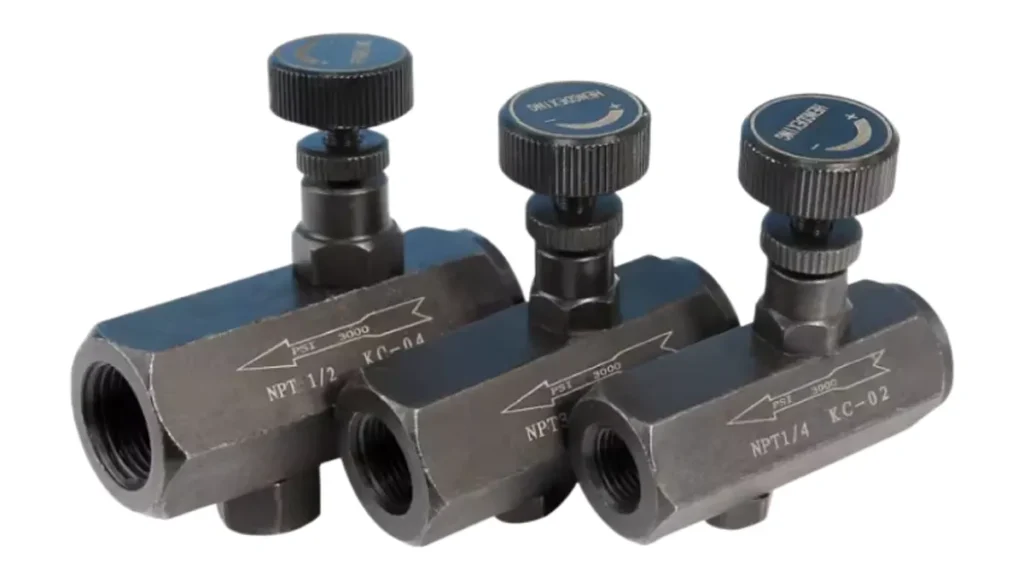
So, how does a hydraulic flow control valve work? It’s pretty simple. You use this valve to adjust the flow rate of hydraulic oil. This lets you control how fast or slow an actuator moves. When you get precise flow control, you keep your hydraulic system running smoothly.
- You get steady actuator speeds, which helps your equipment last longer.
- You avoid overloads and keep power use efficient.
- Your whole system works better because each part gets just the right amount of flow.
Key Takeaways
- Hydraulic flow control valves change how fast oil moves. This lets you control how fast actuators work.
- These valves help keep speeds steady. Steady speeds can make your equipment last longer.
- Good flow control stops overloads. It also helps save energy in hydraulic systems.
- There are different valves, like one-way and two-way. Each type works for certain oil flow directions.
- Check and adjust your valve settings often. This keeps your system working well and stops failures.
- Pick the right valve for your system. Look at pressure ratings, flow ranges, and connection types.
- Custom valves can be made for special uses. They give solutions for machines with unique needs.
- It is important to know how flow control valves are different from other valves, like ball valves. This helps you manage your hydraulic system better.
What Is a Hydraulic Flow Control Valve?
Basic Definition
You might ask, what is a hydraulic flow control valve? It acts like a traffic cop for oil in a machine. This valve lets you pick how much oil moves through the system. When you turn the valve, you can make motors and cylinders go faster or slower. This means you can change how quickly a machine works. If you wonder how a hydraulic flow control valve works, it is easy to explain. The valve changes the size of the opening inside. This lets more or less oil move through. This helps your equipment work safely and without problems.
Main Components
All hydraulic flow control valves have some main parts. These parts help you control how much oil flows. Here is a simple table that shows what is inside most valves:
| Component | Description |
|---|---|
| Valve Body | The main part that holds everything and has places for oil to go in and out. |
| Spool or Plunger | The piece inside that moves and controls how oil flows. |
| Spring | This pushes the spool or plunger back to where it started. You can change it with pressure or by hand. |
| Adjusting Mechanism | This lets you change how much oil can pass. You can use your hand or a computer to do this. |
You use the adjusting mechanism to let more or less oil go through. The spool or plunger moves when you turn a knob or push a lever. The spring helps the valve go back to its first spot. The valve body keeps all the parts together and connects to the rest of the system.
Role in Hydraulic Systems
Hydraulic flow control valves are important for machines. You use them to:
- Change how fast cylinders and motors move.
- Make sure each part gets the right amount of oil.
- Stop too much oil from hurting the system.
- Make machines safer and save energy by stopping sudden changes.
When you control the flow, you control how much power goes to the actuators. This helps the system work well and stops overloads. You see these valves in many places, like factories and building sites. They help machines work better by controlling oil pressure and flow. If you want your machines to last and work well, you need a good flow control valve.
What Does a Hydraulic Flow Control Valve Do?
Flow Regulation
A hydraulic flow control valve helps you control oil movement. This valve works like a gatekeeper for oil in your system. When you turn it, you pick how fast the oil goes. It is like turning a faucet to change water speed. There are different ways these valves control oil flow:
- Pressure-compensated valves keep oil flow steady, even if pressure changes.
- Check valve-type flow control valves let oil go one way and block it the other way.
- Pilot-operated valves use a small pilot valve to help control the main oil flow.
- Proportional valves use an electric signal to change oil flow.
- Restrictor-type valves have a set opening to control oil flow.
- Spool-type valves move a spool to change oil flow when pressure changes.
These valves help each part of your machine get the right oil amount. This keeps your machine working well and stops problems from too much or too little oil.
Speed Control
You use a flow control valve to set how fast actuators move. Actuators are things like cylinders and motors. When you change oil flow, you change how fast these parts move. This is important for jobs that need careful control, like cutting or lifting. You can make your machine move slow for careful work or fast to finish quickly. Here is what happens when you control actuator speed:
- You pick how fast your machine moves.
- You get smooth movement and stop sudden starts and stops.
- You make your machine more accurate.
- You lower shock, which protects your equipment and makes it quieter.
- You make things safer by stopping wild movements.
- You keep your system working well and steady.
If you want to know how a hydraulic flow control valve works, it is about changing the inside opening to control oil flow. This helps you set how fast actuators move.
System Performance
A hydraulic flow control valve makes your system work better. You get more control, so your machine listens to you. You stop overloads and keep your equipment safe. You also save energy by only using the oil you need. Here is what happens when you use a speed adjusting valve:
- You control how much oil moves in your system.
- You set the flow rate, which changes how fast actuators move.
- You adjust the valve to fit your job.
Tip: To help your hydraulic system last longer, always check your flow control valve. Make sure it is set right for your job and equipment.
When you use the right valve, your machine works well and does not break down as much.
How Does a Hydraulic Flow Control Valve Work?
Principle of Flow Path Adjustment
You might wonder how does a hydraulic flow control valve work inside your machine. The answer starts with the way the valve changes the path for oil. When you use the valve, you adjust the size of the opening where oil flows. This controls how much oil moves through the system and how fast your actuator works. Here’s a simple step-by-step look at what happens:
- Oil enters the valve through the inlet port. The pump sends the oil here.
- The oil reaches the regulating element. This part decides how big the passage is.
- You adjust the valve to make the opening larger or smaller.
- The regulated oil leaves through the outlet port.
- Your actuator moves at the speed you set, based on the flow rate.
If you want to know how does a hydraulic flow control valve work, just remember that you change the passage size to control oil flow. This lets you set the speed for cylinders and motors.
Movable Parts: Spool and Poppet
Inside the valve, you find parts that move to control the flow. The most common are spools and poppets. These parts act like gates. When you move them, you change the size of the opening for oil. Let’s look at how they work in different valves:
| Component | Function | Effect on Flow Rate |
|---|---|---|
| Proportional Valve | Uses spools and poppets to change flow based on electrical signals | Alters flow rate by changing the size of the opening |
You use the spool or poppet to make the passage bigger or smaller. This changes how much oil flows and how fast your actuator moves. If you use a proportional valve, you can even control the flow with electric signals. This gives you more precise control.
Manual vs Automatic Control
You can control hydraulic flow control valves in two main ways: manual or automatic. Each method fits different jobs. Here’s a quick comparison:
| Control Method | Description | Applications |
|---|---|---|
| Manual Control | You use a hand wheel or lever. Good for simple jobs with few changes. | Works best when you don’t need to adjust flow often or watch the system all the time. |
| Automatic Control | Uses an electric motor for remote and precise adjustments. | Perfect for systems that need constant monitoring, like HVAC or water treatment. |
If you use manual control, you turn a knob or move a lever. This works well for jobs where you don’t need to change the flow often. Automatic control lets you set the flow from far away or with a computer. This is great for systems that need steady and accurate flow.
Note: Pressure compensation helps keep the flow steady. The valve holds a constant pressure across the opening. When the pressure changes, the valve adjusts itself to keep the flow stable. This means your actuator moves at the same speed, even if the system pressure goes up or down.
Now you know how does a hydraulic flow control valve work. You adjust the flow path, use moving parts like spools and poppets, and pick manual or automatic control. This gives you the power to set actuator speed and keep your system running smoothly.
Flow Direction
When you look at a hydraulic flow control valve, you might wonder which way the oil moves. Flow direction is a big deal in hydraulic systems. If you get it wrong, your valve might not work as you expect. Some valves only control flow in one direction, while others work both ways.
Let’s break it down:
- One-way flow control valves let oil move freely in one direction. In the other direction, the valve restricts the flow. You often see these in machines where you want to control speed in one direction but let oil return quickly the other way.
- Two-way flow control valves manage oil flow in both directions. You use these when you need to control actuator speed going forward and backward.
Here’s a quick table to help you see the difference:
| Valve Type | Flow Control Direction | Common Use Case |
|---|---|---|
| One-way Valve | One direction | Cylinder extension with fast return |
| Two-way Valve | Both directions | Precise speed control both ways |
You need to pay attention to the arrows or markings on the valve body. These show you the correct flow direction. If you install the valve backward, you might block oil or lose control over actuator speed.
Tip: Always check your hydraulic diagram before installing a valve. This helps you match the flow direction with your system’s needs.
Some advanced valves use a check valve inside. This lets oil bypass the restriction in one direction. You get controlled movement one way and free flow the other. This setup works great for machines that need fast return strokes.
If you ever ask yourself, how does a hydraulic flow control valve work when oil flows in different directions, remember that the valve’s design decides how it handles flow. Picking the right valve for your flow direction keeps your system running smooth and safe.
Flow Restriction and Actuator Speed
Flow vs Speed Relationship
Changing the flow changes how fast your hydraulic equipment moves. When you use a speed adjusting valve, you control how much hydraulic fluid goes through. If you make the opening smaller, less fluid moves, and your actuator slows down. If you open the valve more, more fluid goes through, and your actuator speeds up. This lets you pick how fast your machine works. You can adjust the movement for each job. It is like turning a garden hose dial. The more you open it, the faster water comes out. The same idea works for hydraulic fluid and actuator speed.
Cylinder and Motor Speed Control
Hydraulic flow control valves help you manage how fast cylinders and motors move. You change the valve opening, and that changes how much fluid goes through. If you want your cylinder to move slowly, you make the opening smaller. If you want your motor to spin faster, you open the valve more. These valves let you set the speed for your task. You do not have to use just one speed. You can make your equipment move fast for lifting or slow for careful work. This helps you do your job safely and well. You can even change the speed while the machine is working. That means you stay in control all the time.
Here’s a simple table to show how valve size affects actuator speed:
| Valve Opening Size | Fluid Flow Rate | Actuator Speed |
|---|---|---|
| Small | Low | Slow |
| Medium | Moderate | Medium |
| Large | High | Fast |
You can match the speed to your needs easily. Just turn the valve and watch your cylinder or motor change speed.
System Efficiency
When you use a hydraulic valve to control flow, your system works better. You keep actuator speeds steady, so your machine runs smoother. You stop overloads, which protects your equipment and saves energy. You also make sure every part gets the right amount of fluid. This keeps your hydraulic system working well.
Here are some ways flow control valves help your system:
- Hydraulic flow control valves adjust flow rates, making hydraulic systems work better.
- They keep actuator speeds steady, so machines run smoother.
- These valves stop overloads, helping hydraulic machines work well.
Tip: If you want your hydraulic system to last longer and work better, always check your flow control valve settings. Proper adjustment keeps everything running smoothly and saves you money on repairs.
You get more control, safer operation, and better results when you use flow control valves the right way. Your machine works smarter, not harder.
Types of Hydraulic Flow Control Valves
Throttle Valve
You might hear the term “throttle valve” when talking about hydraulic systems. This valve acts like a faucet for hydraulic oil. You turn the knob, and you decide how much oil flows through. The more you open it, the faster the oil moves. If you close it a bit, the oil slows down.
Throttle valves are simple and easy to use. You find them in machines where you want basic speed control. They do not care about changes in pressure. That means the flow rate can change if the system pressure changes. You use throttle valves when you do not need super precise control.
Key features of throttle valves:
- Easy to adjust by hand
- Good for simple jobs
- Not pressure-compensated
Tip: If you want to slow down a hydraulic cylinder or motor, try using a throttle valve. Just turn the knob and watch the speed change.
Here’s a quick table to help you see how throttle valves work:
| Setting | Oil Flow Rate | Actuator Speed |
|---|---|---|
| Open | High | Fast |
| Partially Open | Medium | Medium |
| Closed | Low | Slow |
One-Way Valve
A one-way valve lets oil flow in only one direction. You might know it as a check valve. This valve stops oil from going backward. You use it when you want to control movement in one direction and let oil return quickly in the other.
Imagine you have a hydraulic cylinder. You want it to move slowly when extending, but return fast. You put a one-way valve in the line. The oil flows through the valve when the cylinder extends. When the cylinder retracts, the oil bypasses the valve and moves faster.
Why use a one-way valve?
- Stops oil from flowing backward
- Lets you control speed in one direction
- Helps with quick return strokes
Note: Always check the arrow on the valve body. It shows you which way the oil can flow.
Two-Way Valve
A two-way valve gives you control in both directions. You can adjust the flow when the actuator moves forward and backward. This valve is great when you need precise speed control for both movements.
You use two-way valves in machines that need careful control. For example, you might want a cylinder to move slowly both ways. You set the valve, and the oil flows at the rate you choose, no matter which way the actuator moves.
Benefits of two-way valves:
- Controls flow in both directions
- Offers precise speed adjustment
- Works well for jobs needing accuracy
Here’s a simple list to show where you might use a two-way valve:
- Industrial robots
- Lifting equipment
- Machines needing smooth movement both ways
Tip: If you want your machine to move at the same speed forward and backward, pick a two-way valve.
You now know the basics of throttle, one-way, and two-way hydraulic flow control valves. Each type helps you control oil flow and actuator speed in a different way. Choose the valve that fits your job best!
Custom Valve
Sometimes, you need a hydraulic flow control valve that does not fit the standard types. Maybe your machine has special needs. Maybe you want to solve a tricky problem. This is where a custom valve comes in.
A custom valve is made just for you. You can pick the size, shape, and features. You can ask for special materials or seals. You can even ask for a valve that works in a unique way. Manufacturers like Chenyang Hydraulic can help you design a valve that matches your system.
Here are some reasons you might want a custom valve:
- Your machine has tight space, so you need a special shape.
- You use a fluid that needs a certain seal or material.
- You want to control flow in a new way.
- You need a valve that fits with other custom parts.
When you order a custom valve, you usually talk with the manufacturer. You share your machine drawings, samples, or even just your ideas. The manufacturer will help you pick the right pressure rating, flow range, and connection type. You get a valve that fits your job perfectly.
Tip: If you have a special project or a machine that is hard to fit, ask about custom valves. You can save time and avoid problems by getting a valve made just for you.
Here’s a quick table to show what you can customize:
| Feature | Custom Options |
|---|---|
| Size | Small, medium, large |
| Material | Steel, brass, stainless steel, others |
| Seal Type | NBR, FKM, PTFE, custom |
| Flow Direction | One-way, two-way, special |
| Adjustment | Manual, electric, remote |
Custom valves give you the freedom to solve problems and make your system work better.
Advanced Valves (Brief Mention)
You might see advanced hydraulic flow control valves in high-tech machines. These valves use smart features to give you more control. Some use electronics to adjust flow with a signal. Others have sensors that watch pressure and flow all the time.
Here are a few types you might find:
- Proportional valves: These let you set the flow rate with an electric signal. You get smooth, step-less control.
- Servo valves: These offer very precise control. You use them in robots or test machines.
- Pressure-compensated valves: These keep the flow steady, even if the pressure changes.
Note: Advanced valves cost more, but they give you better control and help your machine do complex jobs.
If you work with smart machines or need top-level control, you might want to look at these advanced options. For most jobs, standard or custom valves work great. For special projects, advanced valves can give you the edge.
One-Way vs Two-Way Valves
One-Way Valve Operation
You use a one-way valve when you want oil to flow in only one direction. This valve acts like a door that opens for oil going forward but shuts tight when oil tries to go back. You might hear people call it a check valve. When you push oil through, the valve lets it pass. If oil tries to return, the valve blocks it.
Here’s how it works:
- Oil enters the valve from the inlet side.
- The valve opens and lets oil move forward.
- If oil tries to flow backward, the valve closes.
You often use one-way valves in hydraulic cylinders. You can control the speed when the cylinder extends. When the cylinder retracts, oil flows back quickly because the valve lets it bypass the restriction.
Tip: Always look for the arrow on the valve body. It shows you the correct direction for oil flow.
Two-Way Valve Operation
A two-way valve gives you control in both directions. You can adjust the flow rate whether oil moves forward or backward. This valve works like a gate that opens and closes for oil going either way. You set the speed for both movements.
Let’s break it down:
- Oil enters from either side.
- The valve lets you control how much oil flows in both directions.
- You can set the speed for extending and retracting actuators.
You use two-way valves when you need smooth and steady movement both ways. Machines like robots or lifts often use these valves. You get more control and accuracy.
Here’s a quick table to show the difference:
| Valve Type | Controls Flow | Direction Controlled | Common Use |
|---|---|---|---|
| One-Way | Yes | One direction | Cylinder extension |
| Two-Way | Yes | Both directions | Precise movement |
Application Differences
You might wonder which valve fits your job best. One-way and two-way valves work in different situations. Let’s look at some examples.
One-way valves work well when you want fast return strokes. You control speed in one direction and let oil flow freely the other way. You see these in dump trucks, presses, and machines that need quick resets.
Two-way valves help when you need careful control both ways. You use them in robots, lifts, and machines that need smooth movement forward and backward. You get steady speed and better accuracy.
Note: If you want your actuator to move at the same speed both ways, pick a two-way valve. If you need fast return, go with a one-way valve.
You can match the valve type to your machine’s needs. Think about how you want oil to flow and how fast you want your actuator to move. The right valve keeps your system running safe and smooth.
Flow Control Valve vs Throttle Valve
Function Comparison
You might wonder if a flow control valve and a throttle valve do the same job. They both change how much hydraulic oil moves in your system, but they work in different ways. Let’s break it down so you can see the difference.
A flow control valve gives you steady control over the oil flow. You can set the speed for your actuator and keep it stable, even if the pressure changes. This valve uses special parts inside, like a spool or poppet, to adjust the opening. Some flow control valves even have pressure compensation. That means the valve keeps the flow rate steady, no matter what happens in the system.
A throttle valve acts more like a simple faucet. You turn the knob, and you change the size of the opening. The oil flows faster or slower, depending on how much you open it. Throttle valves do not care about changes in pressure. If the pressure goes up or down, the flow rate changes too. You get basic speed control, but it is not always steady.
Here’s a quick table to help you compare:
| Valve Type | Main Function | Flow Stability | Pressure Compensation | Typical Use |
|---|---|---|---|---|
| Flow Control Valve | Precise flow adjustment | Steady | Yes | Accurate speed |
| Throttle Valve | Simple flow restriction | Can fluctuate | No | Basic speed change |
Tip: If you need your actuator to move at a steady speed, pick a flow control valve. If you just want to slow things down a bit, a throttle valve works fine.
Precision and Use Cases
You want your machine to do the job right. That means you need the right valve for the task. Flow control valves give you more precision. You can set the exact speed for your cylinder or motor. The valve keeps the flow steady, so your actuator moves smoothly. You use these valves in jobs where accuracy matters, like cutting, lifting, or robotics.
Throttle valves work best when you do not need perfect control. You use them in simple machines, like small presses or basic lifts. If the pressure changes, the speed might change too. That is okay for jobs where you do not need exact movement.
Let’s look at some examples:
- Flow control valve: You use it in a robot arm. The arm needs to move at the same speed every time. You set the valve, and the robot does the job right.
- Throttle valve: You use it in a conveyor belt. You just want to slow the belt down a bit. You turn the knob, and the belt moves slower.
Note: If you want your machine to be accurate and safe, go with a flow control valve. If you just need simple speed changes, a throttle valve saves money and works well.
You can match the valve to your job. Think about how much control you need. The right choice keeps your system running smooth and helps your equipment last longer.
Flow Control Valve vs Ball Valve
Flow Control vs Shut-Off
You might wonder if a ball valve can do the same job as a flow control valve. The answer is no. These two valves work in very different ways. A flow control valve lets you adjust how much hydraulic oil moves through your system. You can set the speed for your actuator. You turn the knob, and you pick how fast your cylinder or motor moves. This valve gives you fine control.
A ball valve acts more like a gate. You use it to start or stop the flow. When you turn the handle, the ball inside rotates. The hole in the ball lines up with the pipe, and oil flows. If you turn the handle the other way, the ball blocks the pipe, and oil stops. You cannot use a ball valve to control speed. It only lets oil flow or stops it completely.
Here’s a simple table to show the difference:
| Valve Type | Main Function | Flow Adjustment | Shut-Off Ability | Typical Use |
|---|---|---|---|---|
| Flow Control Valve | Adjusts flow rate | Yes | Sometimes | Speed control |
| Ball Valve | Starts/stops flow | No | Yes | On/off control |
Tip: If you need to change how fast your actuator moves, use a flow control valve. If you just want to turn the oil on or off, pick a ball valve.
Application Scenarios
You see flow control valves and ball valves in different places. Flow control valves help you set the speed for hydraulic cylinders and motors. You use them in machines that need careful movement. For example, you might use a flow control valve in a robot arm. You want the arm to move slowly and smoothly. You can adjust the valve to get the right speed.
Ball valves work best when you need to start or stop oil flow fast. You use them in systems where you want to shut down a line for maintenance. You might see ball valves in emergency shut-off setups. If you need to stop oil flow right away, a ball valve does the job.
Here are some common uses:
- Flow Control Valve:
- Adjusting cylinder speed in a press
- Setting motor speed in a conveyor
- Fine-tuning movement in a robotic arm
- Ball Valve:
- Isolating a section of a hydraulic system
- Emergency shut-off
- Maintenance and repair
Note: You cannot use a ball valve to control actuator speed. You use it to stop or start oil flow. For speed control, always choose a flow control valve.
If you match the valve to your job, your hydraulic system works better. You get smooth movement with flow control valves. You get quick shut-off with ball valves. Pick the right valve, and your machine stays safe and efficient.
Applications of Flow Control Valves
Industrial Machinery
You see hydraulic flow control valves in many factories. These valves help run machines like presses and conveyor systems. If you want to set how fast a cylinder or motor moves, you use a flow control valve. You can make a press move slow for safety. You can also make a conveyor belt go faster to help production.
Here’s a short list of how these valves help in factories:
- Change press speed to keep workers safe.
- Control robotic arms for careful jobs.
- Set conveyor speed for what you need.
- Stop overloads by limiting oil to some parts.
Tip: If you want your machines to last, check your flow control valves often. Good settings keep everything working well.
Mobile Equipment
You find hydraulic flow control valves in machines like forklifts and cranes. These machines need to move parts at different speeds. You use a flow control valve to make a forklift lift slow or let an excavator arm move fast. You stay in control wherever you work.
Here are some ways these valves help mobile machines:
| Equipment | Valve Function | Benefit |
|---|---|---|
| Forklift | Controls lift speed | Safer handling |
| Excavator | Adjusts arm movement | Smooth digging |
| Crane | Sets hoist speed | Precise lifting |
| Loader | Regulates bucket tilt | Better material control |
You can change the speed for each job. If you need to lift something heavy, slow down the movement. If you want to finish fast, open the valve more.
Note: Mobile machines work in tough places. Always check your valves for leaks or damage before you start work.
Agriculture and Construction
Hydraulic flow control valves are important in farming and building. You use them in tractors, harvesters, and bulldozers. These valves help you control how fast tools like plows and buckets move. You can make a tractor’s plow go slow for careful planting. You can also make a loader’s bucket move fast for quick work.
Here’s how these valves help in farming and building:
- Set plow and harvester speed for crops.
- Change bulldozer blade speed for smooth work.
- Control loader bucket tilt for safe lifting.
- Stop sudden moves that can break things.
Tip: If you want your farm or building machines to work better, use flow control valves to match speed to the job. You get safer work and better results.
You see flow control valves in many machines that need careful movement. When you use them right, you get more control, safer jobs, and machines that last longer.
Custom Systems
You might have a machine that doesn’t fit the usual mold. Maybe you’re building something new, or you’re working with equipment that has unique needs. That’s where custom hydraulic systems come in. You can use flow control valves to solve problems that standard valves just can’t handle.
Custom systems let you pick exactly how you want your hydraulic setup to work. You can choose the speed, direction, and even the way your actuator moves. If you need a valve that fits into a tight space or works with special fluids, you can get one made just for you.
Let’s look at some reasons you might need a custom system:
- Your machine has unusual dimensions or shapes.
- You need to control flow in a way that standard valves can’t.
- You want to use special materials or seals for tough environments.
- You have a project that needs precise movement or timing.
You can talk to a manufacturer about your needs. They’ll ask for drawings, samples, or details about your machine. You can share what you want the valve to do. The manufacturer will help you pick the right pressure rating, flow range, and connection type.
Here’s a table to show what you can customize in your hydraulic system:
| Custom Feature | What You Can Choose |
|---|---|
| Valve Size | Small, medium, large |
| Material | Steel, brass, stainless steel |
| Seal Type | NBR, FKM, PTFE, custom |
| Flow Direction | One-way, two-way, special |
| Adjustment Method | Manual, electric, remote |
You can even ask for a valve that works with a computer or remote control. If you want to make your machine smarter, you can add sensors or electronic controls.
Tip: If you’re not sure what you need, ask for advice. Manufacturers like Chenyang Hydraulic can help you design a custom valve that fits your job. You can save time and avoid problems by getting a valve made just for your system.
Custom systems help you get the best performance. You can make your machine safer, faster, or more accurate. If you have a tricky project, don’t settle for standard parts. You can get a flow control valve that matches your needs and keeps your equipment running smoothly.
You have the power to build a hydraulic system that works exactly how you want. Custom flow control valves make it possible. If you need something special, reach out and start the conversation. Your machine will thank you!
Choosing the Right Flow Control Valve
Pressure Rating
When you pick a hydraulic flow control valve, you need to check the pressure rating first. This tells you how much force the valve can handle without leaking or breaking. If your system runs at high pressure, you need a valve that matches or beats that number. If you choose a valve with a low pressure rating, it might fail when your machine works hard.
Here’s a quick tip:
Always look at your hydraulic pump’s maximum pressure. Match your valve’s pressure rating to that number or go higher.
You can find the pressure rating on the valve’s label or in the product manual. Most valves come in standard ratings like 210 bar, 315 bar, or even higher. If you work with heavy equipment, you might need a valve that handles more pressure.
Flow Range
The flow range tells you how much hydraulic oil can move through the valve. If you pick a valve with a small flow range, your actuator will move slow. If you need fast movement, choose a valve with a bigger flow range. You want the valve to fit your job, so your machine works at the right speed.
Let’s look at a simple table:
| Valve Flow Range (L/min) | Typical Use |
|---|---|
| 1–10 | Small machines |
| 10–50 | Medium equipment |
| 50–200 | Heavy-duty systems |
You can check your actuator’s specs to see how much flow it needs. If you’re not sure, ask your manufacturer. Picking the right flow range keeps your system running smooth.
Tip: If your valve is too small, your machine will move slow. If it’s too big, you might waste energy or lose control.
Connection and Thread
You need to make sure your valve fits your hydraulic lines. Valves come with different connections and thread types. If you pick the wrong one, you won’t be able to install it. You’ll see options like BSP, NPT, or metric threads. Each type fits certain pipes and hoses.
Here’s a quick checklist:
- Check your pipe or hose size.
- Look at the thread type (BSP, NPT, metric).
- Match the valve’s connection to your system.
If you use the wrong thread, you might get leaks or damage. Always double-check before you buy.
| Thread Type | Common Use |
|---|---|
| BSP | European systems |
| NPT | American systems |
| Metric | Global equipment |
Note: If you’re not sure about threads, take a photo of your pipe or ask your supplier. Getting the right connection saves you time and trouble.
You can make your hydraulic system work better by picking the right pressure rating, flow range, and connection. These steps help you avoid problems and keep your equipment safe.
Material and Seals
When you choose a hydraulic flow control valve, you need to look at the material and seals. The material decides how strong the valve is and how long it lasts. You want a valve that can handle tough jobs and resist wear. Most valves use steel, brass, or stainless steel. Each material works best in different situations.
- Steel: Strong and good for heavy-duty machines.
- Brass: Works well for lighter jobs and resists corrosion.
- Stainless Steel: Handles harsh environments and chemicals.
The seals keep oil from leaking. You need the right seal for your fluid and temperature. Common seal types include NBR, FKM, and PTFE. If you use special fluids or work in extreme heat, ask for custom seals.
Here’s a quick table to help you pick:
| Material | Best For | Seal Type | Use Case |
|---|---|---|---|
| Steel | Heavy equipment | NBR | Construction machines |
| Brass | Light-duty, corrosion | FKM | Small pumps |
| Stainless Steel | Chemicals, harsh jobs | PTFE | Food or chemical plants |
Tip: If your machine works in tough conditions, pick stainless steel and PTFE seals. You get more protection and fewer leaks.
Flow Direction
You need to know which way the oil flows in your system. Some valves control flow in one direction. Others work both ways. If you get the direction wrong, your actuator might not move as you want.
- One-way valves: Oil flows in one direction. You use these for slow extension and fast return.
- Two-way valves: Oil flows both ways. You use these for precise speed control forward and backward.
Look for arrows or markings on the valve body. These show you the correct flow direction. Always check your hydraulic diagram before you install a valve.
Note: If you want your cylinder to move slow one way and fast the other, use a one-way valve. If you need steady speed both ways, pick a two-way valve.
Medium and Temperature
The hydraulic fluid and temperature affect how your valve works. You need to match the valve to your fluid type and working temperature. Some fluids need special seals or materials. High temperatures can damage seals and cause leaks.
- Mineral oil: Most valves work with this fluid.
- Synthetic fluid: You need special seals.
- Water-glycol: Pick stainless steel and PTFE seals.
Temperature matters too. If your system runs hot, choose seals that can handle the heat. If you work in cold places, make sure the valve does not freeze.
Here’s a table to help you decide:
| Fluid Type | Seal Needed | Material Needed | Temperature Range |
|---|---|---|---|
| Mineral Oil | NBR | Steel/Brass | -20°C to 80°C |
| Synthetic Oil | FKM | Stainless Steel | -10°C to 120°C |
| Water-Glycol | PTFE | Stainless Steel | 0°C to 100°C |
Tip: Always check your fluid and temperature before you buy a valve. The right choice keeps your system safe and running smooth.
Adjustment Method
You have a few ways to adjust a hydraulic flow control valve. The method you pick changes how easy it is to set the speed and how much control you get. Let’s look at your main options:
- Manual Adjustment: You turn a knob, screw, or lever by hand. This method works well for simple machines. You can see and feel the change right away. If you do not need to change the speed often, manual adjustment is a good choice.
- Electric Adjustment: You use an electric motor or actuator to move the valve. You can control the flow from a control panel or even a remote. This method helps when you need to change speeds often or want to adjust things from far away.
- Remote or Automatic Adjustment: Some valves connect to a computer or PLC (Programmable Logic Controller). You set the flow rate with a button or a program. The system makes changes for you. This works best for big machines or jobs that need very precise control.
Here’s a quick table to help you compare:
| Adjustment Type | How You Use It | Best For |
|---|---|---|
| Manual | Turn by hand | Simple, low-cost jobs |
| Electric | Use a switch or panel | Remote or frequent adjustments |
| Automatic/Remote | Computer or PLC | High-tech, precise systems |
Tip: If you want to save time or keep workers safe, pick electric or remote adjustment. You can change settings without touching the valve.
Think about how often you need to change the speed. If you adjust it every day, electric or remote control makes life easier. If you set it once and leave it, manual works fine.
Installation Space
You need to check the space where you want to install your valve. Some valves are big and heavy. Others are small and light. If you have a tight spot, you need a compact valve. If you have lots of room, you can use a bigger one.
Here are some things to look at:
- Valve Size: Measure the space in your machine. Make sure the valve fits without hitting other parts.
- Mounting Style: Some valves bolt to a flat surface. Others screw into a pipe or hose. Pick the style that matches your setup.
- Access for Adjustment: Leave enough room to turn the knob or reach the control. If you cannot get to the valve, you cannot change the speed.
- Weight: Heavy valves need strong support. Light valves work well in small machines.
Here’s a checklist to help you plan:
- Measure the spot for the valve.
- Check if you need to reach the adjustment knob.
- Look at how the valve mounts (screw-in, bolt-on, etc.).
- Make sure the valve does not block other parts.
Note: If you have a drawing or photo of your machine, show it to your supplier. They can help you pick a valve that fits just right.
Picking the right size and mounting style saves you trouble later. You get a valve that fits, works well, and is easy to adjust. Your machine runs smoother, and you avoid costly mistakes.
Buyer Information Checklist
Valve Type and Pressure
When you start shopping for a hydraulic flow control valve, you need to pick the right type and pressure rating. Not all valves work the same way. Some control flow in one direction, while others handle both. You might need a throttle valve, a one-way valve, or a two-way valve. Think about how your machine works and what kind of control you want.
Pressure rating is just as important. Every valve has a maximum pressure it can handle. If your system runs at high pressure, you need a valve that matches or beats that number. Using a valve with a low pressure rating can lead to leaks or even damage.
Tip: Always check your machine’s specs before you buy. Look for the highest pressure your system can reach and choose a valve that can handle it.
Here’s a quick table to help you compare:
| Valve Type | Flow Control Direction | Typical Pressure Rating (bar) |
|---|---|---|
| Throttle Valve | One or both ways | 160–315 |
| One-Way Valve | One way | 210–350 |
| Two-Way Valve | Both ways | 210–420 |
Flow and Direction
You also need to know how much oil your system uses and which way it flows. The flow rate tells you how fast the oil moves through the valve. If you pick a valve that is too small, your machine will move slow. If you pick one that is too big, you might lose control or waste energy.
Direction matters, too. Some valves only control flow in one direction. Others work both ways. Think about your actuator. Does it need to move at the same speed forward and backward? Or do you want a fast return stroke?
- One-way valves: Good for slow extension and fast return.
- Two-way valves: Best for steady speed in both directions.
Note: Always check the arrows or markings on the valve. They show you the correct flow direction.
Size and Thread
Valve size and thread type help you connect the valve to your system. If you get the size wrong, the valve won’t fit. If you pick the wrong thread, you might get leaks.
First, measure your pipes or hoses. Check the diameter and the thread type. Common thread types include BSP, NPT, and metric. Each type fits different systems.
Here’s a simple checklist:
- Measure the pipe or hose diameter.
- Check the thread type (BSP, NPT, or metric).
- Match the valve size and thread to your system.
| Thread Type | Common Use |
|---|---|
| BSP | European systems |
| NPT | American systems |
| Metric | Global equipment |
Tip: If you’re not sure about the size or thread, take a photo or sample to your supplier. This helps you get the right fit the first time.
Material and Seals
When you pick a hydraulic flow control valve, you need to look at the material and the seals. These two things decide how long your valve lasts and how well it works. If you get them right, you avoid leaks and keep your system running strong.
Let’s start with the material. You see valves made from steel, brass, or stainless steel. Each one has its own strengths. Steel works well for heavy-duty jobs. Brass resists rust and fits lighter machines. Stainless steel stands up to chemicals and tough environments.
Here’s a quick table to help you compare:
| Material | Best Use | Strengths |
|---|---|---|
| Steel | Construction, factories | Strong, durable |
| Brass | Small pumps, light jobs | Rust-resistant, easy to fit |
| Stainless Steel | Food, chemicals | Tough, resists corrosion |
You need to match the material to your job. If your machine works outside or with harsh fluids, stainless steel is a smart choice. For simple jobs, brass saves money and still does the trick.
Now, let’s talk about seals. Seals keep oil from leaking out of the valve. You find seals made from NBR, FKM, or PTFE. NBR works with most oils and fits normal temperatures. FKM handles higher heat and tough fluids. PTFE stands up to chemicals and extreme conditions.
Here’s what you should check:
- What fluid does your system use?
- How hot does your machine get?
- Do you need to stop leaks in tough spots?
If you use special fluids or work in hot places, ask for custom seals. You can even get seals made for food or medical machines.
Tip: Always check the material and seal type before you buy. If you’re not sure, ask your supplier for advice. The right choice keeps your valve working longer and stops leaks.
You can mix and match materials and seals to fit your needs. If you need a valve for a special job, you can ask for custom options. Manufacturers like Chenyang Hydraulic offer valves with different materials and seals. You just need to tell them what your machine needs.
When you get the right material and seals, your hydraulic system stays safe and strong. You avoid downtime and save money on repairs. Take a minute to check these details. Your machine will thank you!
Conclusion
Now you know how a hydraulic flow control valve works and why it matters in a hydraulic system. By adjusting oil flow, the valve helps control actuator speed, improve movement stability, and make machines operate more smoothly.
Choosing the right valve depends on pressure rating, flow requirement, thread type, material, seal compatibility, working medium, and installation conditions. Every hydraulic system is different, so the valve should match the real working environment.
As a hydraulic valve manufacturer, Chenyang Hydraulic provides hydraulic flow control valves, hydraulic throttle valves, and custom hydraulic valve solutions for industrial hydraulic systems. If you need support, send us your pressure, flow range, connection type, drawings, samples, or working conditions. Our team can help you choose or manufacture the right valve for your application.
FAQ
How do you adjust a hydraulic flow control valve?
You turn the knob or lever to change the opening inside the valve. This lets you set how fast the oil flows. You can make your actuator move faster or slower.
Can you use a flow control valve for both directions?
Yes, you can. Two-way flow control valves let oil move in both directions. You get steady speed forward and backward. One-way valves only control flow in one direction.
What happens if you pick the wrong valve size?
If you choose a valve that is too small, your machine moves slow. If you pick one that is too big, you lose control and waste energy. Always match the valve size to your system.
Do flow control valves need regular maintenance?
You should check your valve for leaks, dirt, or damage. Clean the valve and make sure it works right. Regular maintenance keeps your hydraulic system safe and smooth.
What is the difference between a flow control valve and a ball valve?
A flow control valve lets you adjust the speed of your actuator. A ball valve only starts or stops the oil flow. You cannot use a ball valve to control speed.
Can you use flow control valves in high-pressure systems?
Yes, you can. Just make sure the valve’s pressure rating matches your system. If your system runs at high pressure, pick a valve that can handle it.
How do you know which thread type to choose?
Check your pipe or hose. Look for BSP, NPT, or metric threads. Match the valve’s thread type to your system. If you are not sure, ask your supplier.
Why does flow direction matter in hydraulic valves?
Flow direction decides how your actuator moves. If you install the valve backward, you might block oil or lose speed control. Always follow the arrows or markings on the valve.