
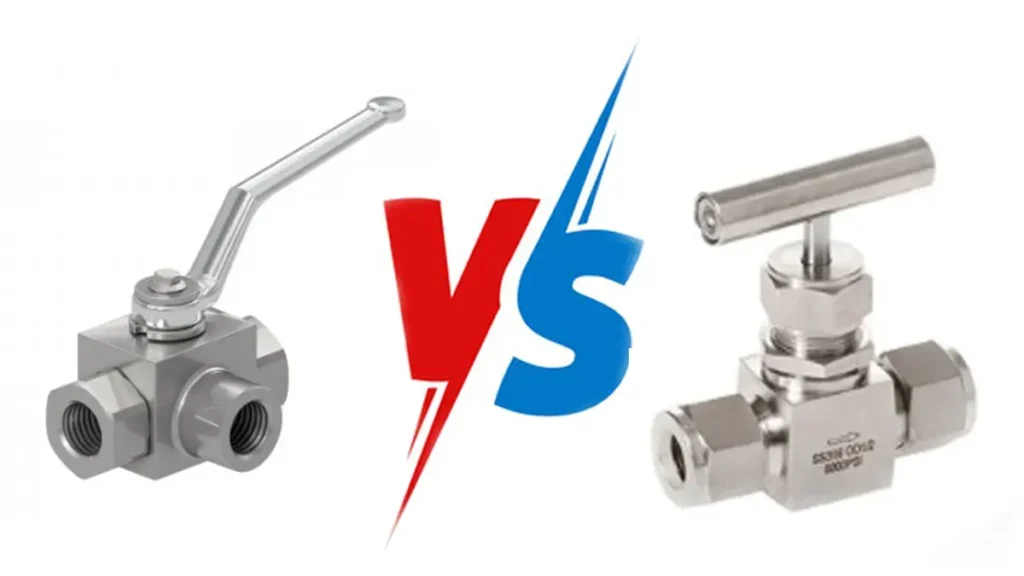
If you need to stop flow quickly, use a ball valve. Ball valves are good for shutting off and isolating flow. On the other hand, if you want to control flow very carefully, you should opt for a needle valve. Needle valves help you adjust flow slowly and exactly. Using the wrong valve can cause problems, especially when considering the differences between Ball Valve vs Needle Valve. You might lose control, have leaks, or even break your system. Many industries emphasize that using the wrong valve can hurt parts and stop machines from working. It is important to know what each valve does best, particularly when comparing Ball Valve vs Needle Valve. This knowledge helps you pick the right valve for your machine. The choice between Ball Valve and Needle Valve is crucial. Your system works better when you choose the right one.
Key Takeaways
- Ball valves shut off flow quickly and can block pipes fast, so they work well when you need lots of liquid to move.
- Needle valves help you control flow very carefully, so they are good for jobs that need small changes.
- Pick a ball valve if you need to stop flow fast in an emergency; it can take high pressure and move a lot of liquid.
- Use a needle valve if you need to measure or control fluids exactly, like in science labs.
- Do not use ball valves to control flow; they cannot make small changes and may break faster.
- Needle valves are not good for quick shutoff; you have to turn them many times, so they are slow in emergencies.
- Always pick the right valve for your job to keep your hydraulic system safe and working well.
- Ask experts or the company for help to choose the best valve for your system’s pressure, flow, and fluid.
What Is a Ball Valve?
Ball Valve Structure
You might wonder what makes a ball valve so reliable in hydraulic systems. The secret lies in its simple yet effective design. A ball valve uses a spherical ball with a hole through the center. When you turn the handle, the ball rotates, allowing fluid to flow or stopping it instantly. The main parts work together to give you fast shutoff and isolation.
Here’s a quick look at the main components and their roles:
| Component | Function |
|---|---|
| Valve Housing | Keeps everything enclosed and provides ports for fluid to enter and exit. |
| Ball | Controls flow with its central bore. The ball can be solid or hollow, which affects flow. |
| Shaft | Connects the ball to the handle or actuator, letting you rotate the ball. |
| Bonnet | Covers the shaft and packing, giving extra support for high-pressure jobs. |
| Seat | Creates a tight seal around the ball, stopping leaks when the valve is closed. |
| Seals, Gaskets, Packing | Prevent leaks between inside and outside surfaces, making sure the valve works smoothly. |
| Electric Actuator | Lets you control the valve remotely, perfect for automated systems. |
You can see that each part has a clear job. The ball valve’s structure makes it easy for you to operate and maintain.
Key Features
If you need a valve that’s quick and dependable, a ball valve stands out. Here are some features you’ll notice:
- The spherical ball with a bore gives you instant control over fluid flow.
- You can operate it easily, even if you’re wearing gloves or working in tight spaces.
- Ball valves have a low risk of leaking, thanks to their tight seals.
- They last a long time if you choose the right materials for your system.
- You shouldn’t use ball valves for throttling. The soft seats can wear out if you try to adjust flow slowly.
Tip: If you want fast shutoff, a ball valve is your best friend. If you need fine control, look for another valve.
Common Types
You’ll find several types of ball valves in hydraulic systems. Each type fits a different job. Here’s a table to help you see where you might use each one:
| Type of Ball Valve | Typical Use Cases |
|---|---|
| Manifold Mounted | Used in mobile hydraulic equipment for control, isolation, and emergency shutoff. |
| Straight | Common in hydraulic presses for shutting off cylinders and controlling fluid bypass. |
| Three-Way | Used in marine systems for deck machinery and steering gear isolation. Also found in automation and power plants for emergency shutdowns. |
You can pick the ball valve type that matches your needs. If you work with mobile equipment, manifold mounted valves help you control and isolate flow. Straight ball valves are great for presses and bypasses. Three-way valves give you flexibility in complex systems.
If you want a valve that’s easy to use, reliable, and perfect for fast shutoff, a ball valve is a smart choice. You’ll see them everywhere in hydraulic machinery because they make your job easier and your system safer.
What Is a Needle Valve?
Needle Valve Structure
If you need to control flow very carefully, use a needle valve. The inside of a needle valve is simple. Each part has an important job. There is a long, thin stem shaped like a needle. This needle moves up and down inside the valve. When you turn the handle, the needle goes in or out of a small hole called the seat. The seat fits the needle’s shape. This makes a tight seal when the valve is closed.
Here’s a quick look at the main parts and what they do:
| Component | Description |
|---|---|
| The Needle | A long, slender, conically-tapered plunger that adjusts into the seat to regulate flow. |
| The Seat | Designed to match the needle, allowing for a complete seal when closed. |
| The Valve Body | Holds all components together. |
| The Packing | Prevents leaks near the handle. |
| The Bonnet | Connects the main body to the handle and the stem. |
The needle’s shape lets you change the flow a little or a lot. You can open the valve just a bit or all the way. The screw-type handle helps you control how much fluid moves through. This design is great for jobs where you need slow and careful flow changes.
Key Features
A needle valve is special because it gives you exact flow control. Here are some reasons to pick this valve:
- You can make small changes to the flow, even with high pressure.
- The needle valve is good for measuring fluids, so you can add chemicals or liquids exactly.
- It protects delicate equipment by letting you control flow very well.
- The design lets you set the gap between the needle and seat, so it works right every time.
Tip: If your system needs careful flow changes, a needle valve gives you the control you want.
Needle valves are important in places where small flow changes matter a lot. You will see them in labs, for adding chemicals, and anywhere you need exact flow control.
Common Types
There are different types of needle valves. Each one is good for a certain job. Here’s a table to help you compare:
| Type | Characteristics |
|---|---|
| Angle Needle Valve | Redirects flow by 90 degrees, useful in space-constrained systems while providing precise flow control. |
| Stainless Steel Needle | Highly resistant to corrosion, durable, suitable for high pressure and temperature, safer for drinking water applications. |
| Nickel-Plated Needle | Affordable and durable, with added corrosion resistance due to nickel plating. |
| Plastic Needle | Lower cost, suitable for non-corrosive fluids, lightweight, and offers nuanced flow control. |
- Angle needle valve: Good for tight spaces where you need to turn the flow.
- Stainless steel needle valve: Best for tough jobs with high pressure or heat, or when you need extra safety.
- Nickel-plated needle valve: Great if you want something strong and not too expensive.
- Plastic needle valve: Works well for fluids that do not cause rust and is easy to move because it is light.
You can choose the needle valve that works best for your system. Each type helps you control flow exactly, whether you need strength, rust protection, or a simple, cheap option.
Ball Valve vs Needle Valve: Key Differences
Design Comparison
When you look at ball valve vs needle valve, you notice big differences in how each valve is built. Ball valves use a round ball with a hole through the center. You turn the handle, and the ball rotates to let fluid pass or stop it. Needle valves use a long, thin needle that moves up and down inside a seat. You twist the handle, and the needle adjusts the gap for flow control.
Here’s a table to help you see the main design differences:
| Factor | Ball Valves | Needle Valves |
|---|---|---|
| Flow control precision | Quick on-off control, not good for fine changes | Precise flow control, perfect for small tweaks |
| Operation speed | Fast quarter-turn for quick changes | Slow, needs many turns to open or close |
| Maintenance and durability | Low maintenance, fewer parts | Durable, but may need more care for precision |
| Visual status indication | Handle shows open or closed easily | Hard to tell if open or closed by looking |
Ball valve vs needle valve design affects how you use them in high-pressure systems and high-flow systems. Ball valves work best when you need fast shutoff. Needle valves shine when you want careful flow control.
Tip: If you need to see if a valve is open or closed at a glance, ball valves make it easy. Needle valves keep you guessing.
Operation Method
The way you operate ball valve vs needle valve feels very different. Ball valves use a handle that you turn a quarter of the way. This quick motion blocks or allows flow in high-flow systems. You get instant results. Needle valves use a screw-type handle. You turn it many times to move the needle up or down. This lets you make tiny changes to flow control.
Check out this table for a clear comparison:
| Valve Type | Functionality Description | User Control Method |
|---|---|---|
| Ball Valve | On/off function, shuts off flow by rotating a ball | Turn handle to block or allow flow |
| Needle Valve | Lets you adjust flow rate with a needle for precise control | Turn handle to fine-tune flow rate |
You feel the difference right away. Ball valves give you speed. Needle valves give you accuracy. In high-pressure systems, ball valves help you shut off flow fast. Needle valves let you adjust flow slowly and carefully.
Note: If you want to control flow in high-flow systems with one quick turn, ball valves are your best bet. If you need to fine-tune flow, needle valves are the way to go.
Flow Control Comparison
Now, let’s talk about flow control. Ball valve vs needle valve shows clear differences here. Ball valves are made for quick on/off action. You use them in high-flow systems where you need to stop or start flow fast. They work well in high-pressure jobs. Needle valves are built for precise flow control. You use them when you want to adjust flow slowly, like in low-flow applications.
Here’s what you need to know:
- Needle valves give you exact flow control. You can set the flow rate just right for delicate jobs.
- Ball valves are perfect for high-flow systems. You get fast shutoff and instant flow changes.
- If you need to stop flow right away, ball valves do the job better.
- In high-pressure systems, ball valves handle the stress and keep things safe.
- Needle valves help you meter flow, making them ideal for measuring fluids or adding chemicals.
When you compare ball valve vs needle valve, think about what your system needs. Do you want speed or precision? Ball valves work best for fast shutoff in high-flow systems. Needle valves help you control flow exactly, even in high-pressure situations.
Callout: Always match the valve to your job. Ball valves for quick shutoff. Needle valves for careful flow control.
Pressure Handling
You want your hydraulic system to work well under pressure. Ball valves and needle valves both do well with high pressure, but they are good at different things. Ball valves are strong. You can use them in places with a lot of pressure. Here are some facts:
- Most ball valves for hydraulics can handle 1,000 to 6,000 PSI.
- Some special ball valves can even handle up to 10,000 PSI.
- Ball valves come in many pressure classes, like Class 150 to Class 2500.
Needle valves also work with high pressure. They are best for jobs where you need slow flow and high pressure. You can control the flow very well, but they are not used for the biggest flow rates.
Tip: If you need to stop flow fast and handle a lot of pressure, use a ball valve. If you want to change flow slowly and carefully, even with high pressure, pick a needle valve.
Durability and Cost
You want your valves to last long and not cost too much to fix. Ball valves and needle valves last for different times and need different care. Ball valves are made to last. They are often made from strong metals like stainless steel or brass. Here is what you should know:
- Ball valves can last from 8 to 20 years, depending on the material and how you care for them.
- Some ball valves in factories can last even longer if you keep them clean and check them often.
- Ball valves do not need much fixing because they have fewer moving parts.
Needle valves let you control flow exactly, but they need more care. They are not as strong as ball valves when there is a lot of pressure or flow.
- Needle valves are best for jobs with slow flow.
- They might need fixing more often, especially if you use them in hard jobs.
- Needle valves usually do not last as long as ball valves if you use them the same way.
Note: If you want a valve that lasts many years and does not need much fixing, choose a ball valve. If you need to control flow very carefully and do not mind fixing it more, a needle valve is a good choice.
Comparison Table
Here is a table to help you see the differences between ball valves and needle valves for hydraulic systems:
| Parameter | Needle Valves | Ball Valves |
|---|---|---|
| Flow Control Mechanism | Fine, precise control with a tapered needle for small adjustments | Quick on/off control with a hollow ball, minimal resistance |
| Flow Rate and Pressure Handling | Handles low flow rates and high pressure, great for tight control | Designed for high flow and low pressure drop, ideal for larger pipelines |
| Precision and Adjustability | Allows very small changes in flow, perfect for pressure regulation | Less suited for fine adjustments, best for full-on or full-off flow |
| Durability | Needs more maintenance, shorter lifespan in tough jobs | Long-lasting (8–20 years), less maintenance needed |
| Cost | Usually lower upfront cost, but may cost more over time due to maintenance | Higher initial cost, but saves money with longer life and less upkeep |
Callout: Think about what is most important for your system—speed, control, how long it lasts, or cost. Picking the right valve makes your hydraulic system safer and easier to use.
Ball Valve Operation in Hydraulics
How Ball Valves Work
You might wonder how a ball valve works in a hydraulic system. The way it works is simple and easy to understand. When you turn the handle, the ball inside turns too. If the handle is in line with the pipe, the hole in the ball lets fluid move straight through. If you turn the handle sideways, the solid part of the ball blocks the flow. This means you can turn flow on or off very fast. You can stop or start the fluid in just a few seconds. Ball valves use this on-off action to shut off and isolate flow. This gives you a reliable way to control hydraulic fluid, especially when you need to stop flow quickly.
Tip: If you need to block part of your hydraulic system fast, a ball valve helps you do it. Just turn the handle and the flow stops right away.
Advantages for Shutoff
Ball valves have many good points when you want to stop flow in hydraulic systems. They are fast, dependable, and work well. Let’s see how ball valves compare to other valves:
| Advantage | Ball Valves | Other Valve Types |
|---|---|---|
| Actuation Speed | Fast quarter-turn actuation | Slower actuation methods |
| Pressure Drop | Minimal pressure drop when open | Higher pressure drop |
| Maintenance | Low maintenance due to simple design | Higher maintenance requirements |
| High-Pressure Capability | Up to 6,000 psi | Generally lower pressure ratings |
| Flow Capability | Bidirectional flow | Limited flow direction |
You can turn the valve on or off with just a small turn. Ball valves keep your system working well because their design lets fluid move easily. They do not need much fixing because they have few moving parts. Ball valves can handle high pressure, sometimes up to 6,000 psi, so they are good for tough jobs. You can trust them to stop flow quickly in emergencies. They work both ways, so you do not have to worry about which way the fluid goes.
- Quick shutoff in emergencies
- Easy control with a short turn
- Keeps system working well with full-bore design
Limitations for Flow Control
Ball valves are great for fast on-off control, but they have some problems if you want to control flow carefully. You cannot adjust flow exactly because the design makes the fluid path uneven when the valve is not all the way open. If you use ball valves to control flow, the parts can wear out faster. This can cause leaks or even make the valve break. Cavitation can happen, which hurts the inside and makes the valve not last as long. In high-pressure systems, floating ball valves may not seal well, so leaks can happen.
- Ball valves cannot give you exact flow control because their design makes the fluid path uneven when partly open.
- Using ball valves to control flow can wear out the parts faster, causing leaks or valve failure.
- Controlling flow with ball valves can cause cavitation, which damages the inside and shortens the valve’s life.
- In high-pressure systems, floating ball valves may not keep a good seal, so leaks can happen.
Note: If you need to adjust flow carefully, you should use a different valve. Ball valves are best for fast shutoff and isolation, not for fine flow control.
Needle Valve Operation in Hydraulics
How Needle Valves Work
You use a needle valve to control flow by turning a handle. The handle is attached to a screw that has a pointy end, shaped like a needle. When you turn the screw to the left, the needle moves away from the seat. This makes the opening bigger, so more fluid can go through. If you turn the screw to the right, the needle gets closer to the seat. The opening gets smaller, so it is harder for fluid to pass and the flow slows down.
Here’s how it works:
- The needle valve makes a small space in the hydraulic line.
- Turning the handle to the left lets more fluid move through.
- Turning it to the right makes the opening smaller and slows the flow.
- When you close the valve, the pressure before the valve goes up, but the flow stays the same until the space gets really small.
- If the valve is almost closed, the flow drops a lot and the relief valve might open.
You can change the flow a little at a time. Needle valves do not just turn flow on or off like ball valves. You get careful control, which is great for jobs like changing how fast an actuator moves or keeping pressure steady.
Tip: If you want to change flow slowly and exactly, a needle valve gives you the control you need.
Advantages for Flow Control
Needle valves are great when you want to control flow very exactly. You can make small changes and get the same results every time. Here is what makes needle valves special:
- Very good at controlling flow
- Smooth and steady changes
- Easy to adjust the same way each time
- Works well when you need only a little flow
- Keeps a tight seal even when under pressure
- Small size fits in control panels
- Can be made from many materials
You can use needle valves when you need to measure fluids, add chemicals, or protect equipment that is easy to damage. The design lets you set the space between the needle and seat, so you always get the right amount of flow. You do not have to worry about leaks because the seal stays tight, even when there is a lot of pressure.
Callout: Needle valves help your hydraulic system work well. You get steady flow and good performance.
Limitations for Shutoff
Needle valves are not the best for every job. If you need to stop flow fast, you might have problems. Here are some things to think about:
- Slow to open or close: You have to turn the handle many times to open or close the valve all the way.
- Not good for big flow: The small opening means not much fluid can move at once.
- Parts can wear out: If you use the valve a lot in tough jobs, the needle and seat can get worn.
- More pressure loss: The small space makes the pressure drop more than with other valves.
You might see that needle valves take too long to stop flow in an emergency. They are best for careful flow control, not for stopping flow quickly. If you need to stop flow right away or move a lot of fluid, you should use a different valve.
Note: Use needle valves when you need careful control, not fast shutoff. If you need speed, ball valves are better.
Flow Control: Ball Valve vs Needle Valve
Precise Flow Adjustment
You want your hydraulic system to work just right. That means you need accurate flow control. Ball valves give you quick on or off action. You turn the handle, and the flow either starts or stops. You cannot make fine adjustments with a ball valve. It is like flipping a light switch—either on or off.
Needle valves work differently. You turn the handle, and the needle moves slowly. This lets you make small changes to the flow. Each turn gives you tight control over how much fluid moves. You can set the flow for low-flow applications and keep it steady. If you need to add chemicals drop by drop or measure fuel in a carburetor, a needle valve helps you do that. You get the power to make fine adjustments every time.
Tip: If you need to control low flow with precision, choose a needle valve. Ball valves are better for fast shutoff, not for careful flow control.
Throttling and Metering
Throttling means you want to slow down or speed up the flow. Metering means you want to measure and control the amount of fluid. Ball valves do not work well for these jobs. They only have two positions: open or closed. You cannot use them for low-flow applications that need careful changes.
Needle valves shine when you need to throttle or meter. The finely threaded stem lets you open the valve just a little or a lot. You can control the flow for low flow and make sure you get the same result every time. This is important in chemical processing, labs, and places where safety matters. You can trust a needle valve to give you fine adjustments and steady flow.
- Ball valves: Fast, reliable shutoff. Not for metering or throttling.
- Needle valves: Perfect for metering, throttling, and low-flow applications.
Note: For jobs that need fine adjustments and low flow, needle valves are the best choice.
Application Scenarios
You might wonder where to use each valve. Here is a table to help you see the difference:
| Valve Type | Typical Applications | Preferred Use Cases |
|---|---|---|
| Ball Valve | On/Off Control, High-Flow Applications, Rapid Valve Actuation | Water purification, oil and gas, agriculture, emergency shut-down systems |
| Needle Valve | Precise Flow Control, Laboratory Settings, Instrumentation, Pneumatic and Hydraulic Systems | Pharmaceutical and chemical industries, scientific equipment, pressure gauging |
If you work in water treatment or need to stop oil flow fast, use a ball valve. If you need to measure pressure or add chemicals slowly, a needle valve is your best tool. You get fine adjustments and low flow for delicate jobs. Ball valves keep things simple and safe when you need to act quickly.
Callout: Always match your valve to your job. For fast shutoff, pick a ball valve. For accurate flow control and low-flow applications, go with a needle valve.
Shutoff Performance
Ball Valve Shutoff
When you need to stop flow fast, a ball valve gives you the power to do it. You just turn the handle a quarter turn, and the flow stops right away. This quick action makes ball valves a favorite in many hydraulic systems. You can count on them to seal tightly, even when the pressure is high. The design uses a round ball that fits snugly against the seat. This creates a strong seal and keeps leaks to a minimum.
You might wonder how well a ball valve holds up over time. The answer is, very well. The simple design means there are fewer parts to wear out. You do not have to worry much about leaks, even after years of use. Ball valves work great in places where you need to shut off flow quickly and keep everything safe. They handle high pressure and do not lose their sealing power easily.
Here’s a quick look at how ball valves compare to needle valves for shutoff:
| Feature | Ball Valves | Needle Valves |
|---|---|---|
| Shutoff Performance | Quick shutoff, excellent sealing | Precise flow regulation, gradual control |
| Leakage Rate | Generally lower leakage rates | Leak-proof but sensitive to wear |
| Suitability | High-pressure applications | Instrumentation and fine control |
| Wear Sensitivity | Low wear during operation | More sensitive to wear over time |
Tip: If you want a valve that shuts off flow fast and keeps leaks low, a ball valve is a smart choice for your hydraulic system.
Needle Valve Shutoff
A needle valve works differently when you want to stop flow. You turn the handle many times, and the needle moves slowly into the seat. This lets you control the flow with great care. You can close the valve all the way, but it takes more time than a ball valve. The seal is tight, but the small parts inside can wear out if you use the valve a lot.
Needle valves shine when you need to adjust flow little by little. They are perfect for jobs where you want to change flow slowly and keep it steady. If you use a needle valve for shutoff, you get a good seal, but you might notice more wear over time. The valve can start to leak if the needle or seat gets damaged. You should check the valve often if you use it to stop flow in your system.
You might pick a needle valve if you care more about fine control than speed. For fast shutoff, though, you will find a ball valve works better.
Note: Use a needle valve when you need careful flow control. For quick and reliable shutoff, choose a ball valve.
When to Use a Ball Valve
Best Applications
You want your hydraulic system to run smoothly and safely. That means you need the right valve for the job. A ball valve works best when you need to stop flow fast or isolate a part of your system. You can count on it for quick shutoff and reliable sealing. But before you pick one, you should think about a few important things.
Here’s what you should check when choosing a ball valve for your hydraulic equipment:
- Make sure the seal can handle the highest pressure your system will reach. If the seal fails, you could have leaks or even damage.
- Look at the temperature range. The seal material must work well in the hottest and coldest conditions your system faces.
- Check if the seal material matches your hydraulic fluid. Some fluids can break down certain seal types.
- Think about abrasion. If your fluid has tiny particles, you need a seal that can resist wear and tear.
- Consider how fast you will open or close the valve. Quick movements can stress the seal and shorten its life.
- Choose materials that last a long time. Durable seals mean less maintenance and fewer shutdowns.
Tip: Always match the valve’s specs to your system’s needs. This helps you avoid leaks, breakdowns, and costly repairs.
You should use a ball valve when you want fast action, strong sealing, and low maintenance. It’s a smart choice for emergency shutoff, system isolation, and places where you need to control high flow rates.
Hydraulic Equipment Examples
You see ball valves in many types of hydraulic equipment. They show up in machines that need quick isolation or emergency shutoff. For example, you might find them in mobile hydraulic units, presses, and power packs. They also work well in water treatment plants, oil and gas systems, and agricultural machines.
Ball valves do a great job in these systems because they can handle high flow rates and stop fluid movement right away. You just turn the handle, and the flow stops. This quick action helps you keep your equipment safe and your process under control. But you should watch out for hydraulic shock. If you close the valve too fast, the sudden stop can cause a pressure spike. Always close the valve smoothly to protect your system.
You can trust a ball valve for jobs where you need to isolate a section of pipe, shut off a pump, or stop flow during maintenance. They make your work easier and help prevent accidents.
Callout: If you need a valve that acts fast and seals tight, a ball valve is your go-to choice for most hydraulic equipment.
When to Use a Needle Valve
Best Applications
You want your hydraulic system to work well. Sometimes, you must control fluid flow very carefully. A needle valve helps you do this. You use it when you need slow and steady flow changes. It is great for jobs that need accuracy.
Here are some places where you use a needle valve:
- Laboratory equipment
- Chemical dosing systems
- Fuel injection setups
- Hydraulic test benches
- Water treatment plants
A needle valve protects sensitive instruments. It stops sudden flow changes that can hurt your equipment. If you work with chemicals, you can add them drop by drop. This keeps your process safe and steady. Needle valves are also used in fuel systems. They help you control how much fuel goes into an engine. This gives you better performance and less waste.
Tip: If you need tiny changes in fluid movement, a needle valve gives you good control.
Here is a table that shows where needle valves work best:
| Application Area | Why Use a Needle Valve? |
|---|---|
| Laboratory Instruments | Precise flow for experiments |
| Chemical Processing | Safe dosing and mixing |
| Fuel Systems | Accurate fuel delivery |
| Hydraulic Testing | Controlled pressure and flow |
| Water Treatment | Steady chemical addition |
Needle valves are used for jobs where accuracy is important. You get steady flow and avoid sudden spikes.
Instrumentation and Control
You need good control in your system. Instrumentation and control setups often use needle valves. You can adjust flow rates with great precision. This is important when you measure pressure or regulate gas flow. You want your readings to be correct. A needle valve helps keep everything steady.
In control panels, needle valves are used for fine tuning. You can set the flow exactly where you want it. If you work with sensors or gauges, you need stable flow. Needle valves stop sudden jumps in pressure. You get smooth operation and better data.
Here are ways you use needle valves in instrumentation and control:
- Adjusting flow to pressure gauges
- Regulating gas flow for analyzers
- Controlling sample flow in testing labs
- Protecting sensitive sensors from sudden changes
Note: You get the best results when you use a needle valve for careful control. Your instruments stay safe, and your system works well.
You can trust a needle valve to give you steady flow and reliable readings. It is a smart choice for any setup where you need to measure, regulate, or protect.
Ball Valve vs Needle Valve vs Throttle Valve
Throttle Valve Overview
You might hear about throttle valves when working with hydraulic systems. Throttle valves help you control how fast fluid moves. You turn the handle, and the valve changes the size of the opening. This lets you slow down or speed up the flow. Throttle valves do not shut off flow completely. They only adjust how much fluid passes through. You use throttle valves when you want steady flow but do not need super precise control.
Throttle valves look simple. You see a body, a handle, and an adjustable opening. You can use them in machines where you want to keep flow at a certain rate. They work well in cooling systems, pumps, and circuits that need basic flow adjustment.
Tip: If you want to change flow speed without stopping it, a throttle valve makes your job easier.
Comparison of Three Valve Types
You might wonder how throttle valves compare to ball valves and needle valves. Each valve has its own job. Let’s look at the differences:
| Valve Type | Main Function | Flow Control Precision | Shutoff Ability | Typical Use Cases |
|---|---|---|---|---|
| Ball Valve | Quick shutoff/isolation | Low | Excellent | Emergency shutoff, isolation |
| Needle Valve | Precise flow adjustment | High | Good | Metering, instrumentation |
| Throttle Valve | Adjustable flow rate | Medium | Poor | Speed control, cooling |
- Ball valves give you fast shutoff. You turn the handle a quarter turn, and the flow stops.
- Needle valves let you adjust flow very carefully. You turn the handle many times for small changes.
- Throttle valves help you set flow speed. You get steady flow but not super fine control.
Note: Each valve works best for a different job. You need to match the valve to your system’s needs.
Choosing for Flow Control
You want your hydraulic system to work well. Picking the right valve helps you get the results you want. Here’s how you can choose:
- If you need to stop flow fast, pick a ball valve. You get quick action and strong sealing.
- If you want to control flow exactly, use a needle valve. You can make tiny changes and keep flow steady.
- If you need to adjust flow speed but do not need super precise control, choose a throttle valve. You can set the rate and keep it steady.
Ask yourself these questions:
- Do you need fast shutoff or isolation? Go with a ball valve.
- Do you need to meter or measure flow? Pick a needle valve.
- Do you want to slow down or speed up flow? Try a throttle valve.
Callout: Always check your system’s needs before picking a valve. The right choice keeps your machines safe and your work easy.
You can talk to a hydraulic expert if you feel unsure. They help you match the valve to your job. You get better performance and fewer problems.
Common Hydraulic Applications
Hydraulic systems show up in many industries. You see them in factories, farms, labs, and even on ships. Each valve type has its own job. Let’s look at where you use ball valves, needle valves, and throttle valves in real life.
Ball Valve Uses
You use ball valves when you need to stop flow fast or isolate a part of your system. These valves work well in places where safety matters. Here are some common applications:
- Emergency shutoff in hydraulic power units
- Isolation of pumps and cylinders in mobile equipment
- Main line control in water treatment plants
- Oil and gas pipelines for quick shutoff
- Agricultural sprayers and irrigation systems
Ball valves help you keep things safe. You can stop flow in seconds. If you need to do repairs, you just turn the handle and work without worry. Ball valves also handle high pressure and large flow rates. You find them in many machines because they last long and need little care.
Tip: Use ball valves when you want fast action and strong sealing. They make your job easier in busy or dangerous places.
Needle Valve Uses
Needle valves give you fine control over flow. You use them when you need to make small changes or protect sensitive tools. Here are some common applications for needle valves:
- Laboratory equipment for chemical dosing
- Pressure gauges and test benches
- Fuel injection systems in engines
- Flow control in water treatment labs
- Sampling lines in chemical plants
You can adjust flow drop by drop with a needle valve. This helps you measure, mix, or protect delicate parts. If you work in a lab or need to add chemicals slowly, needle valves are your best choice. They also help you keep readings steady on gauges and sensors.
Note: Choose needle valves when you need careful flow control. They keep your system steady and safe.
Throttle Valve Uses
Throttle valves help you set the speed of flow. You use them when you want to slow down or speed up fluid, but you do not need exact control. Here are some places you find throttle valves:
- Cooling circuits in hydraulic presses
- Speed control for hydraulic motors
- Flow adjustment in lubrication systems
- Pump bypass lines in industrial machines
- Simple flow regulation in agricultural equipment
Throttle valves let you keep flow steady. You turn the handle and set the rate you want. These valves work well in systems that do not need fast shutoff or super fine control. They are easy to use and help you get the job done.
Callout: Throttle valves are great for basic flow control. Use them when you want to keep things simple.
You see these valves in many common applications. Each type has its own strengths. When you match the right valve to the job, your hydraulic system works better and lasts longer.
Selection Mistakes to Avoid
Choosing the right valve for your hydraulic system can feel tricky. You want your machines to run smoothly and safely. But it’s easy to make mistakes if you don’t know what to watch for. Let’s look at some common errors and how you can avoid them.
Misusing Ball Valves for Flow Control
You might think a ball valve can do it all. It’s tempting to use one for both shutoff and flow control. But ball valves are not built for fine adjustments. If you try to throttle flow with a ball valve, you’ll run into problems. The ball design gives you either full flow or no flow. When you leave the valve partly open, the seats can wear out fast. This leads to leaks and even valve failure.
Tip: Use ball valves for quick shutoff or isolation only. If you need to adjust flow slowly, pick a needle valve instead.
You’ll save money and time by using each valve for its proper job. Ball valves keep your system safe when you need to stop flow fast. They don’t give you the control you need for metering or throttling.
Misusing Needle Valves for Shutoff
Needle valves look precise and sturdy. You might want to use them for shutoff, but that’s not their strong point. Needle valves close slowly. You have to turn the handle many times to stop the flow. In an emergency, this delay can cause trouble. The small needle and seat can also wear out if you use the valve for frequent shutoff.
If you use a needle valve to stop flow quickly, you risk leaks and damage. The valve might not seal as tightly as you need. Over time, you’ll notice more maintenance and possible system downtime.
Note: Choose needle valves for precise flow control, not for fast shutoff. For emergencies, stick with a ball valve.
Ignoring Pressure and Flow Specs
You need to match the valve to your system’s pressure and flow. If you ignore these specs, you can damage your equipment. Some people pick a valve just because it’s cheap or easy to find. This can lead to leaks, bursts, or even machine failure.
Here’s a table that shows other mistakes you should avoid and how to fix them:
| Mistake | Explanation | Solution |
|---|---|---|
| Focusing solely on price | Cheap valves can cost more in repairs and downtime. | Look at total cost, including maintenance and replacements. |
| Overlooking electrical compatibility | Wrong match can cause solenoid burnout or erratic operation. | Check that the valve works with your electrical system. |
| Ignoring maintenance | Skipping maintenance leads to poor performance and breakdowns. | Set up a regular maintenance schedule for your valves. |
You want your hydraulic system to last. Always check the pressure and flow ratings before you buy a valve. Don’t let price be your only guide. Make sure the valve fits your system and plan for regular maintenance.
Callout: The right valve keeps your machines safe, saves you money, and helps you avoid headaches down the road.
How to Choose the Right Valve
Key Selection Factors
Choosing the right valve can feel tricky, but you can make it simple. You just need to focus on a few key factors. Here’s what you should look at before you decide:
- Purpose: Ask yourself, “Do I need to stop flow fast, or do I want to control flow slowly?” Ball valves work best for quick shutoff. Needle valves give you fine control. Throttle valves help you adjust flow speed.
- Pressure Rating: Check how much pressure your system uses. Pick a valve that can handle the highest pressure you expect.
- Flow Rate: Think about how much fluid you need to move. Ball valves work well for high flow. Needle valves fit low-flow jobs.
- Fluid Type: Some fluids can damage certain materials. Make sure the valve material matches your fluid. For example, stainless steel resists rust. Plastic works for non-corrosive fluids.
- Temperature Range: Look at how hot or cold your system gets. Choose a valve that works in those conditions.
- Size and Space: Measure the space where you want to put the valve. Some valves need more room to turn or fit.
- Maintenance Needs: Decide if you want a valve that needs little care. Ball valves last long with less fixing. Needle valves may need more attention.
Tip: Write down your system’s pressure, flow, and fluid type before you shop for a valve. This helps you pick the right one the first time.
Matching Valve to Application
You want your system to run smoothly. That means you need to match the valve to your job. Here’s a quick guide to help you:
| Application Need | Best Valve Type | Why It Works Well |
|---|---|---|
| Fast shutoff | Ball Valve | Quick quarter-turn action, strong seal |
| Precise flow control | Needle Valve | Fine adjustments, steady flow |
| Adjustable flow speed | Throttle Valve | Easy to set and change flow rate |
| High-pressure systems | Ball or Needle Valve | Both handle high pressure, pick based on control |
| Low-flow applications | Needle Valve | Accurate control for small amounts |
| Emergency isolation | Ball Valve | Stops flow instantly, keeps system safe |
Let’s say you work in a lab and need to add chemicals drop by drop. You should use a needle valve. If you run a water treatment plant and need to stop flow fast, a ball valve is your best choice. For a cooling system where you want to slow down or speed up flow, a throttle valve makes sense.
Callout: Always match the valve to your job. The right valve keeps your system safe and easy to use.
Consulting Manufacturers
Sometimes, you might feel unsure about which valve to pick. That’s okay! You can always talk to the manufacturer or a hydraulic expert. They know their products and can help you find the perfect fit.
Here’s how you can get the best help:
- Gather your system details. Write down pressure, flow rate, fluid type, temperature, and pipe size.
- Make a list of what you want the valve to do. Do you need fast shutoff, fine control, or just steady flow?
- Ask the manufacturer for advice. Share your details and needs. They can suggest the right valve and material.
- Request technical data sheets. These show you the specs and help you compare options.
- Don’t be afraid to ask questions. Good manufacturers want to help you succeed.
Note: The right advice can save you time, money, and stress. Experts can help you avoid mistakes and get the best results.
You don’t have to guess when picking a valve. Use your system info, match the valve to your job, and reach out to experts when you need help. You’ll get a valve that works well and keeps your hydraulic system running strong.
Information Needed for a Quote
When you want a quote for a hydraulic valve, you need to give the supplier the right information. This helps you get the best price and makes sure the valve fits your system. If you miss some details, you might get a valve that does not work well or costs more than you expect. Let’s look at what you should prepare before you ask for a quote.
Technical Specs
You need to know the main technical specs for your valve. These details help the supplier match the right product to your needs. If you give clear specs, you save time and avoid mistakes. Here are the most important technical specs you should have ready:
| Specification | Description |
|---|---|
| Max Working Pressure | The highest working pressure the valve can handle. |
| Flow Rating (L/min or GPM) | Maximum hydraulic fluid flow through the valve without performance loss. |
| Response Time | Time taken for the valve to open or close after receiving a signal. |
| Temp Range | Operational temperature range for reliable performance. |
| Duty Cycle | Maximum time the valve can be active before overheating. |
You can find these numbers in your machine’s manual or by asking your engineer. If you are not sure, write down what you do know and ask the supplier for help. The more details you give, the better the quote you will get.
Tip: Always double-check your pressure and flow numbers. A small mistake here can lead to big problems later.
Application Details
Technical specs are important, but you also need to share how and where you will use the valve. This helps the supplier pick the best material, size, and design for your job. Here are some questions you should answer:
- What type of fluid will flow through the valve? (oil, water, chemicals, etc.)
- What is the main purpose? (shutoff, flow control, metering)
- Where will you install the valve? (indoor, outdoor, mobile equipment, lab)
- What are the pipe or port sizes?
- Do you need special features? (manual or electric operation, corrosion resistance, certifications)
If you tell the supplier about your application, you get a valve that lasts longer and works better. For example, if you use the valve outdoors, you might need stainless steel. If you work with chemicals, you may need special seals.
Note: The more you share about your application, the easier it is for the supplier to help you. You get a quote that matches your real needs, not just a guess.
When you gather both technical specs and application details, you make the quoting process smooth and fast. You also avoid surprises and get a valve that fits your system perfectly.
Conclusion
You’ve seen that ball valves and needle valves each have their own strengths. Ball valves give you quick shutoff and handle high flow. Needle valves let you control flow with precision. Here’s a quick look:
- Ball valves: Fast, reliable shutoff for big jobs.
- Needle valves: Careful flow control for delicate work.
| Feature | Ball Valve | Needle Valve |
|---|---|---|
| Best Use | On/off, isolation | Precise adjustments |
| Flow Volume | High | Low |
Chenyang Hydraulic can help you find the right valve or even design a custom solution. If you’re not sure, talk to an expert for advice that fits your needs.
FAQ
What is the main difference between a ball valve and a needle valve?
You get fast on/off control with a ball valve. A needle valve gives you precise flow adjustments. Ball valves work best for quick shutoff. Needle valves help you fine-tune flow.
Can I use a ball valve for flow control?
No, you shouldn’t. Ball valves are not made for precise flow control. If you try, you might wear out the seats and cause leaks.
Where should I use a needle valve?
You should use a needle valve when you need to control flow slowly and carefully. These valves work well in labs, chemical dosing, and pressure gauges.
Are ball valves good for high-pressure systems?
Yes! Ball valves handle high pressure very well. You can use them in hydraulic systems, oil and gas, and water treatment plants.
How do I know which valve to pick?
Ask yourself what you need. Do you want fast shutoff? Pick a ball valve. Need careful flow control? Go with a needle valve. Not sure? Talk to a hydraulic expert.
Do needle valves last as long as ball valves?
Usually, ball valves last longer. Needle valves need more care, especially if you use them a lot. Regular checks help them last.
Can I use a throttle valve instead?
You can use a throttle valve if you want to adjust flow speed but don’t need super fine control. Throttle valves are great for steady flow in cooling or lubrication systems.