
If you have asked, “Can You Use a Ball Valve to Control Flow?” the answer is yes, but there are big limits. When you open a ball valve partway, you can slow the flow. But you will not get exact control. This happens because ball valves open fast. About 80-90% of the flow comes through with a small turn. So, it is hard to control the flow well. You may also see problems like cavitation or seat damage if you try to slow flow for a long time. For better control, you should use a throttle or needle valve. This article talks about hydraulic and industrial systems, not your kitchen sink.
| Characteristic | Implication on Flow Control |
|---|---|
| Quick-opening | Most flow moves with little handle turn—hard to adjust. |
| High pressure recovery | Can cause cavitation and other system problems. |
| Soft-seat limitations | Seats can break if you throttle too long. |
| Floating ball design | Makes flow control uneven and not steady. |
Key Takeaways
- Ball valves are good for turning flow on or off fast, but they are not good for making small changes to flow.
- If you leave a ball valve partly open, it can make the water or air move in a rough way. This can also make loud sounds and damage the valve over time.
- If you need to control flow very carefully, you should use a throttle valve or a needle valve instead.
- You can easily see if a ball valve is open or closed by looking at the handle.
- In an emergency, you can shut off a ball valve very quickly, so it is a good choice when you need to act fast.
- V-port ball valves can control flow better than regular ball valves, so people use them in factories.
- You should always look at the pressure and temperature ratings of a ball valve before using it. This helps stop leaks and keeps the valve from breaking.
- Picking the right kind of valve is very important for keeping your system safe and working well.
Can You Use a Ball Valve to Control Flow?
Ball Valve Function in Hydraulic Systems
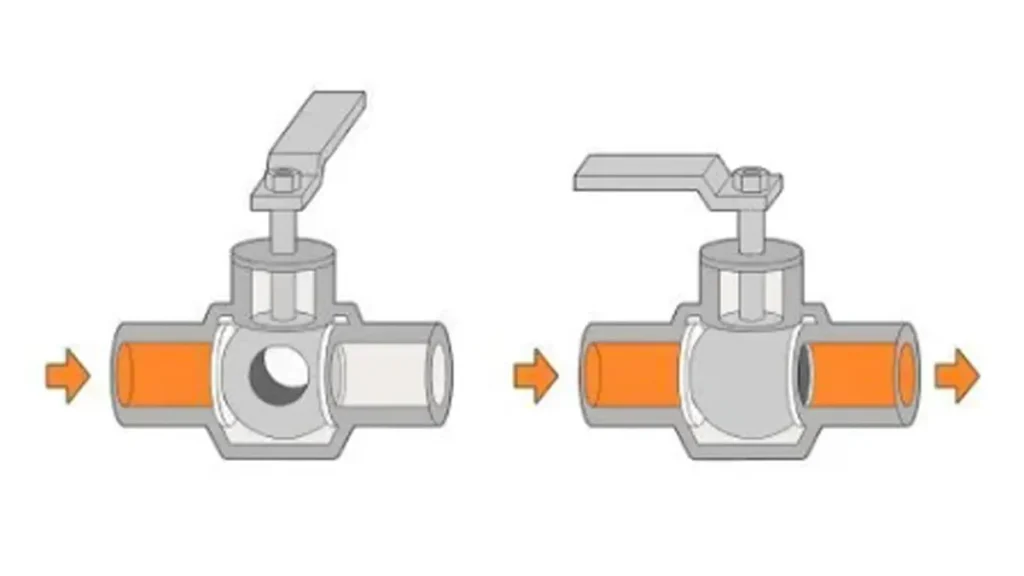
When you ask, “Can you use a ball valve to control flow?” you probably want to know how it works inside a hydraulic system. The main job of a ball valve is to start or stop the flow quickly. Inside, you will find a round ball with a hole through the middle. When you turn the handle, the ball rotates and either lets fluid pass or blocks it completely. This design gives you fast shut-off with very little leakage.
Here’s a quick look at how the internal mechanism affects what you can do:
| Feature | Description |
|---|---|
| Internal Mechanism | Spherical disc that rotates to control flow, allowing rapid on/off control with minimal leakage. |
| Flow Control Variants | V-port or characterized variants are used for precise flow control, unlike standard full-bore designs. |
| Automation | Low operating torque facilitates easy automation with quarter-turn actuators, enhancing functionality in hydraulic systems. |
| Applications | Commonly used for pipeline isolation in oil and gas, and as zone isolation valves in water distribution networks. |
Most hydraulic systems use ball valves for isolation, not for fine-tuning flow. If you need to adjust flow with high accuracy, you will want a dedicated flow control valve. For example, coolant valves can keep flow within ±0.5% of your set point. Standard ball valves usually only get you within ±1-2%. That difference matters if you need steady, precise control.
Quarter-Turn Operation and Handle Position
You might notice that ball valves work with a simple quarter-turn. This means you only need to turn the handle 90 degrees to go from fully open to fully closed. That quick action is a big reason why people like them for emergency shut-off. The full-bore passageway inside the valve keeps resistance low, so you get a strong flow with little pressure drop. This makes your system more energy efficient compared to other valves, like gate or globe valves, which need several turns and slow down the process.
The quarter-turn design also helps you react fast. In places like petrochemical plants, you need to stop flow right away if something goes wrong. Ball valves let you do that with just a flick of the wrist. The tight seal between the ball and the seats keeps leaks to a minimum, so you can trust the valve to hold pressure when you need it most.
Visual Flow Indication
You do not need to guess if a ball valve is open or closed. The handle gives you a clear visual clue. Here’s how you can tell:
- Handle parallel to the valve body: The valve is open, and fluid can flow.
- Handle perpendicular to the valve body: The valve is closed, and flow stops.
This simple indicator helps you check the valve status at a glance. You do not need special tools or gauges. Just look at the handle position, and you will know if the system is running or shut off.
So, can you use a ball valve to control flow? Yes, you can, but you will not get the same accuracy as with a true flow control valve. Ball valves shine when you need quick shut-off, reliable isolation, and easy operation. If you want to fine-tune flow, you should look at other options designed for that job.
Ball Valve Design and Purpose
On-Off Shut-Off Role
You probably want a valve that can stop flow fast and keep leaks away. That’s where ball valves shine. They use a simple design with a round ball inside. When you turn the handle, the ball rotates and either opens or closes the passage. This makes them perfect for on-off shut-off jobs. Take a look at what makes them so good for this role:
| Feature | Description |
|---|---|
| Quick Operation | A quarter-turn fully opens or closes the valve. |
| Durability | Made from strong materials like brass or stainless steel. |
| Leak Resistance | Gives a tight seal, so leaks are rare. |
| Versatility | Works with water, gas, and chemicals. |
You can see why so many people trust ball valves for quick shut-off. You get a strong seal and fast action every time.
Advantages in Hydraulic Circuits
Ball valves offer a lot of benefits when you use them in hydraulic systems. Here are some reasons you might pick them over other valve types:
- Quick and easy operation lets you react fast in emergencies.
- Reliable shut-off means you don’t have to worry about leaks.
- Minimal pressure drop keeps your system running smoothly.
- Durability helps the valve last through tough jobs and harsh conditions.
- Versatility lets you use them with many fluids and gases.
- Low maintenance saves you time and money.
- Bi-directional flow means you can send fluid either way.
- Some designs give you better control over flow rates.
- Reduced friction leads to less wear and lower energy use.
- Fire-safe options work well in critical or dangerous places.
You get a lot of value from ball valves in hydraulic circuits. They make your system safer, easier to use, and more reliable.
Limitations for Flow Control
Even though ball valves work great for on-off tasks, they do not handle precise flow control well. When you try to use them for throttling, you might notice a few problems:
Tip: If you need to adjust flow with high accuracy, you should look at other valve types.
The ball inside opens most of the way with just a small turn. This makes it hard to set the flow exactly where you want it. You might also see extra wear on the seats if you leave the valve partly open for a long time. Noise and vibration can show up, too. These issues can shorten the life of your valve and hurt your system’s performance.
So, if you want to fine-tune flow, you should pick a different valve. Ball valves do best when you use them for quick shut-off and isolation.
Ball Valves in Flow Control Applications
What Happens When Partially Open
When you leave ball valves only partway open, you change how fluid moves through your system. You might think you can control the flow by turning the handle just a little, but things get tricky fast.
Flow Instability and Pressure Drop
A ball valve works best when it is either fully open or fully closed. If you stop in the middle, the flow becomes unstable. The ball inside does not let fluid move smoothly. Instead, you get sudden changes in pressure and flow. Take a look at this table to see what happens in different positions:
| Situation | Condition | Pressure Behavior |
|---|---|---|
| Closed | Ball seated, cracking pressure not reached | Flow = 0, upstream pressure builds |
| Fully Open | Flow sufficient to compress spring fully | Minimal additional pressure beyond cracking |
| Transitional | Insufficient flow for full opening | Ball oscillates; severe throttling occurs |
When you keep the valve in a transitional spot, the pressure can jump up and down. This makes it hard to keep your system steady. You might see the flow “gulp” or surge instead of moving smoothly. That is not good for your equipment.
Vibration, Noise, and Wear
You will also notice more vibration and noise when you use ball valves for throttling. The fluid hits the ball and seats at odd angles. This creates turbulence, which shakes the pipes and makes a loud rushing sound. Over time, these forces can wear out the valve seats and even damage your pipes. If your fluid has sand or other particles, the problem gets worse. The fast-moving bits can eat away at the metal, causing leaks and failures.
Tip: If you hear rattling or see the handle shaking, you should check if the valve is only partly open. That is a sign of trouble.
Impact on System Performance
Using ball valves for flow control can hurt your whole system. Here is what you might see:
- More turbulence means your pump works harder.
- Pressure losses go up, so less fluid reaches where you need it.
- Pipes and valves wear out faster, especially with dirty fluids.
- You lose efficiency, which can raise your energy costs.
- The system becomes less reliable and needs more repairs.
You need to think about how the valve position affects everything. If you want smooth, steady flow, ball valves are not your best choice for flow control. They do a great job for quick shut-off, but they struggle with fine adjustments. For better results, you should use valves made for precise control.
Why Ball Valves Are Not Ideal for Throttling
Lack of Precise Adjustment
You might think you can control flow by turning the handle just a little, but ball valves do not give you fine control. Their design makes it hard to set the flow exactly where you want. When you open the valve partway, the flow path becomes uneven. This causes turbulence and makes the flow jump up or down with small handle movements. You cannot make tiny adjustments like you can with a needle valve.
Here’s why you struggle to get precise flow control:
- Ball valves are built for on-off jobs, not for careful flow changes.
- The round ball inside does not let you fine-tune the opening.
- Turbulence happens when the valve is not fully open or closed.
- Small handle turns can cause big changes in flow.
Experts agree that ball valves work best for quick shut-off, not for throttling. If you need to set a flow rate and keep it steady, you should pick a different valve.
Pressure Recovery and Cavitation
When you try to throttle with a ball valve, you can run into a problem called cavitation. This happens because of fast pressure changes inside the valve. As fluid moves through the partly open ball, the pressure drops quickly. If the pressure falls below the vapor point, tiny vapor bubbles form. When these bubbles move downstream and the pressure rises again, they collapse. This collapse sends out shock waves that can eat away at the valve’s insides.
You can check for cavitation risk using the cavitation index ($\gamma_c$):
| Cavitation Index ($\gamma_c$) | What It Means |
|---|---|
| Above 2.5 | Safe, no cavitation |
| Below 2.5 | Cavitation starts |
Ball valves have high pressure recovery. This means the pressure jumps back up fast after the fluid passes the ball. Because of this, the cavitation index drops below 2.5 more quickly than with other valves, like globe valves. You see more vapor bubbles and more damage.
Tip: If you hear a rattling or popping sound, cavitation might be happening inside your valve.
Seal Damage and Heat Generation
Throttling with ball valves does not just cause noise and vibration. It can also damage the seals and create heat. When you force fluid through a small opening, the speed goes up. This high velocity can wear down the ball and the seats. Over time, you might see leaks or even valve failure.
Here’s what can happen if you use a ball valve for throttling:
- The seats wear out faster because of the high-speed fluid.
- The ball gets scratched or pitted.
- Heat builds up, which can hurt the seals.
- Leaks start, and you lose control of your system.
If you use the valve this way for a long time, you will need to replace it sooner. You might also have to fix other parts of your system. For steady, safe flow control, you should use a valve made for throttling.
Floating vs Trunnion Designs
You may ask if the type of ball valve matters for flow control. There are two main types: floating and trunnion-mounted ball valves. Each type has good and bad points, especially when you try to throttle.
Floating ball valves have a simple build. The ball inside can move a bit. This helps make a tight seal. These valves are used in medium pressure systems. They cost less and are good for basic shut-off. When you turn the handle, the ball pushes against the seat. This stops leaks. The moving ball makes the valve easy to use. But it also means less steady flow when you try to throttle. The ball can shake, which causes uneven flow and wears out the seats faster.
Trunnion-mounted ball valves have a ball that does not move. The ball is held in place by a shaft at both ends. This design is best for high-pressure systems. It gives smoother use and less leaking. The fixed ball does not shift, so the valve can handle tough jobs. Trunnion valves cost more, but they last longer and need less fixing.
Here is a quick list to compare:
- Trunnion-mounted ball valves:
- Work well with high pressure
- Fixed ball lowers leaks
- Smooth use, even when stressed
- Good for heavy-duty jobs
- Floating ball valves:
- Simple and cheaper
- Ball moves to seal
- Best for medium pressure
- Used for basic shut-off
If you try to throttle with a floating ball valve, the ball may move and make the flow unstable. The seats wear out faster. You might hear rattling or feel shaking. Trunnion valves keep things steadier, but they still are not made for exact flow control. Both types have trouble with fine changes. You cannot set the flow rate just right.
Tip: If you want to control flow very well, do not use ball valves. Pick a needle or throttle valve instead.
You should choose the right valve for your needs. Floating ball valves save money and are good for simple shut-off. Trunnion types are strong and work well in hard jobs. Neither is great for throttling, but knowing the difference helps you avoid problems. When you know how each type works, you can make better choices for your system.
When to Use Ball Valves for Flow Control
Rough or Temporary Flow Reduction
Sometimes you need to slow down the flow for a short time. Maybe you do not have the right valve, or you want a quick fix. In these cases, you can use ball valves to cut the flow roughly. You just turn the handle partway, and the valve blocks some fluid. This works best when you do not need perfect control. If you only want to lower the flow for a few hours or days, a ball valve can help. But do not use this trick for a long time because it can damage the valve and cause leaks.
Tip: If you need to set the flow exactly or keep it steady, use a valve made for flow control. Ball valves are not made for careful adjustments.
Emergency Use Cases
Sometimes emergencies happen, and you need to act fast. Ball valves are great for these moments. They let you stop the flow quickly and safely. You can use them in many places, especially where safety is important. Here are some common emergency uses:
- Ball valves help with emergency shutoff in factories and plants.
- You can use them for fast shutdowns if you add electric or pneumatic actuators.
- They make places like petrochemical plants safer and more reliable.
When you need to protect people or equipment, ball valves help you feel safe. You can trust them to stop the flow in just seconds.
Acceptable Scenarios in Industrial Equipment
You might wonder if ball valves can control flow without causing problems. The answer is yes, but you need the right kind. V-port ball valves are made for these jobs. They give you better control and keep your system safe. Look at this table to see where you can use them:
| Application Area | Type of Ball Valve | Safety Considerations |
|---|---|---|
| Chemical Processing | V-port ball valves | Designed for precise flow control, ensuring safety in handling chemicals. |
| Oil and Gas | V-port ball valves | High pressure and temperature capabilities, maintaining safety in extreme conditions. |
| Water Treatment | V-port ball valves | Low flow resistance and minimal leakage, ensuring safe operation in water systems. |
| Mining | V-port ball valves | Durable and reliable under harsh conditions, enhancing safety in mining operations. |
| Agriculture | V-port ball valves | Allows for controlled flow, reducing risks in irrigation systems. |
| Power Generation | V-port ball valves | Quick operation and high turndown ratio, ensuring safety in energy production. |
You can use V-port ball valves in these jobs because they are strong and keep your system safe. They work well when you need some control but do not need perfect accuracy. If you pick the right valve, you can avoid trouble and keep things running well.
When Not to Use Ball Valves for Flow Control
High Pressure or Frequent Adjustment
You might think you can use any valve for any job, but that is not true. High-pressure systems or setups that need frequent adjustments can quickly wear out the wrong valve. Ball valves struggle in these situations. If you use them for throttling in high-pressure pipelines, you risk leaks and damage.
- V-port ball valves can only handle soft particles up to 5mm. If you use them with rough materials, they wear out fast. In a quartz sand processing line, control accuracy dropped from about ±8% to ±15% after just one month.
- Eccentric ball valves do not seal evenly under high pressure. For example, a DN80 valve leaked 15 drops per minute after running at 12 MPa for a month. That is way above what most systems allow.
If you need to adjust flow often, the seats and seals inside the valve will wear out even faster. You will spend more time fixing leaks and less time running your equipment.
Precise Actuator Speed Control
Do you need to control the speed of a hydraulic actuator or motor? Ball valves cannot give you the fine-tuned control you need. Their design makes flow jump up or down with small handle turns. You cannot make tiny changes. This leads to uneven speeds and jerky movements.
If you try to use a ball valve for this job, you will see:
- Inaccurate flow rates
- Unsteady actuator speeds
- More wear on your system
For smooth and steady control, you need a valve made for precision, like a needle or flow control valve.
Safety and Reliability Concerns
Safety should always come first. Using the wrong valve can put your whole system at risk. Ball valve failures are a leading cause of machine downtime. Valve problems stop work more often than motor or control issues. If you pick the wrong valve, you could lose time and money.
- Ball valve failures often cause unexpected shutdowns.
- Poor valve choices lead to higher repair costs.
- System reliability drops when you use the wrong valve for flow control.
Ball valves open fast. A small turn lets a lot of fluid through. This can create irregular flow and vibrations. These problems can damage your pipes and other parts. If you want a safe and reliable system, always choose the right valve for the job.
Note: Never use a ball valve for precise or critical flow control in demanding applications. Pick a valve designed for accuracy and safety.
Alternatives for Flow Control
If you want better control over flow, there are other choices. Ball valves are not the only option. Three common types are throttle valves, needle valves, and flow control valves. Each one helps you control flow in a different way. They work best for certain jobs.
Throttle Valves
Throttle valves let you change how much liquid or gas moves. You turn a handle or knob to open or close the inside part. This lets you pick the flow rate you want. Throttle valves are good if you need to change flow often or keep it steady for a long time.
Here is a table that shows how throttle valves and ball valves are different:
| Feature | Throttle Valves | Ball Valves |
|---|---|---|
| Flow Control Precision | Gives you exact flow control | Best for quick on-off jobs |
| Rangeability | Can adjust flow by a lot | N/A |
| Leakage Classification | Stops leaks in important jobs | N/A |
| Response Time | Stays steady when things change | N/A |
| Application | Used for steady flow | Used for fast shut-off |
Throttle valves give you more control. They are great for systems that need steady flow and less leaking.
Needle Valves
Needle valves are best for tiny changes in flow. They have a long, thin stem that fits into a small hole. When you turn the handle, the needle moves in or out. This changes the size of the opening. You can make very small changes to the flow.
Here is why needle valves are special:
- You can make tiny changes with each turn.
- They work best for small flows, like in chemical lines.
- The needle shape lets you set the flow just right.
If you need to move a small amount of fluid and want it perfect, use a needle valve.
Flow Control Valves
Flow control valves do what their name says. They help you set and keep the flow at one level. These valves are used in hydraulic systems. They help control how fast an actuator or motor moves. There are many kinds, like pressure-compensated and non-compensated types.
Look at this table to see how flow control valves and ball valves compare:
| Valve Type | Operation Characteristics | Precision Level |
|---|---|---|
| Flow Control Valve | Sets flow rate and keeps it steady; stops backflow; comes in different types for different needs. | High |
| Ball Valve | Strong and cheap; not exact; needs more force to turn; not good for small changes. | Low to Moderate |
Flow control valves keep your system working well. They give you steady flow and stop problems like backflow. If you want to control speed or flow with care, these valves are the best.
Tip: Always pick the right valve for your job. The right choice keeps your system safe and working well.
V-Port Ball Valves
You might ask if there is a ball valve that can control flow well. V-port ball valves are made for this job. These valves have a V-shaped notch inside the ball or seat. This special shape helps you change the flow slowly and smoothly. When you turn the handle, the opening gets bigger or smaller in a steady way. You do not get sudden jumps in flow like with other ball valves.
Here is a table to show how V-port ball valves and standard ball valves are different:
| Feature | V-Port Ball Valve | Standard Ball Valve |
|---|---|---|
| Flow Control | Gives steady and repeatable flow control | Opens fast, hard to control at low flow |
| Rangeability | Can control flow over a wide range (100:1 or more) | Only good for on/off jobs, not for fine control |
| Energy Efficiency | Saves energy by responding exactly to changes | Wastes energy because it opens too quickly |
| Application Suitability | Works well in chemical plants and power stations | Best for turning flow on or off in clean fluids |
V-port ball valves give you many good things:
- You can use them to control flow for chemical dosing or temperature changes.
- They let you adjust flow over a big range.
- They save energy because they do not make the system jump or hunt.
If you need to control flow in a plant or a system that needs steady changes, V-port ball valves are a smart pick. They work much better than regular ball valves for this job.
Material Selection
Choosing the right material for your valve is very important. The material decides how well the valve works with different fluids and tough jobs. Ball valves can be made from stainless steel, brass, bronze, or PVC. Each type is best for certain uses.
- Stainless steel is strong and handles high pressure and heat. It does not rust and works with chemicals.
- Brass is good for water and air. It is tough and lasts a long time.
- Bronze is used for seawater and other harsh fluids.
- PVC is light and stands up to many chemicals. It is best for low-pressure jobs.
The material you pick changes how long your valve lasts and how often you need to fix it. Good materials help the valve survive hot, cold, or high-pressure jobs. This keeps your system safe and working longer.
When you choose the right material, you do not have to fix or replace the valve as much. Your valve stays strong, and you avoid sudden problems. Always match the material to the fluid and what your system needs.
Ball Valve vs Throttle Valve
Design Differences
You might wonder what makes a ball valve different from a throttle valve. The answer starts with how each valve controls flow. A ball valve uses a round ball with a hole in the middle. When you turn the handle, the ball rotates and either lets fluid pass or blocks it. This design works great for turning flow on or off fast. It does not work well for slowing flow down just a little. If you open a ball valve partway, the hole does not line up smoothly with the pipe. This creates an uneven path for the fluid. The flow becomes rough and jumps up or down with small handle turns. You also get turbulence, which means the fluid swirls and shakes as it moves through the valve.
Throttle valves work in a different way. These valves are made for fine adjustments. You can turn the handle and change the size of the opening slowly and smoothly. The fluid moves in a steady stream. You get much better control over how much fluid passes through. Throttle valves do not create as much turbulence. They let you set the flow exactly where you want it and keep it there.
If you need to control flow with care, throttle valves give you the precision you want. Ball valves are better for quick shut-off, not for careful flow changes.
Pros and Cons
Let’s look at the good and bad points of each valve. This will help you pick the right one for your job.
Ball Valves:
- You get fast on-off action.
- The design is simple and strong.
- Ball valves cost less and last a long time if you use them for shut-off.
- You cannot control flow with much accuracy.
- If you try to throttle, you get uneven flow and turbulence.
- High-speed fluid can wear out the seats and ball.
- Cavitation can happen, which damages the inside parts.
- Ball valves are not made for steady, small changes in flow.
Throttle Valves:
- You can make fine adjustments to the flow.
- The flow stays steady and smooth.
- Throttle valves are built for precise control.
- They cost more than ball valves.
- The design is more complex.
- You need to check and maintain them more often if you use them a lot.
Here’s a quick table to compare:
| Feature | Ball Valve | Throttle Valve |
|---|---|---|
| Main Use | On/Off shut-off | Precise flow control |
| Flow Adjustment | Poor, not steady | Fine, stable |
| Turbulence | High when throttling | Low |
| Wear and Tear | High if used for throttling | Low with proper use |
| Cost | Lower | Higher |
| Maintenance | Low for shut-off use | Moderate |
Tip: If you want to turn flow on or off, pick a ball valve. If you need to set the flow just right, use a throttle valve.
You can see that each valve has its place. Ball valves are tough and quick. Throttle valves give you control. Think about what your system needs before you choose.
Ball Valve vs Needle Valve
Precision and Adjustability
You might wonder why needle valves get so much praise for precision. The answer lies in their design. Needle valves use a needle-shaped plunger that moves up and down inside the valve. You can turn the handle and adjust the plunger to almost any position. This lets you control the flow in tiny steps. You get to fine-tune the flow rate, which is perfect when you need accuracy.
Ball valves work differently. You turn the handle, and the ball inside rotates. Most of the flow comes through with just a small turn. That makes it hard to set the flow exactly where you want. Ball valves are great for quick shut-off, but they struggle with careful adjustments.
Here’s how needle valves stand out:
- You can make small changes to the flow with each turn.
- The needle-shaped plunger lets you set the flow rate precisely.
- Needle valves work well in jobs where you need high accuracy.
- Ball valves only give you rough control and are best for on-off tasks.
If you need to control flow in a vacuum system or a metering setup, needle valves are your best friend. They let you dial in the exact amount of fluid or gas you want.
Typical Use Cases
Needle valves show up in many places where precision matters. You see them in hydraulic systems, labs, and even in gas lines. Their ability to control flow makes them popular in sensitive jobs.
Here are some common uses for needle valves:
- Sensitive hydraulic metering
- Pilot circuits
- Calibration applications
- Vacuum systems
- Metering systems
- Gas bleeder lines
- Sampling lines
- Fluid power systems
- Automatic combustion control systems
- Calibration lines
- Instrument purging
- Chemical dosing systems
- Laboratory equipment
Let’s look at a quick table to compare where you might use each valve:
| Application | Ball Valve Use | Needle Valve Use |
|---|---|---|
| Quick shut-off | ✅ | ❌ |
| Fine flow adjustment | ❌ | ✅ |
| Sensitive hydraulic metering | ❌ | ✅ |
| Gas bleeder lines | ❌ | ✅ |
| Laboratory equipment | ❌ | ✅ |
You can see that needle valves fit jobs where you need careful control. Ball valves work best when you want to start or stop flow fast. If you need to set a flow rate and keep it steady, needle valves make your life easier.
Tip: Always pick a needle valve for calibration, sampling, or dosing jobs. You get steady flow and avoid sudden jumps or drops.
Needle valves help you keep your system safe and reliable. You get the accuracy you need, and you avoid problems caused by rough adjustments. Ball valves are strong and quick, but they just can’t match the precision of a needle valve.
Choosing the Right Valve
When you pick a valve for your system, you want to get it right the first time. The wrong choice can lead to leaks, wasted energy, or even safety risks. Let’s break down what you need to think about before you buy.
Application Requirements
Start by asking yourself, “What do I need this valve to do?” Every job is different. Some systems need fast shut-off. Others need steady, precise flow control. You might need a valve that handles dirty fluids or one that works with high temperatures.
Here are some questions to guide you:
- Do you need on-off control or fine flow adjustment?
- Will the valve face harsh chemicals or clean water?
- Does your system run all day, or just sometimes?
- Is safety a top concern in your plant?
Tip: Write down your main goals. This helps you match the valve to your needs.
Pressure, Flow Rate, Material
You can’t ignore the numbers. Pressure and flow rate matter a lot. If you pick a valve that can’t handle your system’s pressure, you risk leaks or even bursts. Flow rate tells you how much fluid moves through the valve each minute. If the valve is too small, you won’t get enough flow. If it’s too big, you might waste money and space.
Check out this quick table to help you compare:
| Factor | What to Check | Why It Matters |
|---|---|---|
| Pressure | Max system pressure vs. valve rating | Prevents leaks and failures |
| Flow Rate | System demand vs. valve size | Ensures proper performance |
| Material | Fluid type and temperature | Stops corrosion and damage |
Pick the right material, too. Stainless steel works well for chemicals and high heat. Brass fits water and air jobs. PVC is good for low-pressure and non-corrosive fluids.
Manufacturer Support
You want a valve that lasts. Good support from the manufacturer makes a big difference. Look for companies that offer clear manuals, fast customer service, and spare parts. If you have a problem, you want help right away.
Ask these questions before you buy:
- Does the company offer technical support?
- Can you get replacement parts easily?
- Are there clear instructions for installation and maintenance?
Note: A trusted manufacturer stands behind their products. They help you solve problems and keep your system running.
Choosing the right valve is not just about price. It’s about safety, performance, and peace of mind. Take your time, ask questions, and pick a valve that fits your job.
Common Mistakes with Ball Valves
Ball valves look simple. You turn the handle, and the flow starts or stops. But you can run into trouble if you use them the wrong way. Let’s look at some common mistakes you might make with ball valves and how to avoid them.
Frequent Throttling
You might think, “I can just leave the ball valve half open to control the flow.” This sounds easy, but it causes problems. Ball valves are not made for throttling. When you leave the valve partly open, the fluid rushes through a small gap. This creates turbulence, noise, and vibration. The seats and ball wear out much faster.
Here’s what can happen if you throttle too often:
- The valve starts to leak.
- The handle gets hard to turn.
- You hear rattling or see the valve shake.
- The valve fails sooner than you expect.
Tip: Only use ball valves for on-off jobs. If you need to adjust flow often, pick a throttle or needle valve instead.
Ignoring Ratings
Every ball valve comes with ratings. These ratings tell you the highest pressure and temperature the valve can handle. You might skip checking these numbers. That’s a big mistake. If you use a valve above its rating, you risk leaks, bursts, or even accidents.
Check out this table to see why ratings matter:
| Valve Rating | What Happens If Exceeded |
|---|---|
| Pressure | Leaks, seat blowout, failure |
| Temperature | Seal damage, leaks, stuck handle |
You should always match the valve rating to your system. If you’re not sure, ask the manufacturer or check the datasheet.
Note: Never guess the rating. Always double-check before you install a valve.
Overlooking Safety
Safety matters in every system. Sometimes, you might forget to lock out a valve before working on it. Or you might use the wrong valve for a dangerous fluid. These mistakes can hurt you or damage your equipment.
Here are some safety steps you should follow:
- Lock out and tag out valves before maintenance.
- Use the right valve material for chemicals or high pressure.
- Check for leaks after you install or adjust a valve.
- Train your team on safe valve operation.
Alert: Don’t cut corners with safety. One small mistake can lead to big problems.
If you avoid these common mistakes, your ball valves will last longer and your system will run better. Always use the right valve for the job, check the ratings, and put safety first. That way, you keep your equipment—and yourself—out of trouble.
Conclusion
A ball valve can be used to roughly slow down flow, but its main job is quick shut-off and isolation. For precise flow control in a hydraulic system, a throttle valve, needle valve, or flow control valve is usually a better choice.
Chenyang Hydraulic manufactures hydraulic ball valves, hydraulic throttle valves, and custom hydraulic valve solutions for different pressure ratings, thread types, materials, and working conditions. If you are not sure which valve is right for your system, send us your pressure, flow rate, medium, connection type, drawings, or samples. Our team can help you choose or manufacture the right valve for your application.
FAQ
Can you use a ball valve for precise flow control?
No, you can’t get precise control with a ball valve. The flow jumps up or down with small handle turns. For accuracy, use a needle or throttle valve.
What happens if you throttle a ball valve often?
You will wear out the seats and ball faster. The valve may start leaking or making noise. Ball valves work best for quick shut-off, not for frequent throttling.
Are ball valves safe for high-pressure systems?
Ball valves can handle high pressure if you pick the right type and material. Always check the pressure rating before you install one.
How do you know if a ball valve is open or closed?
Look at the handle. If it lines up with the pipe, the valve is open. If it sits across the pipe, the valve is closed.
What is a V-port ball valve?
A V-port ball valve has a V-shaped notch inside. This shape lets you control flow more smoothly. You can use it for better flow adjustment in industrial systems.
Which valve should you use for hydraulic actuator speed control?
You should use a flow control or needle valve. These valves let you set the speed exactly. Ball valves can’t give you steady or smooth control.
Can you use ball valves with dirty fluids?
You can use ball valves with dirty fluids, but they may wear out faster. Sand or grit can damage the seats and cause leaks. Pick a valve made for tough jobs.