
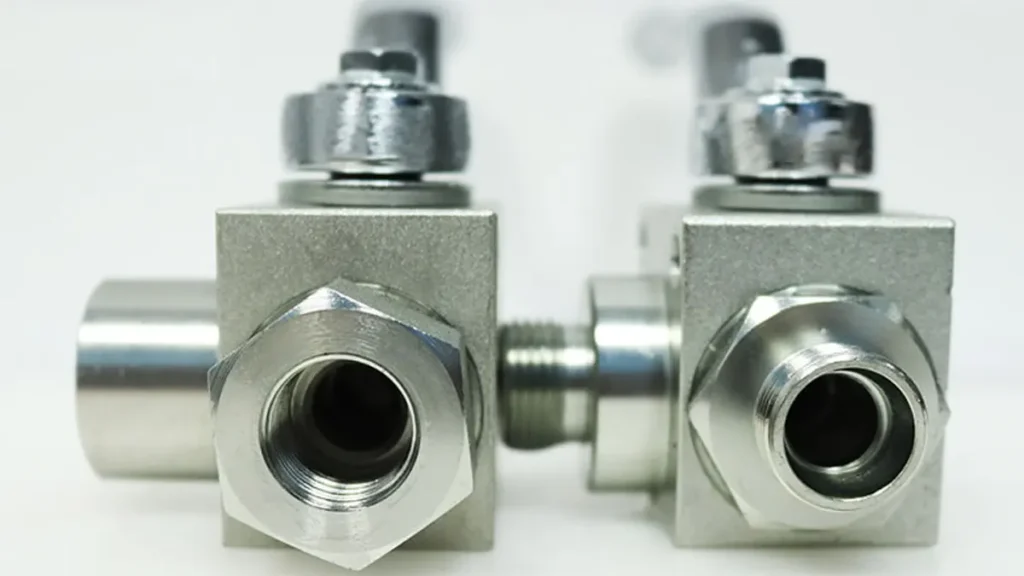
If you choose the wrong hydraulic ball valve connection types, you might get leaks. This can also cause your system to stop working and cost more money. In fluid control systems, matching parts is important. It helps your ball valves work well. Look at the table below to see what happens if connections do not match:
| Consequence | Description |
|---|---|
| Wear and Tear Leading to Misalignment | Ball valves get pressure and rust. This can make them not line up right and not seal well. |
| Disruption of Fluid Flow | If parts do not line up, flow gets blocked. This makes the liquid move rougher and hurts pumps. It can make things break. |
| Increased Energy Usage | Valves that do not line up right make the system work harder. This makes energy bills go up. |
| Operational Downtime | If things do not line up, machines can stop working. This means you lose time making things. |
| Hydraulic System Leaks | Seals get uneven pressure and start to leak. This wastes stuff and can be unsafe. |
Picking the right ball valve connection types helps you avoid problems. It also makes your system work better.
Key Takeaways
- Picking the right hydraulic ball valve connection stops leaks and problems.
- NPT, BSP, Metric, and SAE are main connection types. Each has its own way to seal.
- Always check your ball valve’s pressure rating. Make sure it can handle your system’s pressure.
- Mixing thread types, like NPT and BSP, can cause leaks and damage.
- Use sealants with NPT and BSPT connections. Use O-rings for BSPP and SAE connections.
- Flanged connections are easier to fix and change than threaded ones.
- Standards like ANSI and ISO help keep hydraulic systems safe and working together.
- Custom ball valves can be made for special needs. This makes sure your system fits perfectly.
Why Connection Type Matters
Sealing and Leak Prevention
You want your hydraulic system to work well. The connection type you choose is very important for stopping leaks. Some threads, like NPT, have a shape that gets tighter when you screw them together. This helps make a good seal. Other types, like BSPP, use a flat end with an O-ring or washer to stop leaks. If you use the wrong types together, leaks can happen. Leaks waste fluid and can be dangerous. Always use the right connection for your valve and pipe. Doing this keeps your system safe and saves money on repairs.
Pressure and Safety
Hydraulic systems often use high pressure. The wrong connection type might not hold the pressure and could break. You should always check the pressure rating for each ball valve connection. WOG ratings tell you how much pressure a valve can handle. These ratings are important in places like chemical plants, oil refineries, and power plants. They are also used in HVAC systems and water treatment plants.
- WOG ratings are very important for safety and following the rules in hydraulic ball valve connections.
- They matter in big factories like chemical plants, oil refineries, and power plants.
- For businesses, they are used in HVAC, water treatment, plumbing, and fire safety systems.
- Picking the right valve with the right WOG rating is often required by building codes, insurance, and industry rules.
- Following these rules keeps your system safe, working well, and legal.
“Always pick a valve with a WOG rating at least 50% higher than your system’s top pressure. This helps with pressure spikes, changes, and gives extra safety.” – American Society of Mechanical Engineers (ASME)
If you use the wrong connection, you could get leaks, lose pressure, or even break a pipe. That is why you must check the ratings and follow the rules.
Installation and Maintenance
You want to save time and money when you put in or fix your hydraulic ball valves. The connection type changes how easy it is to install and fix things. Threaded connections, like NPT, are good for small pipes and make a strong seal. But if you need to change a valve, you might have to cut the pipe. This makes fixing things harder. Flange connections are better for big pipes. You can take out and put in valves fast. This saves time and lowers work costs.
- Threaded connections (NPT) work best for small pipes and make a strong seal, but they are harder to fix because you may need to cut the pipe.
- Flange connections are better for big pipes and make it easy to take out and put in valves, which saves time and work.
If you pick the right connection, your job is easier and your system lasts longer.
Standards and Compatibility
You want your hydraulic system to run smoothly, right? Standards help you do that. They make sure your ball valve connections fit and work together. If you follow the right standards, you avoid leaks, breakdowns, and wasted time. You also make your system safer.
Let’s talk about why standards matter. Every country and industry uses different rules for hydraulic ball valves. If you mix parts from different standards, you might get a bad fit. That can cause leaks or even damage your equipment. You don’t want to deal with that mess.
Here’s a quick look at some important standards for hydraulic ball valve connections:
| Standard | Organization | Focus Area |
|---|---|---|
| ANSI B16.34 | American National Standards Institute | Design, materials, and performance characteristics in the U.S. |
| ISO 17292 | International Organization for Standardization | Design, construction, testing, and materials for valve performance globally |
| API 6D | American Petroleum Institute | Specifications for pipeline valves, safety, and performance in oil and gas industry |
You see these standards everywhere. If you work in the U.S., you probably use ANSI B16.34. If your system is global, ISO 17292 is the go-to. Oil and gas companies rely on API 6D. These standards tell you how strong the valve should be, what materials to use, and how to test them.
Tip: Always check the markings on your ball valve. If you see “ANSI,” “ISO,” or “API,” you know the valve follows strict rules. This helps you match parts and avoid trouble.
When you pick a ball valve, you need to think about compatibility. That means checking if the threads match your pipes. NPT, BSP, Metric, and SAE threads all have their own rules. If you mix NPT and BSP, you might get leaks. If you use the wrong metric size, your valve won’t fit.
Here’s what you should do:
- Look at the standards for your system.
- Match the thread type to your pipes.
- Make sure the valve meets the pressure and safety rules.
If you follow these steps, you get a reliable system. You spend less time fixing leaks and more time getting work done. Standards make your life easier. They help you build a system that lasts.
Overview of Hydraulic Ball Valve Connection Types
When you look at hydraulic ball valve connection types, you see a few main options. Each one has its own way of sealing and connecting pipes. You need to know these differences so you can pick the right ball valves for your system. Let’s break down the most common types you’ll find.
NPT Threaded Connections
NPT stands for National Pipe Thread. You see NPT a lot in North America. These threaded connections use a tapered thread. That means the threads get tighter as you screw them together. This creates a seal without needing extra parts. NPTF is a special version that seals by deforming the threads. You don’t need an O-ring or washer. If you use NPT with BSP or SAE, you might get leaks because the threads don’t match.
Here’s a quick look at NPT features:
- Tapered threads make a tight seal.
- No need for extra sealing elements.
- Used in many hydraulic ball valve connection types.
- Not interchangeable with BSP or SAE.
You find NPT ball valves in plumbing, water treatment, and industrial applications. They work well for small pipes and systems that need a strong seal.
BSP Threaded Connections
BSP stands for British Standard Pipe. You see BSP in Europe, Asia, and Australia. BSP comes in two types: BSPT (tapered) and BSPP (parallel). BSPT seals by distorting the threads, while BSPP uses a flat end with a washer or O-ring. If you mix BSP with NPT or SAE, you can get leaks because the threads are different.
Let’s look at BSP features:
- BSPT uses tapered threads for sealing.
- BSPP uses straight threads and needs a soft seal like an O-ring.
- Not interchangeable with NPT or SAE.
- Common in hydraulic ball valve connection types outside North America.
BSP ball valves are popular in oil and gas, chemical plants, and water systems. You often see them in flanged connections for bigger pipes.
Metric Threaded Connections
Metric threaded connections use straight threads. You see these mostly in Europe and places that follow DIN standards. Metric ball valves seal with a cone-to-tapered nose interface. You need a soft seal, like an O-ring, to stop leaks. Metric threads are not the same as NPT or BSP, so you can’t mix them.
Here’s what you should know about metric connections:
- Straight threads need a soft seal.
- Used in hydraulic ball valve connection types for many applications.
- Common in flanged connections and systems that follow DIN standards.
- Not interchangeable with NPT, BSP, or SAE.
Metric ball valves work well in machinery, automotive, and industrial applications. You see them in flanged connections where you need easy maintenance.
Tip: Always check the thread type before you install a ball valve. Mixing types can cause leaks and downtime.
Here’s a table to help you compare the main connection types:
| Connection Type | Thread Form | Sealing Method | Compatibility Issues |
|---|---|---|---|
| NPT | Tapered | Thread deformation (NPTF) | Not interchangeable with BSP |
| BSP | Tapered/Parallel | Thread distortion (BSPT) / O-ring (BSPP) | Non-interchangeable with NPT |
| Metric (DIN) | Straight | Cone-to-tapered interface | Not interchangeable with NPT/BSP/SAE |
| SAE | Tapered | Interference fit | Not interchangeable with NPT/BSP |
You need to match the threaded connection to your system. This helps you avoid leaks and keeps your hydraulic ball valves working well.
SAE Threaded Connections
You see SAE threaded connections in hydraulic systems in North America. SAE means Society of Automotive Engineers. These threads follow strict rules. You get a strong and reliable connection. SAE threads are used in big machines, trucks, and factories.
SAE connections use straight threads. The threads do not seal by themselves. You need an O-ring or a special washer to stop leaks. The O-ring sits in a groove. When you tighten the fitting, the O-ring gets squeezed. This keeps your system safe from leaks. You do not have to worry about thread damage or wrong parts.
Here are some features of SAE threaded connections:
- Straight threads: SAE uses straight threads. You get a smooth fit.
- O-ring sealing: The O-ring stops leaks. Threads just hold parts together.
- Easy maintenance: You can take apart SAE fittings without hurting the threads.
- High pressure: SAE connections work in high-pressure systems. You see them in hydraulic circuits and fuel lines.
Here is a table that shows SAE connection features:
| Feature | SAE Threaded Connections |
|---|---|
| Thread Type | Straight |
| Sealing Method | O-ring or washer |
| Pressure Rating | High |
| Maintenance | Easy to assemble/disassemble |
| Common Use | Hydraulic, automotive, machinery |
SAE connections are popular because you can change parts easily. You do not need to cut pipes or worry about thread damage. The O-ring gives a tight seal every time.
Tip: Always check the O-ring before you install an SAE ball valve. If the O-ring is worn or cracked, replace it. This keeps your system safe from leaks.
SAE connections also have locking devices. These devices keep the fitting tight when the system shakes. You get extra safety and reliability. You do not have to worry about leaks from movement.
You find SAE ball valves in many places:
- Construction equipment
- Agricultural machinery
- Industrial hydraulic systems
- Automotive fuel and brake lines
SAE connections do not fit with NPT, BSP, or Metric threads. If you mix them, you get leaks and damage. Always match the thread type to your system.
If you want a strong and easy-to-fix connection, SAE is a good choice. You get high performance and less downtime. Your hydraulic system stays safe and works well.
NPT, BSP, Metric, and SAE Threaded Connections
NPT Features and Uses
You see npt threaded connection types everywhere in North America. They are a top choice for ball valves in many industries. The npt design uses a tapered thread. This means the threads get tighter as you screw the parts together. You get a strong seal because the metal threads press against each other. But you need to use a sealant like PTFE tape or pipe dope. If you skip the sealant, leaks can happen.
Here’s a table to help you understand the structure and sealing method for npt ball valves:
| Feature | Description |
|---|---|
| Tapered thread design | NPT threads taper, allowing male and female threads to wedge together. |
| Thread angle | 60 degrees, which is standard for NPT threads. |
| Sealing mechanism | Relies on metal-to-metal interference and deformation of threads. |
| Sealant requirement | Requires thread sealant such as PTFE tape or pipe dope for effective sealing. |
| Installation note | Must not be installed dry; leakage is likely without sealant. |
| Common mistake | Overtightening can damage the valve body instead of improving the seal. |
You find npt ball valves in plumbing, oil and gas, and water treatment. They work well for small to medium pipes. You get a reliable seal if you use the right sealant. Just remember, overtightening does not make the seal better. It can actually break the valve.
BSPT vs BSPP
You might see bsp threaded connections in Europe, Asia, and Australia. There are two main types: BSPT and BSPP. They look similar, but they work in different ways. BSPT uses a tapered thread, just like npt. BSPP uses a parallel thread. You need to know the difference so you can pick the right ball valves for your system.
Here’s a table that shows how BSPT and BSPP compare:
| Thread Type | Structure | Application |
|---|---|---|
| BSPP | Parallel threads requiring additional sealing elements (e.g., O-rings) | Low to medium-pressure systems, automotive and fluid systems |
| BSPT | Tapered threads creating a metal-to-metal seal | High-pressure applications requiring robust sealing |
You use BSPT ball valves in high-pressure applications. The tapered thread gives you a strong, leak-free seal. BSPP ball valves work best in low to medium-pressure systems. You need an O-ring or washer to stop leaks with BSPP. If you mix up BSPT and BSPP, you can get leaks or damage your equipment.
You see BSPT and BSPP ball valves in many places. Here are some common applications:
- HVAC systems control heating and cooling fluids.
- Water treatment plants manage water flow.
- Chemical processing plants handle tough chemicals and need precise shut-off.
Always check the thread type before you install a ball valve. This helps you avoid leaks and keeps your system safe.
Metric Threads in Ball Valves
Metric threads show up in many European machines and systems. You find them in ball valves that follow DIN standards. Metric threads are straight, not tapered. They need a soft seal, like an O-ring, to stop leaks. The seal sits between the valve and the pipe. When you tighten the connection, the O-ring gets squeezed and makes a tight seal.
Metric threaded connection types are popular in automotive, machinery, and industrial applications. You see them in places where you need easy maintenance and a reliable seal. Metric ball valves are not the same as npt, bsp, or sae. You cannot mix them. If you try, the parts will not fit, and you will get leaks.
You get these benefits with metric ball valves:
- Easy to assemble and take apart.
- Good for systems that need regular maintenance.
- Reliable sealing with the right O-ring.
But you need to check the O-ring before you install the valve. If the O-ring is worn or missing, you will get leaks. Always use the right size and type for your system.
Metric ball valves work well in many applications. You see them in cars, factory machines, and hydraulic systems. They help you keep your equipment running smoothly.
SAE Threads and Flanges
You see SAE threads and flanges in many hydraulic systems, especially in North America. SAE stands for Society of Automotive Engineers. These connections are everywhere in heavy equipment, trucks, and big machines. If you want a strong and leak-free system, you should know how SAE threads and flanges work.
SAE Thread Structure
SAE threads use straight threads. The threads do not get tighter as you turn them, so they do not seal by themselves. You need an O-ring or a washer to make the seal. The O-ring sits in a groove on the fitting. When you tighten the connection, the O-ring gets squeezed and stops leaks.
How SAE Seals Work
You do not rely on the threads to stop leaks. The O-ring does all the work. This makes SAE connections very reliable. You can take them apart and put them back together many times without hurting the threads.
Tip: Always check the O-ring before you install an SAE ball valve. If the O-ring looks cracked or flat, replace it. This keeps your system safe.
SAE Flange Connections
Sometimes, you need to connect big pipes or handle very high pressure. SAE flanges make this easy. A flange is a flat ring with holes for bolts. You bolt the flange to the valve and the pipe. A soft seal, like an O-ring, sits between the two flanges. When you tighten the bolts, the seal gets squeezed and stops leaks.
Why Use SAE Flanges?
- You can connect and disconnect pipes quickly.
- Flanges handle high pressure and vibration.
- You do not need to cut pipes to change a valve.
- Flanges work well in tight spaces.
Locking Devices for Extra Safety
Hydraulic systems can shake and move. SAE connections often use locking devices, like lock nuts or clips. These keep the fitting tight, even if the machine vibrates. You do not have to worry about the connection coming loose.
Advantages of SAE Threads and Flanges
- Easy to assemble and take apart
- Strong seal with O-ring or washer
- Good for high-pressure systems
- Less risk of thread damage
- Great for maintenance and repairs
Disadvantages
- You must use the right O-ring or washer
- Not compatible with NPT, BSP, or Metric threads
- O-rings can wear out and need checking
Where You Find SAE Connections
You see SAE ball valves and flanges in many places:
- Construction equipment (like excavators and loaders)
- Farm machinery (tractors and harvesters)
- Industrial hydraulic systems
- Trucks and buses
- Oil and gas equipment
Quick Comparison Table
| Feature | SAE Threads & Flanges |
|---|---|
| Thread Type | Straight |
| Sealing Method | O-ring or washer |
| Flange Option | Yes |
| Pressure Rating | High |
| Maintenance | Easy |
| Locking Devices | Common |
| Compatibility | Only with SAE |
Note: Never mix SAE threads with NPT, BSP, or Metric. The parts will not fit, and you will get leaks.
If you want a connection that is easy to use, safe, and strong, SAE threads and flanges are a smart choice. You get less downtime and more peace of mind.
Comparing Ball Valve Connection Types
When you look at different ball valve connection types, you might feel confused. Each type seals in its own way and works best in certain places. Some are better for high pressure. Others are easier to fix or use in certain countries. Let’s make it simple so you can pick the right one.
Thread Type and Sealing Table
Every connection type uses a special thread and sealing method. Some seal with just the threads. Others need an O-ring or washer to stop leaks. Here’s a table to show how they are different:
| Connection Type | Thread Type | Sealing Method Description |
|---|---|---|
| NPT | Tapered | Male threads press into female threads; sometimes uses a 30° cone or chamfer. |
| BSPT | Tapered | Seals on the sides of the threads; no extra seal needed. |
| BSPP | Parallel | Needs an O-ring, bonded seal, or dowty seal to stop leaks. |
| SAE | Straight | O-ring Boss holds the O-ring in a port for a tight seal. |
NPT and BSPT use the threads to make the seal. BSPP and SAE need a soft seal, like an O-ring, to stop leaks. If you mix up these types, you could get leaks or break your equipment.
Tip: Always check your thread type before you start. This easy step can save you from big problems later.
Regional and Application Comparison
Now let’s see where each connection type is used and what jobs they do best. Some types are common in North America. Others are used more in Europe or Asia. Pressure ratings are important too, especially for strong systems.
- NPT: You see NPT mostly in North America. It is used in plumbing, water, and factories. NPT works well for small and medium pipes and handles medium pressure.
- BSPT/BSPP: These are popular in Europe, Asia, and Australia. BSPT is good for high-pressure jobs, like chemical plants and HVAC. BSPP is for low or medium pressure and is used in cars or fluid systems.
- Metric: Metric threads are used in European machines and cars. They are easy to fix and work well where DIN rules are followed.
- SAE: SAE connections are everywhere in North American hydraulic systems, big machines, and trucks. They handle high pressure, especially with Code 61 (up to 3000 psi) and Code 62 (up to 6000 psi) flanges.
Here’s a table to compare pressure ratings and common uses:
| Connection Type | Pressure Rating | Common Applications | Regional Usage |
|---|---|---|---|
| NPT | Up to 3000 psi | Plumbing, water, general industry | North America |
| BSPT | Up to 6000 psi | Chemical, HVAC, high-pressure | Europe, Asia, Australia |
| BSPP | Up to 3000 psi | Automotive, fluid systems | Europe, Asia, Australia |
| Metric | Varies (DIN specs) | Machinery, automotive, hydraulics | Europe, global |
| SAE (Code 61) | 3000 psi | Heavy equipment, hydraulics | North America, global |
| SAE (Code 62) | 6000 psi | High-pressure hydraulics | North America, global |
If you want a connection that is easy to fix and can handle high pressure, SAE or BSPT are good choices. For systems that need lots of fixing or follow European rules, metric threads are smart. Always match your connection type to your region and job for the best results.
Choosing the Right Connection Type
When you pick hydraulic ball valve connection types, you want your system to be safe and work well. The best choice depends on things like pressure, rules, what flows in your pipes, where you put the valve, and how you plan to fix it later. Let’s look at these things so you can choose the best one for your job.
System Pressure and Standards
First, check how much pressure your system has. High-pressure jobs need strong ball valves that can handle a lot of force. If your system has very high pressure, you should use trunnion-mounted ball valves. These valves stay steady and stop leaks, even when the pressure is high.
You also need to know which rules your project must follow. Different places and jobs have different rules. Here’s a table to show which rules matter for your job:
| Standard | Description |
|---|---|
| API 6D | Covers design, material, dimensional, and testing requirements for valves in oil and gas pipelines. |
| API 608 | Addresses metal ball valves for petroleum and natural gas industries in various configurations. |
| ASME B16.34 | Governs valves in flanged, threaded, and welding end configurations, defining pressure-temperature ratings. |
| ISO 17292 | International standard for metal ball valves in petroleum and petrochemical industries. |
| ANSI/ISA 75.01 | Defines the flow coefficient (Cv) for sizing control ball valves. |
| EN 331 | European standard for manually operated ball valves in gas supply systems. |
If you follow these rules, your system will be safer and work better. For example, npt and sae connections often follow ASME and API rules in North America. In Europe, you might use metric or BSP connections that match ISO or EN rules.
Tip: Always check your system’s pressure and the rules before you pick a connection type. This helps you stop leaks and keeps your equipment safe.
Media and Installation Space
Think about what goes through your ball valves. It could be water, oil, chemicals, or gas. You need to match the valve material to the fluid. This stops rust and helps your system last longer.
Here’s a quick checklist for you:
- Make sure the valve material works with your fluid.
- Check if the valve can handle the temperature and weather, like sun or rain.
- Pick a design that fits your working conditions.
You also need to look at the space where you will put the valve. Some hydraulic ball valve connection types need more room. Flanged ball valves take up more space but are easy to remove. Threaded connections like npt or sae save space and fit in small spots. If you have a tight area, you may want a smaller design.
Note: Always measure your space before you buy ball valves. This saves you time and trouble when you set things up.
Maintenance and Customization
You want your system to last and be easy to fix. Maintenance is important when picking the right connection. Flanged ends cost more at first, but you can take them out and put them back fast. This is good for fixing things. Threaded connections like sae or npt cost less but can be harder to fix if they leak or get damaged.
Here’s what you should think about:
- Flanged ends: Easy to put in and take out. Good for fixing things often.
- Threaded connections: Cost less but may need more work if they leak.
- Wafer bodies: Cheap and easy to put in, but only use them if your pipes are fully held up.
You might also need special ball valves for certain jobs. Some companies can make valves with special connections, materials, or seals. This helps you get the best fit for your job.
Here’s a simple table to help you choose:
| Factor | Best Choice | Why? |
|---|---|---|
| High pressure | Trunnion-mounted, SAE, BSPT | Handles strong force, stops leaks |
| Tight space | Threaded (NPT, SAE), Wafer body | Small, easy to put in |
| Frequent maintenance | Flanged ends, SAE | Quick to take out and replace |
| Corrosive media | Custom material, Metric, BSPP | Matches fluid, stops rust |
| Industry standards | NPT, SAE, Metric, BSP (as needed) | Follows rules for your area |
If you need something special, ask your company about custom options. They can help you get the right ball valves for your system.
Picking the right hydraulic ball valve connection types means you get fewer leaks, easier fixes, and better results. Take your time, check what you need, and you’ll have a system that works for a long time.
Common Mistakes in Selecting Ball Valve Connections
Mixing Thread Standards
You might think all threads look the same, but mixing standards like npt and BSP can cause big trouble. These threads have different angles. NPT uses a 60-degree angle, while BSPT uses 55 degrees. If you try to connect them, you get micro-gaps. These gaps lead to leakage within a day or two, especially under pressure. Over time, the threads can harden and crack. Sometimes, the plug can even shoot out or the leak gets worse. This can happen fast if your system runs at high pressure.
If you use sae threads with npt or BSP, you face the same risks. The parts won’t fit right. You might see leaks, or the connection could fail completely. Always check the thread type before you install ball valves. Matching threads keeps your system safe and avoids costly repairs.
Tip: Keep a thread gauge handy. It helps you check the angle and pitch before you connect anything.
Overlooking Thread Variations
You might see BSPT and BSPP and think they’re the same. They’re not. BSPT is tapered, and BSPP is parallel. If you mix them, you risk slow leaks or sudden failures. Sometimes, you get a slow leak that causes rust or water damage. Other times, the fitting can shoot off with force and hurt someone.
Trying to force these threads together damages both parts. You might see thread galling or cross-threading. In high-pressure applications, this can lead to equipment damage or downtime. Always check the thread type and use the right ball valves for your system.
Here’s a quick table to help you spot the difference:
| Thread Type | Shape | Sealing Method | Risk if Mixed |
|---|---|---|---|
| BSPT | Tapered | Metal-to-metal | Slow leak or failure |
| BSPP | Parallel | O-ring or washer | Catastrophic failure |
Note: Never force a connection. If it doesn’t fit easily, check the thread type again.
Ignoring Pressure Ratings
Pressure ratings matter a lot. If you use a low-pressure valve in a high-pressure line, the valve can burst or deform. Sometimes, you see silent failures. The valve might look fine, but seals break or the body ruptures when pressure spikes. This can cause leakage or even a dangerous blowout.
You need to check the pressure rating for all ball valves. Look at the material and the specs. If you ignore these, you risk damage, downtime, or injury. Many applications need valves that handle high pressure, like sae connections in heavy equipment or industrial systems.
Always match the pressure rating to your system. If you’re not sure, ask the manufacturer or check the drawings.
Here’s a checklist to help you avoid mistakes:
- Match thread standards (npt, BSP, sae, metric)
- Check thread variations (BSPT vs BSPP)
- Confirm pressure ratings for your applications
- Follow manufacturer guidelines and drawings
- Inspect for signs of leakage after installation
- Plan for regular maintenance
If you follow these steps, you keep your system safe and avoid costly mistakes. Ball valves work best when you pay attention to details.
Focusing Only on Size
You might think picking a ball valve is all about matching the size. It seems easy. You grab a valve with the same diameter as your pipe, and you’re done. But if you only look at size, you miss a lot of important details. This mistake can lead to leaks, system failures, and even safety hazards.
Let’s break it down. Ball valves come in many sizes, but each connection type has its own thread form, sealing method, and pressure rating. If you ignore these, you set yourself up for trouble. For example, a 1-inch NPT valve and a 1-inch BSP valve look almost the same. The threads, though, are different. If you try to force them together, you get a poor seal. Leaks start, and your system loses pressure. Sometimes, the valve even pops off under high pressure.
Here’s what happens when you focus only on size:
- Leaks and Drips: The wrong thread type or sealing method lets fluid escape.
- Pressure Loss: Your system can’t hold pressure if the connection isn’t right.
- Frequent Repairs: You spend more time fixing leaks and replacing parts.
- Safety Risks: High-pressure leaks can hurt people or damage equipment.
- Wasted Money: You buy new valves and fittings more often.
Tip: Always check the thread type, pressure rating, and sealing method—not just the size. A quick look at the specs can save you hours of work later.
Let’s look at a simple table to help you remember what to check:
| What to Check | Why It Matters |
|---|---|
| Thread Type | Ensures a proper fit and seal |
| Pressure Rating | Keeps your system safe |
| Sealing Method | Prevents leaks |
| Material Compatibility | Stops rust and chemical damage |
| Size | Matches your pipe diameter |
You want your hydraulic system to run smoothly. Don’t let a simple mistake slow you down. When you pick a ball valve, grab your specs sheet. Check every detail, not just the size. If you’re not sure, ask your supplier or use a thread gauge. You’ll save time, money, and headaches.
Remember: The right size is just the start. The right connection keeps your system safe and leak-free. 👍
Custom Solutions for Ball Valves
Manufacturer Customization
You might need something special for your hydraulic system. Manufacturers know this, so they offer custom ball valves to fit your exact needs. You can ask for changes in the diameter or the connection type. Maybe you want npt threads, sae threads, or even a male orfs connection. You can also get flanged ball valves made just for your system. Flanged connections can be changed based on the flange type, the pressure rating, or the flange face style.
Here’s what you can expect when you ask for custom ball valves:
- You get to pick the connection type that matches your pipes, like sae, npt, or metric.
- You can choose the size and shape that fits your space.
- Flanged connections can be made for high pressure or special flange faces.
- You can select the material, such as carbon steel or stainless steel, to handle tough fluids.
- You can ask for special seals or coatings for extra protection.
Custom ball valves cost more because they take extra work to make. But you get a valve that fits your system perfectly and helps prevent leaks or failures.
Working from Drawings or Samples
Sometimes, you have a drawing or a sample of the ball valve you need. Manufacturers can use these to make a new valve that matches exactly. You just send them your drawing or the old valve. They will check the details, like the sae thread, the flanged connections, or the port design. This way, you get a ball valve that works with your current setup. You do not have to change your pipes or fittings. This saves you time and money.
Tip: If you have a unique system, always keep a drawing or a sample. It makes getting custom ball valves much easier.
Chenyang Hydraulic Support
Chenyang Hydraulic can help you with custom ball valves for almost any job. They offer many connection types, including sae, npt, metric, BSP, and flanged. You can ask for special features, like high pressure, different materials, or unique port designs. They even test every valve before shipping, so you know it will work right away.
Here’s a quick look at what Chenyang Hydraulic can do for you:
| Capability | Details |
|---|---|
| Connection Types | NPT, BSP, Metric, SAE, Flanged |
| Customization | Drawings, samples, pressure ratings, materials, thread standards, port designs, surface treatments, application needs |
| Materials | Carbon steel, stainless steel |
| Valve Types | 2-way and 3-way high pressure ball valves |
| Testing | Pressure testing and inspection before shipment |
If you need flanged connections, sae threads, or a special male orfs connection, Chenyang Hydraulic can make it happen. They help you get the right ball valves for your system, so you can focus on your work and not worry about leaks or downtime.
Conclusion
You want your hydraulic system to run smoothly and safely. Choosing the right connection type is an important part of that. When you understand NPT, BSP, Metric, SAE, and flanged connections, you can reduce leakage risks, avoid installation problems, and keep your equipment running with less downtime.
As a hydraulic ball valve manufacturer, Chenyang Hydraulic can help you choose the right connection type based on your pressure rating, thread standard, material, sealing requirements, and working conditions. We also support custom hydraulic ball valves based on drawings, samples, or special project needs.
If you need help selecting NPT, BSP, Metric, SAE, or flanged hydraulic ball valves, contact Chenyang Hydraulic for professional support.
FAQ
What happens if I mix NPT and BSP threads?
You’ll get leaks or damage. NPT and BSP threads look similar, but they don’t fit right. Always match the thread type to your system. If you’re not sure, use a thread gauge or ask your supplier.
How do I know which connection type my system uses?
Check the markings on your valve or pipe. You might see “NPT,” “BSP,” “SAE,” or “Metric.” If you can’t find a mark, measure the thread pitch and angle. A thread gauge helps a lot.
Do I always need to use sealant with threaded connections?
You need sealant for NPT and BSPT threads. Use PTFE tape or pipe dope. For BSPP and SAE, the O-ring or washer does the sealing. Don’t add extra sealant to O-rings.
Can I reuse ball valves with O-rings?
Yes, you can reuse them. Just check the O-ring for cracks or wear. Replace it if it looks damaged. A good O-ring keeps your system leak-free.
Which connection type is best for high pressure?
SAE and BSPT connections handle high pressure well. They use strong seals and work in tough jobs. Always check the pressure rating before you choose.
Why do standards matter for ball valve connections?
Standards make sure your parts fit and work together. They help you avoid leaks, breakdowns, and safety problems. Always pick valves that meet the rules for your industry.
What should I do if I need a custom connection?
Contact your valve supplier or manufacturer. Share your drawings, specs, or a sample. They can make a custom ball valve that fits your system perfectly.
Can I use the same ball valve for water, oil, and chemicals?
Not always. You need to match the valve material to the fluid. Some materials resist rust or chemicals better. Check with your supplier to pick the right valve for your job.