
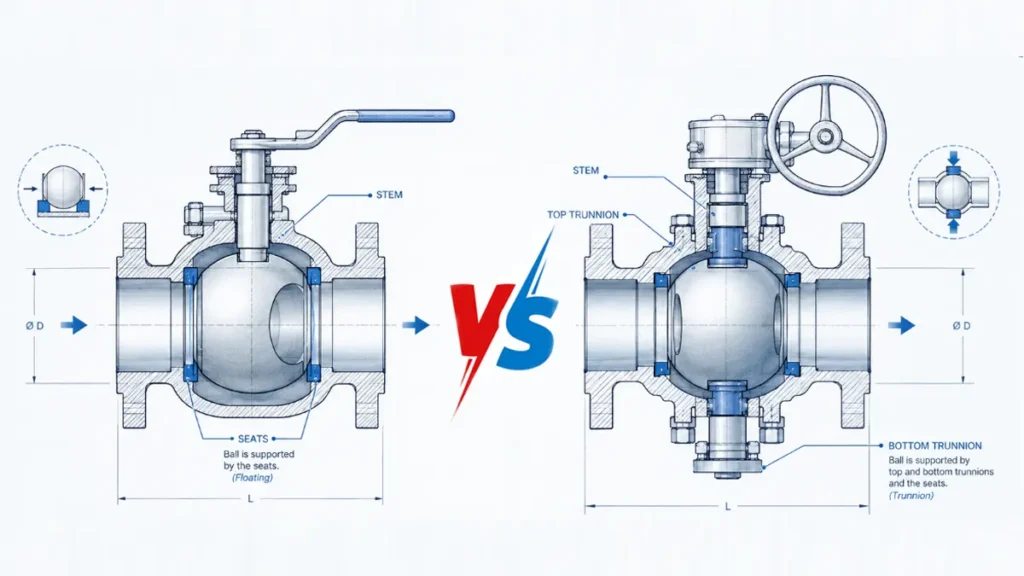
When you compare floating vs trunnion ball valves, you will notice some significant differences in how they operate and where to use them. Floating ball valves feature a ball that moves with the flow, while trunnion ball valves maintain the ball in a fixed position. These distinct designs affect the pressure each valve can handle, the amount of force required to operate them, and the specific applications for which each valve is best suited. Take a look at this simple table to see the main differences:
| Feature | Floating Ball Valves | Trunnion Ball Valves |
|---|---|---|
| Ball Position | Suspended in the downstream | Fixed position |
| Operation Pressure | Ideal for low-pressure uses | Handles low and high pressures |
| Torque Requirement | Needs higher torque | Needs lower torque |
| Application Suitability | Great for low-pressure projects | Works for many applications |
Choosing the right valve is crucial for safety and the efficiency of your hydraulic or industrial system. This article discusses these two types of ball valves, specifically focusing on floating vs trunnion ball valves, rather than the float valves commonly found in tanks.
Key Takeaways
- Floating ball valves have a ball that can move. This makes them good for low or medium pressure jobs.
- Trunnion ball valves have a ball that does not move. They work well with high pressure and big sizes.
- Floating ball valves need more force to turn, especially with more pressure. Trunnion ball valves use the same, lower force each time.
- Pick floating ball valves for small pipes, up to 6 inches. They are also good for normal hydraulic systems and save money.
- Use trunnion ball valves for high-pressure jobs or big pipes. They help keep a tight seal and work well.
- Floating ball valves are simple, so they are easy to fix. Trunnion ball valves last longer and are strong in hard jobs.
- Always think about the pressure and what you need before picking a valve. This helps stop leaks and problems.
- Knowing how the seals and force work helps you choose the right valve for your system.
Floating Ball Valve Overview
Floating Ball Design
When you look inside a floating ball valve, you will see a simple design. The ball sits inside the valve body and is not fixed in place. This ball can move a little along the pipeline axis. It is not attached to any shaft or anchor. Instead, the ball floats between two seats. When you turn the handle, the ball rotates to open or close the flow.
- The ball is hollow and can pivot freely.
- It is not mechanically anchored, so it moves slightly when fluid flows through the valve.
- The design has fewer parts, which makes it easier for you to maintain and repair.
This structure makes floating ball valves different from trunnion ball valves, where the ball stays fixed and does not move with the flow.
Sealing Principle
You might wonder how a floating ball valve keeps fluids from leaking. The answer is in the way the ball seals against the seat. When you use the valve, fluid pressure pushes the ball against the downstream seat. This pressure helps create a tight seal. The ball is not fixed to the stem, so it can move and press against the seat as needed.
- The ball moves freely between two sealing seats.
- Fluid pressure pushes the ball toward the downstream seat, making the seal even tighter.
- This design works well in many situations, including high-pressure and high-temperature systems.
You get a leak-tight seal because the ball adjusts itself with the help of the fluid pressure. This means you can trust a floating ball valve to stop leaks and keep your system safe.
Key Features
Floating ball valves stand out for their simple construction and reliable performance. Here are some key features you should know:
- The ball can move slightly, which helps it seal tightly against the seat.
- The pressure-assisted sealing mechanism gives you a reliable shut-off.
- These valves are popular for medium-pressure applications because they are cost-effective and adjust themselves for a good seal.
- When closed, they provide a tight seal that minimizes leakage and keeps your system running smoothly.
- You will find floating ball valves in many hydraulic and industrial systems, especially where moderate pressure is common.
Here is a quick look at where you might use a floating ball valve:
| Application Area | Typical Pressure Range | Why Choose Floating Ball Valve? |
|---|---|---|
| Oil and Gas | Up to 6,000 PSI | Economical, tight seal, easy maintenance |
| Hydraulic Systems | Up to 6,000 PSI | Reliable shut-off, simple design |
| Industrial Equipment | Up to 6,000 PSI | Good for moderate pressure, cost-saving |
Some special floating ball valves can even handle pressures above 10,000 PSI. Most of the time, you will use them in low to medium pressure systems because they offer a great balance of price, performance, and reliability.
Tip: If you want a valve that is easy to use, simple to fix, and works well for most standard jobs, a floating ball valve is a smart choice.
Trunnion Ball Valve Overview
Trunnion-Mounted Design
If you want a valve that can handle tough jobs, you should look at trunnion ball valves. These valves use a trunnion-mounted design, which means the ball inside the valve stays fixed in place. You will see shafts, called trunnions, at the top and bottom of the ball. These shafts anchor the ball and keep it from moving with the flow. This design works well for large valves and high-pressure systems.
- The trunnion ball valve absorbs line pressure and spreads it evenly across the ball.
- You get less friction, so the valve needs less force to turn.
- The ball stays stable, even when the pressure gets high.
You can use trunnion ball valves in big pipelines, gas transmission lines, and places where safety matters. The design helps the valve last longer and keeps the seal tight.
Fixed Ball Support
You might wonder why the ball needs to stay fixed. The answer is simple. When the ball is anchored by trunnions, it does not deform under pressure. The shafts hold the ball steady, so the pressure does not push it out of place. This support lets the valve handle high pressures and large sizes.
- The ball in a trunnion ball valve is fixed to shafts, which keeps it in place.
- The pressure spreads out evenly, so the ball does not bend or change shape.
- You get a tight seal, even when the system runs at high pressure.
Trunnion ball valves can handle sizes up to 60 inches. You will find them in gas pipelines, refinery process headers, and subsea service. These valves can reach pressure ratings up to Class 2500, making them perfect for demanding jobs.
Main Features
Trunnion ball valves offer several features that make them stand out in industrial settings. You get reliable shut-off, quick operation, and strong durability. Take a look at this table to see what makes these valves special:
| Feature | Explanation |
|---|---|
| High-Pressure Rating | The trunnion design lets the valve handle much higher pressures than floating ball valves. |
| Reliable Shut-Off | The sealing mechanism gives you a leak-proof closure, which is important for safety. |
| Durability | Strong materials and robust construction help the valve last a long time. |
| Quick Operation | You can open or close the valve fast with a quarter-turn. |
| Versatility | Trunnion ball valves come in many sizes and materials for different jobs. |
Tip: If you need a valve for high-pressure or large-size applications, trunnion ball valves are a smart choice. You will get stable sealing, lower torque, and long-lasting performance.
Floating vs Trunnion Ball Valve Operation
Floating Ball Valves Working Principle
When you use a floating ball valve, you control the flow by turning a handle. The ball inside is not fixed. It can move a little inside the valve body. This movement is important for how the valve seals. As fluid flows through, it pushes the ball against the downstream seat. This pressure helps the ball create a tight seal and stops leaks.
- The ball is not anchored, so it floats between two seats.
- Fluid pressure pushes the ball toward the seat, making the seal tighter.
- You get a reliable shut-off because the ball adjusts itself with the flow.
Floating ball valves work best in systems where you need a simple design and a tight seal. You will often see a floating ball valve in places where moderate pressure is common. If you want a valve that is easy to use and maintain, floating ball valves are a great choice.
Trunnion Ball Valves Working Principle
Trunnion ball valves work a bit differently. The ball inside does not move with the flow. Instead, it is anchored by shafts at the top and bottom. These shafts are called trunnions. Because the ball is fixed, the seats inside the valve move to form the seal. This design spreads out the pressure and reduces stress on the seats.
- The ball stays in one place, held by trunnions.
- The seats move to press against the ball and make the seal.
- You get smooth operation, even when the pressure is high.
Trunnion ball valves handle high pressure and large sizes very well. You will find them in big pipelines and heavy-duty industrial systems. If you need a valve for tough jobs, a trunnion ball valve is a smart pick.
Sealing and Torque Differences
You might wonder how sealing and torque compare between these two types. Here is a quick look:
| Valve Type | Torque Requirement | Sealing Mechanism |
|---|---|---|
| Floating Ball Valve | Increases with system pressure; higher torque needed | Relies on fluid pressure to seal against the seat |
| Trunnion Ball Valve | Consistent and lower torque; easier operation | Fixed ball reduces seat stress, allowing smoother operation under pressure |
With a floating ball valve, you will notice that the torque needed to turn the valve goes up as the pressure increases. This happens because the ball presses harder against the seat, which creates more friction. In high-pressure systems, you may need extra force to operate floating ball valves.
Trunnion ball valves make things easier. The ball does not move, so the seats do most of the work. This means you get lower and more stable torque, even when the pressure is high. You can open and close the valve smoothly without much effort.
Tip: If you want a valve that is easy to operate under high pressure, go with a trunnion ball valve. For standard jobs where pressure is not too high, a floating ball valve gives you a simple and reliable option.
Floating vs Trunnion Ball Valve Comparison
Structure and Support
When you look at the structure of these valves, you will see some big differences. In a floating ball valve, the ball sits inside the valve body and can move a little. The ball is not attached to anything. It floats between two seats. When you turn the handle, the ball rotates and controls the flow. This simple design makes floating ball valves easy to use and fix.
A trunnion ball valve works differently. The ball in this valve does not move with the flow. Instead, it is held in place by shafts at the top and bottom. These shafts are called trunnions. They keep the ball steady, even when the pressure gets high. This strong support lets the valve handle bigger sizes and higher pressures. You will notice that trunnion ball valves have more parts, but this helps them last longer in tough jobs.
Here is a quick table to help you see the difference:
| Feature | Floating Ball Valve | Trunnion Ball Valve |
|---|---|---|
| Ball Support | Ball floats, not anchored | Ball fixed by trunnions |
| Movement | Ball moves slightly | Ball stays in one place |
| Parts | Fewer parts | More parts, stronger support |
Sealing Method
The way these valves seal is also different. In a floating ball valve, the fluid pressure pushes the ball against the downstream seat. This pressure helps the ball create a tight seal. The more pressure you have, the tighter the seal gets. This makes floating ball valves great for medium-pressure jobs. You get a leak-proof seal because the ball adjusts itself with the flow.
Trunnion ball valves use a different method. The ball does not move, so the seats inside the valve move to press against the ball. This design spreads out the pressure and keeps the seal strong, even when the pressure is very high. Trunnion ball valves can seal in both directions, which makes them very reliable. The fixed ball design also means less stress on the seats, so the valve lasts longer.
Here are some key points about sealing:
- Floating ball valves use fluid pressure to help seal, which works well for medium-pressure systems.
- Trunnion ball valves use seat springs and piston force for sealing, making them strong in high-pressure jobs.
- Trunnion valves can seal both ways, so you get extra safety.
- The fixed ball in trunnion valves means less wear and longer life.
Pressure Range
You need to know how much pressure each valve can handle before you choose one. Floating ball valves work best for small to medium pipes and lower pressure. Most floating ball valves handle between 150 and 1,480 PSI. When the pressure goes up, you will notice it gets harder to turn the valve. This is because the ball presses harder against the seat, so you need more force.
Trunnion ball valves are made for big jobs. They work well in large pipelines and can handle much higher pressures. You can use trunnion ball valves for pressures from 150 up to 6,000 PSI or even more. The best part is that the force you need to turn the valve stays the same, even when the pressure goes up. This makes trunnion ball valves perfect for high-pressure systems.
Here is a table to help you compare:
| Valve Type | Pressure Range |
|---|---|
| Floating Ball Valve | 150-1,480 PSI |
| Trunnion Ball Valve | 150-6,000+ PSI |
If you want a simple answer for the floating vs trunnion ball valve debate, just remember this: floating ball valves are great for medium pressure, while trunnion ball valves are the best choice for high-pressure and large-size jobs. This comparison of floating ball valves vs trunnion ball valves can help you pick the right valve for your system.
Valve Size
When you choose a ball valve, size matters a lot. Floating ball valves work best for smaller pipes. Once you go above 6 inches, floating ball valves become hard to use. The ball gets too heavy, and the pressure on the seats makes it tough to operate. You will find floating ball valves in systems with pipe sizes up to 6 inches. They fit well in small to medium pipelines and standard industrial setups.
Trunnion ball valves step in when you need something bigger. These valves handle large-diameter pipelines with ease. You can find trunnion ball valves in sizes up to 48 inches or even larger. They shine in big projects like gas transmission lines, oil pipelines, and subsea systems. If your job calls for a big valve, trunnion is the way to go.
Here’s a quick table to help you compare:
| Valve Type | Size Availability | Pressure Rating |
|---|---|---|
| Floating Ball Valve | Up to 6 inches | Up to 1,480 PSI (Class 600) |
| Trunnion Ball Valve | Up to 48 inches or more | Up to 6,170 PSI (Class 2500) |
Tip: If your pipeline is bigger than 6 inches, you should look at trunnion ball valves. For smaller pipes, floating ball valves are usually the best fit.
Operating Torque
Operating torque tells you how much force you need to turn the valve. This is important when you pick an actuator or decide if you want to open the valve by hand. Floating ball valves need more torque, especially as the pressure goes up. The ball “floats” and gets pushed hard against the seat by the fluid. This creates more friction, so you have to use more force to turn the handle.
Trunnion ball valves make things easier. The ball is anchored by shafts, called trunnions. These trunnions take the pressure off the seats. You get less friction, so you need less torque to operate the valve. Even at high pressure, trunnion ball valves stay easy to turn. This means you can use smaller actuators, which saves you money and energy.
Here’s a table to show the difference:
| Feature | Trunnion Ball Valve | Floating Ball Valve |
|---|---|---|
| Mechanical Support | Ball anchored by trunnions | Ball “floats” into seat |
| Torque Requirements | Low torque, easy to turn | High torque, gets harder with pressure |
| Pressure Handling | Great for high pressure | Limited by torque at high pressure |
Note: If you want a valve that’s easy to operate, even under high pressure, trunnion ball valves are your best bet. Floating ball valves work well for lower pressures, but you’ll notice the handle gets harder to turn as pressure rises.
Cost and Maintenance
You probably want to know which valve will cost you less in the long run. Floating ball valves usually cost 30-50% less than trunnion ball valves when you first buy them. Their simple design keeps the price down. If you have a tight budget and your system runs at lower pressure, floating ball valves can save you money up front.
But don’t forget about maintenance. Floating ball valves may need more frequent repairs, especially if you use them in tough conditions. The ball and seats wear out faster because of the higher friction. This means you might spend more time and money fixing them over the years.
Trunnion ball valves cost more at the start. Their design is more complex, and they use stronger materials. However, they last longer and need less maintenance. The ball doesn’t press as hard against the seats, so there’s less wear and tear. In high-pressure or large-size systems, trunnion ball valves often end up costing less over their whole service life.
Here’s what you should remember:
- Floating ball valves have a lower purchase price.
- Trunnion ball valves cost more up front but last longer and need fewer repairs.
- If you want to save money over time in a high-pressure system, trunnion ball valves are a smart investment.
- For simple, low-pressure jobs, floating ball valves keep costs down.
Tip: Always think about the total cost, not just the price tag. Maintenance, downtime, and repairs add up over the years.
Application Suitability
You want to pick the right ball valve for your job. That means you need to know where each type works best. Floating and trunnion ball valves both have their sweet spots. Let’s break it down so you can make a smart choice.
Here’s a quick table to show you how each valve fits different needs:
| Feature | Floating Ball Valve | Trunnion Ball Valve |
|---|---|---|
| Design | Simple, floating ball | Anchored with trunnion support |
| Pressure Handling | Medium | High |
| Torque Requirements | Higher (increases with pressure/size) | Lower (stays steady) |
| Applications | Medium-pressure systems | High-pressure or large systems |
| Cost | More affordable | Higher cost |
| Maintenance | Easier, fewer parts | More durable for tough jobs |
You can see that floating ball valves shine in medium-pressure systems. They work well in oil circuits, hydraulic lines, and small industrial setups. You get a simple design that’s easy to fix and doesn’t cost much. If you need a valve for a job that doesn’t push the pressure limits, floating ball valves are a solid pick.
Trunnion ball valves step up when things get tough. You’ll want these for high-pressure pipelines, big oil and gas projects, or anywhere you need a large valve. Trunnion valves handle thrust loads and keep a tight seal, even if the pressure drops close to zero. They also need less force to operate, so they’re great for automated systems or frequent use.
Let’s look at the main factors that help you decide:
- Pressure:
- Use floating ball valves for medium pressure.
- Choose trunnion ball valves for high pressure or when you need a valve that won’t leak at low pressure.
- Size:
- Floating ball valves fit small to medium pipes (up to 6 inches).
- Trunnion ball valves work for large pipes (over 6 inches).
- Torque and Automation:
- Floating ball valves need more force as pressure and size go up.
- Trunnion ball valves stay easy to turn, even in big or high-pressure systems. This makes them better for automated controls.
- Cost and Maintenance:
- Floating ball valves cost less and are easier to maintain.
- Trunnion ball valves cost more but last longer in tough conditions.
- Application Type:
- Pick floating ball valves for standard hydraulic systems, test benches, and general industrial use.
- Go with trunnion ball valves for oil and gas pipelines, high-pressure circuits, and large-scale projects.
Tip: If you want a valve for a simple, everyday job, floating ball valves are your friend. If you need something for a heavy-duty, high-pressure, or automated system, trunnion ball valves are the way to go.
You don’t have to guess. Just match the valve to your system’s pressure, size, and how often you’ll use it. That way, you get the best performance and value for your money.
Advantages of Floating Ball Valves
Simple Structure
You will notice right away that floating ball valves have a very simple structure. The ball inside the valve floats between two seats. There are no extra shafts or anchors holding it in place. This design means you get fewer parts to worry about. When you need to install or repair the valve, you will find the job much easier. You do not have to take apart a lot of pieces. The simple design also makes these valves lighter and easier to handle.
Here is a quick look at how the simple structure helps you:
| Advantage | Description |
|---|---|
| Simple Design | Fewer parts make it easy to install and maintain. |
| Lower Maintenance | You spend less time and effort on repairs. |
| Lightweight | Easier to move and fit into tight spaces. |
If you want a valve that does not give you headaches during maintenance, a floating ball valve is a smart pick.
Reliable Shut-Off
You want your valve to stop leaks and keep your system safe. Floating ball valves do this very well. When you close the valve, the ball presses tightly against the seat. The pressure from the fluid helps push the ball into place. This action creates a strong seal. You can trust the valve to shut off flow completely when you need it.
- The ball moves just enough to press against the seat.
- The seal gets tighter as the pressure increases.
- You get less leakage and better control over your system.
Many people choose floating ball valves because they know the shut-off will work every time. You do not have to worry about leaks or wasted fluid.
Tip: If you need a valve that gives you peace of mind, floating ball valves offer a reliable shut-off you can count on.
Lower Cost
One of the biggest reasons people choose floating ball valves is the lower cost. You save money right from the start. These valves cost 30-50% less than trunnion ball valves of the same size and pressure rating. The simple design means manufacturers can make them faster and with fewer materials. You also save money on repairs because the valve is easy to take apart and fix.
Here is a table to show you the cost difference:
| Valve Type | Cost Comparison |
|---|---|
| Floating Ball Valves | 30-50% less expensive than trunnion |
| Trunnion Ball Valves | Higher initial costs |
If you have a tight budget or need to buy many valves, floating ball valves help you keep costs down. You get good performance without spending too much.
Note: The advantages of floating ball valves make them a popular choice for many industries. You get a simple, reliable, and affordable solution for your flow control needs.
Compact Design
When you look at a floating ball valve, you will notice how small and neat it is. The compact design is one of the biggest reasons people like to use these valves. You do not need a lot of space to install one. This makes your job easier, especially if you work in a tight area or a crowded system.
A floating ball valve has fewer parts than other types. The ball floats between two seats, and there are no extra shafts or supports. Because of this, the valve body stays short and light. You can fit it into places where a bigger valve just will not work.
Here are some ways the compact design helps you:
- Easy Installation: You can put a floating ball valve into small spaces. You do not have to move other equipment or change your piping layout.
- Lightweight: The valve does not weigh much. You can lift it by hand, and you do not need special tools or extra help.
- Saves Space: The short body means you can use more valves in a small area. This is great for test benches, hydraulic panels, or machines with lots of pipes.
- Simple Maintenance: You can take the valve apart quickly. You do not have to deal with many parts or complicated steps.
Tip: If you need to upgrade your system or add new valves, the compact size of a floating ball valve makes the job fast and easy.
Let’s compare the size of floating ball valves to trunnion ball valves:
| Valve Type | Typical Body Length | Weight (for same size) | Space Needed |
|---|---|---|---|
| Floating Ball Valve | Short | Light | Small |
| Trunnion Ball Valve | Longer | Heavy | Large |
You can see that floating ball valves take up less room. This is a big advantage in factories, labs, or any place where space costs money.
You also get more flexibility. If you need to change your piping or move equipment, you can do it without a lot of trouble. The compact design lets you make changes quickly and keep your system running smoothly.
Note: When you want a valve that fits anywhere and does not slow you down, choose a floating ball valve. The compact design saves you time, money, and effort.
Advantages of Trunnion Ball Valves
Large Size Support
You might need a valve for a big pipeline or a large industrial system. Trunnion ball valves are perfect for these jobs. You can find a trunnion ball valve in sizes much larger than what floating ball valves can handle. Some trunnion ball valves reach up to 48 inches or even more. This makes them a top choice for oil and gas pipelines, water treatment plants, and power stations.
When you use a trunnion ball valve in a large system, you get strong support for the ball. The trunnion design keeps the ball steady, even when the valve is huge. You do not have to worry about the ball bending or moving out of place. This means you get a safe and reliable shut-off, no matter how big your pipeline is.
If you work with large pipes, you will see that trunnion ball valves make your job easier and safer.
High Pressure Capability
Trunnion ball valves shine in high-pressure systems. You can trust a trunnion ball valve to handle tough jobs where the pressure gets very high. These valves can work at pressures up to 6,000 PSI or more. Some special models go even higher. This makes them a favorite in industries like oil and gas, chemical plants, and power generation.
The trunnion design spreads the pressure across the ball and the seats. The ball stays fixed, so the seats move to create a tight seal. You get less wear and tear on the valve. The seal stays strong, even when the pressure changes. You do not have to worry about leaks or sudden failures.
If you need a valve for a high-pressure job, trunnion ball valves give you peace of mind. You know your system will stay safe and keep running smoothly.
Lower Torque
One of the best things about trunnion ball valves is how easy they are to operate. You do not need a lot of force to turn the handle or use an actuator. The trunnion design keeps the ball steady and reduces friction. This means you get a lower and more stable torque, even when the pressure goes up.
Here’s how this helps you:
- The torque stays steady because friction only happens between the spring-loaded seats and the ball surface.
- You can size your actuator more accurately since the torque does not change much with pressure.
- You save money because you can use a smaller actuator or even operate the valve by hand.
- Your whole system runs more efficiently, and you spend less on energy and maintenance.
When you pick trunnion ball valves, you make your job easier. You do not have to fight with a stiff handle or worry about the actuator being too small. The valve works smoothly every time.
Tip: If you want a valve that is easy to automate and keeps your system efficient, trunnion ball valves are the way to go.
Stable Sealing
When you need a valve that keeps your system safe, stable sealing becomes a top priority. Trunnion ball valves give you this peace of mind. The design holds the ball in place with strong shafts, called trunnions. These trunnions keep the ball from shifting, even when the pressure inside your pipeline changes. You get a seal that stays tight, no matter what.
You might wonder why stable sealing matters so much. If a valve leaks, you can lose valuable fluids or even face safety risks. Trunnion ball valves solve this problem by using spring-loaded seats. These seats push against the ball from both sides. The pressure from the springs and the system itself work together. This means the seal stays strong, even if the pressure drops or spikes.
Here’s what makes the sealing so reliable:
- The ball does not move, so the seats always press evenly.
- The springs behind the seats keep the seal tight, even at low pressure.
- The design reduces wear on the seats, so the valve lasts longer.
- You can count on the valve to seal in both directions, which adds extra safety.
Let’s look at a quick comparison:
| Feature | Floating Ball Valve | Trunnion Ball Valve |
|---|---|---|
| Ball Movement | Moves with pressure | Fixed by trunnions |
| Sealing at Low Pressure | Can be less reliable | Always stable |
| Seal Wear | Higher | Lower |
| Double Block & Bleed | Not always available | Common feature |
Tip: If you want a valve that keeps leaks away, even when your system faces tough conditions, trunnion ball valves are your best friend.
You also get another bonus. Trunnion ball valves often come with a double block and bleed feature. This means you can shut off flow from both sides and safely release any trapped fluid. You get more control and better safety for your team.
Stable sealing means less downtime, fewer repairs, and more confidence in your system. When you choose a trunnion ball valve, you pick a solution that keeps your operation running smoothly, day after day.
Choosing Floating vs Trunnion Ball Valve
Floating Ball Valve for Small Sizes
If you work with small pipes or compact systems, you will find that a floating ball valve fits your needs best. This type of valve works great when you need to control flow in pipelines that are 6 inches or less. The design stays simple and light, so you can install it even in tight spots. You do not need special tools or extra help to put it in place.
You will also notice that a floating ball valve gives you a tight seal, even when the pressure is not very high. This makes it a smart choice for low-pressure projects. You can count on it to stop leaks and keep your system safe. The valve does not take up much space, so you can use it on test benches, small machines, or anywhere you need reliable shut-off in a small area.
Here are some reasons to pick a floating ball valve for small sizes:
- Easy to install and remove
- Lightweight and compact
- Good for tight spaces
- Reliable shut-off for small pipelines
Tip: If you want a valve that is easy to handle and fits almost anywhere, go with a floating ball valve for your small-size jobs.
Floating Ball Valve for Standard Hydraulic Use
You often see a floating ball valve in standard hydraulic systems. These valves work well when you need to control oil or fluid flow at moderate pressures. The simple design means you can trust the valve to open and close quickly. You do not have to worry about complicated parts or tricky repairs.
A floating ball valve gives you a strong seal because the ball moves with the pressure. This helps stop leaks and keeps your hydraulic system running smoothly. You can use this valve in many places, like industrial machines, oil circuits, and factory equipment. It is also a good pick if you want to save money, since it costs less than other types.
Check out this table to see where a floating ball valve fits best in hydraulic use:
| Application | Why Choose Floating Ball Valve? |
|---|---|
| Hydraulic Power Units | Simple, fast shut-off |
| Test Benches | Easy to maintain and replace |
| Oil Circuits | Reliable seal, cost-effective |
If you want a valve that is easy to use, affordable, and works well for most hydraulic jobs, a floating ball valve is a great choice.
Trunnion Ball Valve for High Pressure
When you face high-pressure projects, you need a valve that can handle the job without trouble. This is where a trunnion ball valve stands out. The design uses strong shafts, called trunnions, to hold the ball in place. This support lets the valve work in big pipelines and at very high pressures.
You will notice that a trunnion ball valve stays easy to turn, even when the pressure goes up. The seats move to seal against the ball, so you do not need to use a lot of force. This makes it perfect for automated systems or places where you want smooth operation every time.
A trunnion ball valve also lasts longer in tough conditions. The fixed ball means less wear on the seats, so you spend less time on repairs. You can use this valve in oil and gas pipelines, chemical plants, or any system where safety and strength matter most.
Here are some reasons to choose a trunnion ball valve for high-pressure projects:
- Handles very high pressure with ease
- Needs less force to operate
- Works well in large pipelines
- Offers stable sealing and long life
Note: If your system runs at high pressure or uses large pipes, a trunnion ball valve gives you the safety and performance you need.
Pressure and Flow Considerations
When you choose a ball valve, pressure and flow matter a lot. You want your system to run safely and smoothly. If you pick the wrong valve, you might face leaks, hard operation, or even damage.
Let’s break down how pressure and flow affect your choice:
- Floating Ball Valves work best in lower pressure systems. The ball floats inside the valve and relies on fluid pressure to push it against the seat. This creates a tight seal. When the pressure goes up, you need more force to turn the handle. The torque gets higher, and the valve can become tough to operate.
- Trunnion Ball Valves shine in high-pressure jobs. The ball stays fixed, anchored by shafts called trunnions. The seats move to seal against the ball. You get a stable seal, even when the pressure is high. The torque stays low, so you can open and close the valve easily.
Here’s a quick table to help you compare:
| Valve Type | Pressure Suitability | Flow Characteristics | Torque Requirements |
|---|---|---|---|
| Floating Ball Valve | Lower pressure | Pressure-assisted sealing | Higher torque at high pressure |
| Trunnion-Mounted Ball Valve | High pressure | Fixed ball design | Consistent low torque |
You can see that floating ball valves fit best in systems where the pressure stays moderate. If your system runs at high pressure, trunnion ball valves make your life easier.
Let’s look at some key points:
- Floating ball valves:
- Great for lower pressure jobs.
- Use fluid pressure to help seal.
- Need more force as pressure rises.
- Trunnion ball valves:
- Built for high-pressure systems.
- Ball stays steady, so seats do the sealing.
- Keep torque low, even when pressure is high.
Tip: If you want a valve that’s easy to turn and works well in high-pressure pipelines, go with a trunnion ball valve. For standard flow and moderate pressure, floating ball valves offer a simple and reliable solution.
You should always check your system’s pressure and flow before picking a valve. This helps you avoid problems and keeps your operation running smoothly.
Applications of Floating vs Trunnion Ball Valve
Hydraulic Systems
You see ball valves everywhere in hydraulic systems. These systems move oil or fluid under pressure to power machines. When you need to control the flow or stop it quickly, you want a valve that works every time. Floating ball valves fit well in most hydraulic applications. They give you a tight seal and are easy to use. You can install them in small spaces, and they do not cost much.
If your hydraulic system runs at higher pressure or uses bigger pipes, you might need a trunnion ball valve. This type handles more pressure and stays easy to turn. You do not have to worry about leaks or hard operation. Trunnion ball valves also last longer in tough jobs.
Tip: For most standard hydraulic applications, floating ball valves do the job. For heavy-duty or high-pressure systems, go with trunnion ball valves.
Oil Circuits
Oil circuits need reliable valves to keep oil moving where you want it. You find these circuits in engines, pumps, and industrial machines. Floating ball valves work great for small to medium oil circuits. They shut off flow fast and do not take up much space. You can trust them for daily use in most oil applications.
When you deal with large oil pipelines or high-pressure oil transfer, trunnion ball valves become the better choice. They handle bigger flows and higher pressure without wearing out fast. You also get a stable seal, which keeps your oil system safe.
Here’s a quick table to help you pick the right valve for oil circuits:
| Oil Circuit Type | Best Valve Type | Key Reason |
|---|---|---|
| Small/Medium Circuits | Floating Ball Valve | Simple, quick shut-off |
| Large/High-Pressure | Trunnion Ball Valve | Handles more pressure |
Industrial Equipment
You use ball valves in all kinds of industrial equipment. Machines in factories, food plants, and chemical labs all need to control flow. Floating ball valves fit most equipment because they are compact and easy to maintain. You can swap them out fast if you need repairs. They work well for general applications where pressure stays moderate.
Some machines run at high pressure or need bigger valves. In these cases, trunnion ball valves are the answer. They give you a strong seal and do not wear out quickly. You can use them in equipment that runs all day or handles tough jobs.
Note: Always check your equipment’s pressure and size before picking a valve. The right choice keeps your machines running safely.
You can see that both floating and trunnion ball valves have important roles in different applications. Picking the right one helps your system work better and last longer.
Test Benches
You often see ball valves used on test benches. These benches help you check how well your equipment works before you use it in the real world. When you set up a test bench, you want a valve that gives you quick shut-off and easy control. Floating ball valves work great for most test bench applications. They are small, simple, and easy to install. You can open or close them fast, which helps you run tests without wasting time.
Sometimes, you need to test equipment at high pressure. In those cases, trunnion ball valves are the better choice. They handle more pressure and stay easy to turn, even when things get tough. You can trust them to keep your test safe and leak-free.
Here’s a quick table to help you pick the right valve for your test bench:
| Test Bench Type | Best Valve Type | Key Reason |
|---|---|---|
| Standard Pressure | Floating Ball Valve | Quick shut-off, easy use |
| High Pressure | Trunnion Ball Valve | Handles more pressure |
Tip: If you want to save time and get reliable results, match your valve to the pressure level of your test bench.
High-Pressure Systems
High-pressure systems need strong and safe valves. You do not want leaks or hard-to-turn handles when the pressure is high. Trunnion ball valves shine in these applications. They keep the ball steady and use special seats to make a tight seal. You can use them in oil and gas plants, chemical factories, or any place where the pressure gets very high.
Floating ball valves can work in some high-pressure jobs, but you will notice they get harder to turn as the pressure rises. For most high-pressure applications, you should pick a trunnion ball valve. You get smooth operation and less wear on the valve parts.
- Trunnion ball valves handle high pressure with ease.
- You get a stable seal and less maintenance.
- They work well in automated systems.
Note: Always check the pressure rating before you choose a valve for high-pressure systems.
Large Pipelines
Large pipelines move lots of fluid over long distances. You need a valve that can handle big flows and keep your system safe. Trunnion ball valves are the top pick for these applications. They come in large sizes and can handle the weight and pressure of big pipelines. You will see them in oil pipelines, water supply lines, and gas transmission systems.
Floating ball valves do not work well in large pipelines. The ball gets too heavy, and the valve becomes hard to operate. For any application with a pipeline over 6 inches, you should use a trunnion ball valve. You get better control, longer life, and safer operation.
Here’s a summary table for these three applications:
| Application | Suitable Valve Type | Key Selection Factor |
|---|---|---|
| Test Benches | Floating/Trunnion | Pressure level |
| High-Pressure | Trunnion | Pressure rating, durability |
| Large Pipelines | Trunnion | Size, flow, safety |
You can see that picking the right valve for your applications makes your job easier and keeps your system running smoothly.
Common Selection Mistakes
Confusing Floating Ball Valve with Float Valve
You might think a floating ball valve and a float valve are the same thing. They sound similar, but they do very different jobs. A floating ball valve controls the flow of liquids or gases in a pipeline. You turn a handle, and the ball inside moves to open or close the flow. A float valve, on the other hand, uses a floating ball to control the level of liquid in a tank. It works like the valve in your toilet tank at home.
If you mix these up, you could end up buying the wrong valve for your system. That mistake can lead to leaks, wasted money, and even safety problems. Always double-check the valve type before you order. If you need to control flow in a pipe, go with a floating ball valve or a trunnion ball valve. If you want to keep a tank from overflowing, you need a float valve.
Tip: When in doubt, ask your supplier for a drawing or a spec sheet. This helps you make sure you get the right valve for your job.
Choosing by Price Only
It’s easy to look at the price tag and pick the cheapest valve. You might think you’re saving money, but this can cost you more in the long run. Not all ball valves work the same way. Floating ball valves usually cost less than trunnion ball valves. That sounds good, but you need to think about how the valve will work in your system.
If you choose only by price, you might end up with a valve that wears out fast or doesn’t seal well. For example, floating ball valves work best when your system runs at steady, predictable conditions. They may not perform well during startup or shutdown, when pressure changes quickly. If your system faces tough conditions or high pressure, a trunnion ball valve is a better choice, even if it costs more at first.
- Cheaper valves may not last as long.
- The wrong valve can lead to leaks or extra repairs.
- You might spend more money fixing problems than you saved on the purchase.
Note: Always match the valve to your system’s needs, not just your budget.
Ignoring Pressure Rating
Pressure rating is one of the most important things to check when you pick a ball valve. If you ignore it, you risk leaks, damage, or even dangerous failures. Floating ball valves depend on system pressure to help them seal. If your system runs at low pressure, the seal might not be tight enough. This can lead to leaks or poor performance.
Trunnion ball valves handle higher pressures and stay stable, even when the pressure changes. If you use a floating ball valve in a high-pressure system, you might find it hard to turn or see the valve fail early. On the other hand, using a trunnion ball valve in a low-pressure system can be overkill and cost you more than needed.
Here’s a quick checklist to help you avoid this mistake:
- Always check the pressure rating on the valve and your system.
- Remember that floating ball valves seal best at moderate pressure.
- Use trunnion ball valves for high-pressure or changing conditions.
Tip: Never guess the pressure rating. Look at the specs or ask your supplier for help. Picking the right valve keeps your system safe and saves you money.
Overlooking Size and Torque
You might think picking a ball valve is easy. You just grab one that fits your pipe, right? Not so fast! Size and torque are two things you can’t ignore. If you overlook them, you could run into big problems.
Let’s start with size. Ball valves come in many sizes. Some are tiny, others are huge. If you choose the wrong size, your valve might not fit your system. A valve that’s too small can restrict flow. A valve that’s too big can be hard to install and may cost more than you need to spend. You want a valve that matches your pipe size and flow needs.
Now, let’s talk about torque. Torque is the force you need to turn the valve. If you pick a floating ball valve for a big pipe or high-pressure job, you’ll notice the handle gets tough to turn. You might need a wrench or even an actuator to move it. Trunnion ball valves need less torque, even in big or high-pressure systems. If you ignore torque, you could end up with a valve that’s hard to operate or needs expensive automation.
Here’s a quick table to help you see why size and torque matter:
| Factor | What Happens If Ignored | What You Should Do |
|---|---|---|
| Size | Poor fit, restricted flow, leaks | Match valve to pipe size |
| Torque | Hard to turn, stuck valve | Check torque requirements |
You can avoid mistakes by checking the specs. Look at the pipe size, flow rate, and system pressure. Ask yourself:
- Will the valve fit my pipe?
- Can I turn the handle easily?
- Do I need an actuator?
Tip: Always test the handle before you install the valve. If it feels stiff, check the torque rating. You might need a different valve or an actuator.
If you skip these steps, you could waste time and money. You might have to replace the valve or fix leaks. You could even damage your system. Don’t let size and torque catch you off guard. Take a few minutes to check the details. Your system will thank you!
You can also ask your supplier for help. They can show you drawings or torque charts. If you’re not sure, get advice before you buy. It’s better to ask questions now than fix problems later.
Remember, the right size and torque make your job easier. You get smooth operation, safe flow, and less stress. Don’t overlook these important factors!
Conclusion
You have learned the main ways floating and trunnion ball valves are different. Floating ball valves have a ball that can move. They work best in smaller pipes and when the pressure is not too high. Trunnion ball valves keep the ball in one spot. They are good for higher pressure and are easier to turn.
Not sure which valve to choose? Chenyang Hydraulic can help you decide or make a special valve just for your system.
FAQ
What is the main difference between floating and trunnion ball valves?
You will see that floating ball valves have a movable ball. Trunnion ball valves keep the ball fixed with shafts. This affects how each valve seals and handles pressure.
Can I use a floating ball valve for high-pressure systems?
You should avoid using floating ball valves in high-pressure systems. The torque gets too high, making them hard to operate. Trunnion ball valves work better for these jobs.
Which valve is easier to maintain?
Floating ball valves are easier to maintain. You deal with fewer parts and a simple design. Trunnion ball valves last longer but need more care during repairs.
How do I choose the right ball valve for my application?
Check your system’s pressure, pipe size, and how often you use the valve. Use floating ball valves for small, low-pressure jobs. Pick trunnion ball valves for large or high-pressure systems.
Are trunnion ball valves more expensive?
Yes, trunnion ball valves cost more up front. You pay for stronger materials and a complex design. They last longer and need less maintenance in tough conditions.
Can both valve types be automated?
You can automate both types. Trunnion ball valves need less force, so you can use smaller actuators. Floating ball valves may need bigger actuators if the pressure is high.
What is a common mistake when selecting ball valves?
Many people confuse floating ball valves with float valves. Always check the specs and drawings before you buy. Make sure you match the valve to your system’s needs.