
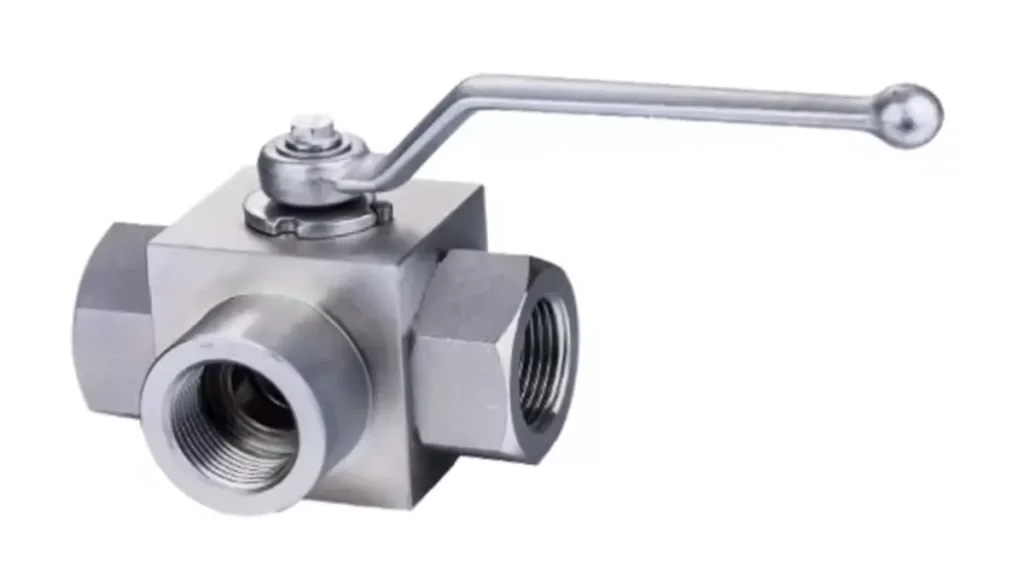
A 3-way ball valve helps you control where fluid goes. You can change the flow by turning the valve. These valves are used in many machines and systems, and they are important in chemical processing facilities, water and wastewater applications, the food and beverage industry, and the oil and gas industry. If you want to know how does a 3 way ball valve work, this guide will help you. These valves are good for mixing, moving, or switching fluids in tough places.
Key Takeaways
- A 3-way ball valve changes where fluid goes. It can mix, send, or stop flow between three pipes.
- The valve turns a quarter way to work. This lets you change flow fast. It is good for systems that need quick changes.
- You need to know about L-port and T-port valves. L-port sends flow to a different pipe. T-port mixes or splits the flow.
- Always look at port markings before you put in the valve. Check the manufacturer’s drawings too. This helps you avoid mistakes and get the flow right.
- Pick the right valve size and pressure rating. This stops leaks and keeps your system safe.
- Think about the connection type you need. It can be threaded, flanged, or welded. This makes setup and fixing easier.
- A 3-way ball valve helps hydraulic systems work better. It lets you control fluid flow well without stopping the system.
- Adding actuators to the valve can help even more. It makes control more exact and lets you use it from far away. This is good for factories and big machines.
What Is a 3 Way Ball Valve
A 3-way ball valve is a special type of valve that lets you control the direction of fluid in a system. You can use it to mix, divert, or even shut off flow between three different pipes. This makes it much more flexible than a regular 2-way valve, which only lets fluid go in or out in one direction. If you work with machines or systems that need to move fluids in different ways, you will find a 3-way ball valve very useful.
Main Components
To understand how a 3-way ball valve works, you should know its main parts. Each part plays a key role in making sure the valve does its job.
Valve Body
The valve body is the main shell that holds everything together. It keeps the inside parts safe from leaks and damage. Most valve bodies are made from strong metals like stainless steel or brass. This helps the valve last a long time, even in tough places.
Ball
The ball sits inside the valve body. It has a hole drilled through it. When you turn the ball, the hole lines up with different ports. This lets you control which way the fluid goes. The ball is what makes the valve so good at switching flow paths.
Stem
The stem connects the ball to the handle or actuator. When you turn the handle, the stem turns the ball inside the valve. The stem needs to be strong and well-sealed so it does not leak.
Handle/Actuator
You use the handle or actuator to turn the valve. Most 3-way ball valves use a simple lever handle. Some use electric or pneumatic actuators for automatic control. The handle gives you quick and easy control over the flow.
Seats/Seals
Seats and seals keep the valve from leaking. They press against the ball and the valve body. Most seats are made from soft materials like PTFE (Teflon). Good seats and seals mean you get a tight shut-off when you need it.
Three-Port Structure
The three-port structure is what sets a 3-way ball valve apart from other valves. You get three openings, or ports, instead of just two. This design lets you do things that a 2-way valve cannot.
- You can mix two different fluids together.
- You can divert flow from one pipe to another.
- You can isolate one part of your system while keeping the other parts running.
The three-port design gives you more ways to control fluid. You can send flow to different places, combine streams, or split them apart. This makes the 3-way ball valve perfect for jobs that need more than just simple on/off control.
Tip: If you need to handle more complex fluid paths, a 3-way ball valve gives you the flexibility that a 2-way valve just can’t match. You can manage multiple flow paths with one valve, saving space and making your system easier to control.
How Does a 3 Way Ball Valve Work
You might wonder how does a 3 way ball valve work in real-world systems. The answer starts with the way you turn the valve and how the internal ball moves to control fluid flow. Let’s break down the process so you can see exactly what happens inside.
Quarter-Turn Operation
When you grab the handle of a 3-way ball valve, you only need to turn it a quarter of a full circle—just 90 degrees. This quick movement rotates the internal ball, which has a special passage drilled through it. The quarter-turn design lets you change the flow direction fast. You don’t have to wait for slow adjustments. You get instant control.
- The ball rotates 90 degrees, lining up its passage with the ports.
- You can switch flow paths quickly, which is great for systems that need rapid changes.
- The internal structure, with either an L-port or T-port, helps you divert, mix, or split fluid streams.
- If you use an actuator, like pneumatic or electric, the valve responds even faster and more reliably.
Tip: The quarter-turn operation makes these valves perfect for jobs where speed and reliability matter. You can trust the valve to react right away when you need to change the flow.
Ball Alignment and Port Connection
Inside the valve, the ball is the star of the show. It has a passage shaped like an L or a T. When you turn the handle, the ball rotates and connects different ports. This is how does a 3 way ball valve work to control where the fluid goes.
- The ball’s passage can be L-port or T-port.
- In the L-port setup, the ball connects two ports and redirects fluid from one pipe to another.
- In the T-port setup, the ball can mix fluids or send flow to multiple outlets.
- The ball’s position decides which ports are open and which are closed.
You get a lot of flexibility. You can mix two streams, divert flow, or shut off one path while keeping another open. The ball alignment is what makes these valves so useful in hydraulic and industrial systems.
Manual vs Automated
You can operate a 3-way ball valve by hand or let an actuator do the work. Each method has its own strengths. Let’s look at how does a 3 way ball valve work in both cases.
| Feature | Manual 3-Way Ball Valves | Automated 3-Way Ball Valves |
|---|---|---|
| Control Method | Operated by a handle or lever | Controlled by actuators (pneumatic, hydraulic, electric) |
| Flow Control Accuracy | Immediate control, suitable for infrequent adjustments | High accuracy, suitable for frequent adjustments and automation |
| Best Uses | Smaller systems, residential plumbing, non-critical applications | Industrial applications, process automation, remote control needs |
If you use a manual valve, you get direct control. You turn the handle and see the result right away. This works well for smaller systems or places where you don’t need to change flow often. Automated valves use actuators. These can be pneumatic, hydraulic, or electric. You get high accuracy and can make frequent adjustments without touching the valve. Automation is great for big industrial setups or when you need remote control.
Note: Choose manual for simple jobs. Go with automated if you need precision or want to control the valve from a distance.
Now you know how does a 3 way ball valve work. The quarter-turn operation, ball alignment, and choice between manual or automated control give you the power to manage fluid flow exactly how you want.
Flow Direction
Changing Flow Paths
When you use a 3-way ball valve, you get to decide where the fluid goes. The ball inside the valve has a special passage. As you turn the handle, the ball rotates and lines up with different ports. This changes the flow direction. You can mix, divert, or block fluid paths just by moving the handle.
Let’s look at the two main types of flow paths:
| Valve Type | Flow Path Description |
|---|---|
| L-pattern | Connects two ports at a time, blocking the third. A quarter turn changes the connection to a different pair of ports. |
| T-pattern | Can connect all three ports simultaneously or isolate one, allowing for mixing or diverting flows. A quarter turn changes the flow path. |
You might use an L-pattern valve to switch between two outputs or shut off one line. With a T-pattern valve, you can mix flows from two inlets or send fluid from one source to two outputs. The ball’s position decides which ports are open. If you ever wondered how does a 3 way ball valve work, this is the key: the ball’s rotation lets you control the flow path in many ways.
Tip: Try turning the handle slowly and watch how the flow changes. You’ll see how easy it is to switch between different paths.
Port Markings
Before you install a 3-way ball valve, you need to check the port markings. Manufacturers usually label the ports to help you connect everything the right way. If you miss these markings, you might set up the valve wrong and cause problems in your system.
- Look for the port labeled as “common.” This is usually the main port that connects to the source or main line.
- Check how each actuator position connects the ports. Some valves only allow two hard stop positions, while others let you use an intermediate position.
- Make sure you understand which port will be open or closed when you turn the handle.
If you pay attention to these markings, you’ll avoid mistakes and keep your system running smoothly.
Note: Always double-check the port labels before you start connecting pipes. It saves time and prevents leaks.
Manufacturer Drawings
Manufacturer drawings give you a clear picture of how the valve works. These diagrams show you the flow direction, handle positions, and any special notes for installation. You should always look at these drawings before you install the valve.
- Arrows on the valve body show the correct flow direction for unidirectional valves.
- The handle’s orientation tells you which ports are open. If the handle is parallel to the port, it’s usually open. If it’s perpendicular, it’s closed.
- Tags or labels may point out flow direction or give extra installation tips.
If you follow the manufacturer’s drawings, you’ll set up the valve the right way. You won’t have to guess how does a 3 way ball valve work in your system. The drawings make everything clear.
Tip: Keep the manufacturer’s diagram handy during installation. It’s your best guide for getting the flow direction right.
L Port vs T Port
L Port Function
You might see the term “L-port” when shopping for 3-way ball valves. The L-port gets its name from the shape of the passage inside the ball. This shape lets you divert flow between two outlets. You can send fluid to Tank 1 or Tank 2, but not both at the same time. The L-port does not allow mixing. It only connects two ports at once, blocking the third.
You often use L-port valves for switching flow between two tanks. You can also bypass equipment, like filters or pumps, during maintenance. If you need to redirect fluid for seasonal changes, such as sending it to a heater in winter or a cooler in summer, the L-port makes this easy. Sometimes, you want to block one outlet completely and use the other. The L-port handles this “dead-end” service well.
- Common L-port uses:
- Switching flow between two tanks
- Bypassing equipment for maintenance
- Seasonal flow redirection
- Dead-end service
Tip: If you need to choose between two destinations for your fluid, the L-port is your go-to option.
T Port Function
The T-port is a bit more flexible. The passage inside the ball looks like a “T”. This design lets you connect all three ports at once, or just two, depending on how you turn the handle. You can mix two fluid streams coming in from ports A and B, then send the combined flow out through port C. You can also split one inlet into two outlets.
You might use a T-port valve to blend hot and cold water, or to split a feed into two branches. In chemical processing, you can mix two reactant streams before sending them to a reactor. The T-port gives you both mixing and diverting functions, making it a favorite in systems where you need more control.
Note: The T-port lets you mix, split, or divert flows. You get more options for complex fluid paths.
Comparison Table
Let’s make things clearer with a side-by-side comparison. This table shows the main differences between L-port and T-port 3-way ball valves:
| Feature | L-Port 3-Way Ball Valve | T-Port 3-Way Ball Valve |
|---|---|---|
| Typical Function | Divert flow between two outlets | Mix two inlets or split one inlet to two outlets |
| Can connect all 3 at once | No | Yes, in many positions |
| Flow Direction | Diverts fluid without mixing | Mixes or splits fluids |
| Port Configuration | Connects one side port to the bottom port | Can connect all three ports simultaneously |
| Maintenance Variations | Similar initial cost, may differ in wear | May require more frequent maintenance due to complexity |
| Typical Use | Send flow to Tank 1 or Tank 2, or Line A or B | Blend hot and cold, split a feed into two branches |
| Selection Notes | Best for simple diversion tasks | Ideal for mixing or splitting flows |
Callout: If you need to mix fluids or send flow to multiple places at once, pick a T-port. If you just want to switch between two paths, stick with an L-port.
Typical Uses
You might wonder where you’ll actually see L-port and T-port 3-way ball valves in action. These valves show up in many industrial settings. Each type has its own specialty, so you’ll want to pick the right one for your job.
Let’s look at some common applications. Here’s a quick table to help you see the differences:
| Valve Type | Specific Uses |
|---|---|
| L-Port | HVAC systems: Directing coolant flow Industrial processes: Controlling the direction of chemical flows Irrigation systems: Switching between water sources or zones |
| T-Port | Mixing hot and cold water for temperature control Chemical processing: Blending different chemicals Industrial processes: Controlling flow and mixing in various applications |
If you work with HVAC systems, you’ll often use an L-port valve to send coolant to different parts of the system. In irrigation, you can switch water between zones or sources. Industrial processes rely on L-port valves to divert chemicals or fluids from one line to another.
T-port valves are the go-to choice when you need to mix things. You might use a T-port to blend hot and cold water for temperature control in plumbing. Chemical plants use T-port valves to mix different chemicals before sending them to the next stage. In factories, T-port valves help you control and mix flows for complex operations.
Tip: If your job needs simple flow diversion, stick with an L-port. If you need to mix or split flows, grab a T-port.
Selection Notes
Choosing between an L-port and a T-port 3-way ball valve can feel tricky. You want to make sure you pick the right one for your system. Here are some notes to help you decide:
- Flow Patterns: L-port valves work best for diverging flows. You can send fluid to one outlet or another, but not both at the same time. T-port valves let you mix fluids or split one stream into two. If you need more complex flow control, T-port is your friend.
- Applications: L-port valves fit simple jobs. You’ll use them for basic diversion or shut-off tasks. T-port valves handle more complicated processes, like mixing fluids or managing multiple flow paths.
- Key Features: Always check the design options. Some valves have different handle positions or port markings. Make sure the valve matches your installation needs. Look at the manufacturer’s drawings before you buy.
Note: Think about what your system needs. If you only need to switch between two paths, L-port is usually enough. If you need to mix, split, or handle more than two flows, T-port gives you extra flexibility.
You’ll save time and avoid headaches if you match the valve to your application. Don’t forget to check the flow pattern and make sure the valve fits your piping layout. If you’re unsure, ask your supplier for advice or look at the technical drawings. Picking the right valve keeps your system running smoothly and safely.
Applications
Hydraulic Power Units
You see hydraulic power units in factories, construction sites, and machine shops. These units use pumps, motors, and valves to move hydraulic fluid and create force. A 3-way ball valve helps you control where the fluid goes. You can switch flow between different cylinders or tools with just a quick turn of the handle. This makes your system more flexible and easier to maintain.
If you need to run two machines from one power unit, a 3-way ball valve lets you send fluid to one or both. You can also use the valve to isolate a part of the system for repairs. This means you don’t have to shut down everything. You keep your work moving and avoid long delays.
Tip: If you want to make your hydraulic system safer and easier to use, add a 3-way ball valve. You get fast control and less downtime.
Oil Circuits
Oil circuits show up in refineries, pipelines, and chemical plants. You need to manage oil flow for safety and efficiency. A 3-way ball valve gives you the power to divert, mix, or isolate oil streams. You can switch between flow paths quickly, which is important when you work with hazardous materials.
Here’s how you use a 3-way ball valve in oil circuits:
- Divert oil from one pipeline to another with a simple quarter-turn.
- Mix two oil streams before sending them to a processing unit.
- Isolate a section of the pipeline for maintenance or emergencies.
- Enable automated flow control by connecting the valve to an actuator.
- Improve safety in dangerous settings like refineries and chemical factories.
Operators rely on these valves to separate hydrocarbons and direct flow to different pipelines. You get precise control, which helps prevent spills and keeps your system running smoothly.
Note: Automated 3-way ball valves reduce the need for manual operation. You get safer and more efficient oil circuit management.
Test Benches
Test benches help you check the performance of pumps, valves, and other hydraulic parts. You need to control fluid flow during testing. A 3-way ball valve makes this easy. You can switch between test circuits, mix fluids, or block flow with just a quick turn.
If you want to test two pumps, you use the valve to send fluid to each one in turn. You can also mix fluids to see how parts react under different conditions. The valve lets you isolate a test section, so you don’t risk damaging other equipment.
| Test Bench Function | 3-Way Ball Valve Role |
|---|---|
| Switch test circuits | Divert flow easily |
| Mix fluids | Combine streams |
| Isolate sections | Block flow quickly |
You get more control and faster results. Your test bench works better, and you save time.
Callout: If you run a test bench, a 3-way ball valve gives you the flexibility to handle many test setups. You can switch, mix, or block flow in seconds.
Machine Tools
You work with machine tools every day if you’re in manufacturing. These machines cut, shape, and finish metal parts. They need precise control over fluids like coolants, lubricants, and hydraulic oil. That’s where a 3-way ball valve comes in. You get to decide exactly where the fluid goes, and you can switch flow paths in seconds.
Imagine you’re running a CNC milling machine. You want to send coolant to the cutting area, but sometimes you need to divert it to another part for cleaning. With a 3-way ball valve, you just turn the handle. The valve redirects the fluid instantly. You don’t have to stop the machine or change pipes. You keep production moving and avoid downtime.
These valves handle high pressure and temperature. You don’t worry about leaks or failures, even when your machine runs hot or fast. The strong design means you can trust the valve in tough environments. You get reliability, and your tools stay safe.
Let’s say you need to mix two fluids for a special process. The T-port 3-way ball valve lets you blend them right inside the machine. You control the mix with a simple turn. If you want to isolate a section for maintenance, the L-port valve blocks one path while keeping the other open. You don’t have to shut down the whole system. You save time and keep your work efficient.
Here’s how you benefit from using 3-way ball valves in machine tools:
- You control fluid flow in multiple directions.
- You switch between different operations without extra plumbing.
- You handle high pressure and temperature with confidence.
- You keep your machines running smoothly and safely.
Tip: If you want to boost your machine’s flexibility, add a 3-way ball valve. You get more options for fluid control and make your setup easier to manage.
You also find these valves in automated systems. If your machine uses sensors and actuators, the valve responds to commands. You get fast changes in flow, which helps with precision tasks. You don’t have to worry about manual errors. The system adjusts itself, and you get consistent results.
Machine tools rely on 3-way ball valves for many reasons. You get versatility, reliability, and easy operation. Whether you’re mixing fluids, diverting flow, or isolating parts, the valve gives you the control you need. You make your manufacturing process safer and more efficient. That’s why these valves are a favorite in factories and workshops.
Agricultural Machinery
Modern agricultural machinery has many moving parts. Tractors, sprayers, and harvesters need good fluid control. If you want your work to be easier, try using 3-way ball valves. These valves help you move hydraulic oil, water, and liquid fertilizers. You only need to turn the handle a little.
Think about working in a field. You need to change your equipment’s height. With a 3-way ball valve, you send hydraulic fluid to the right spot. You do not need to stop or change hoses. Just turn the handle and the valve sends fluid where you want. This saves time and keeps your machine working well.
You also need to control liquid fertilizer. If you want to use different tanks or mix two fertilizers, a 3-way ball valve helps. You can control how much goes to each part of your sprayer. This means every part of your field gets the right amount. Your crops grow better and you do not waste fertilizer.
Here are some ways 3-way ball valves help in agricultural machinery:
- You can send fluid in different directions.
- You change equipment height fast.
- You control fertilizer flow exactly.
- You switch tanks or lines without extra pipes.
- You make your work faster and easier.
Tip: If you want your farm machines to do more, add a 3-way ball valve. You get quick changes and better fluid control.
Let’s see how these valves are used in farming:
| Equipment Type | 3-Way Ball Valve Function |
|---|---|
| Tractors | Change hydraulic tools, switch lines |
| Sprayers | Mix or send out liquid fertilizers |
| Harvesters | Move hydraulic oil for parts |
| Irrigation Systems | Send water to different zones |
You find these valves in irrigation systems too. You can send water to different places or mix nutrients before they reach plants. If you need to fix something, the valve blocks one path but keeps others open. You do not have to stop the whole system.
Farmers like 3-way ball valves because they make fluid jobs easy. You get more control, less waiting, and better crops. If you want your machines to do more, these valves are a smart choice.
Callout: 3-way ball valves help you control fluids for every farm job. You save time, use less, and get a better harvest.
3 Way vs 2 Way Ball Valve
Comparison Table
You might wonder what makes a 3-way ball valve different from a 2-way ball valve. The answer starts with the number of ports and what each valve can do. Here’s a quick table to help you see the main differences:
| Feature | 2-Way Ball Valve | 3-Way Ball Valve |
|---|---|---|
| Number of Ports | 2 (inlet and outlet) | 3 (input, output, or both) |
| Flow Direction | Single straight flow | Can change direction and mix media |
| Primary Function | Shut-off or isolation | Directing flow, mixing, and shut-off |
| Flow Rate Stability | Variations during operation | More steady flow rate |
| Cost | Less expensive | More economical for complex tasks |
| Application Suitability | Isolation in simple systems | Mixing and diversion in complex systems |
Tip: If you need to just start or stop flow, a 2-way valve is usually enough. If you want to mix, split, or change flow paths, a 3-way valve gives you more options.
Ports and Function
A 2-way ball valve has two ports—one for fluid to enter and one for fluid to leave. You use it when you want to turn flow on or off. It works like a light switch for your fluid system. You open it, and fluid moves straight through. You close it, and the flow stops.
A 3-way ball valve has three ports. You can use it to send fluid in different directions. You might want to mix two fluids together or split one stream into two. You can also use it to switch flow between two different lines. The extra port gives you more control. You can do more than just open or close the flow.
You get a more stable flow rate with a 3-way valve. When you turn a 2-way valve, the flow can change quickly and cause pressure spikes. A 3-way valve lets you switch or mix flows smoothly. This helps protect your equipment and keeps your system running better.
Note: Think about what you need your valve to do. If you only need to stop or start flow, stick with a 2-way. If you need to mix, divert, or control flow in more ways, go with a 3-way.
Application Differences
You will see 2-way and 3-way ball valves used in different places. Here’s how you can decide which one fits your job:
- Use a 2-way ball valve for simple on/off control. It works best when you only need to open or close a single flow path.
- Choose a 3-way ball valve if you need to mix two fluids or send flow to different places. It’s great for systems that need more than just shut-off.
- Pick a 2-way valve for isolation tasks, like stopping flow to a pump or a tank.
- Go with a 3-way valve when you want to switch between two tanks, mix chemicals, or split a flow into two branches.
- If your system needs steady flow and less pressure change, a 3-way valve is a better choice.
Callout: Always match the valve to your system’s needs. The right choice makes your work easier and keeps your equipment safe.
You now know the main differences between 2-way and 3-way ball valves. Think about your system’s flow paths and what you want to control. This will help you pick the best valve for your job.
Selection Points
Choosing between a 2-way and a 3-way ball valve can feel tricky. You want to make the right call for your system. Let’s break down the key points you should check before you buy.
Here’s a handy table to help you compare what matters most:
| Selection Criteria | What to Look For |
|---|---|
| Valve Type | Decide if you need simple shut-off (2-way) or flow direction/mixing (3-way). |
| Material Compatibility | Pick a valve material that handles your fluid, pressure, and temperature. |
| Pressure & Temperature Ratings | Make sure the valve can handle your system’s highest pressure and temperature. |
| Flow Rate & Cv Value | Check if the valve lets enough fluid through for your needs. |
| Actuation Method | Choose manual handles for simple jobs or actuators for automation. |
Let’s talk about each point:
- Valve Type: Start by thinking about what you want the valve to do. If you just need to open or close a line, a 2-way valve works well. If you want to mix, split, or switch flow between lines, go for a 3-way valve. Don’t forget to check if you need an L-port or T-port for your 3-way valve. Each shape gives you different flow options.
- Material Compatibility: Your valve needs to stand up to whatever you put through it. Stainless steel works for tough chemicals and high pressure. Brass is good for water and oil. Always match the valve material to your fluid and system conditions.
- Pressure & Temperature Ratings: Every valve has limits. Check the label or datasheet for the maximum pressure and temperature. Pick a valve that can handle your system’s toughest moments. This keeps your equipment safe and running longer.
- Flow Rate & Cv Value: The Cv value tells you how much fluid can pass through the valve. If your system needs a lot of flow, make sure the valve isn’t too small. A valve with the right Cv value keeps your process smooth and steady.
- Actuation Method: Think about how you want to control the valve. Manual handles are simple and cheap. If you need remote control or want to automate your system, look for valves with electric, pneumatic, or hydraulic actuators.
Tip: Always check the manufacturer’s drawings and specs before you buy. This helps you avoid mistakes and makes installation easier.
If you follow these points, you’ll pick the right valve for your job. You’ll get better performance, fewer problems, and a safer system. Take your time, ask questions, and match the valve to your needs. That’s how you make a smart choice!
Valve Selection
Flow Function
When you pick a 3-way ball valve, you need to think about what you want the valve to do. This is called the flow function. Do you want to mix two fluids together? Maybe you need to split one stream into two different lines. Sometimes, you just want to switch flow from one place to another. Each job needs a different flow function.
Here are some common flow functions:
- Diverting: You send fluid from one pipe to another. This works well if you want to choose between two tanks or lines.
- Mixing: You combine two fluids into one stream. This is great for blending chemicals or adjusting temperatures.
- Shut-off: You block one or more ports to stop the flow. This helps with maintenance or safety.
Tip: Always ask yourself, “What do I need this valve to do?” Write down your answer before you shop. This makes it easier to pick the right valve.
Port Type
The port type decides how the valve moves fluid. You will see two main types: L-port and T-port. Each one has a special job.
| Port Type | What It Does | Best For |
|---|---|---|
| L-Port | Connects two ports at once | Diverting flow |
| T-Port | Connects all three ports | Mixing or splitting flow |
- L-Port: This port looks like the letter “L.” It lets you switch flow between two paths. You can send fluid to one line or the other, but not both at the same time.
- T-Port: This port looks like a “T.” It can connect all three ports. You can mix two streams or split one stream into two.
If you want to mix fluids, pick a T-port. If you only need to switch between two lines, go with an L-port.
Note: Always check the manufacturer’s drawings. Some valves have special port shapes or extra features.
Pressure Rating
Pressure rating tells you how much force the valve can handle. If you use a valve with a low pressure rating in a high-pressure system, you risk leaks or even damage. You want your valve to match or beat the highest pressure in your system.
Here’s how you can check pressure ratings:
- Look at your system’s maximum working pressure.
- Find the valve’s pressure rating on the label or datasheet.
- Make sure the valve’s rating is equal to or higher than your system’s pressure.
| System Pressure | Valve Pressure Rating | Safe to Use? |
|---|---|---|
| 150 bar | 200 bar | Yes |
| 250 bar | 160 bar | No |
Alert: Never guess the pressure rating. Always double-check before you install the valve. Using the wrong rating can cause accidents.
If you follow these steps, you keep your system safe and your equipment working longer.
Valve Size
Picking the right valve size matters a lot. If you choose a valve that’s too small, you might choke the flow and put stress on your system. If you go too big, you waste money and space. You want a valve that matches your pipe size and flow needs.
Start by checking the size of your pipes. Most 3-way ball valves come in standard sizes, like 1/4″, 1/2″, 1″, or even bigger. You should match the valve size to your pipe size for the best results. If you’re not sure, look at your system’s flow rate. The valve’s datasheet will show you the maximum flow it can handle, often called the Cv value.
Here’s a quick table to help you:
| Pipe Size (inches) | Typical Valve Size | Common Use |
|---|---|---|
| 1/4″ – 1/2″ | 1/4″ – 1/2″ | Small machines, test benches |
| 3/4″ – 1″ | 3/4″ – 1″ | General industrial |
| 1-1/4″ and above | 1-1/4″ + | Large equipment, main lines |
Tip: Always check the valve’s flow rating. If your system needs a lot of flow, pick a bigger valve. If you only need a little flow, a smaller valve saves space and money.
Connection Type
You have a few choices when it comes to how your valve connects to the rest of your system. The right connection type makes installation easier and helps prevent leaks.
Here are the most common connection types:
- Threaded: These valves screw right onto your pipes. They’re easy to install and remove. You’ll see them a lot in small or medium systems.
- Flanged: These have flat ends with holes for bolts. You bolt them to matching flanges on your pipes. Flanged valves work well for big pipes or high-pressure jobs.
- Welded: These valves get welded right onto the pipe. You get a strong, leak-proof joint. Welded connections are best for permanent setups.
- Compression: These use special fittings to grip the pipe. They’re quick to install and good for small lines.
Note: Match the valve’s connection type to your pipe and your installation needs. If you want to swap valves out later, threaded or flanged types make it easy.
Material/Seal
The material of your valve and its seals decides how long it lasts and what fluids it can handle. You want to pick materials that stand up to your system’s pressure, temperature, and chemicals.
Common valve body materials include:
- Stainless Steel: Handles high pressure, heat, and harsh chemicals. Great for tough jobs.
- Brass: Works well with water, oil, and mild chemicals. It’s affordable and easy to find.
- Carbon Steel: Good for high-pressure systems but not as resistant to corrosion as stainless steel.
For seals, you’ll see:
- PTFE (Teflon): Handles most chemicals and temperatures. It’s the most common seal material.
- Viton: Stands up to high temperatures and aggressive fluids.
- EPDM: Good for water and steam but not for oil.
Alert: Always check if the valve material and seals match your fluid. The wrong choice can cause leaks or damage.
If you pick the right size, connection, and material, your 3-way ball valve will work better and last longer. Take your time and double-check before you buy!
Installation Space
You might think picking a valve is all about size and pressure, but space matters just as much. Before you buy a 3-way ball valve, take a good look at where you want to install it. Some valves need more room than you expect. If you skip this step, you could end up with a valve that just won’t fit.
Start by measuring the area around your pipes. Check for nearby walls, other equipment, or tight corners. You want to make sure you have enough space to turn the handle or fit an actuator. If you plan to use an automated valve, remember that actuators can be bulky.
Here’s a quick checklist to help you:
- Measure the distance between pipes and nearby objects.
- Check the height above and below the valve for handle or actuator movement.
- Look for obstacles that might block access to the valve.
- Make sure you can reach the valve for maintenance or repairs.
Tip: Always leave extra space for your hand or tools. You’ll thank yourself when it’s time to service the valve!
Some valves come with compact designs for tight spots. Others need more clearance because of large handles or flanges. If you work in a crowded machine room or a small cabinet, ask your supplier about space-saving options.
A table can help you compare space needs:
| Valve Feature | Space Needed | Notes |
|---|---|---|
| Manual Handle | Medium | Needs room to turn |
| Electric Actuator | Large | Needs space for wiring |
| Pneumatic Actuator | Large | Needs space for air lines |
| Compact Design | Small | Good for tight installations |
If you plan ahead, you avoid headaches later. You get a valve that fits and works well in your system.
Manufacturer Drawings
Manufacturer drawings are your best friend when it comes to valve selection. These drawings show you exactly how the valve looks and works. You get to see the port layout, handle positions, and flow paths. If you skip the drawings, you might connect the valve the wrong way or pick the wrong port type.
Always ask for the technical drawing or datasheet before you buy. Look for these key details:
- Port labels (A, B, C or 1, 2, 3)
- Flow direction arrows
- Handle or actuator positions
- Valve dimensions (length, width, height)
- Mounting hole locations
Note: The drawing tells you how the valve fits into your system. It helps you avoid mistakes during installation.
If you use the drawing, you can plan your piping layout better. You know where each pipe connects and how the handle moves. You also see if the valve will fit in your available space. Some manufacturers even provide 3D models or CAD files. These tools make it easy to check clearances and avoid surprises.
Here’s a simple example of what you might see on a drawing:
   [A]---[Valve Body]---[B]
           |
          [C]
You can match the drawing to your system and make sure everything lines up. If you have questions, show the drawing to your installer or supplier. They can help you pick the right valve and avoid costly errors.
Callout: Never install a 3-way ball valve without checking the manufacturer’s drawing first. It’s the easiest way to get your system right the first time.
Common Mistakes
Port Type Confusion
You might think all 3-way ball valves work the same way. That’s not true. One of the biggest mistakes happens when you mix up L-port and T-port valves. If you grab the wrong type, your system won’t do what you expect. Maybe you want to mix two fluids, but you install an L-port valve. Now, you can only divert flow. Or you need to switch between two tanks, but you pick a T-port. Suddenly, you’re mixing fluids when you just want to redirect.
Here’s a quick table to help you spot the difference:
| Port Type | What It Does | Common Use |
|---|---|---|
| L-Port | Diverts flow | Switching tanks |
| T-Port | Mixes or splits flow | Blending fluids |
Tip: Always check the port shape before you buy. Look at the manufacturer’s drawing. If you’re not sure, ask your supplier. You’ll save yourself a lot of trouble.
Ignoring Flow Direction
You might overlook flow direction when installing your valve. That’s a common mistake. If you connect pipes without checking how the ball lines up inside, you could block the wrong port or send fluid where you don’t want it. Sometimes, you install the valve backwards. Now, the handle positions don’t match the flow paths. Your system gets confusing, and you risk leaks or damage.
Manufacturers mark ports and show flow direction in their diagrams. You should always follow these guides. If you skip this step, you might waste time fixing mistakes later.
- Check port markings before installation.
- Match handle positions to the flow path.
- Use the manufacturer’s diagram as your reference.
Alert: Never guess the flow direction. Double-check before you tighten any fittings. You’ll avoid headaches and keep your system safe.
Size Only Selection
You might focus only on valve size when shopping. That’s a mistake many people make. You see a valve that fits your pipe, so you grab it. But size isn’t everything. You need to check pressure rating, material, and flow function too. If you pick a valve that’s too small, you choke the flow. If you go too big, you waste money and space.
Some valves look right but can’t handle your system’s pressure. Others have seals that don’t match your fluid. You need to look at the whole picture.
Here’s a checklist to help you:
- Match valve size to pipe size.
- Check pressure rating.
- Pick the right material for your fluid.
- Confirm the flow function fits your needs.
Note: Don’t let size fool you. Always check the specs before you buy. You’ll get better performance and fewer problems.
If you avoid these mistakes, your 3-way ball valve will work the way you want. You’ll save time, money, and keep your system running smoothly.
Pressure Rating Overlooked
You might think all ball valves can handle any pressure. That’s not true. One of the most common mistakes is ignoring the pressure rating. If you install a valve that can’t handle your system’s pressure, you risk leaks, damage, or even dangerous failures.
Every 3-way ball valve comes with a pressure rating. This tells you the maximum pressure the valve can safely handle. You need to check this number before you buy or install a valve. If your system runs at 200 bar and your valve is only rated for 150 bar, you have a problem. The valve could burst or start leaking. You don’t want that.
Here’s a quick checklist to help you avoid this mistake:
- Find out your system’s maximum working pressure.
- Check the valve’s pressure rating on the label or datasheet.
- Make sure the valve’s rating is equal to or higher than your system’s pressure.
Tip: Always ask your supplier for the pressure rating if you can’t find it. Don’t guess. It’s better to be safe than sorry.
Let’s look at a simple table:
| System Pressure | Valve Pressure Rating | Safe to Use? |
|---|---|---|
| 100 bar | 150 bar | ✅ Yes |
| 250 bar | 160 bar | ❌ No |
| 180 bar | 200 bar | ✅ Yes |
If you match the pressure rating to your system, you keep everything safe. You also make your equipment last longer. High-pressure systems need strong valves. Low-pressure systems can use lighter valves, but you still need to check.
Some people forget about pressure rating when they focus on size or price. That’s a big mistake. You might save money now, but you’ll pay more later if the valve fails. Always check the rating before you buy.
Alert: Never install a valve without knowing its pressure rating. You protect your system and your team by making the right choice.
If you remember this step, you avoid leaks, downtime, and accidents. Your system stays safe, and you get peace of mind.
Drawing Confirmation
You might think you can skip the drawings when you install a 3-way ball valve. That’s a mistake that can cost you time, money, and even safety. Manufacturer drawings show you exactly how the valve works. If you ignore them, you risk connecting the wrong ports or setting up the valve backward. You could end up with leaks, blocked flow, or a system that just doesn’t work the way you want.
Let’s break down why these drawings matter:
- Port Identification: Drawings label each port. You see which one is the common port and which are the side ports. If you guess, you might connect your pipes wrong.
- Flow Path Visualization: The drawing shows how the ball inside lines up with each port. You know which handle position opens or closes each path.
- Handle Position: You see how far the handle turns and what each position does. Some valves have stops or special angles. The drawing tells you what to expect.
- Valve Orientation: You learn how to mount the valve. Some valves only work in certain positions. The drawing helps you avoid upside-down or sideways installs.
- Space Requirements: The drawing gives you dimensions. You check if the valve fits in your system before you buy or install it.
Tip: Always keep the manufacturer’s drawing handy during installation. It’s your best friend for getting things right the first time.
Here’s a quick checklist for drawing confirmation:
- Find the drawing in the valve’s manual or datasheet.
- Match the port labels on the drawing to the markings on the valve.
- Check the flow arrows and handle positions.
- Make sure the valve fits your space using the dimensions.
- Double-check before you tighten any fittings.
If you follow these steps, you avoid the most common mistakes. You save yourself from rework and frustration. You also keep your system safe and reliable.
Here’s a simple table to help you remember what to check:
| Drawing Detail | Why It Matters |
|---|---|
| Port Labels | Prevents wrong connections |
| Flow Arrows | Shows correct flow direction |
| Handle Positions | Ensures proper operation |
| Dimensions | Confirms fit in your system |
Alert: Never install a 3-way ball valve without checking the drawing. One small mistake can lead to big problems.
You don’t need to be an engineer to read these drawings. Just take your time and match what you see on paper to what you hold in your hands. If you get stuck, ask your supplier or manufacturer for help. They want your system to work just as much as you do.
Conclusion
You now know how a 3 way ball valve works. When you turn the handle, the ball inside rotates to open, block, or redirect the ports. This allows the valve to mix, switch, or change the flow direction in a hydraulic system.
When choosing a 3 way ball valve, you should check the flow function, port design, pressure rating, connection type, material, seal compatibility, and installation space. These details help the valve fit your system and work safely.
As a 3-way hydraulic ball valve manufacturer, Chenyang Hydraulic can help you choose or customize the right valve based on your pressure, flow direction, thread type, material, drawings, or samples. If you are not sure which valve fits your system, send us your requirements and our team will help you find a suitable solution.
FAQ
What is the main difference between an L-port and a T-port 3-way ball valve?
You use an L-port valve to switch flow between two paths. A T-port valve lets you mix or split flows. If you want to combine or divide fluids, pick a T-port. For simple switching, choose an L-port.
Can I use a 3-way ball valve for shut-off?
Yes, you can. Just turn the handle to block one or more ports. This lets you stop flow to certain parts of your system without shutting everything down.
How do I know which port is which on my valve?
Look for markings on the valve body. Manufacturers often label ports as A, B, and C or 1, 2, and 3. You can also check the manufacturer’s drawing for clear port identification.
Do I need special tools to install a 3-way ball valve?
Most of the time, you only need basic hand tools like wrenches. If your valve uses flanges or needs welding, you might need extra equipment. Always follow the installation guide.
Can I automate a 3-way ball valve?
Absolutely! You can add an electric, pneumatic, or hydraulic actuator. This lets you control the valve remotely or as part of an automated system. It’s great for large or hard-to-reach setups.
What materials work best for 3-way ball valves?
Stainless steel works well for harsh chemicals and high pressure. Brass is good for water and oil. Always match the valve material to your fluid and system needs.
How do I prevent leaks in my 3-way ball valve?
Check that the seals and seats match your fluid type. Tighten all connections properly. Inspect the valve for damage before installation. If you see leaks, replace worn seals right away.