
You need good ball valves for hard jobs like plumbing, factories, and HVAC. The ball valve manufacturing process begins with picking strong materials. These materials determine how tough the valve is and how well it functions. Careful cutting and smart sealing are essential in the ball valve manufacturing process to ensure valves work effectively in HVAC systems. Meticulous construction and rigorous testing in the ball valve manufacturing process guarantee that valves can handle high pressure and harsh environments.
Key Takeaways
- Ball valves use strong materials like stainless steel and brass. These materials help the valves work in hard jobs.
- Engineers use computers to design the valves. This helps make sure the size and shape are correct.
- Workers use machines to cut and drill the valve parts. They also polish the parts so they fit well.
- Testing checks if the valves can handle high pressure. This makes sure they do not leak.
- Pick valves with good surface treatments. This helps stop rust and damage.
- Some valves are custom for special needs. These can handle high pressure or have special threads.
- Quality checks find problems before the valves leave the factory.
- Choose a manufacturer with good production and support. This helps you get reliable valves.
Ball Valve Manufacturing Process Overview
Key Manufacturing Steps
Have you ever wondered how ball valves are made for tough jobs? Let’s look at the steps one by one. First, engineers design the valve on computers. They make sure the size and shape are just right. Next, workers get the materials ready and shape them. They heat and form the valve body or pour metal into molds. After that, they trim off extra pieces and smooth the surface. Machines drill, cut, and polish each part so they fit together well. Heat treatment makes the valve stronger. Plating helps stop rust. Then, workers put all the parts together. They check the seals and add the end caps. At the end, every valve gets tested to make sure it works under high pressure.
Here’s a quick look at the main steps in the ball valve manufacturing process:
| Step | Description |
|---|---|
| Design | Engineers use CAD software to create detailed blueprints and optimize performance. |
| Material Preparation | Workers cut raw materials like stainless steel or brass to the right size. |
| Forging or Casting | Materials are shaped into valve bodies by heating and forming or by pouring into molds. |
| Trimming and Blasting | Excess material gets trimmed, and surfaces are smoothed for a clean finish. |
| Machining | CNC machines drill, lathe, and mill parts to meet exact specifications. |
| Heat Treatment and Plating | Heat treatment boosts strength, and plating protects against corrosion. |
| Assembly | Teams fit the ball, seals, and end caps together. |
| Testing and Quality Control | Each valve faces pressure tests and inspections to ensure reliability. |
Material Preparation
You need the right materials to make a strong valve. For industrial ball valves, workers use stainless steel, brass, or cast iron. They check each batch to see if it is strong enough. Material test certificates show if the metal can handle heat and pressure. This step is important because weak materials can cause leaks.
Industrial ball valves use tougher materials than household valves. Here’s a simple comparison:
| Aspect | Industrial Ball Valves | Household/Low-Pressure Valves |
|---|---|---|
| Material Selection | Stainless steel, brass, PVC for durability | Lighter materials like plastic or brass |
| Manufacturing Methods | Forging and casting for strength and pressure | Simpler, less robust methods |
| Design Specifications | Built for high pressures (above 1500 PSI) | Lower pressure ratings, simpler designs |
Workers cut the raw materials into the right shapes and sizes. They check for cracks or other problems using special tools. If you want a valve that lasts, you need good materials from the start.
Tip: Always ask for material test certificates when you buy industrial valves. These certificates show the quality and strength of the materials used.
Machining and Assembly Flow
After the materials are ready, the next step is machining. CNC machines drill, mill, and turn each part to match the design. The parts must fit together perfectly. If they don’t, the valve could leak.
Workers use measuring machines to check every piece. They look for mistakes or rough spots. After machining, the parts get heat treatment to make them stronger. Plating, like nickel or zinc, helps stop rust.
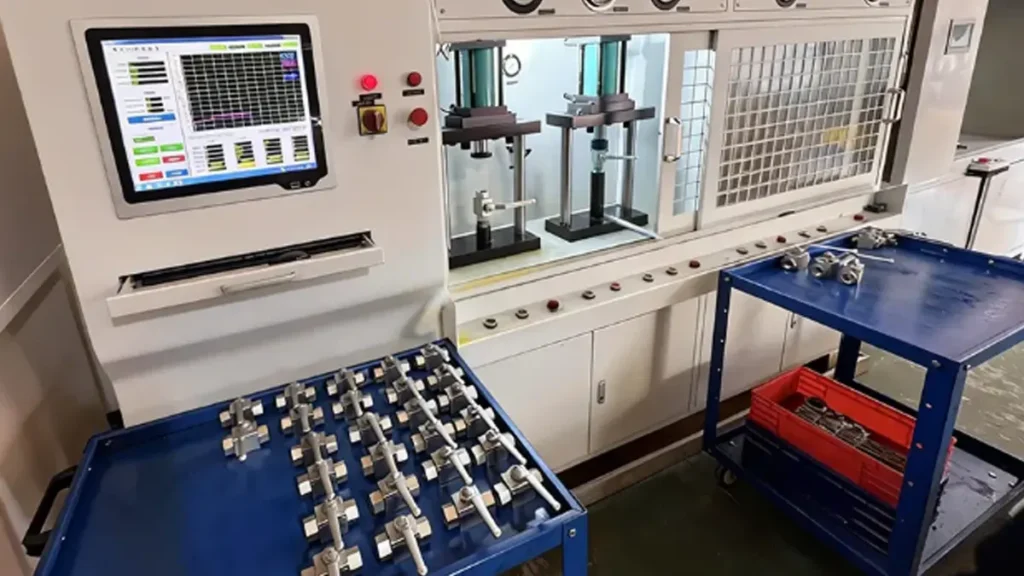
Now it’s time for assembly. Teams put the ball inside the valve body. They add seals and end caps. They make sure everything moves smoothly. Quality checks happen at every step. Workers look for problems, measure sizes, and test for leaks. Hydrostatic and pneumatic tests help find weak spots. Non-destructive testing, like dye checks, finds hidden flaws.
If you follow these steps, you get valves that work well in hard places. Industrial ball valves need this care to handle high pressure and strong chemicals.
Testing and Inspection
You want your valves to work every time. That is why testing and inspection matter so much in the ball valve manufacturing process. When you test a valve, you make sure it can handle tough jobs. You do not want leaks or weak spots. You want strong, safe valves.
First, you check the parts before you put them together. You look for cracks, dents, or rough spots. You use special tools to measure the size of each piece. If a part does not fit, you set it aside. Only the best parts move on.
Next, you test the valve after assembly. You fill the valve with water or air. You raise the pressure higher than what the valve will face in real life. You watch for leaks. If you see bubbles or drops, you know there is a problem. You fix it or start over.
Here is a simple list of common tests you might use:
- Hydrostatic Pressure Test: You fill the valve with water and pump up the pressure. You check for leaks around the seals and body.
- Pneumatic Test: You use air instead of water. This test helps you find tiny leaks that water might miss.
- Torque Test: You turn the handle or actuator. You make sure the valve opens and closes smoothly.
- Seat Leakage Test: You check if the ball seals tightly. You do not want any fluid to slip past the seat.
- Visual Inspection: You look at the outside. You check for scratches, marks, or missing labels.
Tip: Always ask your supplier about their testing steps. Good testing means safer valves for your system.
You also keep records of every test. You write down the pressure, the time, and the results. This helps you track quality and spot patterns. If you see the same problem again and again, you can fix it in the process.
Testing and inspection are not just the last steps. They are your safety net. They help you catch mistakes before the valve leaves the factory. When you buy a valve, you want to know it passed every test. That is how you get reliable performance in your plant or system.
Material Selection
Picking the right materials is the first step. You want ball valves to last and work safely. The materials for the valve body, seats, and seals decide how well it works. Let’s look at the main choices and see why matching materials matters.
Metals for Valve Bodies
Industrial ball valves need strong metals. Four main metals are used: stainless steel, carbon steel, brass, and cast iron. Each metal has good and bad points.
Stainless Steel
Stainless steel is best for durability and corrosion resistance. It is the most popular metal for industrial ball valve bodies. You see it in oil, gas, water treatment, and chemical plants. Stainless steel handles high pressure and extreme temperatures. It resists rust and stays strong over time. Stainless steel valves are trusted in food processing and chemical plants.
Carbon Steel
Carbon steel is tough and costs less. It works well where corrosion is not a big problem. Carbon steel handles high pressure but does not resist corrosion well. You might use carbon steel valves in hydraulic systems. If you want to save money and do not need top corrosion resistance, carbon steel is a good choice.
Brass
Brass ball valves are becoming more popular. They are used in plumbing and HVAC. Brass is strong, resists some corrosion, and looks nice. You see brass ball valves in homes and buildings. Brass is easier to machine than steel. It is not as tough as stainless steel, but it works for many jobs.
Cast Iron
Cast iron is heavy-duty and used for large valves. It is strong and handles big flows. Cast iron does not resist corrosion like stainless or brass. You find cast iron in older systems or where cost matters most. It is not good for chemical resistance.
Here is a table to compare the main metals:
| Material | Corrosion Resistance | Pressure Rating (psi) | Applications |
|---|---|---|---|
| Stainless Steel | Superior | Up to 10,000 | Harsh environments, food processing |
| Carbon Steel | Poor | Economical solution | Non-corrosive applications |
| Brass | Moderate | Up to 3,000 | Home plumbing, HVAC systems |
Note: Stainless steel is best for harsh places. Brass is great for plumbing and HVAC. Carbon steel works where corrosion is not a big worry.
Non-Metallic Materials
You need more than metal to build a good valve. Seats and seals use non-metallic materials. PTFE, POM, and elastomers are important for sealing and performance.
PTFE (Teflon)
PTFE, also called Teflon, is great for seats and seals. It is stable, non-reactive, and has low friction. PTFE stands up to many chemicals. You see PTFE in valves that handle acids and tough fluids. It keeps valves moving smoothly and stops leaks.
POM
POM, sometimes called Delrin, is strong and keeps its shape. It is good for parts that must fit well. POM has low friction and helps the ball turn easily. It does not handle abrasion or strong acids as well as PTFE. But it works for many jobs.
Elastomers (EPDM, NBR)
Elastomers like EPDM and NBR are flexible and seal well. These materials stretch and bounce back. They keep a tight seal even when the valve moves. Elastomers work well in seats and seals. They help stop leaks and keep systems safe.
Here is a list of what makes these materials special:
- PTFE: Stable, low friction, pure, non-reactive, and resists many chemicals.
- POM: Keeps its shape, strong, low friction, but does not like abrasion or acids.
- Elastomers: Stretch to keep a solid seal and recover from stress.
Material Selection Criteria
You want ball valve materials to match your job. Picking the right body, seat, and seal materials means your valve lasts longer and works better. Here is what to look for:
Corrosion Resistance
Corrosion can ruin a valve fast. Stainless steel gives the best resistance. Brass offers some protection. Carbon steel is not good in harsh places. PTFE and elastomers also resist chemicals inside the valve.
Pressure and Temperature Ratings
Check the pressure and temperature ratings for each material. Stainless steel handles the highest pressures—up to 10,000 psi. Brass works up to 3,000 psi. Carbon steel is strong but only works well if corrosion is not a problem. PTFE and POM keep their shape at many temperatures.
Application Suitability
Think about where you will use the valve. For chemical industries, use stainless steel and PTFE. For home plumbing or HVAC, brass and elastomers work well. For high-pressure hydraulic systems, use stainless steel or carbon steel. Make sure seat and seal materials can handle the pressure and chemicals.
Here is a checklist to help you pick materials:
- Pressure ratings: Make sure the valve can handle your system’s pressure.
- Temperature compatibility: Pick materials that will not break down.
- Material properties: Look for strength, corrosion resistance, and chemical compatibility.
- Compliance: Check that materials meet standards.
- Operating conditions: Think about the fluid, temperature, and pressure.
- Safety margins: Pick materials that resist wear and failure.
Tip: Always ask your supplier about the materials in your valves. The right choice means better performance and fewer problems.
Industrial ball valves use stainless steel, carbon steel, and advanced plastics for strength and resistance. Household valves use lighter materials like brass, bronze, or plastic. Industrial valves handle higher pressures, tougher chemicals, and harder jobs.
If you want ball valves that last, focus on the right materials. Matching materials to jobs is the key to safe, reliable, and long-lasting valves.
Valve Body Machining
CNC Machining
When you want a ball valve that works every time, you need precise machining. CNC machines help you get that precision. These machines use computer programs to cut metal exactly as you need. You load the design, and the CNC machine shapes the valve body with sharp tools. This process gives you smooth surfaces and tight fits.
CNC machining controls every move. You get the same result every time. This is important for ball valves because even a tiny mistake can cause leaks. For example, the main bore diameter must stay within ±0.05 mm. If it is too big or too small, the ball will not seal right. The flange face must be flat within ±0.02 mm. If it is not flat, the gasket will not seal, and you might get leaks.
Here’s a table showing some typical CNC machining tolerances for ball valve bodies:
| Feature | Typical Tolerance | Why It Matters |
|---|---|---|
| Main Bore Diameter | ±0.05 mm | Sealing & Ball Rotation |
| Flange Face Flatness | ±0.02 mm | Gasket Sealing |
| Stem Hole Position | ±0.1 mm | Actuator Alignment |
| O-Ring Groove Bottom | ±0.05 mm | Leak-Proof Sealing |
Tip: CNC machining helps you get repeatable quality. You can trust that every valve body will fit and seal as it should.
Drilling and Boring
After CNC machining, you need to drill and bore holes in the valve body. Drilling makes the first hole, and boring makes it smooth and the right size. You want the holes to line up perfectly. If they do not, the ball will not turn smoothly, or the stem might not fit.
You also need to keep the surface finish smooth. For sealing surfaces, the finish should be Ra ≤ 0.4 μm. This smoothness helps the seals work better and last longer. If the surface is rough, you might get leaks or wear out the seals too fast.
Here’s what you need to remember about drilling and boring:
- Keep the holes straight and true.
- Make sure the bore matches the ball size.
- Smooth the sealing surfaces for better performance.
Threading and Flange Work
Now, you need to add threads and flanges. Threads let you connect the valve to pipes. Flanges give you a flat surface for gaskets. You must cut threads to the right class, like Class 2A/2B, so they fit tight and do not leak.
Flange faces must be flat. If they are not, the gasket will not seal. The flatness should be within ±0.02 mm. You also need to check the angle of the metal seat. The angle should be within ±0.1°. If the angle is off, the ball will not seal well.
Here’s a quick checklist for threading and flange work:
- Cut threads to the right class for leak-proof connections.
- Check flange face flatness for good gasket sealing.
- Set seat angles and positions for proper ball contact.
Note: Dimensional accuracy in every step helps you get a valve that seals tight and works smoothly. Even small errors can cause leaks or make the valve hard to operate.
Dimensional Accuracy
When you build a ball valve, every millimeter counts. Dimensional accuracy means you make each part the right size and shape. If you get this step right, your valve will seal tight and work smoothly. If you miss by even a little, you might get leaks or stuck parts.
You want the ball to fit inside the valve body just right. If the hole is too big, the ball can move around and leak. If it is too small, the ball will not turn. The stem must line up with the ball. The seats must touch the ball evenly. You need to check every part before you put the valve together.
Here are some ways you can check dimensional accuracy:
- Use calipers and micrometers to measure the width and diameter of parts.
- Try a coordinate measuring machine (CMM) for complex shapes.
- Check the roundness of the ball with a gauge.
- Measure the flatness of the flange face with a straight edge and feeler gauge.
Tip: Always measure parts at room temperature. Metal can expand or shrink if it gets hot or cold.
You should also keep a record of your measurements. This helps you spot mistakes early. If you see a part that does not match the drawing, you can fix it before assembly.
Here’s a table of common tolerances for ball valve parts:
| Part | Typical Tolerance | Why It Matters |
|---|---|---|
| Ball Diameter | ±0.05 mm | Sealing and smooth rotation |
| Stem Hole Position | ±0.1 mm | Proper alignment |
| Flange Flatness | ≤0.02 mm | Leak-proof gasket sealing |
| Seat Groove Depth | ±0.03 mm | Tight seat fit |
If you skip these checks, you might run into problems:
- The valve leaks under pressure.
- The handle feels hard to turn.
- The seals wear out too fast.
- The valve fails early in service.
You want your valves to last. Dimensional accuracy helps you get there. Take your time with measurements. Use the right tools. Double-check your work. When you care about the details, you build valves that work every time.
Note: Good dimensional accuracy is not just for big factories. Even small shops can use simple tools to check their work. Start with the basics, and you will see better results.
Ball and Stem Manufacturing
When you look at a ball valve, the ball and stem do the heavy lifting. They control the flow and make sure your valve works smoothly. If you want a valve that lasts, you need strong, well-made parts. Let’s see how you get there.
Forging and Turning
You start with forging. This step shapes the metal into a rough ball or stem. Forging makes the metal stronger by squeezing it under high pressure. Here are some common forging methods you might see:
- Open Die Forging: You use simple dies to shape big parts. This works well for custom or heavy-duty stems.
- Closed Die Forging: You press the metal into a detailed mold. This gives you repeatable, complex shapes for balls and stems.
- Roll Forging: You roll the metal between cylinders to stretch or shape it. This method works for long, straight stems.
- Cold Forging: You shape the metal without heating it. This saves energy and gives you a smooth surface.
- Extrusion and Upset Forging: You push hot metal through a die to make long rods or stems with even thickness.
After forging, you use turning. A lathe spins the part while a sharp tool cuts it to the right size. Turning gives you a round, smooth ball and a straight stem. You check the size often to make sure it matches the drawing.
Tip: Forging and turning make your ball and stem tough. They help your valve handle high pressure without bending or breaking.
Polishing and Surface Finish
Now, you want the ball and stem to be smooth. A rough surface can cause leaks or make the valve hard to turn. You polish the ball until it shines. You also treat the surface to make it last longer.
Here’s a quick look at some surface treatments and their benefits:
| Surface Treatment Type | Benefits |
|---|---|
| Hard Chrome Plating | Increases hardness, reduces friction, and helps the ball move smoothly. |
| PTFE Coatings | Boosts corrosion resistance and improves sealing. |
You might also see other treatments like nitriding or boronizing. These make the stem harder and more rust-resistant. A good finish means fewer leaks and less wear. You spend less time fixing valves and more time running your system.
Note: A smooth, shiny ball seals better and lasts longer. Surface treatments help your valve work better in tough places.
Stem Strength and Fit
The stem connects the handle or actuator to the ball. It needs to be strong and fit just right. If the stem is too loose, the valve might leak. If it is too tight, it will not turn easily.
You check the stem’s size, straightness, and surface finish. Here’s a table with some typical tolerances for industrial ball valve stems:
| Specification | Tolerance |
|---|---|
| Shaft Diameter | ±0.005″ (standard) |
| ±0.002″ (tighter) | |
| ±0.010″ (looser) | |
| Straightness | 0.005″ per foot |
| Concentricity | 0.005″ TIR |
| Perpendicularity | 0.5° |
| Surface Finish (Seal) | 16-32 Ra (micro-inches) |
You want the stem to fit snugly but still turn smoothly. A good fit keeps the valve tight and easy to use. You also want the stem to be hard enough to resist bending or breaking.
Tip: Always check the fit and finish of the stem. A strong, well-fitted stem means a longer-lasting valve.
When you pay attention to these steps, you get a ball valve that works well and stands up to tough jobs.
Seats and Seals
PTFE and POM Seats
When you look inside a ball valve, you will find seats made from special materials. PTFE and POM are two of the most common choices. PTFE, also called Teflon, stands out for its amazing chemical resistance. It can handle almost any chemical except molten alkali metals. PTFE also works in extreme temperatures, from freezing cold to very hot. You can use it from -200°C up to 260°C. POM, sometimes called Delrin, is another popular plastic seat material. It resists oils and organic solvents, but it does not like strong acids or bases. POM works well in temperatures from -40°C to 120°C.
Here’s a quick comparison to help you choose the right seat:
| Material | Chemical Resistance | Continuous Use Temperature |
|---|---|---|
| PTFE (Teflon) | Handles almost all chemicals | -200°C to 260°C |
| POM (Delrin) | Good with oils and solvents, not strong acids | -40°C to 120°C |
If you need a valve for harsh chemicals or high heat, PTFE is your best bet. For less demanding jobs, POM gives you a strong, cost-effective seat.
Elastomer Seals (EPDM, NBR)
Seals keep your valve leak-free. EPDM and NBR are two elastomers you will see often. EPDM works well under high pressure and stays stable even when things get tough. It does not crack or leak, even after many cycles. NBR, on the other hand, can struggle with high-pressure hydrogen. It may develop tiny cracks after lots of use. Still, NBR seals work well for many oils and fuels.
Here’s a table to show how these elastomers perform:
| Elastomer | High-Pressure Performance | Key Observations |
|---|---|---|
| EPDM | Stays stable, no cracks or leaks | Best choice for tough, high-pressure environments |
| NBR | Can develop small surface cracks | Good for oils, but less reliable under high stress |
You want to pick the right seal for your job. EPDM gives you peace of mind in harsh conditions. NBR works well for less demanding tasks.
Leakage Control
You want your ball valve to stay tight and reliable. Leaks can happen for many reasons. Moving parts wear down over time. If you install a valve the wrong way, you might get gaps. Seals and gaskets can break down or get put in wrong.
Common causes of leakage include:
- Wear and tear on moving parts
- Improper installation or misalignment
- Sealing or gasket problems from damage or poor fit
Other issues can pop up, too. The stem packing might wear out. A bent stem can create gaps. Loose nuts or bolts can let the stem move out of place. If you skip lubrication, the stem packing can wear faster. Corrosion from chemicals or heat can weaken the stem. High pressure and temperature can push the valve parts to their limits.
You can stop leaks before they start. Choose valves made with corrosion- and abrasion-resistant materials. Make sure you install and align everything the right way. Keep up with regular maintenance and lubrication. When you focus on effective sealing, your system runs smoother and safer.
Tip: Always check your valve seats and seals before installation. A quick inspection can save you from leaks and downtime.
Temperature and Chemical Resistance
You want your ball valve to stand up to tough conditions. Temperature and chemical resistance play a huge role in how well your seats and seals perform. If you pick the wrong materials, your valve can fail fast. Let’s break down what you need to know.
Temperature Resistance
Seats and seals face extreme heat and cold. Some materials handle these swings better than others. PTFE (Teflon) works in temperatures from -200°C up to 260°C. That means you can use it in freezing or boiling systems. POM (Delrin) handles temperatures from -40°C to 120°C. Elastomers like EPDM and NBR have their own limits. EPDM works from -40°C to 150°C. NBR stays strong from -40°C to 120°C.
Here’s a quick table to help you compare:
| Material | Min Temp (°C) | Max Temp (°C) | Notes |
|---|---|---|---|
| PTFE | -200 | 260 | Best for extreme heat/cold |
| POM | -40 | 120 | Good for moderate ranges |
| EPDM | -40 | 150 | Handles steam and hot water |
| NBR | -40 | 120 | Great for oils and fuels |
Tip: Always check your system’s temperature before you pick a seat or seal. If you go outside the material’s range, you risk leaks or breakdowns.
Chemical Resistance
You deal with all kinds of fluids in industrial systems. Some chemicals eat away at seals and seats. PTFE resists almost every chemical except molten alkali metals and some fluorine compounds. POM stands up to oils and organic solvents but struggles with strong acids. EPDM resists water, steam, and some chemicals but does not like oils or fuels. NBR loves oils and fuels but breaks down with strong acids or ozone.
Let’s look at how these materials handle chemicals:
- PTFE: Handles acids, bases, solvents, and most chemicals. You can trust it in harsh environments.
- POM: Works with oils and fuels. Avoid strong acids and bases.
- EPDM: Good for water, steam, and mild chemicals. Not for oils or fuels.
- NBR: Great for oils, fuels, and greases. Not for acids or ozone.
Note: If your system uses strong acids, bases, or solvents, PTFE is your safest bet. For oil and fuel systems, NBR works best.
Why It Matters
If you use the wrong material, your valve can leak, crack, or fail. You want seats and seals that match your system’s temperature and chemicals. This keeps your valve working longer and saves you money on repairs.
Here’s what you should do:
- Check your system’s temperature and chemical type.
- Match the seat and seal material to those conditions.
- Ask your supplier for chemical compatibility charts.
- Inspect seats and seals regularly for signs of wear.
Callout: Picking the right material means fewer leaks, longer life, and safer operation. Don’t guess—always check before you buy.
You can trust your ball valve when you know the seats and seals can handle the heat and chemicals. Make smart choices, and your system will run smoother.
Surface Treatment
If you want your ball valve to last, you need surface treatment. This helps the valve stay strong in tough places. It stops rust, makes the valve tougher, and keeps it looking nice. Let’s look at the main ways to treat a valve’s surface.
Anti-Corrosion Coatings
Some jobs need special coatings. These coatings protect the valve from rust and chemicals. Ceramic coatings work well when things get very hot or under high pressure. PTFE coatings help the valve seal better and make it slippery. Super duplex stainless steel coatings are great for fighting rust in salty or chemical-filled places. They keep the valve safe from salt and strong chemicals. Diamond-like coatings (DLC) make the ball move easily by lowering friction.
Here’s a table with some common anti-corrosion coatings and what they do:
| Coating Type | Benefits |
|---|---|
| Polyurethane Coatings | Help stop scratches and protect from sunlight, so the valve lasts longer. |
| Epoxy Coatings | Block strong chemicals and stick well to the valve, keeping it safe. |
| Anti-Fouling Coatings | Stop sea life from sticking, so the valve stays clean and works well. |
Some ball valves have super duplex stainless steel coatings. These valves can last two years in salt spray with no rust. They last over 50% longer than regular stainless steel valves.
Tip: Pick the right coating for your work. If you deal with chemicals or salt, use super duplex stainless steel coatings.
Zinc Plating and Polishing
Zinc plating gives the valve a shiny look and some rust protection. A thin layer of zinc covers the steel or brass parts. This layer helps stop rust and damage from chemicals. Zinc-plated valves last 100–500 hours in salt spray tests before rust shows up. This is good for jobs that don’t need super strong protection.
Polishing makes the valve smooth and helps it move better. You see polished brass and steel valves in plumbing and HVAC. Zinc plating costs less than stainless steel finishing. If you want something cheap that still works, zinc plating is a good choice.
- Corrosion resistance: Zinc plating gives some protection.
- Cost: Zinc plating is cheaper than stainless steel finishing.
Note: Zinc plating is a good pick for valves that don’t face strong chemicals or lots of rust.
Stainless Steel Finishing
Stainless steel finishing gives the best rust protection. You see these valves in chemical plants, water treatment, and other tough places. Grades like 316 stainless steel last two or three times longer than brass or carbon steel valves. The finishing makes the valve smooth and shiny. It also helps stop rust and damage from chemicals.
You can use stainless steel valves in saltwater, acids, and other harsh places. The finish keeps the valve strong and working well. Stainless steel costs more than zinc plating, but it lasts much longer and works better.
Callout: If you need the best rust and chemical protection, pick stainless steel finishing.
You can choose plastic, brass, steel, or stainless steel valves. Surface treatment helps all of them last longer and work better. Pick the right finish for your job, and your valve will stay strong.
Valve Assembly
Component Assembly
First, gather all the valve parts together. You need the valve body, ball, stem, seats, seals, and handle. Each part must fit just right. Metal or plastic seats should match the ball and body. Put the ball inside the valve body. Next, add the seats and seals in their places. Slide the stem through the top and connect it to the ball. Attach the handle or actuator so you can turn the valve. Tighten the bolts and nuts to hold everything together. Make sure the seals sit in the correct grooves. If you skip a step, the valve might leak or not work well.
Tip: Always check that every part is clean before you start. Dirt can scratch parts and cause leaks.
Alignment and Smooth Operation
Getting the valve lined up is very important. If you want the valve to move easily, follow these tips:
- Put the handle so it points with the flow when open.
- Do not install the valve upside down. This keeps dirt away from the stem packing.
- Make sure the handle or actuator is easy to reach.
- When closed, the handle should be across the flow. When open, it should go with the flow.
- Open and close the valve a few times to check for sticking.
- Look at the valve to make sure it is straight and tight.
- Keep pipes lined up during assembly to avoid stress on the valve.
- Support the valve and pipes so nothing pulls or pushes on the valve.
- Use the right amount of force when tightening bolts. This keeps the valve lined up with the pipe.
- Lubricate the valve to help it move better and last longer.
- Follow careful steps to make sure the valve fits with the pipes.
- Lubricate the valve often, especially in high-pressure or hot systems.
If you do these things, your valve will work well and last longer. You can stop leaks, hard turning, or early problems.
Accessory Installation
Industrial ball valves sometimes need extra parts to work better. You might add solenoid valves, limit switch boxes, or position indicators. These extras help control the valve and show if it is open or closed. Here’s a table with common accessories and what they do:
| Accessory Type | Function |
|---|---|
| Solenoid Valves | Used for pneumatic actuation |
| Limit Switch Boxes | Provides open/close feedback |
| Position Indication | Offers control components based on automation requirements |
Install these accessories after you finish the main assembly. Make sure each one fits tight and connects to your control system. Accessories help you watch and control the valve from far away. They make your system safer and easier to use.
Callout: If you want good automation, always check that the accessories work with your valve and system.
When you put together a ball valve, you set it up to work well. Careful assembly, good alignment, and smart accessory choices help your valve last in tough places.
Pressure and Leak Testing
When you want your ball valve to work in tough industrial applications, you need to make sure it passes strict pressure and leak tests. These tests help you catch problems before the valve goes into service. You want to know your stainless steel or brass ball valves can handle high pressure, resist corrosion, and keep a tight seal.
Pressure Test Methods
You have several ways to test the strength and sealing of your valve. International standards set clear steps for these tests. Here are some common methods you will see:
- Shell Test: Close the valve ends, fill it with water or another safe liquid, and apply the required pressure. Hold the pressure for a set time and check for leaks.
- Seat Test: Use air, water, or inert gas as the test fluid. The pressure depends on the valve’s material and size. This test checks if the seat seals tightly.
- Backseat Test: Open the valve fully, loosen the packing gland, and apply hydrostatic pressure. Watch for leaks around the stem.
- Hydrostatic Shell Test: Use 1.5 times the rated pressure for 10 to 30 minutes. This test checks the strength of the valve body, especially for stainless steel and steel valves.
- Seat Leakage Test: Apply 1.1 times the rated pressure. The valve must meet strict leakage classes, from Class IV to VI.
- Low-Pressure Air Test: Use 0.6 MPa air to find tiny leaks.
- Special Tests: Some valves need cryogenic tests at -196°C, fire-safe tests, or fugitive emission tests for chemical resistance.
Tip: Always check if your valve meets the right test standards for your applications. This is key for safety and long life.
Leak Detection
You want to catch even the smallest leaks before the valve leaves the factory. Leak detection uses both simple and advanced tools. Here are some ways you can spot leaks:
- Soap Water Procedure: Apply soapy water to the stem area while the valve is under pressure. If you see bubbles, you have a leak.
- Helium Mass Spectrometer: This high-tech tool finds leaks as small as 0.1 parts per million. It is very accurate and meets strict certification standards.
Here’s a table to show how different leak detection methods compare:
| Method | Detection Accuracy | Typical Use |
|---|---|---|
| Soap Water | Visible bubbles | Quick checks, stem area |
| Helium Mass Spectrometer | ≤0.1 ppm | High-precision, stainless steel |
You want to use the right method for your valve’s material and the level of sealing you need. Stainless steel and steel valves often get the most advanced tests because they face harsh chemical and corrosion challenges.
Functional Testing
After pressure and leak tests, you need to check if the valve works as it should. Functional testing makes sure the handle or actuator turns smoothly and the valve opens and closes without sticking. You want to see if the ball lines up with the seats and if the stem moves freely.
Here’s a simple checklist for functional testing:
- Turn the handle or actuator several times. Make sure it moves easily.
- Check if the valve opens and closes fully.
- Look for any signs of leaks during movement.
- Listen for odd noises or feel for rough spots.
- Make sure the sealing stays tight after several cycles.
Callout: Good functional testing helps you spot problems early. This keeps your stainless steel, steel, or brass ball valves working longer in tough applications.
When you follow these steps, you get valves that stand up to high pressure, resist corrosion, and work well in chemical or water systems. You can trust your stainless steel or brass valves to last in even the hardest jobs.
Quality Inspection
When you want a ball valve that works every time, you need strong quality checks. These inspections help you catch problems before the valve leaves the factory. Let’s look at what you should expect during the final inspection.
Thread and Size Check
You want every thread to fit just right. If the threads are too loose or too tight, you might get leaks or trouble during installation. Workers use gauges to check the threads on each valve. They make sure the threads match the pipe size and type. You also need to check the size of every part. Calipers and micrometers help measure the ball, stem, and body. If you use stainless steel or regular steel, you want the same accuracy. Even a small mistake can cause a big problem later.
Here’s a quick checklist for thread and size inspection:
- Use thread gauges to check for correct fit.
- Measure the ball and stem diameter.
- Check the flange thickness and hole spacing.
- Make sure the stainless steel parts match the drawing.
If you skip these steps, you might end up with a valve that leaks or does not fit your system.
Appearance and Marking
You want your valve to look good and show the right information. Inspectors look for scratches, dents, or rust spots. Stainless steel and steel valves should have a smooth, clean finish. No one wants to see marks or stains on a new valve.
Markings matter a lot. Every valve needs clear markings to show its origin and specs. You should see the size, pressure rating, material grade, and heat number. These details help you know if you have a stainless steel or regular steel valve. You also want to see the manufacturer’s logo, model, serial number, and country of origin. Some valves use barcodes or RFID tags for easy tracking.
Here’s a table showing what you should find on a good valve:
| Inspection Aspect | Details |
|---|---|
| Markings & Nameplate | Size, pressure rating, material grade, heat number (ASME B16.34) |
| Manufacturer Details | Logo, model, serial number, country of origin (API 6D) |
| Tagging & Traceability | Barcode, RFID, or manual tag verification |
Clear markings help you trace each valve back to its test report and material certificate. This is important for safety and compliance. You can always check if your stainless steel valve meets the right standards.
- Clear markings show the manufacturer, size, pressure class, and material.
- Good traceability links each valve to its test and material records.
Tip: Always check the markings before you install a valve. This helps you avoid mix-ups and keeps your system safe.
Final Quality Control
You want the last check to catch anything that slipped through. Inspectors look at the whole valve, inside and out. They check for leaks, smooth operation, and correct markings. Stainless steel and steel valves get extra attention because they often go into tough jobs.
Here’s what happens during final quality control:
- Inspectors check the threads, size, and markings again.
- They look for any signs of corrosion or damage.
- They test the valve one more time for leaks and smooth turning.
- They review the paperwork to make sure the stainless steel matches the test reports.
If the valve passes every check, it gets packed and shipped. If not, it goes back for repair or gets scrapped. You want to know your stainless steel ball valve passed every test before it reaches your site.
Callout: Good quality control means fewer problems and longer life for your valves. Always choose a supplier who takes inspection seriously.
Standard vs Custom Valves
When you shop for ball valves, you find two main types. There are standard valves and custom valves. Standard valves work for most jobs. Custom valves are made for special needs. You might need a custom valve if your system has high pressure. You may also need one if your pipes have odd threads or need special materials.
Custom Pressure Ratings
Standard ball valves are good for normal jobs. They work with water, air, and low pressure. Custom valves are stronger for harder jobs. If your system uses more than 1500 PSI, you need a high-pressure valve. These valves have thicker bodies and stronger seals. You see them in oil plants, chemical factories, and power stations.
Check this table to see the differences:
| Feature | High Pressure Ball Valves | Low Pressure Ball Valves |
|---|---|---|
| Pressure Rating | Rated above 1500 PSI (100 bar) | Rated below 1500 PSI |
| Typical Materials | Stronger materials like carbon steel or stainless steel | Lighter materials like brass or PVC |
| Design | Thicker bodies, reinforced seals | Simpler designs |
| Applications | Oil and gas, chemical processing, power plants | Water treatment, HVAC systems, food processing |
Brass valves are good for low pressure. They are easy to put in and last in mild places. For high pressure, you need steel or stainless steel.
Tip: Always check the pressure rating before you buy. The wrong valve can break quickly.
Non-Standard Threads
Sometimes, your pipes have threads that do not fit normal valves. Custom ball valves can match these special threads. You might need a valve with a male-to-female setup. Some valves fit many thread types. This makes putting them in faster and easier.
Here is a table showing how special designs change how valves are made:
| Feature | Impact on Manufacturing Complexity and Lead Time |
|---|---|
| One-piece design | Makes assembly easier and lowers leak risk, so it is faster to make. |
| Compatibility with multiple thread standards | Makes buying easier and means you need fewer types of valves. |
| Male-to-female configuration | Lets you swap valves without changing pipes, so you finish faster. |
Custom threads help you install valves quickly. You do not need to change pipes or buy extra parts.
Note: Custom threads let you fit your system without extra work.
Special Materials and Designs
Sometimes, you need a valve made from special metals. Custom ball valves can use stainless steel, carbon steel, or brass for special jobs. Some systems need valves that fight off chemicals, heat, or salt. You can ask for coatings that stop rust and wear.
Custom designs let you pick the shape and size you want. You can get a one-piece valve to stop leaks. You can choose a special handle that is easy to turn. If you need automation, you can add things like solenoid valves or position indicators.
- Pick custom materials for tough places.
- Choose special designs for easy use and long life.
- Add accessories for better control.
Callout: Custom ball valves give you the best fit for your system. You get more choices and better results.
Custom valves help you solve hard problems. Standard valves work for most jobs, but custom ones help with special needs.
Common Quality Issues
Machining Defects
When you look at a ball valve, you want every part to fit just right. Machining defects can mess this up. If a machine cuts too much or too little, the ball might not seal. Sometimes, tools get dull or break. This can leave rough spots or sharp edges inside the valve. You might see scratches, uneven surfaces, or holes that are not round. These problems make the valve hard to turn or cause leaks.
Machining defects often happen when workers rush or machines are not set up right. Sometimes, people do not check the parts enough. If you use a valve with these defects, you risk leaks or even a sudden failure. In high-pressure systems, these mistakes can lead to dangerous accidents. The valve body can get weak spots. These spots collect stress and can crack over time. You do not want that in your plant or factory.
Here’s a table showing some common quality issues and why they happen:
| Quality Issue | Root Cause |
|---|---|
| Material Sourcing Issues | Global supply chain disruptions, geopolitical dynamics, and transportation bottlenecks. |
| Precision Machining Challenges | Technical difficulties in achieving tight tolerances, tool wear, and communication breakdowns. |
| Maintaining Consistent Quality | Inconsistent manufacturing practices, skilled personnel shortages, and design oversights. |
Tip: Always ask your supplier about their machining checks. Good shops use fresh tools and measure every part.
Material Errors
Material errors can sneak in before you even start making the valve. If you use the wrong metal or plastic, the valve might not last. Sometimes, suppliers send metal that is not pure or strong enough. Other times, workers mix up materials by mistake. You might get a valve body made from the wrong grade of steel or a seat made from the wrong plastic.
These errors can make the valve weak. In high-pressure jobs, a weak spot can break open. This puts your whole system at risk. Material errors also make the valve wear out faster. You might see rust, cracks, or even holes after just a short time.
Machining defects and material errors both raise the risk of stress and failure in the valve. This is a big deal in high-pressure systems. You want every part to be strong and safe.
Note: Always check for material certificates. These papers show what the valve is made from.
Sealing and Leakage Problems
Sealing problems are one of the most common headaches with ball valves. If the seats or seals do not fit right, you get leaks. Sometimes, the ball is not smooth enough. Other times, the seals are the wrong size or made from the wrong material. Even a tiny scratch can let water or gas slip through.
You might notice leaks right away, or they might show up after a few weeks. Leaks waste product and can cause damage. In some cases, leaks can be dangerous, especially if you use the valve for chemicals or high-pressure steam.
Here’s what you can do to avoid sealing problems:
- Check the seats and seals before you install the valve.
- Make sure the ball is polished and smooth.
- Use the right material for your job—PTFE for chemicals, EPDM for hot water, and so on.
- Test the valve under pressure before you use it.
Callout: If you spot a leak, fix it fast. Small leaks can turn into big problems if you ignore them.
Thread and Surface Flaws
When you look at a ball valve, you want every thread and surface to be perfect. Even small flaws can cause big problems in your system. Let’s talk about what can go wrong and how you can spot these issues before they turn into headaches.
Thread Flaws
Threads help you connect the valve to pipes. If the threads are not cut right, you might have trouble during installation. Sometimes, the threads are too loose. Other times, they are too tight or even cross-threaded. You might see burrs, chips, or missing threads. These problems can lead to leaks or make it hard to screw the valve onto the pipe.
Here are some common thread flaws you might find:
- Cross-threading: The threads do not line up, so the valve will not fit.
- Damaged threads: You see nicks, dents, or flat spots.
- Incomplete threads: The threads stop before the end of the fitting.
- Burrs or chips: Small pieces of metal stick out and can cut the seal or your hand.
Tip: Always run your finger along the threads before you install the valve. If you feel anything sharp or rough, stop and check it.
Surface Flaws
The outside and inside surfaces of the valve matter, too. If the surface is rough, scratched, or pitted, you might get leaks or weak spots. Sometimes, you see rust or stains on the metal. Other times, the finish looks uneven or has tool marks.
Here’s a table to help you spot surface flaws:
| Flaw Type | What You Might See | Why It Matters |
|---|---|---|
| Scratches | Long, thin marks on the surface | Can weaken the metal |
| Pitting | Small holes or craters | Leads to leaks or corrosion |
| Rust Spots | Brown or orange stains | Shows poor protection |
| Tool Marks | Circular or straight grooves | Can affect sealing surfaces |
You want the valve to look smooth and shiny. If you see any of these flaws, the valve might not last as long as you hope.
How to Avoid Thread and Surface Flaws
You can avoid most of these problems by checking each valve before you use it. Here’s what you can do:
- Inspect threads with a gauge or by hand.
- Look at the surface under good light.
- Wipe the valve with a clean cloth to check for rough spots.
- Ask your supplier about their inspection process.
Callout: Never ignore a flaw, even if it looks small. Small problems can turn into big failures under pressure.
If you catch thread and surface flaws early, you save time and money. Your system will run better, and you will have fewer leaks and repairs.
Choosing a Manufacturer
Picking the right manufacturer is important for tough jobs. You want someone who makes strong valves and supports their products. Let’s see what you should look for.
Production Capability
You need a manufacturer who can handle any order size. Ask about their factory and how many valves they make each month. Can they deliver on time? Do they have enough valves for urgent jobs? If you need custom valves, check if they have skilled workers and machines.
Here’s a table to help you compare production capability and process control:
| Criteria | Description |
|---|---|
| Certifications and Compliance | Make sure the manufacturer meets industry standards and regulations. |
| Reputation & Support Infrastructure | Look for third-party reviews and regional support centers. |
| Delivery Time & Supply Chain | Check lead times, stock levels, and supply chain strength for reliability. |
| Pricing & Value-Added Services | Consider total value, including warranties and extra services. |
| After-Sales Support | Find out about technical support, spare parts, and maintenance programs. |
Tip: Ask for proof of certifications. This shows the factory follows strict rules and builds safe valves.
Material and Process Control
You want valves made from good materials. Ask how the factory checks metal and plastic quality. Do they use material test certificates? Do they inspect every batch? Good factories use advanced machines and measure every part. They keep records so you can trace each valve back to its source.
If you want valves that last, make sure the manufacturer controls every step. They should check for cracks, measure sizes, and test for leaks. You want a factory that fixes mistakes fast and keeps improving.
- Ask about their inspection tools.
- Find out if they use CNC machines for precision.
- Check if they offer test reports with each shipment.
Callout: Strong process control means fewer leaks and longer life for your valves.
Customization and Support
Sometimes, you need a valve that fits your system perfectly. Ask if the manufacturer can make custom sizes, threads, or materials. Can they add special coatings or accessories? If you need automation, see if they offer solenoid valves or position indicators.
You also want good support after you buy. Can you get spare parts fast? Do they help with installation or troubleshooting? Look for a company with local support centers and friendly staff.
- Ask about warranty and maintenance programs.
- Find out if they offer training or technical help.
- Check reviews from other customers.
Note: A manufacturer who listens and supports you makes your job easier.
When you pick a ball valve manufacturer, look for strong production, strict material control, and helpful support. You’ll get valves that work well and last longer.
Conclusion
You want your valves to work well and last long, and that starts with the right manufacturing process. A reliable ball valve needs strong materials, accurate machining, careful assembly, and proper testing before shipment.
As a ball valve manufacturer, Chenyang Hydraulic controls each step of production, from material selection and part machining to sealing assembly and pressure testing. We can also manufacture custom ball valves based on your pressure rating, thread type, material, drawings, or samples.
If you need hydraulic ball valves or high pressure ball valves for your system, send us your working conditions and requirements. Our team can help you choose or produce a valve that fits your project safely and reliably.
FAQ
What makes industrial ball valves different from household valves?
Industrial ball valves are made with stronger metals like stainless steel. They can handle higher pressure and strong chemicals. Household valves use lighter materials and work for lower pressure.
How do you know if a ball valve passed quality tests?
You can ask for test reports and certificates. These papers show the valve passed pressure, leak, and inspection tests. Look for clear markings and tags that help you track the valve.
Can you use brass ball valves for high-pressure jobs?
Brass ball valves are good for low or medium pressure. For high-pressure jobs, you need stainless steel or carbon steel valves. Brass might not last long in tough places.
Why do ball valves need surface treatments?
Surface treatments help stop rust and protect against chemicals. They make the valve last longer and work better. Stainless steel finishing gives the best protection.
What causes leaks in ball valves?
Leaks can happen if seals wear out or parts do not fit right. Scratches on surfaces can also cause leaks. You can stop leaks by checking seats and seals before you install the valve and by doing regular maintenance.
How do you pick the right seat material for your valve?
Check what temperature and chemicals your system uses. PTFE is good for harsh chemicals and high heat. POM works for normal jobs. EPDM and NBR are good for water, steam, oils, and fuels.
Can you get custom ball valves for special jobs?
Yes! You can order custom valves with special pressure ratings, threads, or materials. Custom valves are made to fit special systems and solve hard problems.
What should you look for in a ball valve manufacturer?
Pick a manufacturer with strong production and strict material checks. Good support is important too. Ask about certifications, test reports, and after-sales help. A reliable manufacturer builds valves you can trust.