
Ball valve flow direction shows which way fluid should go. This helps your valve work the right way. If you get the direction wrong, you might have problems. These problems include leaks, more wear, or even system failure. Look at this table to see what can happen:
| Risk Type | Description |
|---|---|
| Wear and Tear | If the valve is not lined up right, it wears out faster. This can cause more problems and make the system fail. |
| Flow Disruption | If the valve is not lined up, it blocks the flow. This makes the fluid move rougher and slows down the system. |
| Increased Energy Usage | When the flow is messed up, parts must work harder. This uses more energy and costs more money. |
| Operational Downtime | If the valve has issues, the system stops working. This can slow down production and make customers lose trust. |
| Hydraulic System Leaks | If the valve is not lined up, it can leak. This happens because seals get too much pressure. Leaks make the system less safe and less efficient. |
| Accelerated Corrosion and Fatigue | Rough flow from bad alignment wears out the valve faster. This can cause rust and make the valve break. |
There are two main kinds of ball valves. One kind lets fluid go one way. The other kind lets fluid go both ways. Handle position and marks show the right flow direction. A three-way ball valve works in a special way.
Key Takeaways
- Knowing ball valve flow direction is important for the system to work right. If you install it wrong, it can cause leaks and make the system fail.
- Always look for arrows or marks on the valve. These show the right flow direction before you install it. Doing this easy step can stop expensive mistakes.
- Use the handle’s position to help you. If the handle points where the flow goes, the valve is open. This makes sure you install it correctly.
- Unidirectional ball valves need careful installation. This stops backflow problems. Bidirectional valves are easier to install and give more choices.
- If you cannot see the marks, check the manufacturer’s papers. This helps you follow the right steps for installation.
- Check your valves often and do maintenance. This finds worn parts and stops leaks or other problems.
- If you have trouble after installing, check if everything lines up right. Make sure you used thread sealant so leaks do not happen.
- Taking time to check flow direction and valve type can help you avoid downtime and costly repairs in your hydraulic system.
Ball Valve Flow Direction Basics
What Is Ball Valve Flow Direction
You might wonder what ball valve flow direction means. In simple terms, it shows you which way the fluid should move through the valve. This direction is not random. It depends on how the valve sits inside your hydraulic system and how the seats inside the valve are arranged. If you look at hydraulic engineering standards, you will see that the path the fluid takes matters a lot. The seats inside the valve help seal the fluid and keep everything safe. Some valves let fluid move in one direction, while others work both ways. You need to know which type you have before you install it.
Ball valve flow direction is important for flow control. If you want your system to work well, you must pay attention to how the valve is placed. The right direction helps the valve seal better and keeps your system safe.
Why Flow Direction Matters
You might think you can put a ball valve in any way you want. That is not true. If you install it the wrong way, you can run into big problems. Here is a table that shows what can happen if you get the direction wrong:
| Consequence | Description |
|---|---|
| Restricted Fluid Movement | Incorrect orientation restricts fluid movement, causing pressure drops and reduced flow rates. |
| Increased Wear and Tear | Additional strain on internal parts leads to quicker wear, reducing valve lifespan. |
| Valve Sticking or Jamming | Misalignment can cause friction, making the valve harder to operate or causing it to become stuck. |
| Leaks and Fluid Loss | Improper sealing can lead to leaks, resulting in fluid loss and increased maintenance costs. |
| System Downtime and Repair Costs | Incorrect installation requires removal and reinstallation, causing system downtime and repair costs. |
| Pressure Loss and Performance Issues | Pressure loss affects the efficiency and effectiveness of the entire fluid system. |
| Damage to Other Components | Valve failure can lead to contamination or increased wear on connected devices, incurring additional costs. |
If you want smooth flow control, you must follow the right ball valve flow direction. The wrong direction can cause leaks, pressure loss, and even damage other parts of your system. You do not want to waste time or money fixing these problems.
Tip: Always check the markings or arrows on your valve before you install it. This small step can save you a lot of trouble later.
Handle Orientation and Flow
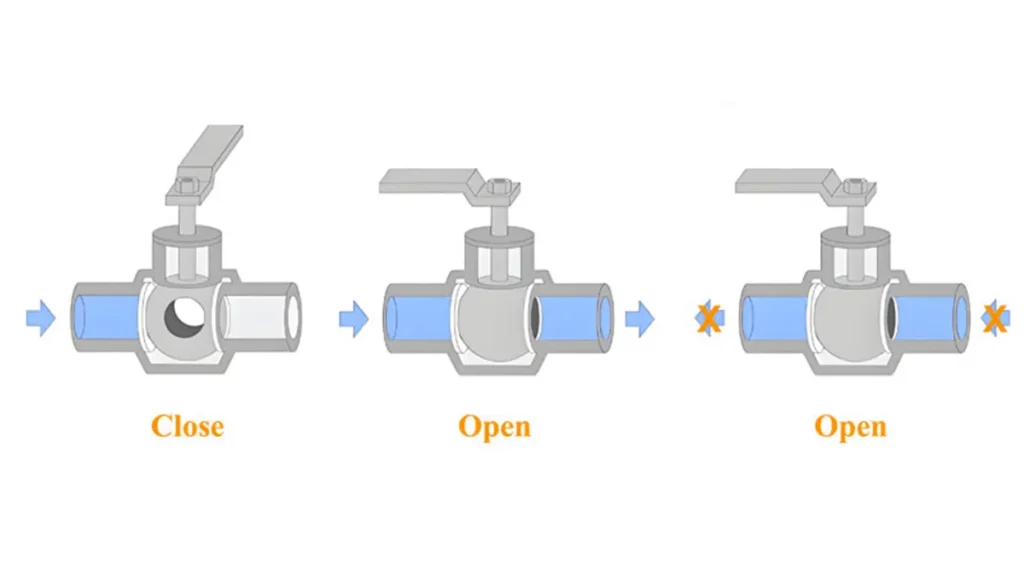
You can use the handle to help you figure out the flow direction. Most ball valves have a handle that points in the direction the fluid should go when the valve is open. Here is how you can use the handle as a guide:
- When the valve is open, the handle points in the direction of the flow.
- You turn the handle counterclockwise to line it up with the flow arrow.
- When the valve is closed, the handle sits sideways and blocks the flow.
This simple trick helps you get the right flow control every time. If you are not sure, look for arrows or check the manual. The handle gives you a quick way to see if you have the ball valve flow direction set up the right way.
Identifying Ball Valve Flow Direction
Flow Direction Markings
You can spot the right way for fluid to move by looking for markings on your ball valve. Most hydraulic ball valves have arrows or symbols right on the valve body. These markings show you the correct path for the fluid. If you see an arrow, you know exactly which way to install the valve.
Here’s a quick table to help you understand common markings:
| Flow Direction Marking | Description |
|---|---|
| Flow Direction Arrows | Indicate the proper direction for fluid or gas flow, ensuring correct installation and operation. |
You’ll often find these arrows engraved or stamped into the metal. They don’t wear off easily, so you can trust them. When you line up the arrow with your system’s flow, you set up your valve the right way.
Tip: If you can’t find any arrows or markings, don’t guess. Always check the manual or ask for help.
Handle Position as a Guide
The handle on your ball valve isn’t just for turning the valve on or off. It also gives you a clue about the flow direction. When the valve is open, the handle usually points in the same direction as the flow. If you see the handle lined up with the pipe, fluid can move through. If the handle sits across the pipe, the valve is closed.
- Handles often match the flow direction when open.
- If you’re not sure, look for arrows or check the manual.
- Some valves have special handles, so always double-check.
This trick works for most valves, but not all. If you see something that doesn’t make sense, stop and look for more information.
Checking Manufacturer Documentation
Sometimes, you won’t see any markings or the handle might confuse you. That’s when you need to check the manufacturer’s documentation. The manual or datasheet tells you exactly how to install the valve.
Here’s a simple way to use the documentation:
- Look for markings on the valve body, like arrows.
- Check the manufacturer’s documentation for detailed flow direction guidelines.
- Observe the handle position to see if the valve is open or closed.
Consulting the manufacturer’s manual is crucial for accurate installation when indicators are not present.
The manual might also have diagrams or pictures. These help you match the valve to your system. If you follow these steps, you’ll avoid mistakes and keep your system safe.
When you take time to check ball valve flow direction, you make sure your hydraulic system works right. You also save yourself from leaks, downtime, and costly repairs.
Physical Inspection Tips
Sometimes, you just need to trust your eyes and hands. If you can’t find markings or the handle seems confusing, a physical inspection can help you figure out the flow direction. You don’t need fancy tools. You just need a careful approach and a little patience.
Here are some easy steps you can follow:
- Check the Valve Body
Look at the outside of the valve. You might spot arrows, numbers, or letters. These can show you the right way for fluid to move. If you see a port labeled “IN” or “OUT,” that’s a big clue. - Inspect the Ports
Ball valves usually have two or more ports. The port with a larger opening often serves as the inlet. The outlet might look smaller or have a different shape. You can shine a flashlight through the ports to see the ball inside. If the ball has a hole, line it up with the ports. The hole should match the flow path. - Feel the Handle Movement
Turn the handle slowly. When the handle lines up with the pipe, the valve opens. You can feel less resistance. If the handle sits across the pipe, the valve closes. You might feel a stop or a click. This tells you the valve blocks the flow. - Look for Seals and Seats
The seals and seats inside the valve help control the flow. If you can see them, check which side looks reinforced. The reinforced side usually faces the pressure side, or the inlet. This helps the valve seal better. - Listen for Sounds
Sometimes, you can hear a soft click or a change in sound when you turn the handle. This means the ball inside moves into place. The sound can help you know when the valve opens or closes.
Tip: Wear gloves when you inspect the valve. You protect your hands and get a better grip.
Here’s a quick table to help you remember what to look for:
| Inspection Step | What to Check For | Why It Matters |
|---|---|---|
| Valve Body | Arrows, labels, port markings | Shows flow direction |
| Ports | Size, shape, ball alignment | Identifies inlet and outlet |
| Handle Movement | Resistance, position, clicks | Confirms open/closed status |
| Seals and Seats | Reinforcement, placement | Indicates pressure side |
| Sounds | Clicks, changes in noise | Signals ball movement |
If you still feel unsure, ask a coworker or supervisor for help. Two sets of eyes can spot things you might miss. You can also take a photo and compare it to the manual or online guides.
Physical inspection gives you confidence. You know your valve is set up the right way. You avoid mistakes and keep your hydraulic system running smoothly.
Unidirectional Ball Valves vs. Bidirectional Ball Valves
Unidirectional Ball Valves Explained
Unidirectional ball valves let fluid move in only one way. These valves help stop backflow and keep things safe. They have a single seat that seals tightly. This keeps fluid from going backwards.
You can find unidirectional ball valves in many places. Here are some examples:
- Used to control oil flow in upstream jobs.
- Protect equipment by controlling gas and oil flow in midstream jobs.
- Used for refining crude oil in downstream jobs.
- Work well in air, gas, and vapor systems too.
When you install a unidirectional ball valve, check the flow direction. The valve works only if you line it up with the arrow or marking. If you get it wrong, you might have leaks or damage.
Let’s see how these valves compare to bidirectional ball valves:
| Feature | Unidirectional Valve | Bidirectional Valve |
|---|---|---|
| Flow Direction | Lets fluid go in one direction only | Lets fluid go in both directions |
| Design | Has a single seat | Blocks flow in either direction |
| Application Suitability | Good for jobs needing one-way flow | Good for jobs needing two-way flow |
Bidirectional Ball Valves Explained
Bidirectional ball valves give you more choices. Fluid can move in both ways. These valves are great for systems where flow direction changes. The design uses seats on both sides of the ball. This makes a tight seal no matter which way fluid moves.
You might wonder how these valves work. When you close the valve, the ball seals against the seat. It does not matter where the pressure comes from. You can install the valve either way. It will still block the flow when needed.
Here’s what makes bidirectional ball valves special:
- They work with pressure from both sides.
- You can install them without worrying about flow direction.
- The ball seals tightly even if pressure changes.
- These valves are good for systems where flow switches directions.
If you want a valve that is easy to use, bidirectional ball valves are a good choice.
Key Differences for Installation
You need to know the differences before you install a ball valve. Unidirectional ball valves need careful alignment. Follow the flow direction arrow. If you ignore this, you might get leaks or poor flow control. Bidirectional ball valves are easier. You can install them either way, and they still work.
Here’s a table to show the key differences:
| Feature | Unidirectional Ball Valves | Bidirectional Ball Valves |
|---|---|---|
| Flow Direction | Lets flow in one way only | Lets flow in both ways |
| Sealing Mechanism | Seals tight to stop backflow | Seats on both sides of the ball |
| Installation Considerations | Must follow the flow direction arrow | Easier and more flexible to install |
| Common Applications | Used in jobs needing precise flow control | Used in jobs with changing flow direction |
If you install a bidirectional ball valve, check the markings and handle position. Make sure the valve fits your system. Here are some tips for installing bidirectional ball valves:
- Check the flow direction before you install. Look at the markings and make sure the handle lines up with the flow.
- Use the right tools and sealing materials, like Teflon tape or thread sealant, to stop leaks.
- Line up the valve with the pipeline flow direction to avoid problems.
- Do a pressure test after you install to check for leaks and fix fittings if needed.
- Check the valve often for wear and tear.
If you want good flow control, pick the right valve and install it the right way. Unidirectional ball valves need careful alignment. Bidirectional ball valves give you more freedom, but you still need to follow best practices.
When to Use Each Type
Choosing the right ball valve can make your hydraulic system safer and more reliable. You might wonder, “When should I pick one type over the other?” Let’s break it down so you can make the best choice for your setup.
If you need to control flow in only one direction, unidirectional ball valves are your go-to option. These valves work best when you want to stop backflow or protect equipment from pressure coming the wrong way. You often see them in places where safety is a big concern or where you need to keep fluids moving in a single path.
Here’s a quick table to help you see when unidirectional ball valves are the better choice:
| Scenario | Why Choose Unidirectional Ball Valves? |
|---|---|
| Vented Ball Valves | They make sure pressure does not get trapped, which helps prevent leaks. |
| High-Pressure Systems | They handle high pressure without leaking, so your system stays safe and strong. |
| Safety Concerns | They keep dangerous fluids moving in the right direction, lowering safety risks. |
You should use bidirectional ball valves when your system needs flow in both directions. These valves are great for pipelines or machines where the flow might change. You do not have to worry about which way you install them. They seal tight no matter which way the fluid moves. This makes them perfect for systems that reverse flow or need flexible operation.
Let’s look at some situations where bidirectional ball valves shine:
- You have a system that sometimes changes flow direction.
- You want easy installation without worrying about flow arrows.
- You need a valve that can handle pressure from either side.
Tip: If you are not sure which type to use, think about how your system works most of the time. If the flow always goes one way, pick a unidirectional valve. If the flow can switch, go with a bidirectional valve.
You can always check your system’s needs and talk to a valve expert if you feel stuck. Picking the right valve keeps your hydraulic system running smoothly and safely.
Three-Way Ball Valve Flow Direction
How Three-Way Ball Valves Work
You might see a three-way ball valve in a hydraulic system and wonder how it controls flow. This valve uses a rotating ball inside the body. The ball has a drilled passage that lines up with three ports. When you turn the handle, the ball rotates and connects different ports. You can change the direction of fluid with just one movement.
The three-way ball valve comes in two main flow patterns. The l-pattern flow lets you redirect fluid between two ports and closes off the third. The t-pattern flow allows fluid to move through two or more ports at the same time. You can use the l-pattern flow to switch between outputs or isolate a port for maintenance. The t-pattern flow works well for mixing two streams or sending fluid to multiple outlets.
If you need a multi-port ball valve for complex systems, the three-way ball valve gives you flexibility. You can use it as a diverter valve or a mixing valve, depending on your needs.
Handle Operation and Flow Paths
The handle on a three-way ball valve makes operation easy. When you turn the handle, you control the internal ball’s position. The l-pattern flow connects two ports and blocks the third. You can switch the flow from one outlet to another. The t-pattern flow lets fluid pass through all three ports, so you can mix or divert fluid.
Here’s a quick table to show the common flow path configurations:
| Configuration | Description | Typical Uses |
|---|---|---|
| L-Port | Allows flow between two ports while isolating the third. | Switching between two outputs, isolating one port for maintenance. |
| T-Port | Enables flow through multiple ports simultaneously. | Mixing two fluid streams, diverting flow to multiple outlets. |
You can use the handle to select l-pattern flow or t-pattern flow. If you want to change the direction, just turn the handle. The three-way ball valve gives you control without needing extra valves.
Tip: Always check the handle position before you operate the three-way ball valve. The handle tells you which ports are open and which are closed.
Installation Tips for Three-Way Valves
You want your three-way ball valve to work right. Follow these installation tips to make sure you get the correct flow direction:
- Align the valve ports with your system’s flow diagram. This helps you avoid misrouting and keeps l-pattern flow or t-pattern flow working as planned.
- Use a torque wrench to tighten bolts evenly. This prevents leaks and keeps the valve strong.
- Lubricate moving parts. This reduces friction and helps the handle turn smoothly for l-pattern flow and t-pattern flow.
- Cycle the valve sometimes. Turn the handle even if you don’t use the valve often. This keeps the three-way ball valve from sticking.
- Inspect seats and seals regularly. Replace worn parts to keep the valve sealing tight for both l-pattern flow and t-pattern flow.
- Use original parts from the manufacturer. This keeps your three-way ball valve working well and avoids compatibility issues.
If you follow these steps, your three-way ball valve will give you reliable l-pattern flow and t-pattern flow for years.
You can trust a three-way ball valve to handle complex flow paths. Whether you need l-pattern flow for switching or t-pattern flow for mixing, this valve makes your hydraulic system flexible and easy to control.
Installing Ball Valves Correctly
Confirming Flow Direction Before Installation
You want your hydraulic system to run smoothly. Before you install any ball valve, you need to confirm the intended flow direction. This step matters for every valve, but it’s even more important if you’re working with a three-way ball valve. These valves can handle l-pattern flow or t-pattern flow, so you must know which ports will open or close.
Here’s how you can confirm the flow direction:
- Check the markings on the valve body. Look for arrows or labels that show the intended flow direction.
- Read the manufacturer’s documentation. You’ll find diagrams for l-pattern flow and t-pattern flow, especially for a three-way ball valve or any multi-port ball valve.
- Make sure the handle lines up with the flow path you want. The handle position helps you set the correct ball valve shut-off direction.
- Align the valve with your pipeline. The ports should match your system’s flow control needs.
- Plan for a pressure test after installation. This test will show if you got the direction right.
Tip: Never guess the flow direction. Take a minute to double-check. This small step can save you from leaks and downtime.
Step-by-Step Installation Guide
You’re ready to install your valve. Follow these best installation practices to get it right the first time:
- Shut off your system and relieve all pressure. Safety comes first.
- Clean the pipe ends and the valve ports. Dirt can cause leaks or block l-pattern flow and t-pattern flow.
- Wrap male threads with PTFE tape or use thread sealant. This keeps your connections tight.
- Position the valve in the correct orientation. For a three-way ball valve, double-check the l-pattern flow or t-pattern flow diagram. Make sure the ports match your system’s flow control plan.
- Tighten all connections. Don’t overtighten, or you might damage the valve.
- If you’re installing a multi-port ball valve, check each port for proper alignment. You want l-pattern flow and t-pattern flow to work as designed.
You can use this process for any ball valve, but it’s especially helpful for three-way ball valve setups. These valves give you flexible flow control, but only if you install them right.
Testing After Installation
You finished the installation. Now, you need to test your work. Testing makes sure your three-way ball valve, l-pattern flow, and t-pattern flow all work as planned.
- Look for arrows or markings on the valve body. These should match your intended flow direction.
- Turn the handle through all positions. For a three-way ball valve, check that l-pattern flow and t-pattern flow switch as expected.
- Run a pressure test. Watch for leaks at every connection.
- Open and close the valve several times. Make sure the handle moves smoothly and the valve seals tight.
- If you see any leaks or the flow path seems wrong, stop and fix the problem before you start the system.
Note: Regular maintenance keeps your ball valves working well. Check your three-way ball valve often, especially if you use l-pattern flow or t-pattern flow a lot.
When you follow these steps, you get reliable flow control and a safe hydraulic system. You also avoid costly mistakes and keep your equipment running longer.
Common Mistakes and Consequences
Installing Against Flow Direction
You might think you can install a ball valve any way you want, but that’s not true. If you put a valve in the wrong direction, you can run into big trouble. The flow direction matters, especially when you work with a three-way ball valve. If you ignore the right path, you can block l-pattern flow and mess up your system. You might see leaks, pressure drops, or even damage to your equipment.
Here are some common mistakes people make during installation:
- You install the valve against the flow direction, causing operational problems.
- You over-tighten or under-tighten the connections, which leads to leaks or damage.
- You forget to use thread sealant, so fluid escapes at the joints.
- You line up pipes incorrectly, which puts stress on the valve and causes early wear.
- You ignore the handle position, making the valve hard to operate.
- You skip checking seals and O-rings, which lets fluid leak out.
If you use a three-way ball valve, you need to pay extra attention. The handle controls l-pattern flow, so you must line it up with your system. If you get it wrong, you can block the flow or send fluid where you don’t want it. Always check the markings and handle before you finish the job.
Tip: Take a minute to double-check the flow direction. This step saves you from headaches later.
Ignoring Markings or Documentation
You might feel tempted to skip reading the manual or ignore the markings on your valve. That’s a mistake you don’t want to make. Markings and documentation show you how to set up a three-way ball valve for proper l-pattern flow. If you miss these clues, you can install the valve wrong and cause leaks or blockages.
When you work with a three-way ball valve, look for arrows or labels on the valve body. These markings help you match the ports to your system. The manual gives you diagrams for l-pattern flow, so you know which ports to connect. If you ignore these guides, you risk making your system less safe and less efficient.
Note: Always check the manual and markings before you install a three-way ball valve. This habit keeps your system running smoothly.
System Performance and Safety Risks
Mistakes during installation can hurt your hydraulic system. If you install a three-way ball valve wrong, you can block l-pattern flow and cause leaks or pressure loss. These problems make your system less reliable and can even put people at risk.
Here’s a table showing the main risks:
| Risk Type | Description |
|---|---|
| Leaks | Improper sealing can lead to leaks, compromising system integrity and increasing repair costs. |
| Pressure Loss | Incorrect installation can create imbalances in pressure, leading to cavitation and pressure drops. |
| Increased Wear and Tear | Misalignment and poor installation can cause premature wear on seals and actuators, reducing longevity. |
| Equipment Failures | Incorrectly sized or installed valves can lead to equipment failures, posing safety risks. |
| Environmental Damage | Poor installation can exacerbate erosion or corrosion, affecting system performance. |
If you use a three-way ball valve, you must check the handle and markings. Make sure you set up l-pattern flow as shown in the manual. This step keeps your system safe and helps you avoid costly repairs.
Reminder: Proper installation of a three-way ball valve protects your equipment and keeps your hydraulic system working well.
Troubleshooting Incorrect Installations
So, you installed your ball valve, but something feels off. Maybe the flow is weak, or you spot a leak. Don’t worry—you can fix most problems with a few simple checks. Let’s walk through some common issues and how you can solve them.
First, grab a flashlight and look at your valve. Check for arrows or markings. These show you the right way for fluid to move. If you see the valve facing the wrong way, you might need to reinstall it. Don’t skip this step. A small mistake here can cause big headaches later.
Next, check the connections. Did you tighten them too much? If you used a wrench and kept turning, you might have overtightened. This can crack the valve or crush the seals. Use a torque wrench if you have one. Follow the numbers in the manual. If you don’t have a torque wrench, tighten the connections until they feel snug, then give a small extra turn.
Now, look at the threads. Did you use thread sealant? If you forgot, leaks can happen. Apply a thin, even layer of sealant to the threads. Don’t use too much. Extra sealant can get inside the valve and block the flow.
You should also check the pipeline. Are the pipe ends clean and smooth? Dirt or rough edges can stop the valve from sealing. Wipe the ends with a clean cloth. Make sure the pipes line up with the valve’s inlet and outlet.
Sometimes, the problem comes from using the wrong valve material. If your valve doesn’t match the fluid or temperature, it can wear out fast. Double-check the label. Make sure the valve fits your system’s needs.
Here’s a handy table to help you spot and fix common installation mistakes:
| Issue | Solution |
|---|---|
| Overtightening Connections | Use a torque wrench and follow the numbers in the manual. |
| Incorrect Valve Orientation | Look for arrows or markings and reinstall the valve if needed. |
| Skipping Thread Sealants | Apply a thin, even layer of sealant to the threads—don’t overdo it. |
| Improper Pipeline Preparation | Clean and inspect the pipe ends. Make sure they line up with the valve’s inlet and outlet. |
| Ignoring Material Compatibility | Check the valve’s label and make sure it matches your fluid, pressure, and temperature. |
Tip: If you fix these issues and still have trouble, ask a coworker for a second look. Sometimes, a fresh set of eyes can spot something you missed.
You don’t need fancy tools to troubleshoot. Just use your eyes, hands, and a little patience. Take your time, follow these steps, and you’ll get your hydraulic system back on track.
Conclusion
You now know why ball valve flow direction is important for safety and how well your system works. Always look for arrows, check the handle, and read the manual before you put in a valve. If you forget these steps, you could have leaks, your system might stop, or you could spend a lot fixing things. Here are some things to keep in mind:
- Lining up the valve right keeps fluid moving and protects your system.
- Unidirectional valves must be placed carefully, but bidirectional valves are easier to use.
- Always follow the instructions from the maker and turn off your system before you start.
If you need help, our team can give you advice, show you how to install valves, and help you keep them working well:
| Service Type | Description |
|---|---|
| Valve Design Consultation | Get advice for your system needs. |
| Installation Guidance | Learn best installation practices. |
| Maintenance Programs | Keep your valves working smoothly. |
As a hydraulic ball valve manufacturer, Chenyang Hydraulic can help you choose the right valve based on your flow direction, pressure rating, connection type, material, seal requirements, and working conditions. We can also provide custom hydraulic ball valves based on drawings, samples, thread standards, and special installation needs.
If you are not sure which valve fits your system, send us your pressure, medium, connection type, flow direction requirements, or drawings. Our team will help you select or manufacture a suitable valve solution for your project.
FAQ
How do I know which way to install my ball valve?
Look for arrows or labels on the valve body. These show you the correct flow direction. If you can’t find any, check the manual or ask your supplier for help.
Can I install a bidirectional ball valve in any direction?
Yes, you can. Bidirectional ball valves work both ways. You don’t need to worry about flow direction. Just make sure the valve fits your system.
What happens if I install a unidirectional valve backwards?
You might get leaks, pressure drops, or even damage your system. Always follow the arrow or marking on the valve to avoid problems.
Does the handle always show the flow direction?
Most of the time, yes. When the handle lines up with the pipe, the valve is open. If you see the handle across the pipe, the valve is closed.
Why do some valves have no arrows or markings?
Some valves don’t need them, especially bidirectional types. If you’re unsure, check the manual or contact the manufacturer for guidance.
How do I test if my valve is installed correctly?
Turn the handle and watch the flow. Run a pressure test. Check for leaks or strange noises. If everything works smoothly, you installed it right.
Can I use the same ball valve for water and oil?
Not always. Check the valve’s material and rating. Some valves work for both, but others don’t. Always match the valve to your fluid type.
What’s the best way to keep my ball valve working well?
Inspect your valve often. Turn the handle sometimes, even if you don’t use it much. Clean the valve and check for leaks or wear.