
Choosing the right hydraulic check valve is not just about finding a valve that fits your pipe. You also need to think about the valve type, working pressure, flow rate, cracking pressure, connection type, material, seal, and how the valve works in your hydraulic system.
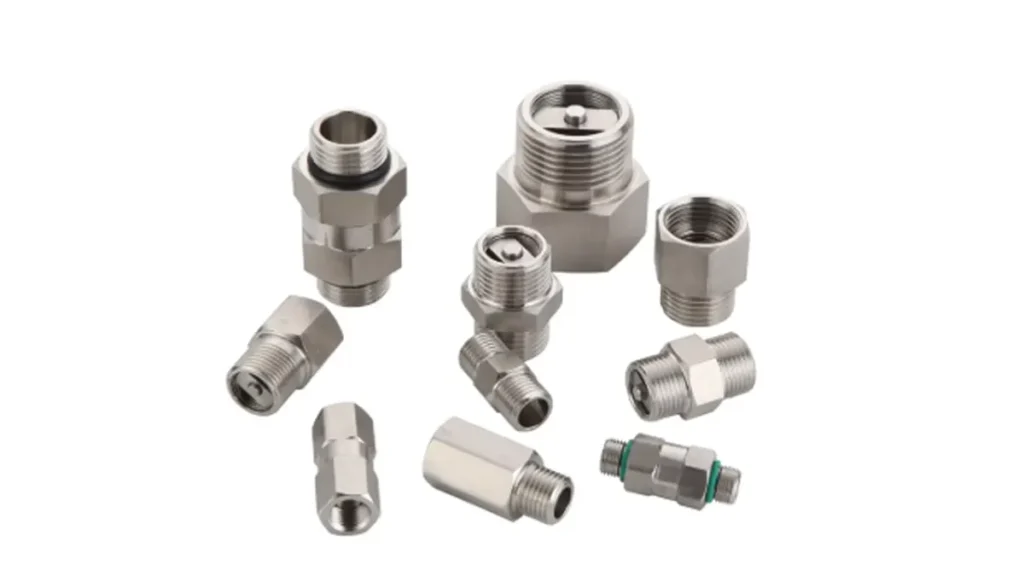
A hydraulic check valve looks like a small component, but it plays a very important role. It allows hydraulic oil to flow in one direction and stops reverse flow. If you choose the wrong type, your system may face pressure loss, oil backflow, cylinder movement, leakage, pump damage, or unexpected downtime.
There are several hydraulic check valve types available. Some are simple inline check valves for general oil circuits. Some are pilot operated check valves used for load holding. Some are poppet type check valves designed for better sealing in high-pressure systems. Each type has its own function and best application.
Key Takeaways
- Hydraulic check valves allow oil to flow in one direction and prevent reverse flow.
- Different hydraulic check valve types are used for different system functions.
- Inline hydraulic check valves are suitable for general hydraulic pipelines.
- Pilot operated hydraulic check valves are often used for hydraulic cylinders, lifting systems, and load holding.
- Spring loaded check valves use spring force to control the cracking pressure.
- Ball type check valves are simple and suitable for small or medium hydraulic circuits.
- Poppet type check valves usually provide better sealing performance for high-pressure systems.
- Cartridge hydraulic check valves are often installed in manifolds or compact hydraulic blocks.
- Before choosing a hydraulic check valve, you should check working pressure, flow rate, cracking pressure, connection type, material, seal compatibility, and installation direction.
What Is a Hydraulic Check Valve?
A hydraulic check valve is a valve that allows hydraulic oil to flow in one direction and blocks flow in the opposite direction.
In a hydraulic system, oil must often move in a controlled direction. If the oil flows backward, it can affect pressure, damage components, or cause equipment movement that should not happen. A check valve helps prevent these problems.
You can find hydraulic check valves in many hydraulic systems, such as hydraulic power units, cylinders, machine tools, construction machinery, agricultural machinery, and industrial oil circuits.
The main job of a hydraulic check valve is simple:
- It allows forward flow.
- It blocks reverse flow.
- It helps maintain pressure.
- It protects pumps, cylinders, and other hydraulic components.
- It improves system safety and stability.
Note: A hydraulic check valve is not mainly used for flow adjustment. Its main purpose is to stop reverse flow and protect the hydraulic circuit.
How Does a Hydraulic Check Valve Work?
A hydraulic check valve works by using pressure difference.
When the pressure at the inlet side is high enough, the internal valve element opens. This valve element may be a ball, poppet, disc, or spool depending on the valve design. Once the valve opens, hydraulic oil can pass through.
When the oil tries to flow backward, the valve element moves back to the sealing position. This blocks reverse flow and keeps the oil moving in the correct direction.
Forward Flow
During forward flow, hydraulic oil enters from the inlet side. When the inlet pressure is higher than the valve’s cracking pressure, the valve opens and allows oil to pass.
This process is automatic. You do not need manual operation.
Reverse Flow
When pressure comes from the opposite direction, the valve closes. This prevents oil from flowing backward.
This is why hydraulic check valves are commonly used to protect pumps, maintain pressure, and prevent hydraulic cylinders from moving unexpectedly.
Cracking Pressure
Cracking pressure is the minimum pressure needed to open the check valve.
This is an important parameter. If the cracking pressure is too low, the valve may open too easily. If it is too high, the system may need more pressure to push oil through the valve.
For many hydraulic systems, the right cracking pressure helps keep the system stable, responsive, and efficient.
Tip: When buying a hydraulic check valve, do not only check the size. Always confirm the cracking pressure too.
Common Hydraulic Check Valve Types
Inline Hydraulic Check Valve
An inline hydraulic check valve is one of the most common types. It is installed directly in the hydraulic pipeline. The oil flows through the valve body in a straight direction, and the valve stops oil from flowing backward.
This type is simple, practical, and easy to install. It is often used in general hydraulic oil circuits where basic backflow prevention is needed.
Inline hydraulic check valves are suitable for:
- Hydraulic power units
- Oil supply lines
- Return lines
- Machine tools
- General hydraulic pipelines
- Small and medium hydraulic systems
If your system only needs simple reverse flow protection, an inline hydraulic check valve is usually a good choice.
The most important things to check are valve size, flow direction, thread type, working pressure, and seal material.
Tip: Always check the arrow mark on the valve body before installation. The arrow shows the correct flow direction.
Pilot Operated Hydraulic Check Valve
A pilot operated hydraulic check valve is more advanced than a standard check valve.
A normal check valve allows oil to flow in one direction and blocks reverse flow. A pilot operated check valve can also be opened by pilot pressure. This means the valve can stay closed to hold pressure, and then open when the system sends a pilot signal.
This type is very common in hydraulic cylinder systems. It is often used when the cylinder needs to hold position, support a load, or prevent unwanted movement.
For example, in lifting equipment, the hydraulic cylinder may need to stay in position even when the pump stops. A pilot operated check valve can help lock the oil in the cylinder and prevent the load from dropping.
Pilot operated hydraulic check valves are commonly used in:
- Hydraulic cylinders
- Lifting equipment
- Construction machinery
- Clamping systems
- Hydraulic presses
- Load holding circuits
- Mobile hydraulic equipment
This type is especially useful when safety and position holding are important.
Choose a pilot operated hydraulic check valve when your system needs more than basic backflow prevention. If you need to hold a cylinder, lock a load, or control reverse flow with pilot pressure, this type is usually more suitable.
Note: If your system has a hydraulic cylinder that must hold position under load, a pilot operated check valve is often better than a standard inline check valve.
Spring Loaded Hydraulic Check Valve
A spring loaded hydraulic check valve uses a spring to control the opening of the valve.
Inside the valve, the spring pushes the valve element against the seat. When inlet pressure becomes high enough, it overcomes the spring force and opens the valve. When pressure drops or reverse flow happens, the spring helps close the valve again.
The spring force is related to cracking pressure. That is why spring loaded check valves are useful when the system needs a controlled opening pressure.
Spring loaded hydraulic check valves are commonly used in:
- Hydraulic oil circuits
- Control lines
- Pump outlet protection
- Pressure holding systems
- Mobile hydraulic systems
- General industrial hydraulic systems
This type is popular because it is simple, stable, and available with different cracking pressure options.
When choosing a spring loaded check valve, you should check the cracking pressure carefully. The wrong spring pressure can affect flow, pressure response, and system performance.
For example, if the cracking pressure is too high, the oil may not pass through the valve easily. If it is too low, the valve may open too early and fail to support the system function.
Ball Type Hydraulic Check Valve
A ball type hydraulic check valve uses a ball as the sealing element.
When oil flows in the correct direction, pressure pushes the ball away from the seat and allows oil to pass. When oil tries to flow backward, the ball returns to the seat and blocks reverse flow.
This design is simple and compact. It is often used in small or medium hydraulic systems where the pressure and leakage requirements are not extremely strict.
Ball type hydraulic check valves are commonly used in:
- Small hydraulic circuits
- Control lines
- Lubrication systems
- Compact equipment
- General hydraulic pipelines
- Low to medium flow applications
One advantage of ball type check valves is their simple structure. They are easy to use and suitable for many general hydraulic applications.
However, for high-pressure systems or applications that require very low leakage, a poppet type check valve may be a better choice.
Tip: Ball type check valves are good for simple backflow prevention, but always check whether the sealing performance meets your system requirements.
Poppet Type Hydraulic Check Valve
A poppet type hydraulic check valve uses a poppet or cone-shaped valve element to seal against the valve seat.
Compared with a ball type design, a poppet type check valve usually provides more stable sealing. It is often used in hydraulic systems that require better leakage control, higher pressure performance, or more reliable closing.
This type is very suitable for high-pressure hydraulic systems.
Poppet type hydraulic check valves are commonly used in:
- High-pressure hydraulic circuits
- Hydraulic power units
- Test benches
- Hydraulic presses
- Heavy-duty equipment
- Industrial oil systems
- Systems with low leakage requirements
If your system works under high pressure, or if leakage control is very important, a poppet type hydraulic check valve is often a strong choice.
When choosing this type, you should check pressure rating, flow rate, seal material, cracking pressure, and connection type.
Note: For many high-pressure hydraulic systems, poppet type check valves are preferred because they can provide better sealing performance.
Cartridge Hydraulic Check Valve
A cartridge hydraulic check valve is designed to be installed into a manifold, valve block, or compact hydraulic system.
Instead of being installed as a separate inline valve in the pipeline, the cartridge valve is inserted into a cavity. This saves space and helps make the hydraulic system more compact.
Cartridge hydraulic check valves are commonly used in:
- Hydraulic manifolds
- Valve blocks
- Compact hydraulic power units
- Mobile hydraulic systems
- Integrated hydraulic circuits
- Custom hydraulic equipment
This type is a good choice when space is limited or when the system needs a clean, integrated design.
However, cartridge check valves require careful matching. You need to confirm the cavity size, thread type, installation dimensions, flow capacity, and pressure rating before ordering.
If the cavity does not match the valve, installation will be difficult or impossible.
Tip: For cartridge hydraulic check valves, drawings are very helpful. They help the manufacturer confirm the cavity, thread, and installation size.
High Pressure Hydraulic Check Valve
A high pressure hydraulic check valve is designed for hydraulic systems that work under higher pressure.
This term usually focuses more on the valve’s pressure capability than on one specific internal structure. A high pressure check valve may use a poppet design, spring loaded design, threaded connection, or other structure depending on the application.
High pressure hydraulic check valves are commonly used in:
- Construction machinery
- Hydraulic presses
- Hydraulic power units
- Test benches
- Heavy-duty industrial systems
- Oil pressure circuits
- High-pressure hydraulic lines
When selecting a high pressure hydraulic check valve, you should pay close attention to:
- Pressure rating
- Valve body material
- Seal material
- Cracking pressure
- Connection type
- Flow rate
- Leakage requirement
- Installation direction
For high-pressure systems, do not choose a valve only based on appearance or size. A valve may look similar from the outside, but the pressure rating, sealing design, and material can be very different.
Note: In high-pressure hydraulic systems, the valve pressure rating should always match or exceed the system’s maximum working pressure.
Hydraulic Check Valve Types Comparison Table
The table below gives you a quick way to compare different hydraulic check valve types.
| Hydraulic Check Valve Type | Main Feature | Common Applications | Selection Note |
|---|---|---|---|
| Inline Hydraulic Check Valve | Simple pipeline installation | General hydraulic lines, oil circuits, power units | Check flow direction and thread type |
| Pilot Operated Hydraulic Check Valve | Opens with pilot pressure | Hydraulic cylinders, lifting systems, load holding circuits | Good for holding pressure or locking cylinder position |
| Spring Loaded Hydraulic Check Valve | Uses spring force to control opening | Control lines, pump outlets, pressure holding systems | Choose the correct cracking pressure |
| Ball Type Hydraulic Check Valve | Simple ball sealing design | Small and medium hydraulic circuits | Suitable for general backflow prevention |
| Poppet Type Hydraulic Check Valve | Better sealing performance | High-pressure systems, test benches, hydraulic presses | Good for low leakage requirements |
| Cartridge Hydraulic Check Valve | Compact installation in manifolds | Valve blocks, compact hydraulic systems | Check cavity size and installation dimensions |
| High Pressure Hydraulic Check Valve | Designed for high-pressure service | Heavy-duty hydraulic systems, construction machinery | Check pressure rating carefully |
This table can help you quickly narrow down your choice. But for real selection, you still need to check the system conditions in detail.
How to Choose the Right Hydraulic Check Valve Type
Choosing a hydraulic check valve becomes much easier when you break it down step by step.
Do not start with the product picture. Start with your hydraulic system.
You need to know what the valve must do, how much pressure it must handle, how much oil must pass through, and how it will be installed.
Check Working Pressure
Working pressure is one of the first things to check.
Your hydraulic check valve must handle the normal working pressure of your system. It should also have enough pressure capacity for peak pressure or pressure shock.
If the valve pressure rating is too low, it may cause leakage, seal failure, or valve body damage.
Before choosing the valve, confirm:
- Normal working pressure
- Maximum system pressure
- Pressure peaks
- Pressure rating of the valve
- Pressure rating of fittings and pipes
Do not only check the valve. The whole system must be compatible, including pipes, connectors, seals, and other components.
Confirm Flow Rate
Flow rate affects how much oil can pass through the valve.
If the valve is too small for the required flow, it can create pressure drop, heat, noise, or slow system response. If the valve is too large, it may take up more space and increase cost without improving performance.
You should check:
- Required flow rate
- Valve flow capacity
- Internal passage size
- Pressure drop
- Application speed requirement
For hydraulic cylinders, flow rate can affect cylinder speed. For hydraulic power units, it can affect system efficiency. For machine tools, it can affect movement stability.
A properly sized check valve helps the system run smoothly.
Choose the Right Cracking Pressure
Cracking pressure is very important, but many buyers forget to check it.
Cracking pressure means the minimum inlet pressure needed to open the valve.
If cracking pressure is too low, the valve may open too easily. If it is too high, the system needs more pressure to push oil through the valve. This can affect response time, efficiency, and pressure stability.
You should choose cracking pressure based on the system function.
- For simple backflow prevention, a low cracking pressure may be enough.
- For pressure holding or controlled opening, you may need a specific cracking pressure.
- For custom hydraulic systems, it is better to confirm this with the manufacturer before ordering.
Tip: If you are not sure about cracking pressure, provide your working pressure, flow rate, and application. The manufacturer can help you choose a suitable option.
Match the Connection Type
Connection type is another key point.
A hydraulic check valve must match your pipe, hose, manifold, or equipment connection. If the connection does not match, installation will be difficult and leakage may happen.
Common connection types include:
- BSP thread
- NPT thread
- Metric thread
- Flanged connection
- Cartridge cavity connection
- Custom thread
BSP and NPT threads may look similar, but they are not the same. They have different thread forms and sealing methods. Mixing them can cause leakage or thread damage.
Before ordering, confirm:
- Thread standard
- Thread size
- Male or female connection
- Sealing method
- Installation space
- System drawing or sample
Note: If you work with international suppliers, always confirm the thread standard clearly. Do not only say “1/2 inch thread” because different standards may use similar size names.
Check Installation Direction
Hydraulic check valves have a correct flow direction.
Most check valves have an arrow on the valve body. This arrow shows the direction that oil is allowed to flow.
If the valve is installed backward, the oil may not pass through. This can stop the system from working and may cause pressure problems.
Before installation, check:
- Flow direction
- Valve arrow mark
- Pipe direction
- System drawing
- Space for installation and maintenance
This is a simple step, but it can prevent many problems.
Select the Right Material and Seal
Material and seal selection affect valve life, leakage control, and system reliability.
Common valve body materials include carbon steel and stainless steel.
Carbon steel is often used for general hydraulic oil systems. It is strong and suitable for many industrial hydraulic applications.
Stainless steel is better for corrosive environments, outdoor use, special fluids, or systems that need better corrosion resistance.
Seal material also matters. The seal must match the oil type, pressure, temperature, and working environment.
When choosing material and seal, consider:
- Hydraulic oil type
- Working temperature
- System pressure
- Outdoor or indoor use
- Corrosion risk
- Seal compatibility
- Maintenance requirements
If the seal material is not compatible with the medium or temperature, leakage or early failure may happen.
Think About the System Function
The best hydraulic check valve type depends on what your system needs the valve to do.
- If you only need to stop reverse flow in a simple pipeline, an inline check valve, spring loaded check valve, or ball type check valve may be enough.
- If you need to hold a hydraulic cylinder in position, a pilot operated hydraulic check valve is usually more suitable.
- If your system works under high pressure or needs better sealing, a poppet type or high pressure hydraulic check valve may be better.
- If you are designing a manifold or compact hydraulic block, a cartridge hydraulic check valve may be the right choice.
Here is a simple selection guide:
| System Need | Suggested Check Valve Type |
|---|---|
| General backflow prevention | Inline hydraulic check valve |
| Load holding or cylinder locking | Pilot operated hydraulic check valve |
| Controlled opening pressure | Spring loaded hydraulic check valve |
| Simple small circuit protection | Ball type hydraulic check valve |
| Better sealing under high pressure | Poppet type hydraulic check valve |
| Compact manifold installation | Cartridge hydraulic check valve |
| Heavy-duty high-pressure system | High pressure hydraulic check valve |
Common Applications of Hydraulic Check Valves
Hydraulic check valves are used in many types of equipment. Their job may look simple, but they help keep the whole system stable and safe.
Hydraulic Power Units
Hydraulic power units often use check valves to control oil direction and prevent reverse flow.
A check valve can help protect the pump, maintain pressure, and stop oil from flowing back into the wrong part of the system.
In hydraulic power units, inline check valves, spring loaded check valves, poppet type check valves, and high pressure check valves are all common options.
Hydraulic Cylinders
Hydraulic cylinders often need stable pressure and controlled movement.
In some systems, the cylinder must stay in position even when the pump is not running. In this case, a pilot operated hydraulic check valve can help hold the load and prevent unwanted cylinder movement.
This is common in lifting equipment, presses, clamping systems, and mobile machinery.
Construction Machinery
Construction machinery usually works under heavy loads, high pressure, vibration, dust, and harsh working conditions.
Hydraulic check valves in these machines must be strong, reliable, and resistant to leakage.
Common applications include excavators, loaders, cranes, lifting platforms, and other mobile hydraulic systems.
For this type of equipment, high pressure hydraulic check valves and poppet type check valves are often used.
Agricultural Machinery
Agricultural machinery also uses hydraulic check valves in lifting, steering, folding, and control systems.
These machines often work outdoors, so durability and easy maintenance are important.
Hydraulic check valves help keep oil flowing in the correct direction and support stable operation in the field.
Machine Tools
Machine tools often require stable hydraulic movement and compact installation.
Hydraulic check valves are used in clamping systems, lubrication systems, oil circuits, and actuator control.
In these systems, size, response, leakage control, and connection type should be checked carefully.
Test Benches
Hydraulic test benches often require stable pressure and accurate testing conditions.
A check valve can help maintain oil direction, prevent reverse flow, and improve test safety.
Because test benches may work under high pressure, poppet type and high pressure hydraulic check valves are often suitable.
Industrial Oil Circuits
In industrial oil circuits, hydraulic check valves help protect pumps, control oil direction, reduce pressure fluctuation, and prevent oil from returning to the wrong line.
These systems may use inline check valves, spring loaded check valves, poppet check valves, or customized check valves depending on the working condition.
Common Mistakes When Selecting Hydraulic Check Valves
Many hydraulic check valve problems come from wrong selection, not poor installation. Before buying, try to avoid these common mistakes.
Only Looking at Valve Size
Size is important, but it is not enough.
Two check valves may have the same thread size, but they may have different pressure ratings, internal structures, cracking pressures, and seal materials.
You should always check the full specification, not only the outside size.
Ignoring Cracking Pressure
Cracking pressure affects when the valve opens.
If you ignore this parameter, the valve may not work the way you expect. It may open too early, open too late, or create unwanted pressure loss.
Always confirm cracking pressure before ordering, especially for spring loaded check valves and custom hydraulic systems.
Using a Standard Check Valve for Load Holding
A standard check valve is not always suitable for load holding.
If your system needs to hold a hydraulic cylinder or prevent a load from dropping, you may need a pilot operated hydraulic check valve.
Using the wrong type can create safety risks and unstable movement.
Mixing Thread Standards
Thread problems are common in international purchasing.
BSP, NPT, and metric threads should not be mixed. Even if they look close, they may not seal correctly.
Before placing an order, confirm the thread type, size, and sealing method.
Choosing the Wrong Material
Material selection depends on the medium, pressure, temperature, and environment.
Carbon steel is suitable for many normal hydraulic oil systems. Stainless steel is better for corrosion resistance or harsh environments.
If you choose the wrong material, the valve may corrode, leak, or fail too early.
Ignoring Seal Compatibility
Seals must match the oil, temperature, pressure, and working environment.
If the seal material is not suitable, leakage may happen even if the valve body is correct.
Always check seal compatibility, especially for high temperature, special oil, or corrosive conditions.
Not Checking the Flow Direction
A hydraulic check valve must be installed in the correct direction.
If the valve is installed backward, the oil may be blocked. This can make the system fail to start or create abnormal pressure.
Always check the arrow on the valve body before installation.
What Information Should You Provide Before Buying?
If you want the manufacturer to recommend the right hydraulic check valve, it helps to provide clear working conditions.
You do not need to know every technical detail, but the more information you provide, the easier it is to choose the right valve.
Here is a useful checklist:
| Information | Why It Matters |
|---|---|
| Working pressure | Helps choose the correct pressure rating |
| Maximum pressure | Helps avoid leakage or valve failure |
| Flow rate | Helps prevent pressure drop and flow restriction |
| Cracking pressure | Affects valve opening performance |
| Connection type | Ensures correct installation |
| Thread size | Helps match pipes, hoses, or manifolds |
| Valve material | Affects corrosion resistance and service life |
| Seal material | Helps avoid leakage and compatibility problems |
| Working medium | Helps confirm material and seal compatibility |
| Installation direction | Helps avoid reverse installation |
| Application equipment | Helps choose the correct valve type |
| Drawings or samples | Helps with custom production |
If you have drawings, samples, photos, or an existing valve model, you can also send them to the manufacturer. This can make selection faster and more accurate.
Conclusion
Hydraulic check valves are important for preventing reverse flow, protecting hydraulic components, and keeping the system pressure stable. Different hydraulic check valve types are used for different needs, such as general pipeline protection, cylinder load holding, high-pressure sealing, or compact manifold installation.
When choosing a hydraulic check valve, you should check the working pressure, flow rate, cracking pressure, connection type, material, seal compatibility, and installation direction. A properly selected valve can help reduce leakage, improve system stability, and avoid unnecessary downtime.
As a hydraulic check valve manufacturer, Chenyang Hydraulic can help you choose or customize the right valve based on your working conditions, drawings, or samples. If you are not sure which type is suitable for your system, you can send us your requirements, and our team will help you find a suitable solution.
FAQ
What are the main types of hydraulic check valves?
The main types of hydraulic check valves include inline hydraulic check valves, pilot operated hydraulic check valves, spring loaded check valves, ball type check valves, poppet type check valves, cartridge check valves, and high pressure hydraulic check valves, and the right type depends on your working pressure, flow rate, cracking pressure, connection type, installation method, and system function.
What is the difference between a standard check valve and a pilot operated check valve?
A standard hydraulic check valve allows oil to flow in one direction and blocks reverse flow, while a pilot operated hydraulic check valve can also be opened by pilot pressure, making it more suitable for hydraulic cylinders, lifting systems, load holding circuits, and applications where controlled reverse flow is required.
Which hydraulic check valve is best for high-pressure systems?
For high-pressure hydraulic systems, poppet type hydraulic check valves and high pressure hydraulic check valves are often better choices because they usually provide stronger sealing performance, better pressure resistance, and lower leakage, but the final selection should still be based on pressure rating, flow rate, seal material, connection type, and working conditions.
What does cracking pressure mean in a hydraulic check valve?
Cracking pressure means the minimum inlet pressure needed to open the hydraulic check valve, and it is an important selection factor because a cracking pressure that is too low or too high can affect system response, pressure stability, oil flow, and overall hydraulic performance.
Can hydraulic check valves be customized?
Yes, hydraulic check valves can often be customized according to pressure rating, flow rate, cracking pressure, thread type, valve material, seal material, installation size, drawings, or samples, which is especially useful for special hydraulic systems, compact equipment, or non-standard connection requirements.
How do I choose the right hydraulic check valve?
To choose the right hydraulic check valve, you should first understand what the valve needs to do in your system, then confirm the working pressure, maximum pressure, flow rate, cracking pressure, connection type, material, seal compatibility, installation direction, and whether the system needs simple backflow prevention, load holding, high-pressure sealing, or manifold installation.
Where are hydraulic check valves commonly used?
Hydraulic check valves are commonly used in hydraulic power units, hydraulic cylinders, construction machinery, agricultural machinery, machine tools, hydraulic presses, test benches, and industrial oil circuits, where they help prevent reverse flow, protect hydraulic components, maintain pressure, and improve system safety.
Can I use a hydraulic check valve for flow control?
A hydraulic check valve is mainly used to prevent reverse flow rather than adjust flow rate, so if your system needs flow regulation, speed control, or precise oil flow adjustment, a hydraulic throttle valve, flow control valve, or other suitable hydraulic valve may be a better choice.
Why does my hydraulic check valve leak?
A hydraulic check valve may leak because of wrong valve selection, damaged seals, dirty hydraulic oil, worn sealing surfaces, incorrect installation direction, excessive pressure, or incompatible seal material, so it is important to choose the correct valve type, keep the oil clean, and confirm the pressure rating, material, and seal compatibility before use.