
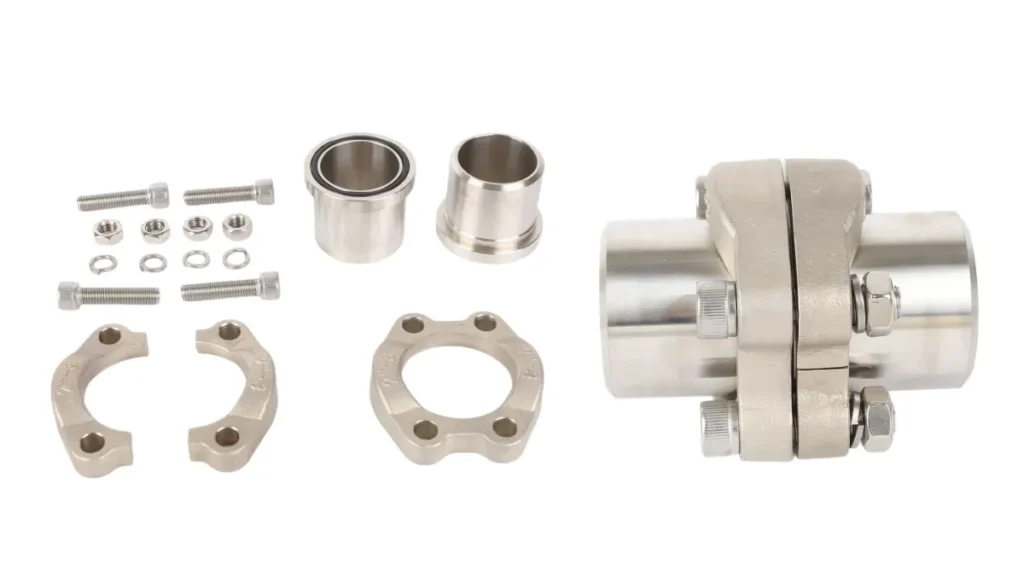
You can see flange coupling used to connect pipes, valves, and pumps in many places. Flange coupling joins machine parts. It helps keep systems safe and working well. There are three main types of flange coupling. These are protected, unprotected, and marine flange coupling. Each type is best for a special job. Protected flange coupling covers nuts and screws. This makes things safer. Marine flange coupling uses long bolts for a strong hold. The table below lists the common types of flange coupling and their main features:
| Type | Description |
|---|---|
| Protected Flange Coupling | Has covered nuts and screws to make things safer for workers. |
| Marine Flange Coupling | Made with shafts and uses 4 to 12 long bolts to keep the connection tight. |
| Unprotected Flange Coupling | Uses a key and bolts to join shafts, but there can be small gaps because of the keyways. |
Picking the right flange coupling helps you stay safe and have less system downtime.
Key Takeaways
- Flange couplings join pipes, valves, and pumps. They help keep systems safe and working well.
- There are three main types of flange couplings. These are protected, unprotected, and marine. Each type works best for certain jobs.
- Protected flange couplings have covers. These covers keep nuts and bolts safe from dirt. This makes them safer in factories.
- Unprotected flange couplings are more basic. They work best in clean places. You must line them up carefully to stop damage.
- Marine flange couplings are made for tough places. They use special materials that do not rust in saltwater.
- Picking the right flange coupling helps stop breakdowns. It also makes the system work better. This is very important for success.
- Checking and taking care of flange couplings often stops leaks. It also helps them last longer.
- Always think about the environment and how much weight is needed. This helps you pick the best flange coupling for the job.
Types of Flange Coupling
When you look at flange coupling types, you will notice each one is different. These differences help you pick the right one for your system. The main types are protected flange coupling, unprotected flange coupling, and marine flange coupling. Each type is best for certain jobs. Knowing how these types of flange coupling are not the same helps you make safe and smart choices.
Protected Flange Coupling
Features
Protected flange coupling is easy to spot because it has a cover. This cover keeps nuts and bolts safe from dust, dirt, and water. It also stops you from touching moving parts by mistake. You will see this type where safety and trust are very important.
Here is a table that shows how protected flange coupling is different from other types:
| Characteristic | Protected Flange Coupling | Other Flange Couplings |
|---|---|---|
| Protective Covering | Yes, includes a shield to protect from contaminants | No, lacks protective features |
| Safety Barrier | Yes, prevents accidental contact with rotating components | No, more vulnerable to accidents |
| Environmental Protection | Yes, shields from dust, dirt, moisture, and debris | No, exposed to environmental factors |
| Common Usage | Industrial settings prioritizing reliability and safety | General applications without specific safety needs |
You should remember these things:
- Has a cover to keep out dust and dirt.
- Stops you from touching moving parts by accident.
- Used in places where safety is very important.
Uses
Protected flange coupling is used in factories and chemical plants. These places need strong safety rules. The cover keeps workers safe and helps the system last longer. If you want to stop accidents and keep out dust or water, this type of flange coupling is the best choice.
Unprotected Flange Coupling
Features
Unprotected flange coupling does not have a cover on the nuts and bolts. It is simple and quick to put together. You will see it where the air is clean and there is little dust. The big difference between protected and unprotected flange coupling is the missing cover.
Here is a table that shows the differences:
| Feature | Protected Flange Coupling | Unprotected Flange Coupling |
|---|---|---|
| Protective Covering | Yes, designed with a protective covering | No, lacks any protective covering |
| Purpose | To protect against dust, dirt, moisture, and provide safety | Used in controlled environments with minimal contamination risk |
| Common Applications | Industrial settings requiring long-term reliability | Situations with straightforward maintenance access |
Unprotected flange coupling can break if the shafts are not lined up right. Bad alignment can cause damage. You should use this type only where you can keep out dust and water.
Uses
You will find unprotected flange coupling in small factories and workshops. These places are easy to clean and fix. If you need a simple connection and can check it often, this type works well. But you should not use it where there is a lot of dirt or harsh weather. This type of coupling is best for clean and safe places.
Marine Flange Coupling
Features
Marine flange coupling is made for hard work. You will see it on ships and oil platforms. This type uses long bolts and strong metal. It does not rust from saltwater or wet air. The design keeps the connection tight, even when things shake.
Here is a table that shows what makes marine flange coupling special:
| Feature | Description |
|---|---|
| Corrosion Resistance | Essential for marine environments to prevent degradation. |
| Reliable Sealing | Maintains integrity under vibration, crucial for safety and performance. |
Marine flange coupling uses stainless steel or other metals that do not rust. This helps it last longer in tough places. The seal stays strong, so leaks do not happen when the ship moves.
Uses
You will use marine flange coupling on ships, oil rigs, and near the ocean. These places need strong and safe connections that can handle saltwater and storms. Marine flange coupling works better than other types in these places because it does not rust and keeps a tight seal. If you work near the sea, this type of flange coupling is the safest and strongest.
Tip: Always pick the right flange coupling for your job and where you work. This helps you stop problems and keeps your system working well.
When you know about the main types of flange coupling, you can pick the best one for your work. Each type has its own good points. If you know the differences, you can make better choices for your system.
Flange Coupling Adaptors
What Is a Flange Coupling Adaptor
Sometimes, pipes are not the same size or made from the same stuff. A flange coupling adaptor helps you join these pipes fast and safely. This tool connects two pipe ends or tubing in a system with pressure. It gives a strong hold that does not let the pipes move around. The nuts and bolts have many threads and keep the adaptor tight. This stops leaks and helps your system work well.
Here are the main jobs of a flange coupling adaptor:
- Joins two pipes or tubing ends tightly in pressurized systems.
- Makes a strong connection that does not shake or move.
- Uses tough nuts and bolts to stop leaks at the joint.
You use a flange coupling adaptor when pipes are made from different things, like steel and PVC. You also use it if the pipes are not the same size or have different flange types. This adaptor makes your work safer and easier.
Applications in Construction and Infrastructure
You see flange coupling adaptors in many building and city projects. These adaptors help when pipes do not match up. You can use them for water lines, sewage pipes, oil and gas pipes, and even on ships.
Here is a table that shows where you use a flange coupling adaptor and how it helps:
| Application | Description |
|---|---|
| Extending and Connecting Pipes | Joins pipes of different sizes or materials for safe, leak-free connections. |
| Change in Flange Dimensions | Connects pipes with different flange types, like ANSI, DIN, or JIS. |
| Restoration and Maintenance | Lets you swap out broken parts without welding or big changes. |
| Pump and Valve Connections | Joins pipes to flanged valves and pumps for easy setup and fixing. |
| Emergency Maintenance | Blocks off broken parts fast for repairs, so you lose less time. |
| Chemical and Industrial Applications | Keeps chemicals safe while joining different pipe materials. |
| Water and Sewage Treatment | Links different pipes in city water and waste systems. |
| Fire Protection Systems | Makes sure fire safety pipes stay connected and strong. |
| Oil and Gas Pipelines | Holds oil and gas pipes tight to stop leaks. |
| Hydraulic Systems | Joins hydraulic pipes and parts for smooth fluid movement. |
| Shipbuilding | Gives rust-proof pipe joins on ships. |
| Infrastructure and Building | Safely joins pipes of different sizes and materials in big jobs. |
You pick a flange coupling adaptor when you need a fast, safe, and easy fix. You do not have to weld or change your system a lot. This saves time and money. You also get a strong, leak-free join, even in hard places.
Tip: Always check the size, material, and pressure rating before you choose a flange coupling adaptor. This helps you stop leaks and keeps your system safe.
Flange Couplings in Industry
Manufacturing and Heavy Loads
Flange couplings are very important in factories. Many factories use rigid coupling and flexible coupling for big machines. These machines can get very hot and have a lot of pressure. Oil and gas plants and power plants use flange coupling to stay safe. You must pick the right material for your pipe and flange. This helps stop leaks and keeps rust away. You also need to follow safety rules like ASME B16.5 and ASTM A182. These rules help keep workers safe and protect the system.
Rigid coupling gives a strong connection. It is good for machines that do not move much. If your system shakes or does not line up, use flexible coupling. Flexible coupling can take in movement and lower stress on your machines.
Note: Always make sure your flange coupling fits the load and heat. This helps you stop problems and keeps your factory working.
Piping Systems and Pumps
You see flange couplings in almost every factory pipe system. These parts connect pipes to pumps, valves, and other tools. Rigid coupling makes a strong and tight joint. Use it when you need no movement and a good seal. Flexible coupling is better if your pipes move or shake.
Here is a table that shows why flange couplings are good for pipes and pumps:
| Feature | Benefit |
|---|---|
| Exceptional Strength | Handles heavy loads and high pressure |
| High-Pressure Suitability | Works in tough conditions with heat and force |
| Ease of Maintenance | Lets you take apart and check your system easily |
| Effective Leak Prevention | Stops leaks when you use the right gasket and install it correctly |
| Vibration and Misalignment Control | Reduces shaking and absorbs movement to protect your system |
You should look for common problems. Leaks can happen if the gasket is loose or bolts are not tight. Check for damage or rust when you do maintenance. If you see leaks or broken bolts, check your work and change parts if needed.
Marine and Shipbuilding
Flange couplings are used on ships and in shipyards. These connections must not rust and must last in saltwater. Rigid coupling gives a strong joint for ship engines and drive shafts. Flexible coupling helps take in shaking from waves and engines.
You must choose materials that do not rust. This keeps your ship safe and follows marine rules. Flange couplings help stop leaks and protect people and cargo. You may also see grooved couplings in shipbuilding. Grooved couplings cost less and are easy to put in and fix. They handle shaking well and need fewer bolts. Flange coupling gives a tighter seal and works better for high-pressure jobs.
Tip: Always follow marine safety rules when you put in flange couplings. This keeps your ship safe and your system strong.
Key Features and Benefits
Strength and Durability
You want your system to last a long time. Flange couplings make strong and safe connections. Makers use metals like carbon steel, stainless steel, and alloy steel. These metals can handle heavy loads and high torque. They also do not break easily in tough places.
- Carbon steel
- Stainless steel
- Alloy steel
- Tool steel
- Superalloys
Steel is very strong and lasts a long time. This helps flange couplings work well in hard jobs. You can trust these metals to keep your system safe.
Note: Strong metals mean fewer breaks and less time fixing. You get more work done and have fewer problems.
Maintenance and Safety
You should think about how often you check your machines. Strong flange couplings help you spend less on repairs. When you use tough couplings, you do not need to change them a lot. This means your machines stop less, so you save money.
If you pick a weak coupling, you must check and change it more. This can slow your work and cost more. Always pick a coupling that fits your system. Using the right type also keeps you safer. Protected flange couplings cover moving parts and help stop accidents.
- Fewer breaks mean workers are safer.
- Strong couplings keep your system steady and safe.
Hygiene and Tightness (Aseptic Types)
Food and drug factories must stay very clean. Aseptic flange couplings help keep things safe. They follow rules like DIN, ISO, and ASME BPE. The design has smooth surfaces and tight seals. This stops germs and dirt from hiding.
| Feature | Description |
|---|---|
| Standards | Follows DIN, ISO, and ASME BPE connection standards |
| Surface Design | Ensures smooth surfaces without dead zones |
| Material Properties | Can withstand repeated sterilization |
| Seal Design | Achieves a tight and hygienic seal without large gaskets |
Aseptic couplings are easy to clean. You can use cleaning and sterilizing to reach all parts. The gasket fits the pipe just right. This stops germs from growing in small spaces.
- Aseptic fittings lower the chance of germs and buildup.
- You get a tight seal that keeps your product safe.
Tip: If you work with food or medicine, always use aseptic flange couplings for the best safety and cleanliness.
Choosing a Flange Coupling
Assessing Application Needs
You must start by understanding what your system requires. Each application has unique needs. You should look at the type of machinery, the speed of rotation, and the amount of torque. You also need to check how much movement or misalignment the shafts might have. If your system needs lubrication, you must consider how often you can add it.
Here are the main factors you should check before you choose a flange coupling:
- Torque levels
- Alignment limits
- Maximum rotational speed
- Lubrication constraints
You should match the coupling to your system’s torque. If your machine runs at high speed, pick a coupling that can handle the RPM. If your shafts do not line up perfectly, choose a coupling that allows for some misalignment. You must also think about how easy it is to maintain the coupling. If you need to add grease or oil often, pick a design that makes this simple.
Tip: Write down your system’s needs before you buy a flange coupling. This helps you avoid mistakes and keeps your machines running well.
Environmental and Load Factors
You must also think about where your system works and what loads it handles. The environment can change what type of flange coupling you need. For example, high heat, cold, or chemicals can damage some materials. Heavy loads or fast speeds can also affect your choice.
Consider these steps when you look at environmental and load factors:
- Type of Misalignment: Decide if your system has angular, parallel, or axial misalignment.
- Torque Requirements: Make sure the coupling can handle both peak and steady torque.
- Speed and RPM: Check if your application needs a coupling for high-speed use.
- Environmental Conditions: Look at temperature, moisture, and chemicals in your work area.
- Vibration and Shock Loads: Pick a coupling that can absorb vibration and shock if needed.
- Application-Specific Features: Some jobs need special features, like chemical resistance or easy cleaning.
You should always match the coupling material to your environment. Stainless steel works well in wet or salty places. For food or medicine, use couplings that are easy to clean and do not trap dirt.
Note: The right flange coupling can help your system last longer and work better, even in tough conditions.
Cost and Maintenance
You must balance cost with quality and maintenance needs. A cheaper coupling may save money at first, but it can cost more if it breaks or needs lots of repairs. You should look at how often you need to check or replace the coupling. Some types need more care than others.
Here is a simple table to help you compare:
| Factor | Low-Cost Coupling | High-Quality Coupling |
|---|---|---|
| Initial Price | Lower | Higher |
| Maintenance Needs | More frequent | Less frequent |
| Lifespan | Shorter | Longer |
| Downtime Risk | Higher | Lower |
You should choose a coupling that fits your budget and your system’s needs. If your machines run all day, pick a strong, reliable coupling. This reduces downtime and saves money over time.
Tip: Always think about the total cost, not just the price tag. A good flange coupling gives you safety, less downtime, and peace of mind.
Installation and Maintenance
If you install and check flange couplings often, they work better. Doing things the right way stops leaks and keeps your system running. This section shows you how to line up parts, put them together, check for problems, swap out broken pieces, and fix issues.
Alignment and Assembly
Start by making sure the shafts are lined up. Put them so they match up straight. If you skip this, leaks or cracks can happen. Use a straight edge or laser tool to check. Clean the flange faces before you start. Dirt or scratches can ruin the seal.
When you put the coupling together, use a new gasket each time. Make sure the gasket is flat and covers the whole area. Tighten bolts in a criss-cross way. This spreads the force evenly. Use a torque wrench to get the right tightness. Too much or too little can make weak spots.
Tip: After you turn on the system, check the bolts again. They can get loose as things settle.
Inspection and Replacement
Check your flange couplings often to keep them safe. Look for rust, wear, or leaks near the flange. Make sure bolts and nuts are tight. If you see damage, change the bad part right away. Always use the right gaskets and bolts. Wrong parts can cause problems.
Make a schedule to check your couplings every few months. If your workplace is tough, check more often. Change gaskets and bolts during big repairs. Clean the flange faces before you put things back together.
- Look for leaks, rust, and worn spots.
- Change broken or old parts.
- Clean everything before you put it back.
Troubleshooting Common Issues
You might run into some problems when you install or use flange couplings. Knowing how to fix these saves time and stops bigger trouble. The table below shows common problems, why they happen, and how to fix them:
| Common Issue | Explanation | Solution |
|---|---|---|
| Incorrect Torque on Bolts | Bolts not tightened right can cause leaks | Use a torque wrench and tighten bolts in a criss-cross pattern. |
| Misplacement or Wrong Gasket | Bad gasket or wrong spot can make the flange fail | Always use a new gasket and make sure it fits right. |
| Ignoring Pipe/Flange Alignment | Not lining up parts can cause leaks or cracks | Line up shafts and flanges before you bolt them together. |
| Using Incompatible Materials | Wrong materials can cause failures | Pick materials that fit your job. |
| Neglecting Surface Preparation | Dirty or damaged surfaces can ruin the seal | Clean and check flange faces before you install. |
Note: Careful installation and regular checks help you avoid most problems. If you see a leak or hear strange sounds, stop the system and check the coupling right away.
If you follow these steps, your flange couplings stay safe and work well. Good installation and maintenance protect your machines and your team.
Conclusion
If you know about flange coupling types and how to use them, you can make things safer and work better. Picking the right one stops leaks and keeps your system strong. To get the best results, always do these things:
- Make sure the flange faces line up and are flat.
- Pick gaskets that work with your pressure and chemicals.
- Tighten bolts in a criss-cross way and use the right force.
If you need help choosing or using flange couplings, it is a good idea to talk to an experienced manufacturer. A flange coupling manufacturer can provide product suggestions, custom options, installation guidance, and technical support based on your working conditions. As a flange coupling manufacturer, we are ready to help you choose the right solution for your equipment or project.
FAQ
What is the main purpose of a flange coupling?
A flange coupling connects two shafts or pipes together. It lets power or fluids move safely from one part to another. You can take it apart or put it back together easily for repairs.
How do you choose the right flange coupling?
Check how much weight and speed your system has. Think about where it will be used. Pick the right material, size, and type for your job. Always match the coupling to your system for safety.
Can you use flange couplings in high-pressure systems?
Yes, flange couplings work in high-pressure systems. Pick the right material and pressure rating for your job. Always follow the rules for putting them in and checking them.
What is the difference between protected and unprotected flange couplings?
| Type | Protective Cover | Safety Level |
|---|---|---|
| Protected | Yes | High |
| Unprotected | No | Moderate |
Protected flange couplings have a cover for more safety. Unprotected ones do not have this cover.
How often should you inspect flange couplings?
Check flange couplings every few months to stay safe. If your system is in a tough place, check more often. Look for leaks, rust, or loose bolts each time you check.
What are common problems with flange couplings?
Leaks, bad alignment, and loose bolts are common problems. You might also see rust or old gaskets. Checking often helps you find and fix these problems early.
Can you reuse gaskets when reinstalling a flange coupling?
No, always use a new gasket when you put a flange coupling back. Old gaskets might not seal well and can cause leaks.